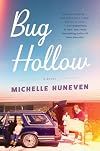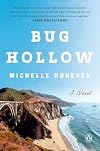
Bug Hollow
by Michelle Huneven
On This Page
Description
"A family novel that follows the Samuelson clan over four decades as they hurt and heal one another"--Tags
Recommendations





Member Reviews
Bug Hollow: A Novel-Michelle Huneven, author; Emily Rankin, narrator
This novel follows the Samuelson family. It begins in the mid-seventies when Ellis Samuelson graduates from high school, and at the age of 17, he sets off on a vacation with two friends. When the friends return, they return without Ellis. He has met 19-year-old Julia, and has decided to stay with her and her friends in a place called Bug Hollow. For some unknown reason, he chooses to keep his whereabouts secret from his parents, Sib and Phil, and sisters, Katie and Sally. He does call home to say he is safe and will return home at the end of the summer. He asks them not to worry. He has never been happier. His mom tends to jump to conclusions and is very judgmental. She show more immediately assumes that he has been lured to a commune and will abandon his dreams of sports and college. His dad is not worried at all, but Sib convinces Phil to put an ad about their missing son in the classified section of a newspaper. When a woman calls to tell them that she knows where he is, they pack up and set off to rescue him! Does he want to be rescued? Ellis has only recently celebrated his 18th birthday, and so he does not have to go home with them. He and Julia believe they are in love and will marry one day, so they talk it over and decide that for their relationship to succeed, going home is the best choice for their future. Ellis returns home, but he can’t wait to leave and returns to school earlier than necessary. That choice changes the trajectory of all of their lives.
The book continues to follow the family and their many relationships for decades. The adults deal with the tragedies that come their way, the children mature and go out into the world, and ultimately the choices and their secrets keep moving them around like pieces on a chess board. Yet, thankfully, for the most part, they never reach checkmate. Somehow, everything seems to come full circle happily. There is no retribution, and there is little remorse, shame or guilt for anyone’s behavior. Everyone seems to happily embrace their own shortcomings and the shortcomings of others, even when they feel anger and disappointment. Forgiveness and acceptance of any and all circumstances seems to be the overriding theme. The law of unintended consequences somehow seems to do no harm to any of them, although each of the characters has flaws. None of them are perfect; they all seem to suffer from being human! Most important is the idea that they all seem to manage whatever life throws at them without spinning completely out of control. The questions all have answers, the problems all have solutions.
From this novel and the lives portrayed, however, these are some of the conclusions one might draw from the narrative. One might get the idea that a person named Baron is not a nice person since Baron is not a nice name. One might assume that an illegitimate child or a child of unknown genetic background is the reward, not the consequence of risky behavior. One might get the idea that Socialism is preferred to Capitalism or that Jews are welcome in Arab countries so long as they make sure to keep a low profile, and isn’t that okay? One might assume that religious and ethnic barriers have disappeared and no longer matter as people marry whom they please and procreate at will. It might be assumed that alcoholics do not need outside help to control their alcoholism or that it is okay to mock immigration laws and ICE. For instance, a same sex marriage that simply represents a deep and close friendship can be performed in order to grant legal status to someone who has overstayed a visa or is in the country illegally. It might even be assumed that someone who misses their cancer screening can expect a diagnosis of cancer and shame on them. Then there is the assumption that a person may choose the time of their death, and it is okay for those who know to keep vigil at the death and to keep it a secret, so long as they do not participate and the person does it entirely on their own. That would not be considered assisted suicide. The line between compassion and judgment is so blurred it is difficult to make the important assumption about whether or not something is really right or wrong.
How the author managed to include all of these approaches to life with a positive spin was mind-boggling for me, Then, I thought, as the branches of this family grew and traveled in so many different directions, in the past and the present, and their relationships were deeply explored in detail, with all of the joy and the grief, was this novel which kept me interested until the very end, essentially propaganda? Was it the author subtly and expertly using this story to indoctrinate the reader with political views? Every action in the novel had a pull and a push. The reader needs to decide whether or not to pull or push, condemn or forgive. Every concept that is presented in this book can be thought about as if it has two sides of the same coin. Abortion rights, immigration rights, end of life rights, treatment rights, religious rights, marriage rights, civil rights, etc., all rear their heads. When I finished the book, I thought about the rights we have, and perhaps, more importantly, I thought about what rights we should be entitled to have. show less
This novel follows the Samuelson family. It begins in the mid-seventies when Ellis Samuelson graduates from high school, and at the age of 17, he sets off on a vacation with two friends. When the friends return, they return without Ellis. He has met 19-year-old Julia, and has decided to stay with her and her friends in a place called Bug Hollow. For some unknown reason, he chooses to keep his whereabouts secret from his parents, Sib and Phil, and sisters, Katie and Sally. He does call home to say he is safe and will return home at the end of the summer. He asks them not to worry. He has never been happier. His mom tends to jump to conclusions and is very judgmental. She show more immediately assumes that he has been lured to a commune and will abandon his dreams of sports and college. His dad is not worried at all, but Sib convinces Phil to put an ad about their missing son in the classified section of a newspaper. When a woman calls to tell them that she knows where he is, they pack up and set off to rescue him! Does he want to be rescued? Ellis has only recently celebrated his 18th birthday, and so he does not have to go home with them. He and Julia believe they are in love and will marry one day, so they talk it over and decide that for their relationship to succeed, going home is the best choice for their future. Ellis returns home, but he can’t wait to leave and returns to school earlier than necessary. That choice changes the trajectory of all of their lives.
The book continues to follow the family and their many relationships for decades. The adults deal with the tragedies that come their way, the children mature and go out into the world, and ultimately the choices and their secrets keep moving them around like pieces on a chess board. Yet, thankfully, for the most part, they never reach checkmate. Somehow, everything seems to come full circle happily. There is no retribution, and there is little remorse, shame or guilt for anyone’s behavior. Everyone seems to happily embrace their own shortcomings and the shortcomings of others, even when they feel anger and disappointment. Forgiveness and acceptance of any and all circumstances seems to be the overriding theme. The law of unintended consequences somehow seems to do no harm to any of them, although each of the characters has flaws. None of them are perfect; they all seem to suffer from being human! Most important is the idea that they all seem to manage whatever life throws at them without spinning completely out of control. The questions all have answers, the problems all have solutions.
From this novel and the lives portrayed, however, these are some of the conclusions one might draw from the narrative. One might get the idea that a person named Baron is not a nice person since Baron is not a nice name. One might assume that an illegitimate child or a child of unknown genetic background is the reward, not the consequence of risky behavior. One might get the idea that Socialism is preferred to Capitalism or that Jews are welcome in Arab countries so long as they make sure to keep a low profile, and isn’t that okay? One might assume that religious and ethnic barriers have disappeared and no longer matter as people marry whom they please and procreate at will. It might be assumed that alcoholics do not need outside help to control their alcoholism or that it is okay to mock immigration laws and ICE. For instance, a same sex marriage that simply represents a deep and close friendship can be performed in order to grant legal status to someone who has overstayed a visa or is in the country illegally. It might even be assumed that someone who misses their cancer screening can expect a diagnosis of cancer and shame on them. Then there is the assumption that a person may choose the time of their death, and it is okay for those who know to keep vigil at the death and to keep it a secret, so long as they do not participate and the person does it entirely on their own. That would not be considered assisted suicide. The line between compassion and judgment is so blurred it is difficult to make the important assumption about whether or not something is really right or wrong.
How the author managed to include all of these approaches to life with a positive spin was mind-boggling for me, Then, I thought, as the branches of this family grew and traveled in so many different directions, in the past and the present, and their relationships were deeply explored in detail, with all of the joy and the grief, was this novel which kept me interested until the very end, essentially propaganda? Was it the author subtly and expertly using this story to indoctrinate the reader with political views? Every action in the novel had a pull and a push. The reader needs to decide whether or not to pull or push, condemn or forgive. Every concept that is presented in this book can be thought about as if it has two sides of the same coin. Abortion rights, immigration rights, end of life rights, treatment rights, religious rights, marriage rights, civil rights, etc., all rear their heads. When I finished the book, I thought about the rights we have, and perhaps, more importantly, I thought about what rights we should be entitled to have. show less
The Samuelsons seem like an average upper-middle-class family navigating California in the 1970s when Ellis, the oldest son, runs away to a hippie house for the summer. Shortly after dragging him back and sending him to college, he dies in an accident. Bug Hollow by Michelle Huneven begins with this tragic episode, but soon spirals out into many stories and characters touched by the events of that summer. I’m a sucker for a non-linear narrative, so as soon as the novel jumped in time and POV, I was hooked. Huneven has written a lovely book that deeply explores what it means to be family.
Someone described this book as feeling more like a book of short stories about one family and I'd agree with that assessment. I think that's why I didn't like it. Rarely do I like short stories. They often lack depth and a deep connection to the main character. In Bug Hollow, who even is the *main* character? I'm not sure. A lot of people enjoyed this book because of how it was written. I am not one of them. I'm not sure how to rate it properly since it was written well but the connection to it, or rather disconnection was me.
Michelle Huneven is an author who writes heart-piercing novels (Blame and Off Course were both excellent). Her latest, Bug Hollow, begins with the golden son heading off for a weeklong trip with his friends before he goes to college. When he meets a lovely young lady, he decides to spend the rest of the summer with her. His mother is unhappy about the situation, his father thinks he's sewing oats. When he tragically drowns the first week of college, and his summer girlfriend shows up pregnant, the family is thrown into turmoil. This moving story follows the family for the next twenty years as each member gets their chance to tell their story. It's one of the best books I read this year.
An interesting book, but more a series of intersecting short stories than a novel. Each chapter focuses on one character. The stories also cover a long span of time. The style of this book is not what I generally prefer, hence my rating of only three.
A novel, or a collection of linked stories? The inciting incident, from eight-year-old Sally's point of view, is her older brother Ellis's death just before his first year of college, and the appearance of Julia, his summer love, who is pregnant with his baby. Julia doesn't want the baby, but carries her to term so that Ellis' parents can adopt her.
From there, the story leaps forward in time, and between characters: to Saudi Arabia and back to California, through affairs and deaths and school and art, to family lost and found. Some POV characters are biologically related to Sally; others, more tangentially (e.g. her mother's colleague Mrs. Wright).
See also: Commonwealth by Ann Patchett; The Patron Saint of Liars by Ann show more Patchett
Quotes
Sib couldn't help herself; she undercut any good, tender moment. (127)
There was work to dying, Katie could tell, to withdrawing from life, to finding the way out; she had a sense of long corridors, a narrow path over rocky ground, a dark forest closing in. How far away a person can go even when they're there, right in front of you! They all held on to Sib, but could accompany her only so far; at some point - at the banks of the dark river - she had to go on alone. (134)
"It is surreal being back here....It's like one of those dreams where you're someplace familiar, but you keep finding rooms you never knew existed." (Julia, 161)
Too many halves! His whole family had been halved. Halved and multiplied. (JP, 223) show less
From there, the story leaps forward in time, and between characters: to Saudi Arabia and back to California, through affairs and deaths and school and art, to family lost and found. Some POV characters are biologically related to Sally; others, more tangentially (e.g. her mother's colleague Mrs. Wright).
See also: Commonwealth by Ann Patchett; The Patron Saint of Liars by Ann show more Patchett
Quotes
Sib couldn't help herself; she undercut any good, tender moment. (127)
There was work to dying, Katie could tell, to withdrawing from life, to finding the way out; she had a sense of long corridors, a narrow path over rocky ground, a dark forest closing in. How far away a person can go even when they're there, right in front of you! They all held on to Sib, but could accompany her only so far; at some point - at the banks of the dark river - she had to go on alone. (134)
"It is surreal being back here....It's like one of those dreams where you're someplace familiar, but you keep finding rooms you never knew existed." (Julia, 161)
Too many halves! His whole family had been halved. Halved and multiplied. (JP, 223) show less
Phil and Sibyl Samuelson and their three children are at the center of this deeply satisfying novel, but Huneven's leaps through time and stories provide constant surprise and delights. The reader finds herself in the leafy green of California, then Saudi Arabia for a business trip, then by the side of an old woman who has unexpectedly fall in love.
Members
- Recently Added By
Lists

To Read
133 works; 1 member

Best Books I Read in 2025
12 works; 1 member

Books Read in 2025
4,090 works; 97 members
Author Information

7+ Works 1,411 Members
Awards and Honors
Common Knowledge
- Canonical title
- Bug Hollow
- Original publication date
- 2025
- People/Characters
- Sally Rose Samuelson; Ellis Samuelson; Katherine “Katie” Samuelson Yu; Sybil Hartstein Samuelson; Phil Samuelson; Julia Ortiz (show all 25); Eva Ellis Samuelson; Yvette Joubert-Durand; Claude Durand; François Durand; John Pierre “J.P.” Durand; Sandro Grolio; Fredrick “Freddy” O'Connor; Winona Wright; Baron “Barney” Reese; Bill Woodrow; Ruth Hader; Opal Frazier; Pilar Ardolina; Todd; Sibbie; Ida; Fitznorman Brown; Alma Brown; Linda Brown
- Important places
- Bug Hollow, Boulder Creek, Santa Cruz Mountains, California, USA; Altadena, California, USA; Dhahran, Saudi Arabia; Ingalls, California, USA; Oaxaca, Mexico
- Dedication
- To Altadena
- First words
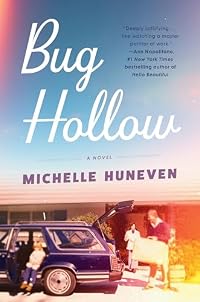
- The summer when Sally Samuelson was eight, her brother Ellis graduated from high school and a few days later, he and his best friends, Heck Stevens and Ben Klosterman, drove up the coast in Heck's ‘64 Rambler American.
- Quotations
- Funny how the days you weep, you can also have the fullest, deepest laughs.
- Last words
- (Click to show. Warning: May contain spoilers.)Sibbie and Ida have stopped at the curb at the far end of the park and are making big scooping motions with their arms. “Hurry up, you guys,” Sibbie calls to them. “People are waiting. People are hungry.”
(Click to show. Warning: May contain spoilers.)Yours,
Dr. Fredrick O'Connor
Silver Professor of Mathematics, NYU - Blurbers
- Dunne, Griffin; Napolitano, Ann; Jamison, Leslie; Lombardo, Claire; Simpson, Mona
Classifications
Statistics
- Members
- 145
- Popularity
- 224,762
- Reviews
- 11
- Rating
- (3.86)
- Languages
- English
- Media
- Paper, Audiobook, Ebook
- ISBNs
- 6
- ASINs
- 3