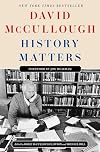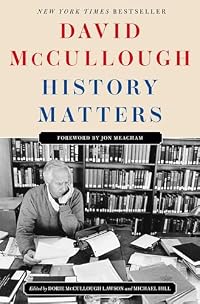
History Matters
by David McCullough
On This Page
Description
In this posthumous collection of thought-provoking essays--many never published before--Pulitzer Prize-winning historian and bestselling author David McCullough affirms the value of history, how we can be guided by its lessons, and the enduring legacy of American ideals. History Matters brings together selected essays by beloved historian David McCullough, some published here for the first time, written at different points over the course of his long career but all focused on the subject of show more his lifelong passion: the importance of history in understanding our present and future. Edited by McCullough's daughter, Dorie McCullough Lawson, and his longtime researcher, Michael Hill, History Matters is a tribute to a master historian and offers fresh insights into McCullough's enduring interests and writing life. The book also features a foreword by Jon Meacham. McCullough highlights the importance of character in political leaders, with Harry Truman and George Washington serving as exemplars of American values like optimism and determination. He shares his early influences, from the books he cherished in his youth to the people who mentored him. He also pays homage to those who inspired him, such as writer Paul Horgan and painter Thomas Eakins, illustrating the diverse influences on his writing as well as the influence of art. Rich with McCullough's signature grace, curiosity, and narrative gifts, these essays offer vital lessons in viewing history through the eyes of its participants, a perspective that McCullough believed was crucial to understanding the present as well as the past. History Matters is testament to McCullough's legacy as one of the great storytellers of this nation's history and of the lasting promise of American ideals. show lessTags
Recommendations



Member Reviews
There was a time when I thought history and essays were boring. David McCullough changed my mind on both.
While reading his essays, I imagined myself sitting with McCullough in his writing room in the backyard, with his 1941 Royal typewriter he bought second hand in 1965. He has written every single book on that typewriter.
These essays were a window to how McCullough writes, his thought process, where his inspiration for the next book comes from.
“Don’t get discouraged, don’t give up. We’ve known worse times and come through, and we will now if we never forget who we are and what we stand for. The world needs you…there’s work to be done. Let’s never lapse into being spectators only. If you’re going to ring that bell, give show more that rope one hell of a pull.”
These essays are perfect for times when the reader might just want to open the book and find McCullough’s inspiring wisdom. If you have never read McCullough before, this book might be a great starting point. Or, you might have pre-ordered the book and want to be a completionist. Either way, I highly recommend History Matters. It does matter.
McCullough wrote “ History is- or should be- the bedrock of patriotism, not the chest-pounding kind of patriotism but the real thing, love of country.” show less
While reading his essays, I imagined myself sitting with McCullough in his writing room in the backyard, with his 1941 Royal typewriter he bought second hand in 1965. He has written every single book on that typewriter.
These essays were a window to how McCullough writes, his thought process, where his inspiration for the next book comes from.
“Don’t get discouraged, don’t give up. We’ve known worse times and come through, and we will now if we never forget who we are and what we stand for. The world needs you…there’s work to be done. Let’s never lapse into being spectators only. If you’re going to ring that bell, give show more that rope one hell of a pull.”
These essays are perfect for times when the reader might just want to open the book and find McCullough’s inspiring wisdom. If you have never read McCullough before, this book might be a great starting point. Or, you might have pre-ordered the book and want to be a completionist. Either way, I highly recommend History Matters. It does matter.
McCullough wrote “ History is- or should be- the bedrock of patriotism, not the chest-pounding kind of patriotism but the real thing, love of country.” show less
As most posthumous collections of one's writings, this one is very uneven. It collections interviews, speeches, working notes and a few published pieces and is more of a curiosity than a necessity for a history readers.
Despite not being trained as a historian, David McCullough is regarded as one of the good American historians. His writing is usually engaging and his choice of topics tends to be straddling the line between obscure (The Johnstown Flood) and popular (Truman and 1776 for example) while treating them with the same attention to detail.
I came to this book excepting more of the same type of writing and while a few of the pieces delivered, most did not. It was not the author's fault - speeches have a different structure from show more written essays and as the editors (his daughter and his long term researcher) combed through his papers to find what to include, they probably did not have that much to work with in the shorter form. The book ended up somewhat repetitive (the same ideas and often the same sentences made it into multiple speeches) and while some of the ideas were interesting, they were also unpolished.
If you had never read McCullough, don't start with this book. Or if you really want to sample his writing and you do not want to commit to a longer book, read these 3 pieces from this book:
- The Paris Review Interview from 1999 - for the details of his work process, his thoughts about history and writing and a lot more (The Paris Review Interviews are almost always very good)
- "Thomas Eakins" - to see him handling a more obscure figure from the past
- "Harry S. Truman" (originally published in "Character Above All" after McCullough published his biography of the president which got him the first of the two Pulizers he won) for his work on a more popular topic.
Overall, not the book I expected and hoped for but still worth checking as long as you know what to expect. Plus I learned that McCullough painted - 2 of his watercolors are used as the end-sheets. show less
Despite not being trained as a historian, David McCullough is regarded as one of the good American historians. His writing is usually engaging and his choice of topics tends to be straddling the line between obscure (The Johnstown Flood) and popular (Truman and 1776 for example) while treating them with the same attention to detail.
I came to this book excepting more of the same type of writing and while a few of the pieces delivered, most did not. It was not the author's fault - speeches have a different structure from show more written essays and as the editors (his daughter and his long term researcher) combed through his papers to find what to include, they probably did not have that much to work with in the shorter form. The book ended up somewhat repetitive (the same ideas and often the same sentences made it into multiple speeches) and while some of the ideas were interesting, they were also unpolished.
If you had never read McCullough, don't start with this book. Or if you really want to sample his writing and you do not want to commit to a longer book, read these 3 pieces from this book:
- The Paris Review Interview from 1999 - for the details of his work process, his thoughts about history and writing and a lot more (The Paris Review Interviews are almost always very good)
- "Thomas Eakins" - to see him handling a more obscure figure from the past
- "Harry S. Truman" (originally published in "Character Above All" after McCullough published his biography of the president which got him the first of the two Pulizers he won) for his work on a more popular topic.
Overall, not the book I expected and hoped for but still worth checking as long as you know what to expect. Plus I learned that McCullough painted - 2 of his watercolors are used as the end-sheets. show less
Summary: Essays and lectures on the importance of history, biographical vignettes, influences on the writer, and writing process.
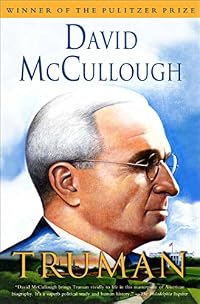
I became a fan while reading Harry Truman. Nine hundred pages in and I didn’t want the book to end. It was not only the subject, but the writing. And so I’ve read just about everything David McCullough has written. (Looking over his publications, I discovered I somehow had missed Brave Companions. I will remedy that soon!). And so I was delighted to learn of this new, posthumous collection of his essays and lecture transcripts, edited by daughter Dorie McCullough Lawson and researcher Michael Hill.
The pieces in this collection are grouped into four parts. Firstly, apropos of the title is a section titled show more “why History?” He sums it up as follows:
“But, I think, what it really comes down to is that history is an extension of life. It both enlarges and intensifies the experience of being alive. It’s like poetry and art. Or music. And it’s ours, to enjoy” (p.4).
He adds, in the words of Barbara Tuchman that the key to good historiography is to “Tell stories.” He goes on to write about American values and hid long-range optimism about the country. A short essay on luck and history explores Washington’s luck with the weather in escaping the British and McCullough’s own good fortune. The final essay in this section is a transcript of his Paris Review interview with good background on his beginnings as a writer and behind the scenes glimpses of several of his books. Most interesting was his reason for not writing on Picasso–he just didn’t like him. He found when you have to spend years researching someone, it helps to like them as a person.
Part Two is titled “Figures in a Landscape.” These essays offer vignettes of Americans against the backdrop of their history: Thomas Eakins, Harriet Beecher Stowe, George Washington, and Harry Truman. The two longest ones are on Washington and Truman. Of Washington, he described his essential trait as leadership–of people and a nation. He could call people to do things beyond what they thought their capacity. Of Truman, he argues that part of his greatness was his profound sense of history. In less than twenty pages, he summarizes the strengths and flaws of the man, considering him among America’s great presidents.
In Part Three, the topic is “Influences.” He begins with the love of learning of three Yale men: Ezra Stiles, John Trumbull, and Manasseh Cutler. The latter was a pioneer in higher education on the Ohio frontier, and Ohio University’s oldest building is Cutler Hall. He offers a profile of the actor Vincent Scully. This is followed by McCullough’s account of getting a speech idea through to Arthur Schlesinger, advisor to candidate John Kennedy. In the end, one sentence made it into a speech. I was so fascinated by his profile of Paul Horgan, I found used copies of a couple of his works. He loved the writing of Herman Wouk. Of course, one essay offers a list of his favorite books. The section concludes with a delightful Christmas ritual titled “A Book on Every Bed.”
Part Four centers on McCullough’s writing process. He begins with great writing advice and his own practice of never working from an outline, which he likens to painting by number. Like many writers, he emphasizes the hard work of rewriting, describing himself as a rewriter. He offers a tribute to his Royal Standard typewriter, on which he wrote all of his books. In his advice to writers, he advises reading widely as well as deeply and this section includes an essay with more book recommendations. The final essay is on history and art, highlighting Churchill as an artist. McCullough was as well, the endpapers featuring two of his watercolors.
If McCullough is new to you, it will whet your appetite for his books (and many others as well). For others, it clarifies the values that informed McCullough’s writing–of history’s importance, of telling a good story, of living with a character long enough to bring them to life. Finally, these essays are a workshop for writers, especially of biography and history. They represent a fitting summing up of his life. show less
I became a fan while reading Harry Truman. Nine hundred pages in and I didn’t want the book to end. It was not only the subject, but the writing. And so I’ve read just about everything David McCullough has written. (Looking over his publications, I discovered I somehow had missed Brave Companions. I will remedy that soon!). And so I was delighted to learn of this new, posthumous collection of his essays and lecture transcripts, edited by daughter Dorie McCullough Lawson and researcher Michael Hill.
The pieces in this collection are grouped into four parts. Firstly, apropos of the title is a section titled show more “why History?” He sums it up as follows:
“But, I think, what it really comes down to is that history is an extension of life. It both enlarges and intensifies the experience of being alive. It’s like poetry and art. Or music. And it’s ours, to enjoy” (p.4).
He adds, in the words of Barbara Tuchman that the key to good historiography is to “Tell stories.” He goes on to write about American values and hid long-range optimism about the country. A short essay on luck and history explores Washington’s luck with the weather in escaping the British and McCullough’s own good fortune. The final essay in this section is a transcript of his Paris Review interview with good background on his beginnings as a writer and behind the scenes glimpses of several of his books. Most interesting was his reason for not writing on Picasso–he just didn’t like him. He found when you have to spend years researching someone, it helps to like them as a person.
Part Two is titled “Figures in a Landscape.” These essays offer vignettes of Americans against the backdrop of their history: Thomas Eakins, Harriet Beecher Stowe, George Washington, and Harry Truman. The two longest ones are on Washington and Truman. Of Washington, he described his essential trait as leadership–of people and a nation. He could call people to do things beyond what they thought their capacity. Of Truman, he argues that part of his greatness was his profound sense of history. In less than twenty pages, he summarizes the strengths and flaws of the man, considering him among America’s great presidents.
In Part Three, the topic is “Influences.” He begins with the love of learning of three Yale men: Ezra Stiles, John Trumbull, and Manasseh Cutler. The latter was a pioneer in higher education on the Ohio frontier, and Ohio University’s oldest building is Cutler Hall. He offers a profile of the actor Vincent Scully. This is followed by McCullough’s account of getting a speech idea through to Arthur Schlesinger, advisor to candidate John Kennedy. In the end, one sentence made it into a speech. I was so fascinated by his profile of Paul Horgan, I found used copies of a couple of his works. He loved the writing of Herman Wouk. Of course, one essay offers a list of his favorite books. The section concludes with a delightful Christmas ritual titled “A Book on Every Bed.”
Part Four centers on McCullough’s writing process. He begins with great writing advice and his own practice of never working from an outline, which he likens to painting by number. Like many writers, he emphasizes the hard work of rewriting, describing himself as a rewriter. He offers a tribute to his Royal Standard typewriter, on which he wrote all of his books. In his advice to writers, he advises reading widely as well as deeply and this section includes an essay with more book recommendations. The final essay is on history and art, highlighting Churchill as an artist. McCullough was as well, the endpapers featuring two of his watercolors.
If McCullough is new to you, it will whet your appetite for his books (and many others as well). For others, it clarifies the values that informed McCullough’s writing–of history’s importance, of telling a good story, of living with a character long enough to bring them to life. Finally, these essays are a workshop for writers, especially of biography and history. They represent a fitting summing up of his life. show less
I am going to miss David McCullough. A Democrat, sure, but of the old school: there is a right and wrong, and America, despite its faults, is good and right. This is a collection of speeches, interviews, and short pieces, many collected here for the first time by his daughter and researcher, with a foreword by the eloquent, but politically compromised, Jon Meacham. Every piece was good in its own way, and interesting. Lots of good food for thought on history and books.
The biographical essays are great, but anyone could have written his graduation addresses. I'm impressed that a person could remain so optimistic with all the knowledge he has of history, but I remain sceptical of generalized optimism.
A delightful little book. So many collected insights into history, writing, who we are and what is unique about the USA, and of course why knowing history is so damn important. A couple of the tributes were a bit tedious, but that is a minor quibble. This is one that I will reread. Highly recommended
I’ve read many of David McCullough’s books: books about the building of the Panama Canal (I read that prior to visiting the Canal, and I’m glad I did), the building of the Brooklyn Bridge, the story of the Wright brothers among his best. This is a “best kept secret” book. It is short, fewer than 200 pages, but it is chock full of interesting stuff, including the titles of lots of books McCullough recommends, many of them unknown to me. That alone is worth the price of admission. It only takes a few hours to read “History Matters,” but you’ll leave it with a wealth of knowledge about not just history but of many things. And, after all, isn’t that what we have come to expect from the great David McCullough?
Members
- Recently Added By
Lists

Top Five Books of 2025
950 works; 302 members

World
18 works; 1 member
Author Information

58+ Works 63,966 Members
David McCullough was born in Pittsburgh, Pennsylvania on July 7, 1933. He received a bachelor's degree in English literature from Yale University in 1955. After graduation, he moved to New York City and worked as a trainee at Sports Illustrated. He later worked as a writer and editor for the United States Information Agency, in Washington, D.C., show more including a position at American Heritage. His first book, The Johnstown Flood, was published in 1968. His other books include 1776, Brave Companions, The Great Bridge, and The Greater Journey: Americans in Paris. He received the Pulitzer Prize twice for Truman and John Adams and the National Book Award twice for The Path Between the Seas: The Creation of the Panama Canal and Mornings on Horseback. He also won two Francis Parkman Prizes, the Los Angeles Times Book Award, and New York Public Library's Literary Lion Award. Two of his books, Truman and John Adams, have been adapted into a television movie and mini-series, respectively, by HBO. In December 2006, he received the Presidential Medal of Freedom. He also made the New York Times Best Seller List in 2015 with his book The Wright Brothers, and in 2017 with The American Spirit: Who We Are and What We Stand For. (Bowker Author Biography) David McCullough is a writer, historian, lecturer, & teacher. He has received the Pulitzer Prize for "Truman", as well as the Francis Parkman Prize, & the "Los Angeles Times" Book Award. He is also a two-time winner of the National Book Award, for history & for biography. He lives in Massachusetts. (Publisher Provided) show less
Awards and Honors
Awards
Distinctions
Common Knowledge
- First words
- History teaches us how to behave.
- Last words
- (Click to show. Warning: May contain spoilers.)A very, very great teacher-Robert Henri. "You should paint like a man coming over the top of a hill singing."
Classifications
Statistics
- Members
- 336
- Popularity
- 93,988
- Reviews
- 11
- Rating
- (4.26)
- Languages
- English
- Media
- Paper, Audiobook, Ebook
- ISBNs
- 6
- ASINs
- 2