On This Page
Description
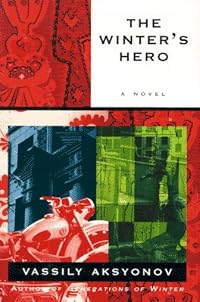
In this epic novel of the U.S.S.R. in the 1950s, a new generation of Gradovs--whom readers first met in Generations of Winter--takes center stage. Boris has turned to womanizing to forget the devastation of his mother's defection. Yolka catches the eye of the secret police chief and is thrown into a nightmare. Even aging patriarch Boris III is not safe in a world drowning in corruption.Tags
Recommendations




















Member Reviews
This is a sequel to Aksyonov's Generations of Winter, a book that I thoroughly enjoyed when I read it a few years ago; it traced the history of the Gradov family from the time of the death of Lenin and the power struggle that saw Stalin emerge, through the collectivization and Great Purges of the 30s, into the war, and ended with the victory over Germany; or one could say that it encapsulated a history of the Soviet Union in that period through the lives of the Gradov family. A friend who read Generations on my advice said that she found the family too unbelieveable in that its members captured the full spectrum: the old Russain patriarch (Boris Gradov, eminent physician who even treats Stalin at one point), then through the children show more and their lovers/partners one had the fervent Marxist, the counterrevolutionary, those purged in the 30s and sent off to Siberia to be rehabilitated when they talents were needed by the military during the war, the orphan adopted out of the horrors of the collectivization of agriculture and the great famine and suffering that followed it, and the ethereal types who lived for literature or music and tried to pretend that the nightmare around them did not exist. A valid point, but I thought that Aksyonov brought it off well in Generations, and I don't doubt that there were extended families that lived through those sorts of experiences; they were times that forced some people to make choices, even if the choice was to try to opt out.
This book is more compressed in time scale: from the end of the war to the death of Stalin in 1953. It follows the lives of a number of people whom we met in Generations, in particular Boris IV, grandson of the doctor and son of the famous Marshal Gradov killed at the end of the war, who focuses first on becoming a national sportsman through motorcylce racing, but then enters medical school; Nina, the daughter of Boris the doctor, unrepentent Trotskyite and her new husband a Georgain painter, Sandro Pevzner, both of whom run afoul of the authorities; Kirill, son of Boris converted Christian who decides to continue to live in Siberia even after his release from the camps and who is joined by his wife, Cecilia, the continuing true believer so steeped in Marxist dogma that she cannot see the reality about her; plus cameo appearances by Stalin and more often by Beria who hunts pretty young women on Moscow streets and has them taken to his house for dinner and rape.
Winter's Hero does not work as well as a novel. With authorial asides, surrealistic touches involving a cat, a toad, and an elephant, and the general feel of the book, it is more of a vehicle for the author to explain and castigate the Soviet system with its fear and oppression, the machinery of the "organs", the paranoia, the unbridled use of power and hence total lack of moral authority or moral constraints. This, I think, is well done, and I found it interesting, but I wonder if others would without some understanding or knowledge of that time and the Soviet system. Aksyonov shows well how the "Doctors' Plot" was leading to the a wide-scale pogram with the forced re-settlement of millions of Jews in the Soviet Union, and which was effectively stopped only with the death of Stalin. It is that same death that saves Doctor Gradov who has been arrested and tortured for having had the courage to speak out in a public meeting against the arrest and slander of Jewish colleagues accused of all sorts of infamy. It is an action for which Boris realizes he will likely pay with his life, but it is a moral victory that goes some way to compensating for a weakness in his younger days when the "organs" forced him to certify as natural the death of a rising political leader that he knew to be deliberate. show less
This book is more compressed in time scale: from the end of the war to the death of Stalin in 1953. It follows the lives of a number of people whom we met in Generations, in particular Boris IV, grandson of the doctor and son of the famous Marshal Gradov killed at the end of the war, who focuses first on becoming a national sportsman through motorcylce racing, but then enters medical school; Nina, the daughter of Boris the doctor, unrepentent Trotskyite and her new husband a Georgain painter, Sandro Pevzner, both of whom run afoul of the authorities; Kirill, son of Boris converted Christian who decides to continue to live in Siberia even after his release from the camps and who is joined by his wife, Cecilia, the continuing true believer so steeped in Marxist dogma that she cannot see the reality about her; plus cameo appearances by Stalin and more often by Beria who hunts pretty young women on Moscow streets and has them taken to his house for dinner and rape.
Winter's Hero does not work as well as a novel. With authorial asides, surrealistic touches involving a cat, a toad, and an elephant, and the general feel of the book, it is more of a vehicle for the author to explain and castigate the Soviet system with its fear and oppression, the machinery of the "organs", the paranoia, the unbridled use of power and hence total lack of moral authority or moral constraints. This, I think, is well done, and I found it interesting, but I wonder if others would without some understanding or knowledge of that time and the Soviet system. Aksyonov shows well how the "Doctors' Plot" was leading to the a wide-scale pogram with the forced re-settlement of millions of Jews in the Soviet Union, and which was effectively stopped only with the death of Stalin. It is that same death that saves Doctor Gradov who has been arrested and tortured for having had the courage to speak out in a public meeting against the arrest and slander of Jewish colleagues accused of all sorts of infamy. It is an action for which Boris realizes he will likely pay with his life, but it is a moral victory that goes some way to compensating for a weakness in his younger days when the "organs" forced him to certify as natural the death of a rising political leader that he knew to be deliberate. show less
1925-1953, la famille Gradov sous trois générations pendant l’ère stalinienne. Dans la capitale, sur les champs de bataille ou au goulag, ils sont médecins, poète, peintre ou général, ils adhèrent au régime en place, l’utilisent ou le subissent. Un roman fleuve (plus de 1600 pages) historique et romanesque, non exempt de longueurs ou de passages difficiles pour qui n’est pas bien au courant des pensées et faits historiques, mais qui emporte le lecteur tel un ”Guerre et Paix” du 20e siècle.
Jan 7, 2021French
Ratings
Members
- Recently Added By
Author Information

68+ Works 1,232 Members
Vassily Aksyonov was born in Kazan, Russia on August 20, 1932. His parents were victims of the Stalin-era repressions. He was raised in an orphanage. He graduated from the Leningrad (now St. Petersburg) Medical Institute in 1956 and worked as a doctor for the next three years. His first stories were published in 1958 in the popular journal Yunost show more (Youth). His first novel, Colleagues, was published in 1961. In the 1970s, his work was kept from publication by Soviet censors. In 1979, he along with several others published the journal Metropol, which featured works that did not receive official permission to appear. He lived in the United States from 1980 to 2004 and taught Russian literature at several American universities including George Mason University and Goucher College. His works include A Ticket to the Stars, The Burn, Oranges from Morocco, The Island of Crimea, In Search of Melancholy Baby and Generations of Winter. He won the Russian Booker Prize in 2004 for his novel Voltairiens and Voltairiennes. He died on July 6, 2009 at the age of 76. (Bowker Author Biography) show less
Some Editions
Awards and Honors
Distinctions
Series

Common Knowledge
- Original title
- Тюрьма и мир
- Disambiguation notice
- This is Part 3 of the Moscow Saga (original title "Jail and Peace"). Please do not combine with "Moscow Saga" or "Generations of Winter".
Classifications
- Genres
- Fiction and Literature, General Fiction
- DDC/MDS
- 891.73 — Literature & rhetoric Asian Literature East Indo-European and Celtic literatures Russian and East Slavic languages Russian fiction
- LCC
- PG3478 .K7 .T5813 — Language and Literature Slavic languages and literatures. Baltic languages. Albanian language Slavic. Baltic. Albanian Russian literature Individual authors and works 1961-2000
- BISAC
Statistics
- Members
- 79
- Popularity
- 395,661
- Reviews
- 2
- Rating
- (3.96)
- Languages
- English, French
- Media
- Paper
- ISBNs
- 3