On This Page
Description
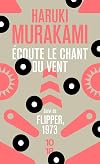
Hear the Wind Sing follows the fortuens of the narrator and his friend, known only by his nickname, the Rat. The narrator is home from college on his summer break. He spends his time drinking beer and somoking in J's Bar with the Rat, listening to the radio, thinking about writing and the women he has slept with and pursuing a relationship with a girl with nine fingers.Tags
Recommendations




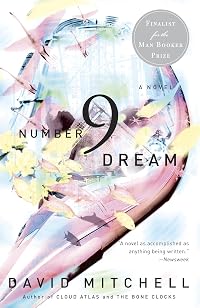
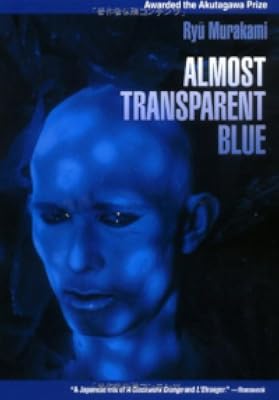
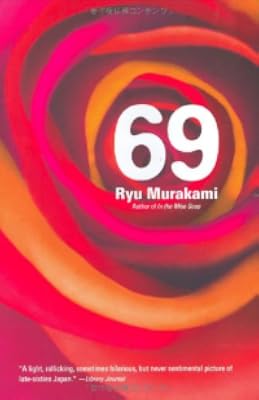
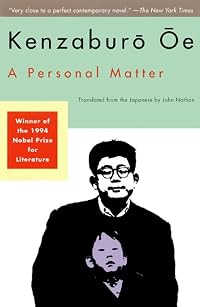
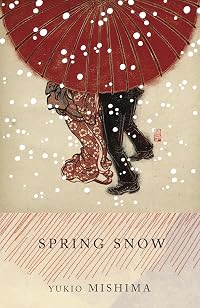
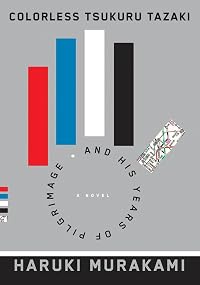
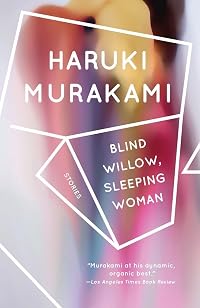
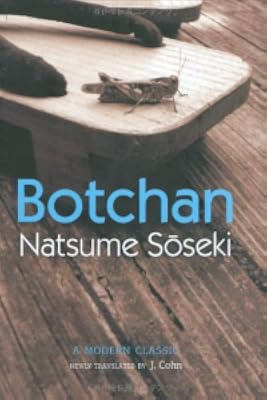
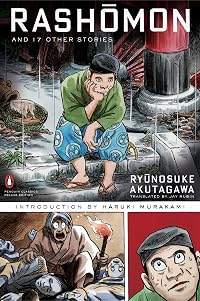
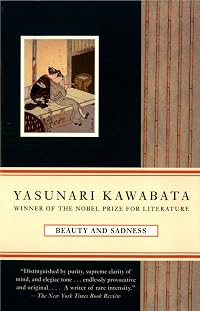
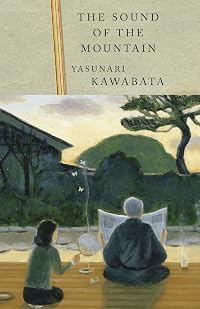
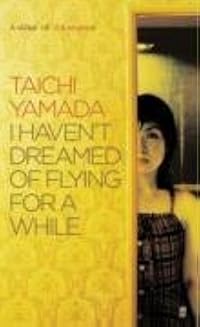
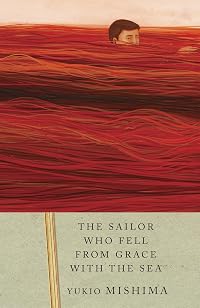
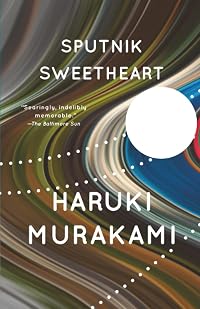
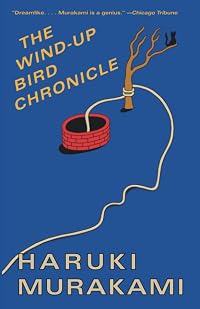
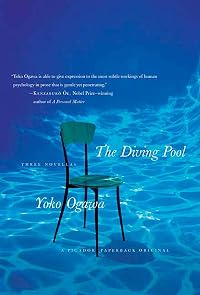
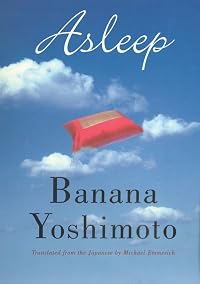
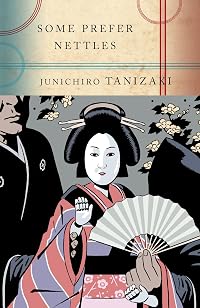
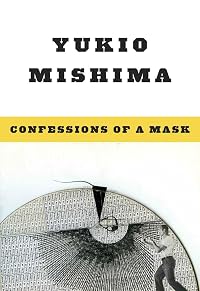
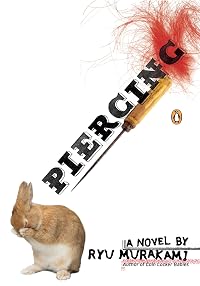
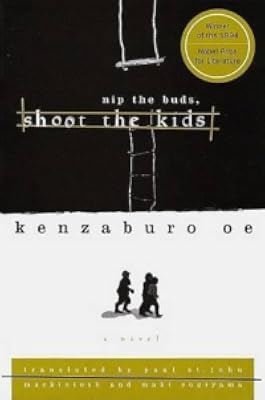
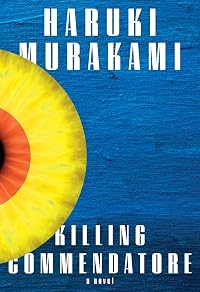
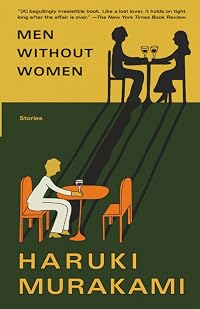
Member Recommendations
Member Reviews
Late last year, after finishing Haruki Murakami's Blind Willow, Sleeping Woman, I went on a quest to complete my Haruki Murakami collection. I felt like I simply had to have every one of his books published in English to truly get into this author. I was lucky that Borders was having their 3 for 2 promotion for all the British covers of Murakami, so I managed to get them all, except for his two first novels: Hear the Wind Sing and Pinball, 1973. Though these novels have had their English translations published in Japan, Murakami doesn't want the English-speaking world reading them, because he thinks they're terrible.
Thanks to eBay, and an enterprising fellow in Japan who's stocked up on English copies of Hear the Wind Sing, I managed to show more get my hands on a copy. And at 6" x 4", such a cute copy it is! At that minuscule size, it's the perfect book to read on the LRT. That's of course, if you don't doze off first. As is usually the case, the problem with first novels is that the writer hasn't found his voice yet, and this is especially true with Hear the Wind Sing.
The novel takes place within 18 days in the summer of 1970, and follows the aimless wanderings and ramblings of the nameless protagonist that Murakami is infamous for and also that of his friend, Rat. Murakami's signature icons and animals already start to appear in this book. Elephants, cats, wells, weirdo girls. They're there, but perhaps a little less underused than they will be in his later novels and short stories. Then there's his penchant for invoking Western culture. References abound from Gatsby to Dostoyevsky, Marvin Gaye to The Beach Boys.
Though this initial novel proves Murakami was already a writer with great ideas and adept in creating interesting dialogue, it also betrays a lack of skill in plotting. Did he pick that up later on? There is no discernible plot whatsoever in this book, just a college student aimlessly going through his life while waiting for his summer vacation to end.
I thought Hear the Wind Sing plodded along at an unbearably slow speed. Nothing that helps the story move along ever happens, and when a mystery crops up, they go unsolved, and the characters remain unbothered and indifferent. The dialogue continues throughout to hint at something more substantial waiting to be revealed, but that never seems to happen. Talk about pretentious! If this was submitted to Western publisher by an unknown writer, it'd be left rotting in the slush pile. show less
Thanks to eBay, and an enterprising fellow in Japan who's stocked up on English copies of Hear the Wind Sing, I managed to show more get my hands on a copy. And at 6" x 4", such a cute copy it is! At that minuscule size, it's the perfect book to read on the LRT. That's of course, if you don't doze off first. As is usually the case, the problem with first novels is that the writer hasn't found his voice yet, and this is especially true with Hear the Wind Sing.
The novel takes place within 18 days in the summer of 1970, and follows the aimless wanderings and ramblings of the nameless protagonist that Murakami is infamous for and also that of his friend, Rat. Murakami's signature icons and animals already start to appear in this book. Elephants, cats, wells, weirdo girls. They're there, but perhaps a little less underused than they will be in his later novels and short stories. Then there's his penchant for invoking Western culture. References abound from Gatsby to Dostoyevsky, Marvin Gaye to The Beach Boys.
Though this initial novel proves Murakami was already a writer with great ideas and adept in creating interesting dialogue, it also betrays a lack of skill in plotting. Did he pick that up later on? There is no discernible plot whatsoever in this book, just a college student aimlessly going through his life while waiting for his summer vacation to end.
I thought Hear the Wind Sing plodded along at an unbearably slow speed. Nothing that helps the story move along ever happens, and when a mystery crops up, they go unsolved, and the characters remain unbothered and indifferent. The dialogue continues throughout to hint at something more substantial waiting to be revealed, but that never seems to happen. Talk about pretentious! If this was submitted to Western publisher by an unknown writer, it'd be left rotting in the slush pile. show less
Murakami's First
Review of the Kodansha English Library edition (198?) translation of the Japanese language original 風の歌を聴け (Listen to the Song of the Wind) (1979)
Sometime in the throes of my Murakami discovery enthusiasm (probably around the time of the Jay Rubin translation of Norwegian Wood (2000)) I actually chased down the initial English language translations of his first books, this present one and Pinball, 1973 (1980) but after reading only a few pages of each, I found them rather uninteresting and put them aside.
After reading my GR friend JimZ's review of the new translations in Wind/Pinball: Two Novels (2015) I decided to give them another shot, not expecting to necessarily enjoy them but to at least investigate show more them further. Also, in the current world situation, it is a good time to catch up on the unread books in your home library.
So, it was about the same this go-around. Hear the Wind Sing is patchy, which is something that you might expect in a book that was written in fits and starts while the author was running a jazz club and writing in his spare time. It is more or less a series of 40 interconnected stories with the main threads being the protagonist meeting his friend nicknamed "The Rat" at J's Bar for drinks and excursions or the protagonist developing a relationship with a girl that he first rescues when she is passed out in a washroom. There is something of the surreal aura of Murakami's later books in that it doesn't seem realistic that so many absurd situations would happen to anyone in real life. In the end it all ends with summer ending and that is it. There is no apparent connection to the title which may just have been an idea to give it a romantic and mysterious tinge.
So, it was just ok, or a 2 as the rating system goes. The well-known story that Murakami realized he could become a writer while watching a baseball game and having never written previously in his life is much more dramatic and inspiring than this first published effort. But everyone has to start somewhere right?
Trivia and Link
Goodreads rather mysteriously provides a downloadable eBook copy of Hear the Wind Sing at https://www.goodreads.com/ebooks/download/226973.Hear_the_Wind_Sing. The odd thing about the download eBook is that it seems like a bootleg or bowdlerized edition as it has slightly different words than my paperback e.g. right at the beginning at the 3rd sentence the paperback has "university" and the ebook has "college." The eBook scrunches everything into one paragraph format in 34 chapters in 103 pages, the paperback has regular paragraph separation in 40 chapters w/ Postscript in 130 pages + 35 pages of translation notes etc. show less
Review of the Kodansha English Library edition (198?) translation of the Japanese language original 風の歌を聴け (Listen to the Song of the Wind) (1979)
Sometime in the throes of my Murakami discovery enthusiasm (probably around the time of the Jay Rubin translation of Norwegian Wood (2000)) I actually chased down the initial English language translations of his first books, this present one and Pinball, 1973 (1980) but after reading only a few pages of each, I found them rather uninteresting and put them aside.
After reading my GR friend JimZ's review of the new translations in Wind/Pinball: Two Novels (2015) I decided to give them another shot, not expecting to necessarily enjoy them but to at least investigate show more them further. Also, in the current world situation, it is a good time to catch up on the unread books in your home library.
So, it was about the same this go-around. Hear the Wind Sing is patchy, which is something that you might expect in a book that was written in fits and starts while the author was running a jazz club and writing in his spare time. It is more or less a series of 40 interconnected stories with the main threads being the protagonist meeting his friend nicknamed "The Rat" at J's Bar for drinks and excursions or the protagonist developing a relationship with a girl that he first rescues when she is passed out in a washroom. There is something of the surreal aura of Murakami's later books in that it doesn't seem realistic that so many absurd situations would happen to anyone in real life. In the end it all ends with summer ending and that is it. There is no apparent connection to the title which may just have been an idea to give it a romantic and mysterious tinge.
So, it was just ok, or a 2 as the rating system goes. The well-known story that Murakami realized he could become a writer while watching a baseball game and having never written previously in his life is much more dramatic and inspiring than this first published effort. But everyone has to start somewhere right?
Trivia and Link
Goodreads rather mysteriously provides a downloadable eBook copy of Hear the Wind Sing at https://www.goodreads.com/ebooks/download/226973.Hear_the_Wind_Sing. The odd thing about the download eBook is that it seems like a bootleg or bowdlerized edition as it has slightly different words than my paperback e.g. right at the beginning at the 3rd sentence the paperback has "university" and the ebook has "college." The eBook scrunches everything into one paragraph format in 34 chapters in 103 pages, the paperback has regular paragraph separation in 40 chapters w/ Postscript in 130 pages + 35 pages of translation notes etc. show less
The first book I ever read by Murakami was Norwegian Wood back in 2012. It remains one of my favourite books and came at a time in my life when a lot was changing for me so I will always have an emotional bond with it. There is something about Murakami's writing which always envokes a kind of melancholia in me. For some people this would be disconcerting but I find it comforting in a wierd kind of way. I guess it helps to remind me that I'm not the only one who doesn't feel like they have life sorted out. I have read most of Murakami's shorter books and liked all of them but I hadn't read his earliest books so I felt like it was time to revisit his writing.
Our narrator tells us the story of his life during the summer of 1970. He is a show more university student who is home for the summer and spends his time hanging out at J's bar with a friend known only as Rat. Along with way we learn about the troubles the narrator has with writing, his ex girlfriends - one of who commited suicide, and a new girl he meets. In common with Murakami's other shorter books, not a huge amount happens but the way he observes life really vibes with me. I could tell this was one of this very early stories because while there are hints of his style they aren't full there yet. show less
Our narrator tells us the story of his life during the summer of 1970. He is a show more university student who is home for the summer and spends his time hanging out at J's bar with a friend known only as Rat. Along with way we learn about the troubles the narrator has with writing, his ex girlfriends - one of who commited suicide, and a new girl he meets. In common with Murakami's other shorter books, not a huge amount happens but the way he observes life really vibes with me. I could tell this was one of this very early stories because while there are hints of his style they aren't full there yet. show less
3.5 / 5
I'd say this falls into the category of books to be read if you're a big Haruki Murakami fan. One can definitely see the roots of his style, and so the evolution of his work. Not a bad read, but sadly lacking the magical, philosophical bent that makes his later work so engaging and mind bending and awesome.
I'd say this falls into the category of books to be read if you're a big Haruki Murakami fan. One can definitely see the roots of his style, and so the evolution of his work. Not a bad read, but sadly lacking the magical, philosophical bent that makes his later work so engaging and mind bending and awesome.
Perfect example of beauty in simplicity!
Even after having read a bunch of novels by Murakami, I always find a new flavor in each of them. Sure they have some similar characters and recurring themes, but each of his novels does have a different note in its voice and a different mood.
Hear the Wind Sing again has a nameless narrator, quirky characters, off-the-wall dialogue, lots of beer, some music and some literature. His characters are the last people one would expect to break into an emotional monologue. And yet Murakami brings out the sense of sadness and loneliness that lurks beneath the nonchalant exterior very well. Where this sadness emanates from, they know not. And their stories have often to do with finding themselves.
Not show more surprisingly, there is no single straight-forward storyline. What we see are little anecdotes describing various images swimming in the narrator's head, his experiences over a summer and some of his past memories. However, the narrator doesn't yet take a flight to the world beyond. That will have to wait till later books.
Both this and [b:Pinball, 1973|591978|Pinball, 1973|Haruki Murakami|http://photo.goodreads.com/books/1279373805s/591978.jpg|290859] do feel somewhat incomplete and aimless. But they give a clear picture of the humble beginnings, which with later novels matured into stronger works. Pinball, 1973 is more of a prelude to what came later on. It carries a glimpse of almost all of the familiar Murakami elements. Hear the Wind Sing is relatively simpler. This simplicity really works for it and makes it an even more pleasurable read than Pinball, 1973.
I wish there were a way for me to see how his mind works. Well, however it works, what comes out of it is wonderful.
_______________________
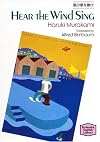
I can't believe how super-tiny this book is. Lighter, smaller, thinner and cuter than kindle/nook/kobo or what have you.
My copy arrived in the mail today. The seller had even gift-wrapped it in a beautiful paper! show less
Hear the Wind Sing is the first novel by Murakami, which was published in 1979 but never released in the US (I bought my copy from a Japanese bookseller on eBay). This book and the subsequent one, Pinball, 1973, which I'll read next, serve as preludes to his third novel, A Wild Sheep Chase, which is available outside of Japan.
The narrator is a 29 year old man, but the story takes place several years before, when he is a college student on his summer break. The action centers around him and his friend The Rat, who both appear in A Wild Sheep Chase, who spend an inordinate amount of time in J's Bar. He also has a quirky and short relationship with a young woman who works in a record shop, who he finds passed out on the floor of the show more bathroom in the bar.
As compared to his later writing, the characters are sketchily portrayed, and the story seems to jump around in short, aimless fragments. It wasn't a bad read, but I'm certainly glad that this wasn't the first book by Murakami I picked up. show less
The narrator is a 29 year old man, but the story takes place several years before, when he is a college student on his summer break. The action centers around him and his friend The Rat, who both appear in A Wild Sheep Chase, who spend an inordinate amount of time in J's Bar. He also has a quirky and short relationship with a young woman who works in a record shop, who he finds passed out on the floor of the show more bathroom in the bar.
As compared to his later writing, the characters are sketchily portrayed, and the story seems to jump around in short, aimless fragments. It wasn't a bad read, but I'm certainly glad that this wasn't the first book by Murakami I picked up. show less
Within the first few pages you see his talent for skipping from one thought to the next without it feeling discursive. He already has the confidence to let go of superficial logical connections and trust the reader to follow him.
Members
- Recently Added By
Author Information

292+ Works 174,727 Members
Haruki Murakami was born on January 12, 1949 in Kyoto, Japan and studied at Tokyo's Waseda University. He opened a coffeehouse/jazz bar in the capital called Peter Cat with his wife. He became a full-time author following the publication of his first novel, Hear the Wind Sing, in 1979. He writes both fiction and non-fiction works. His fiction show more works include Norwegian Wood, Colorless Tsukuru Tazaki and His Years of Pilgrimage, The Strange Library, and Men Without Women. Several of his stories have been adapted for the stage and as films. His nonfiction works include What I Talk About When I Talk About Running. He has received numerous literary awards including the Franz Kafka Prize for Kafka on the Shore, the Yomiuri Prize for The Wind-Up Bird Chronicle, and the Jerusalem Prize. He has translated into Japanese literature written by F. Scott Fitzgerald, Raymond Carver, Truman Capote, John Irving, and Paul Theroux. (Bowker Author Biography) show less
Awards and Honors
Awards
Series

Belongs to Publisher Series
Work Relationships
Is contained in
Common Knowledge
- Canonical title
- Hear the Wind Sing
- Original title
- 風の歌を聴け
- Original publication date
- 1979-07
- People/Characters
- The Rat
- Related movies
- Kaze no uta o kike (1980 | IMDb)
- First words
- "There's no such thing as perfect writing. Just like there's no such thing as perfect despair."
- Original language*
- Japanese
*Some information comes from Common Knowledge in other languages. Click "Edit" for more information.
Classifications
- Genres
- General Fiction, Fiction and Literature
- DDC/MDS
- 895.635 — Literature & rhetoric Literatures of other languages Literatures of East and Southeast Asia Japanese Japanese fiction 1945–2000
- LCC
- PL856 .U673 — Language and Literature Languages and literatures of Eastern Asia, Africa, Oceania Languages of Eastern Asia, Africa, Oceania Japanese language and literature Japanese literature Individual authors and works
Statistics
- Members
- 776
- Popularity
- 36,040
- Reviews
- 29
- Rating
- (3.40)
- Languages
- 10 — Chinese, English, French, German, Hungarian, Japanese, Lithuanian, Russian, Thai, Turkish
- Media
- Paper, Audiobook, Ebook
- ISBNs
- 26
- ASINs
- 11