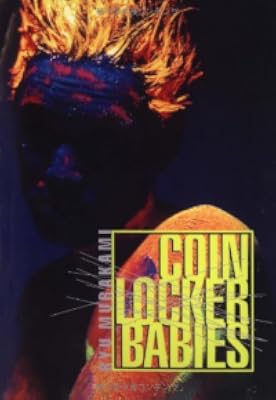
Coin Locker Babies
by Ryû Murakami
On This Page
Description
Two babies are left in a Tokyo station coin locker and survive against the odds, but their lives are forever tainted by this inauspicious start. As they grow up, they join the ranks of Toxitown: a district of addicts, freaks and prostitutes. One becomes a bisexual rock star and looks for his mother, while the other one, an athlete, seeks revenge. This savage story unfolds in a surrealistic whirl of violence.Tags
Recommendations


Member Recommendations

Member Reviews
Right from the first paragraph, you know that you are in for a dark and dreary ride. A few pages in, you'll wonder why you're reading this. But a few chapters in, you'll marvel in sheer awe at Ryu Murakami's morbid writing style and plot devices - and how radically different they are, as compared to another Murakami you might know.
This rollercoaster ride follows the tale of two foster brothers, Kiku and Hashi - both abandoned at birth, and growing up warped as a result. Both find their lives extremely wanting, and as a result, find different ways to cope with the emotional baggage they lug around - one finds solace in singing, and one in DATURA - a mind-bending plot device that you have to read to believe.
This is the polarizing kind of show more masterpiece that you'll forever be in two minds of - in happiness that it exists, as a fine example of human creativity, and despair that a human mind managed to think up of the plot, the scenery and the characters. If alcohol were a book - this would be it. Always enjoyed in small doses, and difficult to return to once finished - because you don't want the hangover again. show less
This rollercoaster ride follows the tale of two foster brothers, Kiku and Hashi - both abandoned at birth, and growing up warped as a result. Both find their lives extremely wanting, and as a result, find different ways to cope with the emotional baggage they lug around - one finds solace in singing, and one in DATURA - a mind-bending plot device that you have to read to believe.
This is the polarizing kind of show more masterpiece that you'll forever be in two minds of - in happiness that it exists, as a fine example of human creativity, and despair that a human mind managed to think up of the plot, the scenery and the characters. If alcohol were a book - this would be it. Always enjoyed in small doses, and difficult to return to once finished - because you don't want the hangover again. show less
Two boys, Hashi and Kiku, separately abandoned in coin lockers as newborns, somewhat miraculously survive their poor start in life only to discover that what follows makes their beginnings seem positively mundane. The boys are adopted together and their lives are forever linked. Kiku grows strong and athletic, a pole-vaulter with blinding speed. Hashi discovers that he has a talent for song, or perhaps more accurately sound, which he uses to envelop and overwhelm his audiences. But they’ve both got a lot of anger management issues and a compulsive desire for, first, matricide (if only they could find their missing biological mothers) and beyond that the destruction of everything and everyone else. Moving from one extreme, even show more surreal, situation to the next the boys eventually find their way to Tokyo and, in different ways, realize their dreams, or nightmares.
Nothing will really prepare you for the aggressive violence of this novel, unless you’ve been saturated by the endless violent imagery of much anime and Japanese cinema. Whether that itself is a result of the influence of Murakami’s writing or was the nascent spur to it, I do not know. The effect, however, on current readers is probably less visceral than it may have been in the 1980s when this book first burst upon the scene in Japan. Indeed I found the heightened teen angst and anger tiresome and much of the violence to be risible, even though I could acknowledge how groundbreaking this might have appeared at the time. In the end it just couldn’t hold my interest. Not recommended, even if your favourite niece doing a degree in Japanese Studies tells you you’ve just got to read it. show less
Nothing will really prepare you for the aggressive violence of this novel, unless you’ve been saturated by the endless violent imagery of much anime and Japanese cinema. Whether that itself is a result of the influence of Murakami’s writing or was the nascent spur to it, I do not know. The effect, however, on current readers is probably less visceral than it may have been in the 1980s when this book first burst upon the scene in Japan. Indeed I found the heightened teen angst and anger tiresome and much of the violence to be risible, even though I could acknowledge how groundbreaking this might have appeared at the time. In the end it just couldn’t hold my interest. Not recommended, even if your favourite niece doing a degree in Japanese Studies tells you you’ve just got to read it. show less
It's so easy to assume that Murakami is just going for shock value, that he's just trying to squick the reader, and the first sentence definitely supports that. But I really don't think he is. He makes the reader nauseated in order that they may purge the nasty things within themselves.And this book described That Moment so well that it was worth the purging. It made me remember and it made me think and more importantly, it made me want to live, to really fucking live, even as it was destroying everything.Few books can do that.
I was rummaging around the spare classroom at my school in Japan one day when I found this modern classic of freak-o Japanese fiction. It's one of the strangest, most scintillating books I've ever read, and is very, very difficult to summarise.
In short, "Coin Locker Babies" are babies abandoned by their mother in subway or train station left-luggage lockers. If they cry loud enough and soon enough, chances are they'll be found and taken to the orphanage for care. The book follows two such babies, but there's much much more that goes on than what you'd think. This is like Dickens and Kafka with a smattering of William S. Burroughs or Philip K. Dick mixed in for good measure. Terrific; terrifying.
In short, "Coin Locker Babies" are babies abandoned by their mother in subway or train station left-luggage lockers. If they cry loud enough and soon enough, chances are they'll be found and taken to the orphanage for care. The book follows two such babies, but there's much much more that goes on than what you'd think. This is like Dickens and Kafka with a smattering of William S. Burroughs or Philip K. Dick mixed in for good measure. Terrific; terrifying.
This book made my poisonous plant loving heart sing.
Kalynn writes strong characters, from the side to the main, everyone is well developed and has all the good and bad you'd find in your own life. So much emotion from each person is packed into this book, so I am warning you now to grab a tissue.
When we meet Briseis, she is cautious, reserved and always tense from holding back her powers. But when we leave her, she has come to life. Bold, daring and confident, her growth in this story is one of my favorite parts. She makes mistakes, miss judges, and fumbles but she keeps pushing forward to discover the secrets of her family lineage. The author captures her age so perfectly, none of the weird whiny YA trope junk. Just a girl trying to show more find her way as a young adult, in a world that won't understand her powers.
I loved her family, her parents are so nurturing, and warm with the right amount of stern / spice.
It was impossible to put this book down to life, the story moves forward in a way that keeps you engaged with the action, while building up lore. The tie ins for Greek mythology is fantastic. There aren't enough stories about hecate, and I adored Kalynn's take on history. All of the magical / witch type elements are mysterious, yet believable. I hope we get more in depth history of some of the town folk as the series progresses.
I can't wait for the next book in this series, the ending is such a huge cliffhanger, yet completely wraps up the plot for this book, which is insane.
You'll love this book if you love magic in plain sight, family history, and modern day quests. show less
Kalynn writes strong characters, from the side to the main, everyone is well developed and has all the good and bad you'd find in your own life. So much emotion from each person is packed into this book, so I am warning you now to grab a tissue.
When we meet Briseis, she is cautious, reserved and always tense from holding back her powers. But when we leave her, she has come to life. Bold, daring and confident, her growth in this story is one of my favorite parts. She makes mistakes, miss judges, and fumbles but she keeps pushing forward to discover the secrets of her family lineage. The author captures her age so perfectly, none of the weird whiny YA trope junk. Just a girl trying to show more find her way as a young adult, in a world that won't understand her powers.
I loved her family, her parents are so nurturing, and warm with the right amount of stern / spice.
It was impossible to put this book down to life, the story moves forward in a way that keeps you engaged with the action, while building up lore. The tie ins for Greek mythology is fantastic. There aren't enough stories about hecate, and I adored Kalynn's take on history. All of the magical / witch type elements are mysterious, yet believable. I hope we get more in depth history of some of the town folk as the series progresses.
I can't wait for the next book in this series, the ending is such a huge cliffhanger, yet completely wraps up the plot for this book, which is insane.
You'll love this book if you love magic in plain sight, family history, and modern day quests. show less
This book is full of ‘what the…?’ moments that catch you totally off guard. But these moments do not come across as gimmicky. Murakami, the Ryu one, not the Haruki one, weaves a pretty dark, yet humorous Japanese landscape. Two babies are found locked in station coin lockers and grow up together; first in an orphanage, then on an island, then splitting ways, both terribly messed up.
The opening line was the most disturbing I’ve ever read in a book and the story took off full of gristle and bone. Unfortunately, Ryu lost focus around the middle of the book. His pace fell off, the texture turned from gritty and gristly to a bland, tasteless pudding. He did regain a little form in the end but by then it was too late.
Still an show more enjoyable read. Here's a passage before the book turned to pudding:
They went back to the hotel exhausted. In the elevator, the cleaning woman was wiping down the walls. Though quite elderly, her hair was dyed, and she wore dark eyeliner and bright red lipstick that filled the deep wrinkles around her mouth.
"Hot, isn’t it?" she said to Kazuyo.
"And terribly sticky, " answered Kazuyo pleasantly as the old woman spat in her mop bucket.
"Hey, by the way, you two find anything weird in you toilet?" she asked suddenly. "Those Filipino whores been throwing some pretty strange stuff down the johns. It’s a bitch having to clean them out. Rubbers you expect, but this is getting ridiculous."
The elevator had reached the fifth floor, but when Kazuyo and Kiku got off, the woman left her bucket and mop and followed them.
"Good night, then - we’re pretty tired, " said Kazuyo, trying to slip into the room, but she grabbed her arm.
"I’m finding these big wads of pubic hair - must be shaving down there. Clogs up the pipes and I have to clean it out by hand. But that’s not the worst of it. A while back I found eggs stopping up one toilet, and I don’t mean chicken eggs. It was frog eggs - these huge frog eggs. Well, I thought that was a bit peculiar, so I did some asking around and found out those Filipino girls keeps the frogs as sort of special pets, real special. Seems they like to stick them up inside themselves... feels good and squishy. But somebody’s got to clean up after them, and what kind of job is that - pulling frog eggs out of a toilet?... Goddamn Filipino hookers and theri goddamn frogs... I ask you!" Bursting into tears, the maid held tight to Kazuyo’s arm. Her mascara began to run and black canals formed along her wrinkles. show less
The opening line was the most disturbing I’ve ever read in a book and the story took off full of gristle and bone. Unfortunately, Ryu lost focus around the middle of the book. His pace fell off, the texture turned from gritty and gristly to a bland, tasteless pudding. He did regain a little form in the end but by then it was too late.
Still an show more enjoyable read. Here's a passage before the book turned to pudding:
They went back to the hotel exhausted. In the elevator, the cleaning woman was wiping down the walls. Though quite elderly, her hair was dyed, and she wore dark eyeliner and bright red lipstick that filled the deep wrinkles around her mouth.
"Hot, isn’t it?" she said to Kazuyo.
"And terribly sticky, " answered Kazuyo pleasantly as the old woman spat in her mop bucket.
"Hey, by the way, you two find anything weird in you toilet?" she asked suddenly. "Those Filipino whores been throwing some pretty strange stuff down the johns. It’s a bitch having to clean them out. Rubbers you expect, but this is getting ridiculous."
The elevator had reached the fifth floor, but when Kazuyo and Kiku got off, the woman left her bucket and mop and followed them.
"Good night, then - we’re pretty tired, " said Kazuyo, trying to slip into the room, but she grabbed her arm.
"I’m finding these big wads of pubic hair - must be shaving down there. Clogs up the pipes and I have to clean it out by hand. But that’s not the worst of it. A while back I found eggs stopping up one toilet, and I don’t mean chicken eggs. It was frog eggs - these huge frog eggs. Well, I thought that was a bit peculiar, so I did some asking around and found out those Filipino girls keeps the frogs as sort of special pets, real special. Seems they like to stick them up inside themselves... feels good and squishy. But somebody’s got to clean up after them, and what kind of job is that - pulling frog eggs out of a toilet?... Goddamn Filipino hookers and theri goddamn frogs... I ask you!" Bursting into tears, the maid held tight to Kazuyo’s arm. Her mascara began to run and black canals formed along her wrinkles. show less
This was an accidental purchase, made hastily in a used bookstore because the price seemed right and because the spine only said "Murakami." After about two paragraphs, it began to seem very unlikely that Harukai Murakami was responsible for the flavorless, graceless and awkward prose. I checked the publishing date and thought, well, okay, it was an early effort . . . I'll give it a chance. After ten pages or so, I gave the book the sort of thorough exploration that would have prevented me from buying it and discovered that I wasn't reading something by an author who I respect and enjoy. But that's not Ryu's fault, so I read another 60 pages and I want my time back.
His characters are flat and predictable. He lacks the confidence to let show more his story-telling communicate subtleties and has a penchant for lame summary sentences that are designed to drive home his blatant and tedious moments of character definition. The dialogue is deplorable. I might have given the title characters some time; but as soon as the "Anemone" section started I began to consider not finishing this book. When the description of "Toxitown" was over, I was pretty sure I wouldn't make page 100 and when the murderous cab driver with his unrealistic monologue held forth, I put the book back into my bag and started reading something else that had seemed really slow to me before, which really triumphed in the contrast.
Avoid this unless you have never read experimental fiction before or unless you feel like "edginess" or shock value are acceptable substitutes for talent. show less
His characters are flat and predictable. He lacks the confidence to let show more his story-telling communicate subtleties and has a penchant for lame summary sentences that are designed to drive home his blatant and tedious moments of character definition. The dialogue is deplorable. I might have given the title characters some time; but as soon as the "Anemone" section started I began to consider not finishing this book. When the description of "Toxitown" was over, I was pretty sure I wouldn't make page 100 and when the murderous cab driver with his unrealistic monologue held forth, I put the book back into my bag and started reading something else that had seemed really slow to me before, which really triumphed in the contrast.
Avoid this unless you have never read experimental fiction before or unless you feel like "edginess" or shock value are acceptable substitutes for talent. show less
Members
- Recently Added By
Lists

Most Disturbing Books
124 works; 27 members

50 Tough Books for Extreme Readers
71 works; 40 members

1980 great books
63 works; 1 member

Books Read in 2002
197 works; 8 members
Author Information

Some Editions
Awards and Honors
Distinctions
Series
Belongs to Publisher Series
Common Knowledge
- Canonical title*
- Les Bébés de la consigne automatique
- Original title
- コインロッカー・ベイビーズ / Koinrokkā Beibīzu
- Original publication date
- 1980 (original Japanese) (original Japanese); 1995 (English: Snyder) (English: Snyder)
- Important places
- Japan; Tokyo, Japan
- First words
- The woman pushed on the baby's stomach and sucked its penis into her mouth; it was thinner than the American menthols she smoked and a bit slimy, like a raw fish.
- Quotations*
- Tu vois, à Disneyland, il y a quatre royaumes différents, et bien moi je crois qu'il y a trois royaumes dans le cerveau humain : le royaume du mouvement, le royaume du désir et le royaume de la pensée, et le roi du royaum... (show all)e du désir c'est le crocodile, celui du royaume du mouvement c'est une anguille, et celui du royaume de la pensée c'est un mort.
- Original language
- Japanese
*Some information comes from Common Knowledge in other languages. Click "Edit" for more information.
Classifications
- Genres
- Fiction and Literature, General Fiction, Horror
- DDC/MDS
- 813 — Literature & rhetoric American literature in English American fiction in English
- LCC
- PL856 .U696 .K613 — Language and Literature Languages and literatures of Eastern Asia, Africa, Oceania Languages of Eastern Asia, Africa, Oceania Japanese language and literature Japanese literature Individual authors and works
- BISAC
Statistics
- Members
- 1,083
- Popularity
- 23,605
- Reviews
- 15
- Rating
- (3.78)
- Languages
- 6 — English, French, German, Japanese, Russian, Spanish
- Media
- Paper, Ebook
- ISBNs
- 18
- ASINs
- 10