On This Page
Description
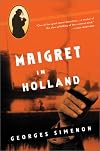
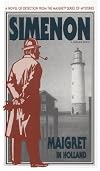
When a French professor visiting the quiet, Dutch coastal town of Delfzjil is accused of murder, Maigret is sent to investigate. The community seems happy to blame an unknown outsider, but there are people much closer to home who seem to know much more than they're letting on: Beetje, the dissatisfied daughter of a local farmer, Any van Elst, sister-in-law of the deceased, and a notorious local crook.Tags
Recommendations













































Member Recommendations

cf66 Simenon y Glauser tienen en común la atención por la psicología y el entorno cultural de los personajes.
Member Reviews
One thing I like about Maigret mysteries is the view they give into Western Europe a century ago, from interwar Parisian urbanites to the insular carriers plying the French canal system. In this eighth book, we follow the Detective Chief Inspector to an unlikely destination: the seafaring town of Delfzijl in the far north of Holland, where a visiting French professor of criminology is entangled in a homicide.
If our laconic hero is ever in danger of being a fish out of water, this is the time. He doesn’t speak Dutch. He has no authority as a representative for a French citizen under foreign suspicion. He’s never delivered a calf — but he’ll learn in the first few pages with Beetje, the farmer’s daughter whose high spirits and show more buxom beauty are destabilizing in this staid little harbor.
Of course, that feeling of displacement can’t last long as the detective’s methods transcend language, jurisdiction, and borders. Part of the fun of a Maigret book is the way supporting characters are unsettled by the brooding mountain in their midst which seems to think nothing but sees everything.
This quality is on amusing display here, whether Maigret is annoying the French professor by disinterest in his theories of the crime, unmanning the fragile cadet attending the naval college, or befuddling the local gendarmerie eager to demonstrate their worldliness to their big city visitor.
Indeed, this is the one mystery I’ve read so far in which Maigret finally rubs up against one character equally as imperturbable as himself: the self-contained sea captain Oosting who can’t speak French, but who may hold the key to the riddle. If Maigret is a French mountain, Oosting is a Dutch ocean, as deep as the detective is imposing. Their silent standoff across an impassable language barrier is oddly touching since, as usual, everyone else is more talkative than is wise when Maigret is on the case.
As someone with Dutch roots, I enjoyed the peek into a world of dikes and canals, soft stained-glass windows and neat picturebook homes. Naturally, nothing is as tidy as it seems. Powerful currents ever run beneath the most placid surface, and a pretty postcard can hide a lot of pain.
Still, Simenon keeps the melancholy to a minimum right up until the end, when Maigret brings his unique brand of order to a small town that’s more disorderly than it appears. No one, but especially not those who stake their identity on respectability, enjoys being forced to confront the truth: that the undertow of human nature always threatens to carry us further than we ever thought we’d go. show less
If our laconic hero is ever in danger of being a fish out of water, this is the time. He doesn’t speak Dutch. He has no authority as a representative for a French citizen under foreign suspicion. He’s never delivered a calf — but he’ll learn in the first few pages with Beetje, the farmer’s daughter whose high spirits and show more buxom beauty are destabilizing in this staid little harbor.
Of course, that feeling of displacement can’t last long as the detective’s methods transcend language, jurisdiction, and borders. Part of the fun of a Maigret book is the way supporting characters are unsettled by the brooding mountain in their midst which seems to think nothing but sees everything.
This quality is on amusing display here, whether Maigret is annoying the French professor by disinterest in his theories of the crime, unmanning the fragile cadet attending the naval college, or befuddling the local gendarmerie eager to demonstrate their worldliness to their big city visitor.
Indeed, this is the one mystery I’ve read so far in which Maigret finally rubs up against one character equally as imperturbable as himself: the self-contained sea captain Oosting who can’t speak French, but who may hold the key to the riddle. If Maigret is a French mountain, Oosting is a Dutch ocean, as deep as the detective is imposing. Their silent standoff across an impassable language barrier is oddly touching since, as usual, everyone else is more talkative than is wise when Maigret is on the case.
As someone with Dutch roots, I enjoyed the peek into a world of dikes and canals, soft stained-glass windows and neat picturebook homes. Naturally, nothing is as tidy as it seems. Powerful currents ever run beneath the most placid surface, and a pretty postcard can hide a lot of pain.
Still, Simenon keeps the melancholy to a minimum right up until the end, when Maigret brings his unique brand of order to a small town that’s more disorderly than it appears. No one, but especially not those who stake their identity on respectability, enjoys being forced to confront the truth: that the undertow of human nature always threatens to carry us further than we ever thought we’d go. show less
It was a gripping crime novel.
Maigret is called to Delfzijl, a Dutch port town to assist a French citizen entangled in a murder, his investigation hampered by his inability to speak Dutch, while only some of the suspects speak French.
The townsfolk are stuffily provincial and would rather the crime go unsolved than an embarrassing scandal be exposed, so Maigret's relentless prodding at the truth is most unwelcome.
Most of the characters are unsympathetic in a claustrophobic small-town way and, while she doesn't come off particularly well as a character portrait, 18 year-old Beetje's desire to leave at any cost seems understandable.
The real-life residents of 1930s Delfzijl were so offended by Simenon's portrayal of their community that show more they threatened to sue him, ironically confirming the accuracy of his impressions of the town, which he had stayed in a few years earlier. show less
Maigret is called to Delfzijl, a Dutch port town to assist a French citizen entangled in a murder, his investigation hampered by his inability to speak Dutch, while only some of the suspects speak French.
The townsfolk are stuffily provincial and would rather the crime go unsolved than an embarrassing scandal be exposed, so Maigret's relentless prodding at the truth is most unwelcome.
Most of the characters are unsympathetic in a claustrophobic small-town way and, while she doesn't come off particularly well as a character portrait, 18 year-old Beetje's desire to leave at any cost seems understandable.
The real-life residents of 1930s Delfzijl were so offended by Simenon's portrayal of their community that show more they threatened to sue him, ironically confirming the accuracy of his impressions of the town, which he had stayed in a few years earlier. show less
A tale that features the beam from a lighthouse, a young woman who eventually marries a lightbulb salesman and Jules Maigret, a police inspector who is expected to throw light on crimes, is -- paradoxically -- full of shadows and dark corners. Knowing a little about the Chief Inspector's reputation we can expect him to deliver the goods in his steady methodical way, but the investigation will be hampered, first by his not being able to speak Dutch, and secondly by a small cast of characters who as expected have their own secrets to hide from him and from the close community they all live in.
Maigret travels to the northern end of Holland to assist a French criminology lecturer, Professor Jean Duclos, who has been caught up with the show more murder of a teacher in the Dutch port of Delfzijl. Duclos was found in possession of the revolver that killed Conrad Popinga, but there soon emerges a houseful of suspects and bystanders who could have had a motive for murder. And one common denominator among these motives turns out to be unrequited love.
Thankfully the local police inspector, Pijpekamp, speaks French, as do a handful of others who are involved, and while his modus operandi -- slow, silent and never jumping to conclusions -- irritates some, Maigret goes about collecting his evidence systematically (almost like a French juge d'instruction or examing magistrate). Then, as if in a classic British cosy, he stages a reconstruction of the crime with participating witnesses, allowing him to reach his conclusions, before finally leaving the matter in the hands of the Dutch inspector.
Despite his cold, taciturn exterior Maigret is not merely forensic in his approach: he is interested in human psychology and, in particular, individual motivation. This, along with him being an outsider, enables him to see what others do not. Simenon is like a reporter standing behind the inspector, observing his actions and his decisions but not daring to interpret them until the case is resolved.
This is apparently a key novel in the Maigret canon. We're told that in the late 1920s Simenon began to travel by boat around the French canals, moving on to Belgium (he was born in the Belgian town of Liège) and the Netherlands. Supposedly it was in Delfzijl, in September 1929, that he came up with the character of Jules Maigret, this epiphany eventually resulting in the corpus of seventy-odd novels featuring the Chief Inspector. Un Crime en Hollande was in the first batch of Maigret titles published two years later, in 1931.
Delfzijl is now a major town with a population of around 25,000, but in this novel set around ninety years ago it comes across as a sleepy provincial enclave. Sparsely peopled in this novel, the very nondescript nature of the port allows Maigret the leisure to stroll around, witness goings-on, make enquiries and eventually solve the crime before returning to his Paris haunts. His observational powers of searchlight propensities make him realise early on that it is the travelling beam of the local vuurtoren or lighthouse that is key to alighting on the likely supect, but not in the most obvious of processes.
Short enough to be a novella, Maigret in Holland for us moderns exudes an old-fashioned charm as it depicts a world long gone, one in which the pace of life was much less hectic than now. It's also very easy to imagine Simenon himself, laid up in a coastal town while his boat is being overhauled, taking the opportunity to quietly and unostentatiously make mental notes on what he sees and hears, saving those memories for the policier that's gestating in his imagination.
https://wp.me/s2oNj1-delfzijl show less
Maigret travels to the northern end of Holland to assist a French criminology lecturer, Professor Jean Duclos, who has been caught up with the show more murder of a teacher in the Dutch port of Delfzijl. Duclos was found in possession of the revolver that killed Conrad Popinga, but there soon emerges a houseful of suspects and bystanders who could have had a motive for murder. And one common denominator among these motives turns out to be unrequited love.
Thankfully the local police inspector, Pijpekamp, speaks French, as do a handful of others who are involved, and while his modus operandi -- slow, silent and never jumping to conclusions -- irritates some, Maigret goes about collecting his evidence systematically (almost like a French juge d'instruction or examing magistrate). Then, as if in a classic British cosy, he stages a reconstruction of the crime with participating witnesses, allowing him to reach his conclusions, before finally leaving the matter in the hands of the Dutch inspector.
Despite his cold, taciturn exterior Maigret is not merely forensic in his approach: he is interested in human psychology and, in particular, individual motivation. This, along with him being an outsider, enables him to see what others do not. Simenon is like a reporter standing behind the inspector, observing his actions and his decisions but not daring to interpret them until the case is resolved.
This is apparently a key novel in the Maigret canon. We're told that in the late 1920s Simenon began to travel by boat around the French canals, moving on to Belgium (he was born in the Belgian town of Liège) and the Netherlands. Supposedly it was in Delfzijl, in September 1929, that he came up with the character of Jules Maigret, this epiphany eventually resulting in the corpus of seventy-odd novels featuring the Chief Inspector. Un Crime en Hollande was in the first batch of Maigret titles published two years later, in 1931.
Delfzijl is now a major town with a population of around 25,000, but in this novel set around ninety years ago it comes across as a sleepy provincial enclave. Sparsely peopled in this novel, the very nondescript nature of the port allows Maigret the leisure to stroll around, witness goings-on, make enquiries and eventually solve the crime before returning to his Paris haunts. His observational powers of searchlight propensities make him realise early on that it is the travelling beam of the local vuurtoren or lighthouse that is key to alighting on the likely supect, but not in the most obvious of processes.
Short enough to be a novella, Maigret in Holland for us moderns exudes an old-fashioned charm as it depicts a world long gone, one in which the pace of life was much less hectic than now. It's also very easy to imagine Simenon himself, laid up in a coastal town while his boat is being overhauled, taking the opportunity to quietly and unostentatiously make mental notes on what he sees and hears, saving those memories for the policier that's gestating in his imagination.
https://wp.me/s2oNj1-delfzijl show less
This is a formulaic who-dun-it with plenty of details that are completely implausible. Why would a French police detective be investigating a murder in pre-war Holland, especially when he doesn't speak Dutch? Why would the killer be inspired by a lecture given by a criminologist? Why would anybody give such a lecture in an obscure farm town and why would the whole town turn out to attend? Why would the criminologist be caught with the murder weapon? When the killer is finally revealed none of it hangs together. The choice of the victim made no sense. These things annoy me, but if you like that kind of nonsensical stuff, go ahead.
Simenon profits from his sailing holidays in the Netherlandsto set a Maigret story in the little northern port of Delfzijl, with plenty of authentic thirties Dutch atmosphere. The pretext for getting Maigret up there is a bit flimsy, perhaps, but the case is a classic. Maigret manages to use the results of his own investigation to satirise the views of a "progressive" professor of criminology - a suspect in the case - who talks airily about modern scientific detection and sociological approaches to crime. Needless to say, Maigret isn't much of an enthusiast for either, and he exhibits the proper scorn when the Dutch police produce their all-important clues.
When a French criminology professor on a lecture tour in the Netherlands becomes a suspect in a murder, Maigret is sent by the French authorities to keep an unofficial eye on the investigation to make sure the professor's rights are protected. Maigret runs into some language difficulties. He doesn't speak Dutch, and not all of the suspects speak French. Despite the language barrier, or perhaps enhanced by the language barrier, Maigret is able to form an impression of the personalities involved in the case and determine what really happened the night of the murder.
The book has a strong sense of place in the flat tidal area of the northeastern Netherlands and the port city of Delfzijl. Boats, canals, and sailors all have a role in the show more mystery. The location is integral to the plot. The plot is a variation of the country house murder plot, where only a limited number of people could have committed the crime. There aren't a lot of extraneous details and Maigret's personal life isn't important to the story, giving readers a tightly plotted story that can easily be read in a single evening. Seasoned mystery readers won't have any trouble figuring out who the murderer must be. The fun is in seeing how Maigret uncovers the murderer's method. show less
The book has a strong sense of place in the flat tidal area of the northeastern Netherlands and the port city of Delfzijl. Boats, canals, and sailors all have a role in the show more mystery. The location is integral to the plot. The plot is a variation of the country house murder plot, where only a limited number of people could have committed the crime. There aren't a lot of extraneous details and Maigret's personal life isn't important to the story, giving readers a tightly plotted story that can easily be read in a single evening. Seasoned mystery readers won't have any trouble figuring out who the murderer must be. The fun is in seeing how Maigret uncovers the murderer's method. show less
A Crime in Holland (also published as Maigret in Holland) begins with a picture-postcard view of Delfzijl, numbering just a few thousand in 1931, when Georges Simenon’s slim novel was first published. But it isn’t long before Detective Chief Inspector Jules Maigret uncovers the savage emotions barely contained beneath the pretty surfaces. So, when Naval College professor Conrad Popinga is shot on his very doorstep and a French citizen is suspected, Maigret heads from Paris to the Netherlands’ northeast border with Germany, and the surly chief inspector proceeds to offend the über-polite, –repressed and — –repressive — bourgeoisie of Delfzijl.
Whether a longtime fan or a first-time reader looking for a new series, A Crime show more in Holland provides an offbeat police procedural that can’t please the thinking reader. show less
Whether a longtime fan or a first-time reader looking for a new series, A Crime show more in Holland provides an offbeat police procedural that can’t please the thinking reader. show less
Members
- Recently Added By
Lists

Books Read in 2024
4,623 works; 126 members

Reading LIst
648 works; 1 member
Author Information

1,324+ Works 62,889 Members
The prolific Belgian-born writer Georges Simenon produced hundreds of fictional works under his own name and 17 pseudonyms, in addition to more than 70 books about Inspector Maigret, long "the favorite sleuth of highbrow detective-story readers" (SR). More than 50 "Simenons" have been made into films. In addition to his mystery stories, he wrote show more what he called "hard" books, the serious psychological novels numbering well over 100. The autobiographical Pedigree, set in his native town of Liege, is perhaps his finest work. The publication of Simenon's intimate memoirs also attracted considerable attention. Simenon himself once said that he would never write a "great novel." Yet Gide called him "a great novelist, perhaps the greatest and truest novelist we have in French literature today," and Thornton Wilder (see Vol. 1) found that Simenon's narrative gift extends "to the tips of his fingers." The following are some of Simenon's novels, exclusive of the Maigret detective stories, that are in print. (Bowker Author Biography) Georges Simenon was born on February 13, 1903 in Liege, Belgium. He wrote more than 200 fiction works under 16 different pseudonyms. His first book, The Case of Peter the Lent led to 80 more of the like including the main character, Inspector Maigret. He published over 400 books that were translated into 50 different languages and sold by the millions. He also wrote psychological novels, including The Man Who Watched the Train Go By. He died on September 4, 1989 in Lausanne. (Bowker Author Biography) show less
Some Editions
Awards and Honors
Notable Lists
Series

Belongs to Publisher Series
Work Relationships
Common Knowledge
- Canonical title
- A Crime in Holland
- Original title
- Un crime en Hollande
- Alternate titles
- Maigret in Holland
- Original publication date
- 1931-07; 1940 (in English) (in English)
- People/Characters
- Jules Maigret; Jean Duclos; Conrad Popinga; Liesbeth Popinga; Any Van Elst; Carl Wienands (show all 12); Beetje Liewens; Conrad Popinga; Farmer Liewens; Oosting (the Baes); Inspector Pijpekamp; Cornelius Barens
- Important places
- The Netherlands; Delfzijl, Groningen, Netherlands
- Related movies
- The Fontenay Murders (1963 | IMDb); Un crime en Hollande (1976 | IMDb); Maigret en Finlande (1996 | IMDb)
- First words
- Maigret had only a faint idea of what it was all about when he arrived one May afternoon in Delfzijl, a small town squatting on the low coast in the extreme northeast of the Netherlands.
When Detective Chief Inspector Maigret arrived in Delfzijl, one afternoon in May, he had only the sketchiest notions about the case taking him to this small town located in the northernmost corner of Holland. - Last words
- (Click to show. Warning: May contain spoilers.)That day, at the Police Judiciaire, Maigret's subordinates found him unbearable.
(Click to show. Warning: May contain spoilers.)That day, when Maigret returned to headquarters, he contrived excuses to shout at all his inspectors. - Original language
- French
- Disambiguation notice
- In the French original, Un crime en Hollande (1931).
Variously published in English as:
(i) "A Crime in Holland,"(tr. Geoffrey Sainsbury) in Maigret Abroad (1940), with "At the 'Gai-Mouli... (show all)n' " (1940), in Mainly Maigret (1946), and with "A Face for a Clue" (1952); and as Maigret in Holland (1980); and:
(ii) Maigret in Holland (tr. Sian Reynolds)(2014).
Classifications
Statistics
- Members
- 646
- Popularity
- 44,798
- Reviews
- 29
- Rating
- (3.46)
- Languages
- 12 — Catalan, Danish, Dutch, English, Finnish, French, German, Italian, Norwegian (Bokmål), Portuguese, Spanish, Turkish
- Media
- Paper, Audiobook, Ebook
- ISBNs
- 46
- ASINs
- 23