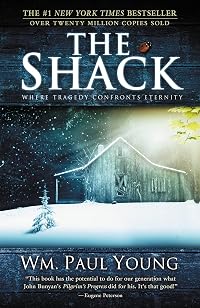
The Shack
by William P. Young
On This Page
Description
Four years after his daughter is abducted and evidence of her murder is found in an abandoned shack, Mackenzie Allen Philips returns to the shack in response to a note claiming to be from God, and has a life-changing experience.Tags
Recommendations
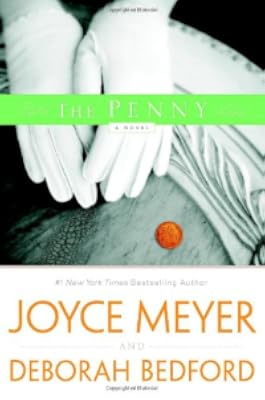
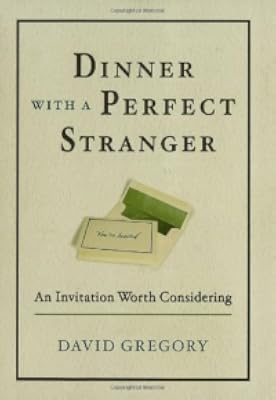

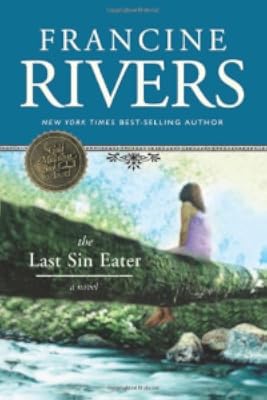
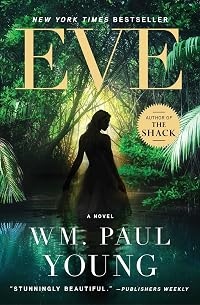




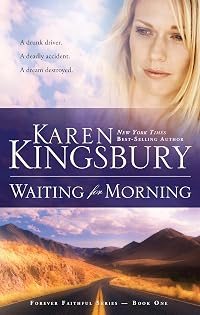
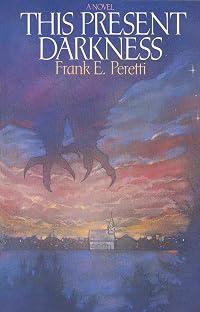
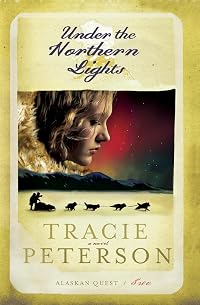
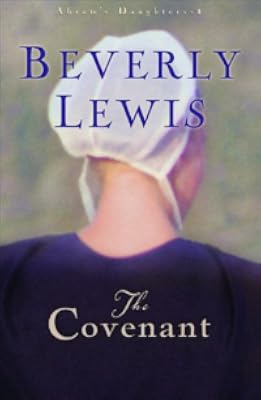

Member Recommendations
soflbooks David Gregory's short story about a man who accepts a dinner invitation with Jesus is better written than The Shack and sticks to evangelical theology.
40

Desmorph Thrones for the Innocent is a stunning compliment to The Shack. It addresses the metaphysical mysteries of ontology and theology without preaching. Where The Shack speaks directly to and about God and the Christian Trinity; Thrones is both subliminal and aggressive. Thrones helped me deal with the frustration I felt in my own heart about the paradox of the existence of evil and and all-loving all-powerful Creator. Thrones is very spiritual and yet avoids struggling with the convolution of structured religion. it should raise some eyebrows as well as quiet some tortured hearts.
paulstalder ähnliche Handlung: Ein Mann kommt in ein Haus und kommt mit seiner Vergangenheit ins Reine
PghDragonMan Another story of searching for meaning after personal tragedy and questioning why bad things happen.
Member Reviews
As I sit to write this review -- which I've delayed a long time -- I confront a simple fear: my reaction to this book is strikingly different to that of many people who have read, including people that I respect and love. Many of them say, unabashedly, that it has changed their lives, expanding their conception of God and God's loving presence in an often unloving world. A literary critique of any form pales in comparison to such accounts.
"The Shack" aims to be a contemporary equivalent to the ancient book of Job, seeking the presence of God in this violent, destructive, and painful world. It offers the story of a man coping with depression after the violent death of one of his children. Some years later, he receives a mysterious show more summons, apparently from God, and spends a period of time in the divine presence.
The story unfolds dramatically, albeit at times with a little verbosity. Young skillfully establishes the characters, particularly the central character of Mack, who has almost become debilitated by his grief and depression. Young also imaginatively (and I think this is what many people are drawn to) creates the divine encounter, giving voice to Mack's questions and offering some answers.
Many will find the representation of the members of the Trinity to be almost mind-blowing; God in particular is no grim, aging, white bearded man. But as the theologian Thomas Aquinas realized centuries ago, offering positive attributes of God is a dangerous and impossible thing because you leave out more than you include and, even if careful, add things that shouldn't be there. Young, unfortunately, falls into this trap. For the creativity of his divine characters, they also feel lacking, particularly Jesus, who seems almost like a misplaced commune-living hippie.
Similarly, the answers that Young offers to this most challenging question of faith -- why does God allow the worst things to happen? -- are at the same time truthful and yet ultimately contradictory. Many of the conversations between Mack and God are powerful explorations, and they suggest some reasons why bad things happen under a loving God's watch. The climax of the narrative, however, radically undercuts these theological conversations, offering a vision that is meant to be comforting but is profoundly disturbing. Here the wisdom of the book of Job applies: at the end, God praises Job in his questioning, but chides each of Job's three friends who offered definitive answers in God's name. If there was a satisfying answer to this age-old question, it would be common knowledge. In fairness, Young does not offer answers to all of Mack's very real questions, recognizing this. But for me, Young offered one answer too many.
Many others will disagree. They will be moved -- to tears, to questioning, to imagining God's love in new ways, to comfort that God really does care -- and will encourage others to read the book. I appreciated the author's continued efforts to think outside of the box as he approached the tough questions, but found that his thinking still was not radical enough to encompass all of God in this painful topic. show less
"The Shack" aims to be a contemporary equivalent to the ancient book of Job, seeking the presence of God in this violent, destructive, and painful world. It offers the story of a man coping with depression after the violent death of one of his children. Some years later, he receives a mysterious show more summons, apparently from God, and spends a period of time in the divine presence.
The story unfolds dramatically, albeit at times with a little verbosity. Young skillfully establishes the characters, particularly the central character of Mack, who has almost become debilitated by his grief and depression. Young also imaginatively (and I think this is what many people are drawn to) creates the divine encounter, giving voice to Mack's questions and offering some answers.
Many will find the representation of the members of the Trinity to be almost mind-blowing; God in particular is no grim, aging, white bearded man. But as the theologian Thomas Aquinas realized centuries ago, offering positive attributes of God is a dangerous and impossible thing because you leave out more than you include and, even if careful, add things that shouldn't be there. Young, unfortunately, falls into this trap. For the creativity of his divine characters, they also feel lacking, particularly Jesus, who seems almost like a misplaced commune-living hippie.
Similarly, the answers that Young offers to this most challenging question of faith -- why does God allow the worst things to happen? -- are at the same time truthful and yet ultimately contradictory. Many of the conversations between Mack and God are powerful explorations, and they suggest some reasons why bad things happen under a loving God's watch. The climax of the narrative, however, radically undercuts these theological conversations, offering a vision that is meant to be comforting but is profoundly disturbing. Here the wisdom of the book of Job applies: at the end, God praises Job in his questioning, but chides each of Job's three friends who offered definitive answers in God's name. If there was a satisfying answer to this age-old question, it would be common knowledge. In fairness, Young does not offer answers to all of Mack's very real questions, recognizing this. But for me, Young offered one answer too many.
Many others will disagree. They will be moved -- to tears, to questioning, to imagining God's love in new ways, to comfort that God really does care -- and will encourage others to read the book. I appreciated the author's continued efforts to think outside of the box as he approached the tough questions, but found that his thinking still was not radical enough to encompass all of God in this painful topic. show less
I wasn't inclined to read this, but a friend repeatedly insisted that I _must_ read it, and I finally gave in. Like many others, my enthusiastic friend had found this book enlightening and comforting, so all I can say to him is that it wasn't my cup of tea. So _this_ is where I record my honest response to the book:
Dear Sweet Merciful Almighty Whatever, is this book ever a load of excrement!
I really don't where to begin. Every piece of it -- plot, pacing, prosody, polemic -- is excruciatingly bad.
All things being equally bad, let's start the writing: Young uses "career" as a verb (and not in the sense of "to rush" -- no, he means "to profession"). He uses "adrenaline" as an adjective. He doesn't know the difference between "affect" and show more "effect." He spends an entire chapter proving that he can't tell a verb from a noun. I don't know whether he ever passed grade-school grammar, but he certainly hasn't given it much thought since then.
There's the characters: You've probably heard that God turns out to be a motherly black woman, but it turns out that God is actually a hat trick of racial stereotypes. But never mind God: consider the book's main character, Mackenzie Philips.
Young opens the book explaining that only Mackenzie's closest friends call him "Mack," and that everyone else calls him "Allen." Apparently everybody is Mack's close friend because in the next 240 pages nobody calls him "Allen"-- not the postmaster, not the police, not the park ranger. Apparently the world is full of Mack's close friends.
One incident may shed some light on this. Mack has been seriously depressed since he lost his daughter three years ago. But he is not just depressed: he has named his depression. He has capitalized and italicized it: "_The_Great_Sadness_." This depression and a plot gimmick convince Mack to go into the backwoods of Washington to meet his maker. Mack calls his "close friend" Willie to explain his plan. Now, Willie knows about Mack's depression. Does he offer to go with Mack or beg him to reconsider? No, he offers Mack a gun. We now know why Mack has so many close friends: with friends like Willie, who needs strangers?
Don't get me started on dialect: The first rule every writer should learn is, "If you're not Mark Twain, don't write dialect." Young hasn't learned this rule, so he delights in stuffing his characters' mouths with painful stock phrases like the "Midwestern" postmaster's "Now don't be goin'" and "Don't ya know" to the "Sho' nuff" and "Aw honey" of the Aunt-Jemimah-God (who calls him "Mackenzie.")
Then there's the philosophy. Apparently God sort of disapproves of people who torture little girls to death, but it's not like he/she/whatever can do anything about it. Well, he/she/whatever _could_ do something about it, but now honey don't you go askin no questions about things you got no business knowin'. Apparently it's comforting to know that even though the little girl was tortured, God was right there with her. And we're supposed to be happy knowing she's in a better place.
Honestly: _this_ is what passes for life-changing theology? What exactly have this book's fans been reading for the last several thousand years? Is it somehow more convincing now that the same old theodicy comes from the mouth of a stereotyped Black Auntie? What does this say about race and popular religious discourse in this country? No, scratch that: I don't want to know.
Even the math is bad. One chapter is inexplicably titled, "A piece of π." It has nothing to do with pi, which is one small blessing I suppose. Alas, Young can't leave the math alone: in the next chapter he has Asian-Princess-God explaining that her garden appears chaotic from the ground, but "from above it's a fractal." No, no, no: a fractal is a structure which has self-similar structure at every level of resolution. If it's a fractal from above, it's a fractal on the ground, and even at the microscopic level it's a fractal.
For a better example of "fractal," consider The shack: its structure is bad, its pacing is bad, its characters are bad, its plot is bad, its prose is bad: at every location and every level -- book, chapter, paragraph, sentence, word -- the book is bad all the way down, and is not recommended. show less
Dear Sweet Merciful Almighty Whatever, is this book ever a load of excrement!
I really don't where to begin. Every piece of it -- plot, pacing, prosody, polemic -- is excruciatingly bad.
All things being equally bad, let's start the writing: Young uses "career" as a verb (and not in the sense of "to rush" -- no, he means "to profession"). He uses "adrenaline" as an adjective. He doesn't know the difference between "affect" and show more "effect." He spends an entire chapter proving that he can't tell a verb from a noun. I don't know whether he ever passed grade-school grammar, but he certainly hasn't given it much thought since then.
There's the characters: You've probably heard that God turns out to be a motherly black woman, but it turns out that God is actually a hat trick of racial stereotypes. But never mind God: consider the book's main character, Mackenzie Philips.
Young opens the book explaining that only Mackenzie's closest friends call him "Mack," and that everyone else calls him "Allen." Apparently everybody is Mack's close friend because in the next 240 pages nobody calls him "Allen"-- not the postmaster, not the police, not the park ranger. Apparently the world is full of Mack's close friends.
One incident may shed some light on this. Mack has been seriously depressed since he lost his daughter three years ago. But he is not just depressed: he has named his depression. He has capitalized and italicized it: "_The_Great_Sadness_." This depression and a plot gimmick convince Mack to go into the backwoods of Washington to meet his maker. Mack calls his "close friend" Willie to explain his plan. Now, Willie knows about Mack's depression. Does he offer to go with Mack or beg him to reconsider? No, he offers Mack a gun. We now know why Mack has so many close friends: with friends like Willie, who needs strangers?
Don't get me started on dialect: The first rule every writer should learn is, "If you're not Mark Twain, don't write dialect." Young hasn't learned this rule, so he delights in stuffing his characters' mouths with painful stock phrases like the "Midwestern" postmaster's "Now don't be goin'" and "Don't ya know" to the "Sho' nuff" and "Aw honey" of the Aunt-Jemimah-God (who calls him "Mackenzie.")
Then there's the philosophy. Apparently God sort of disapproves of people who torture little girls to death, but it's not like he/she/whatever can do anything about it. Well, he/she/whatever _could_ do something about it, but now honey don't you go askin no questions about things you got no business knowin'. Apparently it's comforting to know that even though the little girl was tortured, God was right there with her. And we're supposed to be happy knowing she's in a better place.
Honestly: _this_ is what passes for life-changing theology? What exactly have this book's fans been reading for the last several thousand years? Is it somehow more convincing now that the same old theodicy comes from the mouth of a stereotyped Black Auntie? What does this say about race and popular religious discourse in this country? No, scratch that: I don't want to know.
Even the math is bad. One chapter is inexplicably titled, "A piece of π." It has nothing to do with pi, which is one small blessing I suppose. Alas, Young can't leave the math alone: in the next chapter he has Asian-Princess-God explaining that her garden appears chaotic from the ground, but "from above it's a fractal." No, no, no: a fractal is a structure which has self-similar structure at every level of resolution. If it's a fractal from above, it's a fractal on the ground, and even at the microscopic level it's a fractal.
For a better example of "fractal," consider The shack: its structure is bad, its pacing is bad, its characters are bad, its plot is bad, its prose is bad: at every location and every level -- book, chapter, paragraph, sentence, word -- the book is bad all the way down, and is not recommended. show less
"He looked up into the open rafters. 'I'm done, God,' he whispered. 'I can't do this anymore. I'm tired of trying to find you in all of this.'" (pg. 82)
William Young's The Shack made its way onto my radar because it was given as an example of successful self-publishing, but I decided to read it because of its compelling premise. Though I was wary of the dorky "Christian rock" vibe I got from it, the idea of a man confronting God in the disused shack where his young daughter was abducted and murdered was irresistible. It promised a dramatic confrontation that would tackle the age-old question: Where is God in a world of such pain and brutality? A question asked by a man with more right to know than anybody. That premise is surely, show more regardless of its source, to be considered literature.
So does it succeed? Yes and no, though more 'no' than 'yes'. I should state that I am not a practising Christian, nor have I ever been except in the broadest cultural sense. Therefore, the criticisms of the book that it is undogmatic or disrespectful to church teachings, perhaps even heretical, hold no weight with me. I am, however, interested in Christian theology and open to spiritual questions, and even though I am nowhere near the middle-America church-going audience that the book was targeting, I was keen to see what the book was about.
The Shack, however, doesn't have the bandwidth to answer its forbidding philosophical premise. It does create a few thought-provoking responses to 'where is God in a world of pain?', not least the argument that humans have free will and we create the pain in the world, including the murder of the man's young daughter, and that God then uses "every choice you make for the ultimate good and the most loving outcome" (pg. 127). Like lemonade out of lemons, the more cynical among you might be thinking (and the lemons are increasingly sour…), but despite some scepticism it's a legitimate interpretation of the world. A sort of Order Theory rather than Chaos Theory. A hurricane in China causes a butterfly to flap its wings, or something.
The Shack is at its best when it stays on topic with this dangerous philosophical dilemma posed by the murder of the young girl. The first part of the book is particularly affecting, as we share the father's anguish at the abduction, the police investigation and the heartbreaking acceptance that Missy, the beloved precocious girl, won't ever be coming home. When Mack, the father, approaches the titular shack with a loaded gun in his pocket, preparing to confront God, we share his visceral yet impotent hatred at this unspeakably cruel world.
From that point on, however, the book goes off the rails. Whereas up to this point it had been an agreeably benign story, sort of like a Hallmark adaptation of a Stephen King book, from here on in it starts to get a bit kooky. I was excited by the prospect of a dramatic standoff between a desperate Mack and a pensive, patient God wringing his hands, as they trade blows across a table in a grotty shack where a frightened little girl was murdered. Instead of a shack, however, what we wander into is a sort of Sunday School classroom hijacked by a New Age teacher.
God, you see, is a trinity in Christian teaching, and the God that Mack encounters in the shack is in fact three characters. God is a black woman who likes to bake. Jesus is (of course) an Arab carpenter making stuff in the back room, and popping his head around the corner every so often. The Holy Spirit is a small Asian woman who likes to collect tears in a jar. All speak with big smiles and exclamation marks and Mack responds with "Wow!" at the end of the didactic and undramatic passages of dialogue. Self-esteem and understanding the nature of the Trinity appear to be more important than the Gordian knot of a question that bad things happen to good people. The focus and energy dissipate.
It's not all bad though, and even in the narmy moments I still found plenty to interest me. The book's short and pacey enough, even in the didactic dialogue, to retain the reader's goodwill. The author, thank God, has a sense of humour about his story ("I can just see you scaring the living daylights out of some poor hiker," one of Mack's friends says before the trip to the isolated shack, "asking him if he's God and then demanding answers" (pg. 75)). His theological arguments are delivered honestly, not by sleight of hand.
However, as I said, the bandwidth isn't there to match the premise. The question is too weighty for a limited storyteller; though plot holes naturally emerge in a story that tries to tackle a personified God, a better dramatist would have found a more robust reason for God to invite Mack to the shack in the first place (or perhaps avoid the trap entirely by having Mack just go there and stumble into Him). Instead we have "this is special", that 'we don't normally do this' but Mack was hurting so much they just had to (pg. 114). Not only is this not consistent (why had God not appeared in person to anyone else who'd lost someone?), but the intervention doesn't track with this God's rationale for why Missy wasn't saved: 'we don't intervene'. It becomes even more peculiar when the events at the end only come about because God had intervened. And yet God also says he/she didn't intervene to save Missy "for purposes that you cannot possibly understand now" (pg. 224). The sense of what God's plan might be remains as obtuse as it was when we first opened the book.
Ultimately, though, I never went into The Shack expecting to find a satisfying answer to such a profound question, so I wasn't too disappointed when I didn't. It would have been rather a surprise if the unassuming Young had found something that countless generations of artists, novelists and philosophers had failed to discover, that he had an answer to a question that stymied Dostoevsky, Shakespeare and Kierkegaard.
Where I was disappointed, however, was in the story itself. The concept is remarkable, and I couldn't help but imagine (perhaps ungratefully) what a great writer or dramatist could do with this premise if he or she had thought of it first. Mack and God speaking across the table – something like Cormac McCarthy's The Sunset Limited, though with a roaring and vulnerable actor like Liam Neeson. I mentioned the book as being like a Hallmark adaptation of a Stephen King story – but imagine what even a writer of the second-rank like King could do with this material. When I reached the final chapters of the book, and the pages returned to the narrator who frames the story, I half-expected it to be revealed that the narrator was Missy's killer, or that Willie was. Not as a cool but shallow plot-twist, you understand, but because such a framing, especially if revealed at the end of the journey, would have tied in brilliantly to the 'forgiveness' theme that emerges.
Then I realised that, ambitious as it is, the story was not going to be – and never had been – of that calibre. Certain moments of The Shack carry emotional weight – such as Mack's temporal meeting with the departed Missy near the waterfall ("she signed the words – 'love you'… Mack wept for joy" (pg. 169)) – but rarely any literary weight. Such moments show that whilst we can be touched by The Shack, we can never be fully grasped. show less
William Young's The Shack made its way onto my radar because it was given as an example of successful self-publishing, but I decided to read it because of its compelling premise. Though I was wary of the dorky "Christian rock" vibe I got from it, the idea of a man confronting God in the disused shack where his young daughter was abducted and murdered was irresistible. It promised a dramatic confrontation that would tackle the age-old question: Where is God in a world of such pain and brutality? A question asked by a man with more right to know than anybody. That premise is surely, show more regardless of its source, to be considered literature.
So does it succeed? Yes and no, though more 'no' than 'yes'. I should state that I am not a practising Christian, nor have I ever been except in the broadest cultural sense. Therefore, the criticisms of the book that it is undogmatic or disrespectful to church teachings, perhaps even heretical, hold no weight with me. I am, however, interested in Christian theology and open to spiritual questions, and even though I am nowhere near the middle-America church-going audience that the book was targeting, I was keen to see what the book was about.
The Shack, however, doesn't have the bandwidth to answer its forbidding philosophical premise. It does create a few thought-provoking responses to 'where is God in a world of pain?', not least the argument that humans have free will and we create the pain in the world, including the murder of the man's young daughter, and that God then uses "every choice you make for the ultimate good and the most loving outcome" (pg. 127). Like lemonade out of lemons, the more cynical among you might be thinking (and the lemons are increasingly sour…), but despite some scepticism it's a legitimate interpretation of the world. A sort of Order Theory rather than Chaos Theory. A hurricane in China causes a butterfly to flap its wings, or something.
The Shack is at its best when it stays on topic with this dangerous philosophical dilemma posed by the murder of the young girl. The first part of the book is particularly affecting, as we share the father's anguish at the abduction, the police investigation and the heartbreaking acceptance that Missy, the beloved precocious girl, won't ever be coming home. When Mack, the father, approaches the titular shack with a loaded gun in his pocket, preparing to confront God, we share his visceral yet impotent hatred at this unspeakably cruel world.
From that point on, however, the book goes off the rails. Whereas up to this point it had been an agreeably benign story, sort of like a Hallmark adaptation of a Stephen King book, from here on in it starts to get a bit kooky. I was excited by the prospect of a dramatic standoff between a desperate Mack and a pensive, patient God wringing his hands, as they trade blows across a table in a grotty shack where a frightened little girl was murdered. Instead of a shack, however, what we wander into is a sort of Sunday School classroom hijacked by a New Age teacher.
God, you see, is a trinity in Christian teaching, and the God that Mack encounters in the shack is in fact three characters. God is a black woman who likes to bake. Jesus is (of course) an Arab carpenter making stuff in the back room, and popping his head around the corner every so often. The Holy Spirit is a small Asian woman who likes to collect tears in a jar. All speak with big smiles and exclamation marks and Mack responds with "Wow!" at the end of the didactic and undramatic passages of dialogue. Self-esteem and understanding the nature of the Trinity appear to be more important than the Gordian knot of a question that bad things happen to good people. The focus and energy dissipate.
It's not all bad though, and even in the narmy moments I still found plenty to interest me. The book's short and pacey enough, even in the didactic dialogue, to retain the reader's goodwill. The author, thank God, has a sense of humour about his story ("I can just see you scaring the living daylights out of some poor hiker," one of Mack's friends says before the trip to the isolated shack, "asking him if he's God and then demanding answers" (pg. 75)). His theological arguments are delivered honestly, not by sleight of hand.
However, as I said, the bandwidth isn't there to match the premise. The question is too weighty for a limited storyteller; though plot holes naturally emerge in a story that tries to tackle a personified God, a better dramatist would have found a more robust reason for God to invite Mack to the shack in the first place (or perhaps avoid the trap entirely by having Mack just go there and stumble into Him). Instead we have "this is special", that 'we don't normally do this' but Mack was hurting so much they just had to (pg. 114). Not only is this not consistent (why had God not appeared in person to anyone else who'd lost someone?), but the intervention doesn't track with this God's rationale for why Missy wasn't saved: 'we don't intervene'. It becomes even more peculiar when the events at the end only come about because God had intervened. And yet God also says he/she didn't intervene to save Missy "for purposes that you cannot possibly understand now" (pg. 224). The sense of what God's plan might be remains as obtuse as it was when we first opened the book.
Ultimately, though, I never went into The Shack expecting to find a satisfying answer to such a profound question, so I wasn't too disappointed when I didn't. It would have been rather a surprise if the unassuming Young had found something that countless generations of artists, novelists and philosophers had failed to discover, that he had an answer to a question that stymied Dostoevsky, Shakespeare and Kierkegaard.
Where I was disappointed, however, was in the story itself. The concept is remarkable, and I couldn't help but imagine (perhaps ungratefully) what a great writer or dramatist could do with this premise if he or she had thought of it first. Mack and God speaking across the table – something like Cormac McCarthy's The Sunset Limited, though with a roaring and vulnerable actor like Liam Neeson. I mentioned the book as being like a Hallmark adaptation of a Stephen King story – but imagine what even a writer of the second-rank like King could do with this material. When I reached the final chapters of the book, and the pages returned to the narrator who frames the story, I half-expected it to be revealed that the narrator was Missy's killer, or that Willie was. Not as a cool but shallow plot-twist, you understand, but because such a framing, especially if revealed at the end of the journey, would have tied in brilliantly to the 'forgiveness' theme that emerges.
Then I realised that, ambitious as it is, the story was not going to be – and never had been – of that calibre. Certain moments of The Shack carry emotional weight – such as Mack's temporal meeting with the departed Missy near the waterfall ("she signed the words – 'love you'… Mack wept for joy" (pg. 169)) – but rarely any literary weight. Such moments show that whilst we can be touched by The Shack, we can never be fully grasped. show less
Despite the intensity of the subject matter, this book turns out not to be particularly deep or creative.
For many people, the idea of a God you can actually talk to and relate to is shocking and inspiring, and it is that idea that is powerful, not this book. Young didn't invent any of the actual good ideas in this book, and he's not that good at writing about them.
To take just one example, if you want feminine images of God, plenty of books have done and are doing it much better, with more depth and less emotional manipulation. They range from the mystical writings of Julian of Norwich in the 14th century to the lovely children's picture book Mother God in 2022, both of which would be a better use of your reading time.
Religious matters show more aside, the scenario is just too on-the-nose, too obviously a parent's worst nightmare, to feel real or authentic. If you want your readers to feel really big feelings, you need to earn that, and Young doesn't even try. My major emotional response was irritation at being told how to feel.
It's hard to care about the faith crisis of the main character when you are too busy being annoyed at the author for constructing it the first place. "Your fictional child was killed so that I could inspire people!" might as well be the message. That's manipulation, not depth. show less
For many people, the idea of a God you can actually talk to and relate to is shocking and inspiring, and it is that idea that is powerful, not this book. Young didn't invent any of the actual good ideas in this book, and he's not that good at writing about them.
To take just one example, if you want feminine images of God, plenty of books have done and are doing it much better, with more depth and less emotional manipulation. They range from the mystical writings of Julian of Norwich in the 14th century to the lovely children's picture book Mother God in 2022, both of which would be a better use of your reading time.
Religious matters show more aside, the scenario is just too on-the-nose, too obviously a parent's worst nightmare, to feel real or authentic. If you want your readers to feel really big feelings, you need to earn that, and Young doesn't even try. My major emotional response was irritation at being told how to feel.
It's hard to care about the faith crisis of the main character when you are too busy being annoyed at the author for constructing it the first place. "Your fictional child was killed so that I could inspire people!" might as well be the message. That's manipulation, not depth. show less
The Shack is one of those books that ended up being far more than what I was expecting, although I have to admit that precisely what I was expecting, I'm not sure. I knew that this book was billed as Christian literature, but I also knew that it was highly controversial. However, I wasn't entirely certain whether it had caused upheaval in non-Christian or Christian circles. Turns out it's apparently both, which in my estimation means that it has done a good job of hitting its mark. If both sides are simultaneously criticizing and loving it, then the book has struck a good balance in my opinion.
I've mentioned several times in my reviews of other “Christian” books that in spite of being a Christian myself, nothing will turn me off show more faster than a book that is preachy, which is why I approached The Shack with a certain degree of caution. What I found in it was something that I never would have imagined. It is a deeply moving, spiritual story of a man seeking answers to some very tough questions. I wouldn't call it a religious book, because it doesn't seek to moralize. It is more of a journey in faith to a richer understanding of who and what God is and is not, and how God relates to the human race as a whole. I know that it has challenged me to think of God in a new way which is something that I've been trying to do for a while now, but I often find myself being held back by the strictures of religion. The story in The Shack succeeds in breaking down those barriers to give a look at a God who many people, Christian or not, may never have encountered or even considered. The message here is one of a God of love, gentleness, patience, and goodness, rather than one who is angry, wrathful and ready to smite us at the slightest provocation.
As I read The Shack, I sometimes found myself trying to label it, but it doesn't fit neatly into any one category. It contained elements of apologetics and elements of allegory, but it is difficult to stamp it as having been born out of any one literary device. Instead it is very much rooted in the author's own faith journey. The beginning and ending chapters, as well as the foreword and after words give the uncanny feel of a non-fiction story. It is definitely written in a more factual tone and style. I'm apparently not the only reader who wondered if Mack was a real person who actually had experienced the events detailed in the book. The author states elsewhere that The Shack is a work of fiction, but rightly implies that there is a little bit of Mack in all of us. Pretty much anyone who has experienced difficult or life-changing circumstances or have struggled with their faith could be a Mack.
The Shack definitely left me with a great deal of food for thought. I'm not sure that I'm even doing it justice in my review, because there are so many wonderful messages to be gleaned from its pages that I have a feeling I'll be thinking about it for a long time to come. I loved the imagery in the story. It spoke volumes to me, as did Mack's struggles with understanding God and His mysterious ways. I, without a doubt, related to him in a very profound way. The only reason I didn't give this book the full five stars is because I felt like it was a bit slow in places and the philosophy, no matter how hard I tried to understand, occasionally eluded me. However, I'm willing to admit that when this happened perhaps my spirit just wasn't ready for that particular message yet. The rest of it though made absolute perfect sense. The Shack is definitely a book that will be worth coming back to over and over, and I'm sure each time I'll find something new and exciting within its pages. There are many spiritual truths housed in this simple yet elegant story that I know I will need to be reminded of time and time again which is why it is going on my keeper shelf. I highly recommend The Shack to anyone who wants to be challenged in their faith and understanding of God or anyone who might be looking for a different interpretation of God than what many churches are offering today. show less
I've mentioned several times in my reviews of other “Christian” books that in spite of being a Christian myself, nothing will turn me off show more faster than a book that is preachy, which is why I approached The Shack with a certain degree of caution. What I found in it was something that I never would have imagined. It is a deeply moving, spiritual story of a man seeking answers to some very tough questions. I wouldn't call it a religious book, because it doesn't seek to moralize. It is more of a journey in faith to a richer understanding of who and what God is and is not, and how God relates to the human race as a whole. I know that it has challenged me to think of God in a new way which is something that I've been trying to do for a while now, but I often find myself being held back by the strictures of religion. The story in The Shack succeeds in breaking down those barriers to give a look at a God who many people, Christian or not, may never have encountered or even considered. The message here is one of a God of love, gentleness, patience, and goodness, rather than one who is angry, wrathful and ready to smite us at the slightest provocation.
As I read The Shack, I sometimes found myself trying to label it, but it doesn't fit neatly into any one category. It contained elements of apologetics and elements of allegory, but it is difficult to stamp it as having been born out of any one literary device. Instead it is very much rooted in the author's own faith journey. The beginning and ending chapters, as well as the foreword and after words give the uncanny feel of a non-fiction story. It is definitely written in a more factual tone and style. I'm apparently not the only reader who wondered if Mack was a real person who actually had experienced the events detailed in the book. The author states elsewhere that The Shack is a work of fiction, but rightly implies that there is a little bit of Mack in all of us. Pretty much anyone who has experienced difficult or life-changing circumstances or have struggled with their faith could be a Mack.
The Shack definitely left me with a great deal of food for thought. I'm not sure that I'm even doing it justice in my review, because there are so many wonderful messages to be gleaned from its pages that I have a feeling I'll be thinking about it for a long time to come. I loved the imagery in the story. It spoke volumes to me, as did Mack's struggles with understanding God and His mysterious ways. I, without a doubt, related to him in a very profound way. The only reason I didn't give this book the full five stars is because I felt like it was a bit slow in places and the philosophy, no matter how hard I tried to understand, occasionally eluded me. However, I'm willing to admit that when this happened perhaps my spirit just wasn't ready for that particular message yet. The rest of it though made absolute perfect sense. The Shack is definitely a book that will be worth coming back to over and over, and I'm sure each time I'll find something new and exciting within its pages. There are many spiritual truths housed in this simple yet elegant story that I know I will need to be reminded of time and time again which is why it is going on my keeper shelf. I highly recommend The Shack to anyone who wants to be challenged in their faith and understanding of God or anyone who might be looking for a different interpretation of God than what many churches are offering today. show less
Oh my Papa! I'm giving it two stars! I did not totally hate it! Even though it's full of cliches, 90% dialogue, and has a chapter called "Here Come Da Judge," I still found things to like about The Shack. For example, I completely see why my own sweet mother loved it. It takes all the things that are unsettling about religion and sweeps them under the rug. It's all about love, love, love, and happy endings to terrible tragedies and ways to cope with a sad, chaotic world. Not a bad way to become a self-published bestseller. (By the way, for an antidote to this, try [b:36 Arguments for the Existence of God|6734417|36 Arguments for the Existence of God A Work of Fiction|Rebecca Newberger show more Goldstein|http://photo.goodreads.com/books/1275693456s/6734417.jpg|6930684].)
I actually took notes while I was reading this, so I'm just going to transcribe them here:
-Hilarious/genius simile: comparing a bump on the head to a humpback whale "breaching the wilds of his thinning hair."
-Little Ladykiller? Really? Is it a terrifying homicidal pedophile or a very handsome midget?
-Does the Bible have gilt edges or GUILT edges?! Oooooh. Deep.
-The Holy Trinity is "two women, a man, and none of them white?" HOW CAN THIS BE?!
-God listens to funk music? Again, HOW CAN THIS BE?! My preconceived notions are in TATTERS.
-GOD CARES IF YOU GET THE TROTS.
-Is this book anti-church? Anti-rules? Yes, sir. It's also anti-ritual and it says there's no Hell. If Jesus were not a main character, it would come awfully close to being hippie dippy Unitarian Universalism non-theology. Who knew a popular Christian book could be so liberal?
-Direct quote from Jesus: "I'm not too big on religion." WHAT?!
-"All evil flows from independence." Meaning you should not try to be independent from God. Interesting.
-There is a lot of hugging and kissing in this book. Why does he need to tell us it's ON THE LIPS?
-Direct quote from Holy Spirit: "I am a being verb."
-Bottom line: God is responsible for everything good and nothing bad. All you need is love. Try not to get the trots. show less
I actually took notes while I was reading this, so I'm just going to transcribe them here:
-Hilarious/genius simile: comparing a bump on the head to a humpback whale "breaching the wilds of his thinning hair."
-Little Ladykiller? Really? Is it a terrifying homicidal pedophile or a very handsome midget?
-Does the Bible have gilt edges or GUILT edges?! Oooooh. Deep.
-The Holy Trinity is "two women, a man, and none of them white?" HOW CAN THIS BE?!
-God listens to funk music? Again, HOW CAN THIS BE?! My preconceived notions are in TATTERS.
-GOD CARES IF YOU GET THE TROTS.
-Is this book anti-church? Anti-rules? Yes, sir. It's also anti-ritual and it says there's no Hell. If Jesus were not a main character, it would come awfully close to being hippie dippy Unitarian Universalism non-theology. Who knew a popular Christian book could be so liberal?
-Direct quote from Jesus: "I'm not too big on religion." WHAT?!
-"All evil flows from independence." Meaning you should not try to be independent from God. Interesting.
-There is a lot of hugging and kissing in this book. Why does he need to tell us it's ON THE LIPS?
-Direct quote from Holy Spirit: "I am a being verb."
-Bottom line: God is responsible for everything good and nothing bad. All you need is love. Try not to get the trots. show less
Such fucking pap.
Now, as an atheist/agnostic, it would be fair to say that I am already biased against novels labeled Christian. I do generally judge more harshly against books in this category than the average Christian... but I do try to be fair in that.
I find many Christian books to be distasteful because of the way the authors of such books try to present God as all-loving and wise and that he has a great plan for us all and yes, that plan includes people getting hurt and we should just accept that and that suffering is good and yada yada.
Ehhhh... sorry, but a god with all that power and knowledge should never be ok with a child getting kidnapped, tortured, and murdered.
Now, as an atheist/agnostic, it would be fair to say that I am already biased against novels labeled Christian. I do generally judge more harshly against books in this category than the average Christian... but I do try to be fair in that.
I find many Christian books to be distasteful because of the way the authors of such books try to present God as all-loving and wise and that he has a great plan for us all and yes, that plan includes people getting hurt and we should just accept that and that suffering is good and yada yada.
Ehhhh... sorry, but a god with all that power and knowledge should never be ok with a child getting kidnapped, tortured, and murdered.
Members
- Recently Added By
Published Reviews
ThingScore 25
Young's too-weird-for-the-pulpit thoughts about how Adam's rib and the female uterus form a "circle of relationship" have the appeal of knobby heirloom-produce in a world where much religion arrives vacuum-packed. His theories—how to believe in Adam while supporting particle-physics research; why the Lord is OK with your preference for lewd funk more than staid church music—accomplish what show more mainstream faiths tend to fail at: connecting recondite doctrine to the tastes, rhythms, and mores of modern life. ... And though the novel, as a novel, is a sinner's distance from perfection, it's an eloquent reminder that, for those who give some faith and effort to the writing craft, there is, even today, the chance to touch and heal enough strangers to work a little miracle. show less
added by eromsted
Would I recommend this book? No, I would not. It is full of theological problems as well as an irreverent and casual attitude toward God. Yes, there are nice things in it and people might even be helped by the book. But so what? There are some nice things in Mormonism, too. Should we encourage people to read the Book of Mormon because Mormonism might help someone feel better? Not at all.
Sadly, show more experience has shown me that most Christians aren't interested in biblical fidelity. No, I'm not talking about biblical nit-picking. I'm talking about fidelity to the revealed word of God to the point where we don't contradict what is plainly stated in scripture!
We Christians should regard the word of God as the final authority on all things, and any supposed accounts of actual occurrences should be compared to scripture, not our feelings, wants, and desires. In the case of The Shack, the book falls woefully short of scriptural truth in many important areas and has the strong ability to mislead people regarding God's nature, work, and plan for us.
Again, I do not recommend it. show less
Sadly, show more experience has shown me that most Christians aren't interested in biblical fidelity. No, I'm not talking about biblical nit-picking. I'm talking about fidelity to the revealed word of God to the point where we don't contradict what is plainly stated in scripture!
We Christians should regard the word of God as the final authority on all things, and any supposed accounts of actual occurrences should be compared to scripture, not our feelings, wants, and desires. In the case of The Shack, the book falls woefully short of scriptural truth in many important areas and has the strong ability to mislead people regarding God's nature, work, and plan for us.
Again, I do not recommend it. show less
added by EFreeColumbia
Focusing on just three of the subjects William
Young discusses in The Shack, we’ve seen that
errors abound. He presents a false view of God
and one that may well be described as heretical. He downplays the importance and uniqueness of the Bible, subjugating it or making it equal to other forms of subjective revelation. He misrepresents redemption and salvation, opening the door to the show more possibility of salvation outside of the completed work of Jesus Christ on the cross. We are left with an unbiblical understanding of the persons and nature of God and of His work in this world. show less
Young discusses in The Shack, we’ve seen that
errors abound. He presents a false view of God
and one that may well be described as heretical. He downplays the importance and uniqueness of the Bible, subjugating it or making it equal to other forms of subjective revelation. He misrepresents redemption and salvation, opening the door to the show more possibility of salvation outside of the completed work of Jesus Christ on the cross. We are left with an unbiblical understanding of the persons and nature of God and of His work in this world. show less
added by EFreeColumbia
Lists

Christianity Books You've Read
179 works; 18 members

PBS The Great American Read
100 works; 21 members

Magic Realism
371 works; 52 members

Dishonourable Mentions of 2013
189 works; 63 members

Books Read in 2013
1,630 works; 51 members

Carole's List
445 works; 13 members

Christianity
19 works; 3 members

Recommend the 20 best books you've read in the last five years
2,168 works; 602 members

Books Read in 2016
4,666 works; 199 members

The Worst Bestsellers Podcast
295 works; 5 members

Books Read in 2018
4,360 works; 110 members

Books About Murder
313 works; 7 members

Books Read in 2020
4,379 works; 124 members

El Castillo del Alma: Viajes de Crisis y Transformación (Alquimia)
6 works; 1 member

Leídos 2026
8 works; 1 member
Author Information

All Editions
Some Editions
Awards and Honors
Awards
Distinctions
Work Relationships
Common Knowledge
- Canonical title
- The Shack
- Original title
- The Shack
- Alternate titles
- The shack : where tragedy confronts eternity.
- Original publication date
- 2008
- People/Characters
- Mackenzie Allen Philips (Mack); Papa (God the Father); Jesus Christ (God the Son); Sarayu (God the Holy Spirit); Melissa (Missy); Katherine (Katie) (show all 8); Josh; Nan
- Important places
- Oregon, USA
- Related movies
- The Shack (2017 | IMDb)
- Dedication
- This story was written for my children:
Chad-the Gentle Deep,
Nicholas-the Tender Explorer,
Andrew-the Kindhearted Affection,
Amy-the Joyful Knower,
Alexandra (Lexi)-the Shining Power,
Matthew-the Becomi... (show all)ng Wonder
And dedicated first, to:
Kim, my Beloved, thank you for saving my life.
And second, to:
"...All us stumblers who believe Love rules. Stand up and let it shine." - First words
- Foreword:
Who wouldn't be skeptical when a man claims to have spent an entire weekend with God, in a shack no less?
March unleashed a torrent of rainfall after an abnormally dry winter. - Last words
- (Click to show. Warning: May contain spoilers.)Earth's crammed with heaven, / And every common bush afire with God, / But only he who sees takes off his shoes; / The rest sit round it and pluck blackberries. -Elizabeth Barrett Browning
- Blurbers
- Judd, Wynonna; Peterson, Eugene; Morrell, Mike; Smith, Michael W.
- Original language
- English
Classifications
Statistics
- Members
- 16,563
- Popularity
- 407
- Reviews
- 594
- Rating
- (3.44)
- Languages
- 21 — Afrikaans, Chinese, Czech, Danish, Dutch, English, Finnish, French, German, Hungarian, Italian, Korean, Lithuanian, Norwegian (Bokmål), Norwegian, Polish, Serbian, Croatian, Spanish, Swedish, Portuguese (Portugal)
- Media
- Paper, Audiobook, Ebook
- ISBNs
- 113
- ASINs
- 46