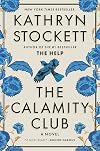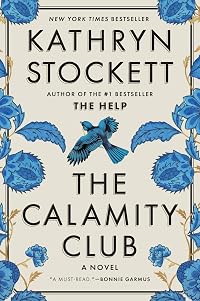
The Calamity Club
by Kathryn Stockett
On This Page
Description
In 1933 Mississippi, three women's lives intersect at an orphanage: Birdie helps her sister Frances through financial ruin, while Charlie searches for her daughter Meg amid Depression-era hardships.Tags
Recommendations










































Member Recommendations

Kin by Tayari Jones
by Micheller7
Member Reviews
Thanks to NetGalley and Spiegel & Grau for a digital advance reader copy. All comments and opinions are my own unless otherwise noted.
This is one of those books everyone seems to be reading right now and it’s really as good as the rave reviews claim. I couldn’t wait to read it as I loved “The Help,” Kathryn Stockett’s 2009 novel. But would it live up to the buzz? The answer is “YES!” This is the kind of book I couldn’t put down, couldn’t stop thinking about, became so involved with the vivid characters and the captivating story that it’s still with me even after finishing it. I was reading a digital version so didn’t realize it was over 600 pages, but don’t let that deter you.
I agree with bookreporter.com who show more calls this novel “riveting historical fiction” and “a powerful narrative about struggling through the Depression.” Told alternately from the point of view of 11-year-old Meg and 24-year-old Birdie, both characters are unique and endearingly memorable.
This is a commanding story of the historic mistreatment of women and how they take hold of the power to fight back. Well-written, meticulously researched, cleverly plotted – told with humor, wit and poignancy. I highly recommend – also great for book clubs. show less
This is one of those books everyone seems to be reading right now and it’s really as good as the rave reviews claim. I couldn’t wait to read it as I loved “The Help,” Kathryn Stockett’s 2009 novel. But would it live up to the buzz? The answer is “YES!” This is the kind of book I couldn’t put down, couldn’t stop thinking about, became so involved with the vivid characters and the captivating story that it’s still with me even after finishing it. I was reading a digital version so didn’t realize it was over 600 pages, but don’t let that deter you.
I agree with bookreporter.com who show more calls this novel “riveting historical fiction” and “a powerful narrative about struggling through the Depression.” Told alternately from the point of view of 11-year-old Meg and 24-year-old Birdie, both characters are unique and endearingly memorable.
This is a commanding story of the historic mistreatment of women and how they take hold of the power to fight back. Well-written, meticulously researched, cleverly plotted – told with humor, wit and poignancy. I highly recommend – also great for book clubs. show less
From the bestselling author of The Help comes a captivating tale of women trying to survive in 1933 Mississippi, a time of financial depression and an oppressive, dangerous lack of freedom for females. Meg is an eleven-year-old whose mother has disappeared, forcing her to live a wretched life at an orphan asylum. Birdie, a single woman responsible for caring for her mother and grandmother, visits her sister seeking financial assistance; after all, her sister is married to a wealthy banker from old family money. When Birdie meets Charlie, a woman with limited resources but boundless ideas, their lives take an unexpected turn.
With an intriguing interwoven plot, I loved this book, became invested in the characters, and couldn’t put it show more down until I found out what happened to them. The narrative evokes a range of emotions, including fear, anger, heartbreak, hope, and joy. Interspersed throughout is Stockett’s refreshing sense of humor.
Kudos to Stockett for this well-researched perspective on the plight of women and other marginalized groups in the 1930s South. This book, though, is a testament to their resilience in the face of injustice. Let it be a poignant reminder as we now face an ongoing reversal in attitudes and treatments of people based on gender, race, and sexuality.
While I thought this an exceptional book and highly recommend it, I did think it got a bit tedious with redundancies at times. It is certain to be a bestseller, and I eagerly anticipate its adaptation into a movie or a series.
Thanks to @NetGalley and @Spiegelandgrau for the DRC. show less
With an intriguing interwoven plot, I loved this book, became invested in the characters, and couldn’t put it show more down until I found out what happened to them. The narrative evokes a range of emotions, including fear, anger, heartbreak, hope, and joy. Interspersed throughout is Stockett’s refreshing sense of humor.
Kudos to Stockett for this well-researched perspective on the plight of women and other marginalized groups in the 1930s South. This book, though, is a testament to their resilience in the face of injustice. Let it be a poignant reminder as we now face an ongoing reversal in attitudes and treatments of people based on gender, race, and sexuality.
While I thought this an exceptional book and highly recommend it, I did think it got a bit tedious with redundancies at times. It is certain to be a bestseller, and I eagerly anticipate its adaptation into a movie or a series.
Thanks to @NetGalley and @Spiegelandgrau for the DRC. show less
This heartrending but ultimately heartwarming historical fiction novel is set in 1933 Oxford, Mississippi. The country was in the middle of "The Great Depression," considered to be the longest and most severe economic downturn in the history of the industrialized world. The main characters trying to survive through the hardships of this time are some of the bravest, most enterprising females you could ever hope to meet, who alternate narration in this book.
We first meet Birdie Calhoun, 24, as she is trying to buy 99 condoms - the most you could buy without a prescription - from the pharmacy. Birdie has traveled from her home in the little town of Footely, Mississippi to visit her younger sister Frances in Oxford. Frances was married to show more Rory Tartt, and living with him in his mother Viktoria's large house. Birdie, Mama, and Meemaw believed the Tartts had money and might help them; they were running out of it themselves, and were worried the bank would repossess their house.
Meg Lefleur is next, a 11-year old orphan who is smart, funny, and being seriously abused at the LaFayette County Orphan Asylum for Girls, where she has lived for the past two years. This institution had a “welcome” sign out front noting it did not accept:
“Coloreds, Indians, Jews, Mexicans, Oriental types, Twins, Anyone who has or has had Leprosy, Consumption, Missing Limbs or Harelip. No Boys. No Sick Children or anyone of a Retarded Nature. No Girls Over the age of twelve. No Women in the Family Way. We do not deliver Babies here. May the Lord bless you all.”
Charlie Lefleur is Meg’s mother. She was the victim of profound injustice, and Meg being taken from her and put into that awful orphanage was the worst of it. She is desperate to get Meg back, and that means she needs money. She will do whatever it takes.
Birdie, Charlie, Frances, and Rory’s mother Viktoria all end up in an uneasy coalition living at the Tartt house, trying to make some cash both to save themselves and the ones they love.
That wasn't the most significant alliance of the book, however. Frances was unwilling to do much to help make money, even though money and status were her loadstars. But Birdie and Charlie found some ladies who would. Soon Flossy, Ruby, the twins Trixie and Dixie, and Esmeralda were also living in the house. They were also joined by Virginia Cunningham, a medical lab assistant intent on becoming a woman doctor. No men were around to save them. Instead, these intrepid women became a family, supporting and empowering each other. As Birdie mused:
“This slapped-together band of misfits made me feel, for the first time, that I truly belonged. How the hell, I wondered, did I ever get so lucky?”
The primary adversary in the book is a woman named Garnett Pittman, who personified the cruelty, hypocrisy, and malice of those who sit in moral judgment on others, and unfortunately have the power to do something about it.
Birdie’s sister Frances was not as much of a villain as Garnett, but definitely did not fill a positive role in Birdie’s life. Frances was overly concerned with social standing, material goods, and other peoples’ opinions. She regularly blamed Birdie for her own problems and tried to whittle down Birdie’s self esteem.
In the end, however, Birdie proved to everyone around her, and even to herself, that she was a force to be reckoned with.
Discussion: There are some important themes in the book that form the background of the story and drive it forward.
Misogyny
Hypocrisy
Prejudice and racism
Self-hate vs. self-acceptance
Tolerance vs. hate and fear
Cowardice vs. bravery
Some of these reflected societal biases back then - maybe now too. Stockett devotes her "After Note" to these issues, filling in readers on the laws in effect in Mississippi in 1933.
For example, a federal law passed by Congress in 1918 regarding women’s health - The Chamberlain-Kahn Act, also known as "the American Plan" - legalized and encouraged police to stop any woman on the street who looked "promiscuous." Police were to detain the woman and test her for sexually transmitted diseases. Tens of thousands of American women were seized and “forcibly examined,” historian Scott W. Stern writes:
“If they misbehaved or if they failed to show ‘proper’ ladylike deference, these women could be beaten, doused with cold water, thrown in solitary confinement—or even sterilized.”
In addition, Mississippi passed a eugenics-based sterilization law in 1928, becoming the 26th state in the U.S. to do so. The law, which targeted individuals in state institutions deemed "feeble-minded," insane, epileptic, or “sexually promiscuous” was part of a broader, systemic effort to control the reproduction of marginalized groups in the South, often resulting in coerced or forced sterilizations that continued into the 1960s and 1970s.
(One of the famous victims of the "Mississippi appendectomy" was the Civil Rights activist Fannie Lou Hamer.)
Stockett mentions that California’s sterilization practices even became models for the Nazi regime.
Evaluation: I was so impressed by the author’s ability to craft flawed, messy, but ultimately lovable characters. They seemed so authentic and relatable that it was impossible not to form emotional connections to them. You will not want to miss the chance to get to know them; they had hard choices to make, and opted to do what was necessary for those they loved in spite of the risk of social obloquy and worse. I won't easily forget them, and in fact, am hoping there might be a sequel of sorts just so I can keep up with these wonderful women. show less
We first meet Birdie Calhoun, 24, as she is trying to buy 99 condoms - the most you could buy without a prescription - from the pharmacy. Birdie has traveled from her home in the little town of Footely, Mississippi to visit her younger sister Frances in Oxford. Frances was married to show more Rory Tartt, and living with him in his mother Viktoria's large house. Birdie, Mama, and Meemaw believed the Tartts had money and might help them; they were running out of it themselves, and were worried the bank would repossess their house.
Meg Lefleur is next, a 11-year old orphan who is smart, funny, and being seriously abused at the LaFayette County Orphan Asylum for Girls, where she has lived for the past two years. This institution had a “welcome” sign out front noting it did not accept:
“Coloreds, Indians, Jews, Mexicans, Oriental types, Twins, Anyone who has or has had Leprosy, Consumption, Missing Limbs or Harelip. No Boys. No Sick Children or anyone of a Retarded Nature. No Girls Over the age of twelve. No Women in the Family Way. We do not deliver Babies here. May the Lord bless you all.”
Charlie Lefleur is Meg’s mother. She was the victim of profound injustice, and Meg being taken from her and put into that awful orphanage was the worst of it. She is desperate to get Meg back, and that means she needs money. She will do whatever it takes.
Birdie, Charlie, Frances, and Rory’s mother Viktoria all end up in an uneasy coalition living at the Tartt house, trying to make some cash both to save themselves and the ones they love.
That wasn't the most significant alliance of the book, however. Frances was unwilling to do much to help make money, even though money and status were her loadstars. But Birdie and Charlie found some ladies who would. Soon Flossy, Ruby, the twins Trixie and Dixie, and Esmeralda were also living in the house. They were also joined by Virginia Cunningham, a medical lab assistant intent on becoming a woman doctor. No men were around to save them. Instead, these intrepid women became a family, supporting and empowering each other. As Birdie mused:
“This slapped-together band of misfits made me feel, for the first time, that I truly belonged. How the hell, I wondered, did I ever get so lucky?”
The primary adversary in the book is a woman named Garnett Pittman, who personified the cruelty, hypocrisy, and malice of those who sit in moral judgment on others, and unfortunately have the power to do something about it.
Birdie’s sister Frances was not as much of a villain as Garnett, but definitely did not fill a positive role in Birdie’s life. Frances was overly concerned with social standing, material goods, and other peoples’ opinions. She regularly blamed Birdie for her own problems and tried to whittle down Birdie’s self esteem.
In the end, however, Birdie proved to everyone around her, and even to herself, that she was a force to be reckoned with.
Discussion: There are some important themes in the book that form the background of the story and drive it forward.
Misogyny
Hypocrisy
Prejudice and racism
Self-hate vs. self-acceptance
Tolerance vs. hate and fear
Cowardice vs. bravery
Some of these reflected societal biases back then - maybe now too. Stockett devotes her "After Note" to these issues, filling in readers on the laws in effect in Mississippi in 1933.
For example, a federal law passed by Congress in 1918 regarding women’s health - The Chamberlain-Kahn Act, also known as "the American Plan" - legalized and encouraged police to stop any woman on the street who looked "promiscuous." Police were to detain the woman and test her for sexually transmitted diseases. Tens of thousands of American women were seized and “forcibly examined,” historian Scott W. Stern writes:
“If they misbehaved or if they failed to show ‘proper’ ladylike deference, these women could be beaten, doused with cold water, thrown in solitary confinement—or even sterilized.”
In addition, Mississippi passed a eugenics-based sterilization law in 1928, becoming the 26th state in the U.S. to do so. The law, which targeted individuals in state institutions deemed "feeble-minded," insane, epileptic, or “sexually promiscuous” was part of a broader, systemic effort to control the reproduction of marginalized groups in the South, often resulting in coerced or forced sterilizations that continued into the 1960s and 1970s.
(One of the famous victims of the "Mississippi appendectomy" was the Civil Rights activist Fannie Lou Hamer.)
Stockett mentions that California’s sterilization practices even became models for the Nazi regime.
Evaluation: I was so impressed by the author’s ability to craft flawed, messy, but ultimately lovable characters. They seemed so authentic and relatable that it was impossible not to form emotional connections to them. You will not want to miss the chance to get to know them; they had hard choices to make, and opted to do what was necessary for those they loved in spite of the risk of social obloquy and worse. I won't easily forget them, and in fact, am hoping there might be a sequel of sorts just so I can keep up with these wonderful women. show less
Eleven-year-old Meg Lefleur has learned the hard way to rely on no one. Now one of the unadoptable “big girls” at the Lafayette County Orphan Asylum, she fights each day to keep her spirit unbowed.
Then there is Birdie Calhoun, unmarried and outspoken. She has come to Oxford to ask her socialite sister to help the struggling family. But Birdie discovers her sister’s seemingly charmed life is a tapestry of lies.
I can honestly say, this is the best book of the year for me. And I never have best books. But these characters live so heavily in your heart and your mind that it is so difficult to let them go. I know this book is over 600 pages, but it did not feel like I was reading a book that long.
Meg’s situation will break your show more heart. But then again, so will Birdie’s. But when the solution to all their problems is “The Calamity Club”, you will laugh, cry, and then gasp for air. Not only that, the way this story wraps around itself and the characters become intertwined…it is brilliant.
Need a story that will keep you wanting more…THIS IS IT! Grab your copy today.
I received this novel from the publisher for a honest review. show less
Then there is Birdie Calhoun, unmarried and outspoken. She has come to Oxford to ask her socialite sister to help the struggling family. But Birdie discovers her sister’s seemingly charmed life is a tapestry of lies.
I can honestly say, this is the best book of the year for me. And I never have best books. But these characters live so heavily in your heart and your mind that it is so difficult to let them go. I know this book is over 600 pages, but it did not feel like I was reading a book that long.
Meg’s situation will break your show more heart. But then again, so will Birdie’s. But when the solution to all their problems is “The Calamity Club”, you will laugh, cry, and then gasp for air. Not only that, the way this story wraps around itself and the characters become intertwined…it is brilliant.
Need a story that will keep you wanting more…THIS IS IT! Grab your copy today.
I received this novel from the publisher for a honest review. show less
***SPOILERS HIDDEN***
It’s the Great Depression, and twenty-four-year-old Birdie Calhoun and eleven-year-old Meg Lefleur are living through it in different ways. Kathryn Stockett’s second book is about what some desperate measures can look like in desperate times, and (surprisingly, given this theme) it’s a positive story overflowing with heart. The Calamity Club unfolds through the dual points of view of Birdie and Meg, who begin the story as strangers to each other but soon meet and form a bond. Their quality time together leads to everything that happens later.
Stockett made the Great Depression’s devastating effects vivid through the wealthy Tartt family, small-town Mississippians living a cosseted life in a stately home.One show more day they receive the financial shock of their lives, and instantly, decadence is no longer guaranteed. The shift is dramatic and thorough. In their direst of straits, they’re forced to turn to a controversial solution that couldn’t offend their demure, classist sensibilities more: converting their home into a brothel. The stakes are high, and thanks to Stockett’s devotion to detail, readers feel the family’s desperation easily. In an early memorable scene, Mrs. Tartt, owner of this grand generational home, must sell most of its valuable furnishings and cherished decor to survive. Readers watch family members scramble from room to room to find items while struggling to make peace with selling them. Then they see the family survive daily on whatever food is left in the kitchen in a barely furnished home with no phone or radio.
This author refuses to shortcut. Depicting the poverty of this time with a broad brush would be easier, faster, and probably get the job done; after all, lots of authors skimp on the minutiae that make a story seem authentic, yet they still earn praise. For Stockett, though, her creation is incomplete unless it places readers in both the story’s era and its emotional heart, and that requires specifics.
The Calamity Club is funny in a charming way but can’t be called a comedy. It has a serious theme leavened here and there by both humor and glimmers of hope that stem from satisfying character interactions. Despite the Great Depression backdrop, lots of likable personalities keep the tone uplifting. The author could write one hundred books starring mature, resourceful, funny, and caring Birdie Calhoun, and it still wouldn’t be enough. Meg suffers in an orphanage but narrates her sections with a wryness that captures her personality perfectly: tenacious but not bratty, observant, survival-minded. The Calamity Club also has lots of minor likable characters, and the unlikable few are of the love-to-hate-them variety. Every character adds something, and every one of the 656 pages matters. Complex developments feel natural and inevitable.
The book’s only flaw occurs when Stockett doesn’t respect a topic’s gravity. She spins prostitution too positively. This job relies upon commodification of a person’s body, but The Calamity Club presents readers with a comfortable version that won’t inconvenience them with this terrible reality. The book instead presents a boisterous mix of five prostitute caricatures. They make this part lively and page-turning, but the portrayal constantly insists that these five are not commodifying their bodies; they simply have insatiable appetites for sex, and so this line of work makes sense for them. Their chapters are disconcertedly heartwarming thanks to an underlying spirit of teamwork as they try to earn money for themselves and the Tartts; crude speech that’s charming in a they-simply-can’t-help-themselves way; and scenes depicting traditional familial things like eating home-cooked meals around a table (and in an actual family residence at that). There’s talk from two about a goal of permanently leaving the job, but emotion doesn’t enrich the talk. Another character reveals that she was forced into prostitution at age twelve, but Stockett’s cheerful portrayal shuts out this sickening fact, even if it does have a dismissive joke-y delivery. The author deliberately chose not to get real, though: The prostitution is vital plot evolution as it relieves rock-bottom, seemingly unsolvable financial problems for several characters. It also allows Stockett to show Birdie at her most lovable, to make The Calamity Club an uplifting book, and to give the story a happily ever after. It would be despicable to have prostitution be what saves the day after exploring the pain and any abuse that comes with it. However, prostitution is just too consequential a life path for the harsh, sexist reality to be sanitized or laughed off—in any story, but especially one set in the oppressive, hyper-patriarchal 1930s. This part conflicts with the stark reality of the earlier scenes showing a wealthy family’s desperation . It needed a full re-working.
Fortunately, everything else about The Calamity Club works beautifully. The long wait for Stockett’s second book after The Help was worth it. The author once again shows off expert skill: She writes well, plots well, and characterizes well (especially via voice). The pages fly by, with both Birdie’s and Meg’s sections having high enough stakes and some complications to be equally captivating. Stockett should have improved some areas, and as with many fictions, a little suspension of disbelief is required to love The Calamity Club, but it’s a major book-slump remedy.
It’s also different from The Help. Readers who panned The Help because a white author explores racism through the emotional pain of black servants can comfortably give Stockett a second chance. Although The Calamity Club has some black servants, unlike The Help, they aren’t its focus. Stockett took the criticism to heart and didn’t presume with her newest book. This time, she couldn’t have stuck more to what she knows—the white Mississippi woman—and The Calamity Club may even surpass the high bar that The Help set.
NOTE: This review is cross-posted on Goodreads. show less
It’s the Great Depression, and twenty-four-year-old Birdie Calhoun and eleven-year-old Meg Lefleur are living through it in different ways. Kathryn Stockett’s second book is about what some desperate measures can look like in desperate times, and (surprisingly, given this theme) it’s a positive story overflowing with heart. The Calamity Club unfolds through the dual points of view of Birdie and Meg, who begin the story as strangers to each other but soon meet and form a bond. Their quality time together leads to everything that happens later.
Stockett made the Great Depression’s devastating effects vivid through the wealthy Tartt family, small-town Mississippians living a cosseted life in a stately home.
This author refuses to shortcut. Depicting the poverty of this time with a broad brush would be easier, faster, and probably get the job done; after all, lots of authors skimp on the minutiae that make a story seem authentic, yet they still earn praise. For Stockett, though, her creation is incomplete unless it places readers in both the story’s era and its emotional heart, and that requires specifics.
The Calamity Club is funny in a charming way but can’t be called a comedy. It has a serious theme leavened here and there by both humor and glimmers of hope that stem from satisfying character interactions. Despite the Great Depression backdrop, lots of likable personalities keep the tone uplifting. The author could write one hundred books starring mature, resourceful, funny, and caring Birdie Calhoun, and it still wouldn’t be enough. Meg suffers in an orphanage but narrates her sections with a wryness that captures her personality perfectly: tenacious but not bratty, observant, survival-minded. The Calamity Club also has lots of minor likable characters, and the unlikable few are of the love-to-hate-them variety. Every character adds something, and every one of the 656 pages matters. Complex developments feel natural and inevitable.
The book’s only flaw occurs when Stockett doesn’t respect a topic’s gravity.
Fortunately, everything else about The Calamity Club works beautifully. The long wait for Stockett’s second book after The Help was worth it. The author once again shows off expert skill: She writes well, plots well, and characterizes well (especially via voice). The pages fly by, with both Birdie’s and Meg’s sections having high enough stakes and some complications to be equally captivating. Stockett should have improved some areas, and as with many fictions, a little suspension of disbelief is required to love The Calamity Club, but it’s a major book-slump remedy.
It’s also different from The Help. Readers who panned The Help because a white author explores racism through the emotional pain of black servants can comfortably give Stockett a second chance. Although The Calamity Club has some black servants, unlike The Help, they aren’t its focus. Stockett took the criticism to heart and didn’t presume with her newest book. This time, she couldn’t have stuck more to what she knows—the white Mississippi woman—and The Calamity Club may even surpass the high bar that The Help set.
NOTE: This review is cross-posted on Goodreads. show less
 This review was written for LibraryThing Early Reviewers.
I loved this one! Stockett’s story is plot-driven historical fiction at its best. The POV switches between 10-year-old Meg, stuck in an orphanage with a cruel superintendent, and 25-year-old Birdie who is stuck solving the dire financial problems of her extended family. Their stories connect through Charlie, a woman whose tragic past drives her to an audacious plan to save all three of them. The characters are compelling, the setting authentic, and the plotting steadily builds to a satisfying conclusion. It’s exactly the sort of shaggy adventure I love.
This review was written for LibraryThing Early Reviewers.The Calamity Club is extremely readable and enjoyable. In fact, it is hard to put down. Stockett has created believable characters in 11 year old Meg, a mistreated orphan, 24 year old Birdie, a "spinster" trying to save her family during the Depression years, and Charlie, a wrongly incarcerated woman who is trying to get her daughter back after she is released from prison. The good guys are good, the bad guys are bad, and as a reader, I found myself rooting for the good guys and their audacious plan to achieve their dreams.
This review was written for LibraryThing Early Reviewers.Members
- Recently Added By
Lists

To Read
140 works; 1 member

LoanStars | Adult List: May 2026
10 works; 1 member

Economist book reviews (July 2026-)
16 works; 1 member
Author Information

5+ Works 35,058 Members
Kathryn Stockett was born in 1969 in Mississippi. She graduated from the University of Alabama with a degree in English and Creative Writing. She soon got a job in magazine marketing and publishing in New York City. She became famous in 2009 with her debut novel, The Help. Her book tells the story of African-American Maids working in white show more households in Jackson Mississippi during the 1960's. It sold over ten million copies and spent more than 100 weeks on The New York Times Best Seller List. (Bowker Author Biography) show less
Common Knowledge
- Canonical title
- The Calamity Club
- Original publication date
- 2026
- People/Characters
- Margot “Meg” Louise Lefleur; Birdina “Birdie” Calhoun; Charlie Lefleur; Frances Begonia Calhoun Tartt; Roderick “Roddy” Beauregard Tartt; Garnett Pittman (show all 23); Viktoria Tartt; Dr. Welty Pittman; Jack Walsh; Thomas “Tom” Heidelberg III; Lucille Heidelberg; Doris Calhoun; Marybeth Heidelberg; Isabelle Heidelberg; Flossy Stolivsky; Ruby Slipper; Esmeralda Lincoln; Trixie; Dixie; Virginia Cunningham; Polly; Picador; Willy May
- Important places
- Oxford, Mississippi, USA; Footely, Mississippi, USA; Lafayette County Orphan Asylum; Byhalia, Mississippi, USA; Jackson, Mississippi, USA; Biloxi, Mississippi, USA
- Important events
- Great Depression
- Dedication
- To my gorgeous, brilliant mama, Ruth Elliott Stockett
- First words
- Downtown Drugstore had a bell on the door that made a single tink sound when you opened it.
- Quotations
- If you give a girl a taste of fresh air and then take it away, she will grow fierce and wild to get that fresh air back again.
Indeed, there was a lot yet to do to set up a dance club that was also a boardinghouse that was actually a speakeasy that was truly a brothel.
When you opened a brothel in a town with thirteen churches, surely it was natural to find peril in every move.
And maybe I will let myself say it, just this one time, soft so Ava will not hear it. So Lucille won't hear it. I curl in a ball and say it soft as a poem. Just this once, so only I can hear it: I want my mommy. - Last words
- (Click to show. Warning: May contain spoilers.)She starts the car, and we drive down the lane with the trees bowing down over us, and I don't look back at any of it, I just look straight ahead.
- Blurbers
- Garmus, Bonnie; Godfrey, Jennie; Read, Shelley
Classifications
Statistics
- Members
- 648
- Popularity
- 44,808
- Reviews
- 47
- Rating
- (4.46)
- Languages
- English
- Media
- Paper
- ISBNs
- 4