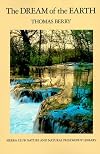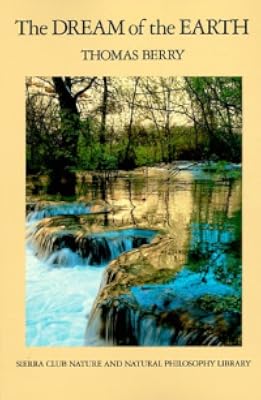
The Dream of the Earth
by Thomas Berry
On This Page
Description
This landmark work- a foundational volume in the ecological canon- points to a necessary transformation of consciousness if mankind and the planet are to survive. Drawing upon the wisdom of the world's greatest thinkers, Thomas Berry forges a balanced, deeply felt declaration of planetary independence from the sociological, psychological, and intellectual conditioning that threatens the death of the Earth. Offering a path that will avert ecological catastrophe, Berry builds his case on a show more comprehensive review of the history of ideas. He provides insights, inspiration, and ethical guidance, which will help us move beyond exploitation and disengagement to begin a restorative relationship with the natural world. show lessTags
Recommendations














Member Reviews
Thomas Berry's seminal work is not called, "Earth Awakening." Rather, Berry uses the metaphor of dream and of sleep—of myth and magic and mystery that can only happen in states outside of the waking world. In "Why We Sleep," sleep scientist Michael Walker posits that it is sleep, not wakefulness, that is the foundational and essential state of all living beings. In a time rife with metaphors of "waking up," to be drawn not only into the nourishment of sleep, but into the numinous invitation of being dreamed by the earth, is a profound summons.
I've been hearing about Berry's work, and this book specifically, since I came in contact with the depth psychology of Bill Plotkin beginning in 2011. Plotkin's life work is centered around show more practices for coming to insight through time alone in nature—one discipline of earth listening implied by Berry's writings. My personal and professionally center has slowly been arcing towards animism, and I arrived at a place earlier this year where it became time for a return to foundation texts in the animist movement. This is the first of Berry's texts that I've read.
After a colleague shared about reading Gary Snyder on a month-long hiking trip along the coast in Oregon and Washington, I decided to bring this book on a wander in the Sawtooth Wilderness in Idaho. I recall reading in a copse of blueberry bushes at the edge of a laughing stream at 8,000 feet of elevation, the golden autumn light settling in glowing pools between the fragrant ponderosa pines. If you decide to read this book, consider taking it with you out into the wilderness.
Maybe more than any writer I know, Berry gets to the heart of the matter. In Berry's words I can hear the essential teachings of many of those whose work I've studied through the years (most of whom were influenced by his writing)—J. G. Bennett, Charles Eisenstein, Bill Plotkin, David Abram, David McConville, Yanis Varoufakis. Each essay is a world unto itself, one that both feels exquisitely researched and effortlessly structured and distilled.
I receive tears as an indicator of truth. I don't think I made it through a single essay in this book without crying. Some essays I read aloud to others, the gait of my articulation slowing to to sit with the interstitial realms between words. Berry's style is that of prose poetry. In his closing paragraph of the book, he writes "even as we glance over the grimy world before us, the sun shines radiantly over the earth, the aspen leaves shimmer in the evening breeze, the coo of the mourning dove and the swelling chorus of the insects fill the land, while down in the hollows the mist deepens the fragrance of the honeysuckle" (p223). So much of Berry's language rings of communing with the numinous beauty of our world.
Now address the central riddle of the book: although Berry (or his publisher) chose the title, "Dream of the Earth," and although he is audaciously forthright in his revelation and apocalypse (from the Greek, "drawing back the marriage veil") in each essay, not once in the entire book does he actually approach the question of what the dream of the earth might be. What might explain this glaring omission? The first spiritual principle to which I would turn to explain this would be from architect Christopher Alexander's esoteric text, "A Foreshadowing of 21st Century Art: The Color and Geometry of Very Early Turkish Carpets." At the center of many prayer carpets you will find a void. This void at the center has a gravity to it that unites the entire carpet. Berry's omission of any explication of the dream of the earth constitutes such a void. To try a second explanation on for size: I'll draw on a framework from my teacher Carol Sanford. Sanford describes the way in which any school has three nested spheres of knowledge: 1) exoteric teaching (think social media posts, public interviews), 2) mesoteric knowledge (think books, educational materials, etc.), and 3) esoteric knowledge. Esoteric knowledge is implicate or right-brain knowledge and is only accessible through union. It is ineffable, and it is not transmissible through language. It is the kind of knowledge we can access only through a lifetime of practice and apprenticeship. If we are to enter into the dream of the earth ourselves, it will come of a lifetime of apprenticeship and practice. May we each have the presence, acquiescence, and grace to dedicate ourselves to such a discipline.
There is a haunting way in which Berry's cosmology prophetically describes the shape of my life, even though these thoughts were articulated before I was born. One of my primary professional endeavors has been to imbue the economy with ecological sentience; this is one of the areas of necessary work that Berry identifies. I also have been courting the idea of starting a Church of Gaia for the past thirteen years—another natural extension of Berry's work. And then I've been putting forward an animist ontology from which humans might regard bioregional entities (such as watersheds) that I've been calling "hyperbeings;" yet another extension of Berry's lineage. And amazingly, I've launched each of these endeavors before reading a word of Berry, and yet they each feel as though Berry's intonations evoked them.
In contemplating the wholeness of entity, one test is to ask the question of what could be removed. In reviewing the table of contents, there isn't a single non-integral chapter. Each chapter deserves an at-length meditation (an endeavor I will not treat in this review). Without the chapters on patriarchy (or ecofeminism) and the American Indian, Berry's ambitions for the work would have fallen flat. The beating heart at the center of the work is Berry's treatise on the Hudson River Valley Bioregion—indisputably the most breathtakingly eloquent storying of place I've ever heard. Berry's deft selection of only the most brilliant (as in, of the luminosity of starlight) and concise terms that call forth the soul of the energies he invokes remind us of the ways in which words can still hold the ancient power of spell. show less
I've been hearing about Berry's work, and this book specifically, since I came in contact with the depth psychology of Bill Plotkin beginning in 2011. Plotkin's life work is centered around show more practices for coming to insight through time alone in nature—one discipline of earth listening implied by Berry's writings. My personal and professionally center has slowly been arcing towards animism, and I arrived at a place earlier this year where it became time for a return to foundation texts in the animist movement. This is the first of Berry's texts that I've read.
After a colleague shared about reading Gary Snyder on a month-long hiking trip along the coast in Oregon and Washington, I decided to bring this book on a wander in the Sawtooth Wilderness in Idaho. I recall reading in a copse of blueberry bushes at the edge of a laughing stream at 8,000 feet of elevation, the golden autumn light settling in glowing pools between the fragrant ponderosa pines. If you decide to read this book, consider taking it with you out into the wilderness.
Maybe more than any writer I know, Berry gets to the heart of the matter. In Berry's words I can hear the essential teachings of many of those whose work I've studied through the years (most of whom were influenced by his writing)—J. G. Bennett, Charles Eisenstein, Bill Plotkin, David Abram, David McConville, Yanis Varoufakis. Each essay is a world unto itself, one that both feels exquisitely researched and effortlessly structured and distilled.
I receive tears as an indicator of truth. I don't think I made it through a single essay in this book without crying. Some essays I read aloud to others, the gait of my articulation slowing to to sit with the interstitial realms between words. Berry's style is that of prose poetry. In his closing paragraph of the book, he writes "even as we glance over the grimy world before us, the sun shines radiantly over the earth, the aspen leaves shimmer in the evening breeze, the coo of the mourning dove and the swelling chorus of the insects fill the land, while down in the hollows the mist deepens the fragrance of the honeysuckle" (p223). So much of Berry's language rings of communing with the numinous beauty of our world.
Now address the central riddle of the book: although Berry (or his publisher) chose the title, "Dream of the Earth," and although he is audaciously forthright in his revelation and apocalypse (from the Greek, "drawing back the marriage veil") in each essay, not once in the entire book does he actually approach the question of what the dream of the earth might be. What might explain this glaring omission? The first spiritual principle to which I would turn to explain this would be from architect Christopher Alexander's esoteric text, "A Foreshadowing of 21st Century Art: The Color and Geometry of Very Early Turkish Carpets." At the center of many prayer carpets you will find a void. This void at the center has a gravity to it that unites the entire carpet. Berry's omission of any explication of the dream of the earth constitutes such a void. To try a second explanation on for size: I'll draw on a framework from my teacher Carol Sanford. Sanford describes the way in which any school has three nested spheres of knowledge: 1) exoteric teaching (think social media posts, public interviews), 2) mesoteric knowledge (think books, educational materials, etc.), and 3) esoteric knowledge. Esoteric knowledge is implicate or right-brain knowledge and is only accessible through union. It is ineffable, and it is not transmissible through language. It is the kind of knowledge we can access only through a lifetime of practice and apprenticeship. If we are to enter into the dream of the earth ourselves, it will come of a lifetime of apprenticeship and practice. May we each have the presence, acquiescence, and grace to dedicate ourselves to such a discipline.
There is a haunting way in which Berry's cosmology prophetically describes the shape of my life, even though these thoughts were articulated before I was born. One of my primary professional endeavors has been to imbue the economy with ecological sentience; this is one of the areas of necessary work that Berry identifies. I also have been courting the idea of starting a Church of Gaia for the past thirteen years—another natural extension of Berry's work. And then I've been putting forward an animist ontology from which humans might regard bioregional entities (such as watersheds) that I've been calling "hyperbeings;" yet another extension of Berry's lineage. And amazingly, I've launched each of these endeavors before reading a word of Berry, and yet they each feel as though Berry's intonations evoked them.
In contemplating the wholeness of entity, one test is to ask the question of what could be removed. In reviewing the table of contents, there isn't a single non-integral chapter. Each chapter deserves an at-length meditation (an endeavor I will not treat in this review). Without the chapters on patriarchy (or ecofeminism) and the American Indian, Berry's ambitions for the work would have fallen flat. The beating heart at the center of the work is Berry's treatise on the Hudson River Valley Bioregion—indisputably the most breathtakingly eloquent storying of place I've ever heard. Berry's deft selection of only the most brilliant (as in, of the luminosity of starlight) and concise terms that call forth the soul of the energies he invokes remind us of the ways in which words can still hold the ancient power of spell. show less
I have tried so hard to like Thomas Berry.
I give up. I can't do it. Dense, unreadable prose based on the sketchiest types of half-evidence, stitched together with such slender chains of reasoning that a good sneeze could rip it apart. Nice ideas. Lovely philosophy. A wonderful world would result if, indeed, there were any basis for his proposals or if they were implementable by animals with the sorts of brains human beings have. But they're not, and I can't waste one more second of my life believing that there is anything useful to be learned from a book that makes the argument that there were pre-partriarchal women-ruled societies in which the environment was treated well. Mr. Berry, you meant well, and I respect you as an ally; but to show more all his successors, I beg of you, please sully yourself with some form of actual evidence, and stop confusing "fact" with "someone else's opinion that you found in print." show less
I give up. I can't do it. Dense, unreadable prose based on the sketchiest types of half-evidence, stitched together with such slender chains of reasoning that a good sneeze could rip it apart. Nice ideas. Lovely philosophy. A wonderful world would result if, indeed, there were any basis for his proposals or if they were implementable by animals with the sorts of brains human beings have. But they're not, and I can't waste one more second of my life believing that there is anything useful to be learned from a book that makes the argument that there were pre-partriarchal women-ruled societies in which the environment was treated well. Mr. Berry, you meant well, and I respect you as an ally; but to show more all his successors, I beg of you, please sully yourself with some form of actual evidence, and stop confusing "fact" with "someone else's opinion that you found in print." show less
A foundational volume in the ecological canon. Thomas Berry provides a new ethical framework for the human community: planetary well-being as the measure of all human activity. Drawing on Western philosophy, Asian thought, and Native American traditions, Berry offers a new perspective on our understanding of science, technology, politics, religion, ecology, and education. He shows why it is important to respond to the Earth’s need for planetary renewal, and what we must do to break free of the “technological trance” that drives a misguided dream of progress.
To my mind Thomas Berry is one of the definitive contemporary Christian writers on ecology, or creation spirituality, and this is one of his definitive works.
Within the pages of his book, Berry overviews and examines the relationship between man and the rest of the world and nature. Within the book’s pages the author examines how the idea of man being apart and separate from nature being a myth and how human beings need to learn to be in harmony with the natural world once again. He wonders over how the connections within nature and the world around us should be important to everyone regardless of religion or residence. This book is truly a wonderful read regardless of one’s spirituality over ecology.
Essays questioning what it means to be part of a universe that is alive, by an "eco-theologian" whose thoughts have aroused environmentalists and re-cast views of the relationship between nature and science.
Modern scientific research is discovering a universe that is dynamically alive a whole system, fluid and interconnected.
Members
- Recently Added By
Lists

Burgess's Place-based Education Reading List
9 works; 1 member

Science: Earth
109 works; 1 member
Talk Discussions
Past Discussions
Group read - The Dream of the Earth by Thomas Berry in Christianity (July 2014)
Author Information

32+ Works 1,268 Members
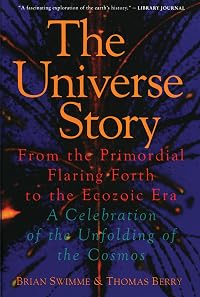
Thomas Berry was a Catholic priest of the Passionist order, cultural historian, and ecotheologian. He proposed that a deep understanding of the history and functioning of the evolving universe is a necessary inspiration and guide for our own effective functioning as individuals and as a species. Born in Greensboro, North Carolina in 1914, he died show more there in 2009. His other major books include The Universe Story, co-authored with Brian Swimme (1992); The Great Work (1999); and Evening Thoughts (2006). show less
Some Editions
Series
Belongs to Publisher Series
Common Knowledge
- Canonical title
- The Dream of the Earth
- Original publication date
- 1988
- Dedication
- To the Great Red Oak, beneath whose sheltering branches this book was written
- First words
- One of the more remarkable achievements of the twentieth century is our ability to tell the story of the universe from empirical observations and with amazing insight into the sequence of transformations that has brought into... (show all) being the earth, the living world, and the human community.
- Last words
- (Click to show. Warning: May contain spoilers.)Where else can we go for the guidance needed for the task that is before us.
Classifications
Statistics
- Members
- 505
- Popularity
- 59,600
- Reviews
- 8
- Rating
- (4.15)
- Languages
- English
- Media
- Paper, Audiobook, Ebook
- ISBNs
- 8
- UPCs
- 1
- ASINs
- 6