On This Page
Description
God's Demon is a "fascinating"* dark fantasy novel of a fallen warrior seeking atonement from award-winning author and renowned artist Wayne Barlowe. Lucifer's War, which damned legions of angels to Hell, is an ancient and bitter memory shrouded in the smoke and ash of the Inferno. The Fallen, those banished demons who escaped the full wrath of Heaven, have established a limitless and oppressive kingdom within the fiery confines of Hell. Lucifer has not been seen since the Fall and the show more mantle of rulership has been passed to the horrific Prince Beelzebub, the Lord of the Flies. The Demons Major, Heaven's former warriors, have become the ruling class. They are the equivalent to landed lords, each owing allegiance to the de facto ruler of Hell. They reign over their fiefdoms, tormenting the damned souls and adding to their wealth. One Demon Major, however, has not forgotten his former life in Heaven. The powerful Lord Sargatanas is restless. For millennia Sargatanas has ruled dutifully but unenthusiastically, building his city, Adamantinarx, into the model of an Infernal metropolis. But he has never forgotten what he lost in the Fall--proximity to God. He is sickened by what he has become. Now, with a small event--a confrontation with one of the damned souls--he makes a decision that will reverberate through every being in Hell. Sargatanas decides to attempt the impossible, to rebel, to endeavor to go Home and bring with himanyone who chooses to follow . . . be they demon or soul. He will stake everything on this chance for redemption. *Guillermo del Toro, Academy Award-Winning Director ofThe Shape of Water show lessTags
Recommendations












Member Reviews
This was awesome. I actually finished it more than a week ago but I’m just getting around to reviewing it. I’ve enjoyed Barlowe’s Inferno books even thought I don’t think the art itself is amazing I love the concepts – how all the structures in Hell are huge, how the souls carry their essence in black spheres that protrude and move about their bodies. I love the glyphs above the demons heads. All that is brought to life with many more ideas that make Hell a very memorable setting.
The plot was original, there was plenty of action, and the “bad” guys (or this is hell so the “badder” guys”) were really freaking bad. Beelzebub was scary and I actually felt myself cringing at the helplessness of his victims. The addition show more of Lillith was definitely a cool touch and I could see any sequel most likely involving her as one of the main characters. The story also inspired me. One line inspired the entire plot of a short story – of course I would have to write it to prove truly inspired.
So I’m very curious what Mr. Barlowe will have for us next, though I’m not sure how well it will hold up to this amazing piece of fiction show less
The plot was original, there was plenty of action, and the “bad” guys (or this is hell so the “badder” guys”) were really freaking bad. Beelzebub was scary and I actually felt myself cringing at the helplessness of his victims. The addition show more of Lillith was definitely a cool touch and I could see any sequel most likely involving her as one of the main characters. The story also inspired me. One line inspired the entire plot of a short story – of course I would have to write it to prove truly inspired.
So I’m very curious what Mr. Barlowe will have for us next, though I’m not sure how well it will hold up to this amazing piece of fiction show less
I picked this one up at Macmillan's free book day back in 2013 and finally got around to reading it! On top of the fact that it looked and sounded interesting, it has a blurb from Guillermo del Toro--so yeah, that was one time when I actually read a blurb. Also, this is totally a case of judging a book by its cover, and with good reason.
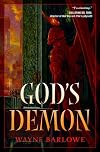
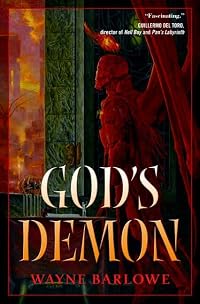
The author is actually an artist, a film concept designer who did work on Hellboy and at least two Harry Potter movies--at it shows in the book. The cover, of course, is gorgeous and insanely detailed, not to mention incredibly helpful for visualizing Hell--which is, if I'm perfectly honest, a bit difficult to do. There are definitely places where the book reads more like an artist or director show more describing their vision for a movie than it does a typical book. This has its pluses and minuses: while it can slow the pace down and be a little distracting from the plot, Barlowe's extraordinary vision of Hell is a key selling point of the book. I've read so many books that it's hard for me to come across completely new ideas, but those did exist here in the descriptions of the demons' appearances, in the construction of the cities of Hell, and in the makeup of Hell's geography. This is a very Gaiman-esque Hell, not one full of fire and brimstone, but one that's disgusting and inhumane even as it's incredibly, personally human.
(I have one cool (I think) theory about Hell, never confirmed: that it's actually located on the absent Lucifer's body. )
This book was world-building at its finest, with engaging characters even if a bit frustrating. Why were all of the demons male? I must admit that I find it refreshing when otherworldly creatures are basically sex/genderless--and I was annoyed at the very contrived, unfortunately practically inevitable romance with Lilith. I would have been just as (if not more) invested in a relationship of equals founded entirely on respect. It would have been more tragically romantic, which I think would have better fit Barlowe's vision of Hell, not to mention more realistic (I'm pretty sure) for a woman with Lilith's sexual trauma. (I'm not listing that as a spoiler because this is a book written by a man and populated almost exclusively by men. Talk about Hell!)
My biggest beef with the book? Sargatanas' belief that starting a war against the Beelzebub, the reigning monarch of Hell, will redeem him in the eyes of the Creator. When has holy war ever been something admirable? Starting a war in order to better one's station--not including others--to a better state seems like the the most selfish act possible, and certainly not one that God would condone. But then, it's never totally clear if the god of this book reflects the Christian God. Probably not, given how unreligious the book is overall. (Quite a feat for a book based on one of the greatest works of Biblical fanfiction ever written!)
Yeah, there's more action than plot here...but if it was made into a movie based on Barlowe's designs--especially if directed by del Toro--I would totally go and see it.
Quote Roundup
Note: Since the awesome environmental descriptions were too long to quote, most of these relate to my annoyance about the means by which these demons are going to reclaim Heaven.
37: I'd just read a series of parodies of dude writers describing women, contrasted with almost equally painful actual descriptions of women written by men, when I reached this introduction to Lilith, who just happens to be casually masturbating while waiting for her servant to return. Never mind that she has a horrifying life filled with regular, Hellishly nightmarish rape, she's just going to lie there and please herself for the titillation of male readers. Ugh.
96: "Henceforth, in this new time, you and your Guard will have to add secret police to your list of many tasks. I must know of the shifting thoughts of those closest to my throne. As seemingly unimpeachable as my inner circle is, no one is safe from corruption."
Yup. Secret police. This sounds more like Nazi Germany than the way to Heaven.
107: The palace was so vast, so filled with administrative levels, that it came as no real surprise to him that they might be in an area that he had not traversed.
No. Freaking. Way. An undying demon with all the time in the world to kill, and endless curiosity, and he hasn't explored every inch of that place? No way. Also, I have no idea what kind of administration Sargatanas needs to manage Hell. It seems like a pretty straightforward place.
108-109: "We have fulfilled every one of Their claims against us, prove ourselves to be anything but the angels we once were, and denied ourselves any consideration for return. We must show that after all these grim millennia, after all the pain and punishment, we are capable of change. I am convinced that if our intentions and actions are clear--that our opposition to Beelzebub and his government is in earnest--They will take notice. And that is the first step to regaining our lost grace."
Yeah. I'm really not buying it. It sounds like he's just picking a fight to show off. What's the goal of this, if he's just going to leave it behind? To wreck half of Hell? How is that heavenly? I pretty much knew that Barlowe was going to have his characters win, but I was also really hoping there'd be some kind of shock at some point, when Sargatanas is told that he's not doing this for the right reasons, and he'd have to reevaluate his goals. Alas, this was not to be.
172: Sargatanas is giving a speech to rally the troops.
"What is it that keeps us here? ... Are we here because we are all truly evil or were some of us misled and misdirected, carried away on the scalding winds of rhetoric? ... Or is it, perhaps, our damaged pride that keeps us filled with shame and bound to this place?"**
*My gosh, he was basically a Trump supporter, except with Lucifer!
**I'm pretty sure it's pride making you think you're good enough to prove yourself worthy of going back to heaven. And pride is kind of a deadly sin and all...
238: This scene where Hani takes on Moloch was particularly cinematic, and nicely condensed so that it didn't get exhausting. I really do appreciate Hani. He seems more honestly self-reflective than Sargatanas, and I respect his blunt awareness of his own motives. I know he's in Hell for a reason...but it's kind of hard not to end up rooting for him.
256: Sargatanas does have a moment of clarity to reflect on the purpose/selfishness of his goals. But it's not a long reflection, and the result is pretty much the same coming out as it was coming in: we fight and kill for the right to regain Heaven. He compares his war to Lucifer's and even questions whether his motives are selfish--but those questions are never answered! Argh!
258: As a writer and a being capable of logic and a storytelling grump and a woman, I object to this page.
303: We're only 50 pages from the end of the book when we learn that Lilith has interests other than carving statues, being interested in souls, and having sex. Surely Barlowe could have spared a sentence here or there to tell us about her non-lover-related activities in Adamantinarx-upon-the-Acheron rather than shoehorning it all in here at the end. Can this poor woman have some non-male-related characterization, please? I just feel like there was so much potential for her to be a more interesting character than she ended up being, and it's really frustrating to me.
343: The reason for Sargatanas's fate is as full of holes as Swiss cheese. This book could have been a good bit more philosophical. i'd have sacrificed some between-battle prep for a little more depth to the discussions of good and evil.
349: We learn two pages from the end that Lilith had some sword fighting training. Why couldn't we have read about this? Why couldn't Lilith have fought, even if just alongside the souls?
Ugh!
Okay, so my responses to the quotes came out sounding like I didn't like the book much. But the fact is, I did. It's practically the definition of world-building, which is something that I highly value, and I did care about the characters even if they weren't as three-dimensional as they could have been. I guess I might say that there was never a "sublime" moment to lift this book out of the action-orientation. It felt a bit like a lot of today's action movies, which try to give a nod to deeper ideas but push through them to get back to the action. But then, that goes hand in hand with the kinds of films that Barlowe works on.
That said, check out his art--he's got a website and the work he did is absolutely stunning. He apparently illustrated a book based on Dante's Inferno, and I'd be interested to take a look at it sometime. show less
The author is actually an artist, a film concept designer who did work on Hellboy and at least two Harry Potter movies--at it shows in the book. The cover, of course, is gorgeous and insanely detailed, not to mention incredibly helpful for visualizing Hell--which is, if I'm perfectly honest, a bit difficult to do. There are definitely places where the book reads more like an artist or director show more describing their vision for a movie than it does a typical book. This has its pluses and minuses: while it can slow the pace down and be a little distracting from the plot, Barlowe's extraordinary vision of Hell is a key selling point of the book. I've read so many books that it's hard for me to come across completely new ideas, but those did exist here in the descriptions of the demons' appearances, in the construction of the cities of Hell, and in the makeup of Hell's geography. This is a very Gaiman-esque Hell, not one full of fire and brimstone, but one that's disgusting and inhumane even as it's incredibly, personally human.
(
This book was world-building at its finest, with engaging characters even if a bit frustrating. Why were all of the demons male? I must admit that I find it refreshing when otherworldly creatures are basically sex/genderless--and I was annoyed at the very contrived, unfortunately practically inevitable romance with Lilith. I would have been just as (if not more) invested in a relationship of equals founded entirely on respect. It would have been more tragically romantic, which I think would have better fit Barlowe's vision of Hell, not to mention more realistic (I'm pretty sure) for a woman with Lilith's sexual trauma. (I'm not listing that as a spoiler because this is a book written by a man and populated almost exclusively by men. Talk about Hell!)
My biggest beef with the book? Sargatanas' belief that starting a war against the Beelzebub, the reigning monarch of Hell, will redeem him in the eyes of the Creator. When has holy war ever been something admirable? Starting a war in order to better one's station--not including others--to a better state seems like the the most selfish act possible, and certainly not one that God would condone. But then, it's never totally clear if the god of this book reflects the Christian God. Probably not, given how unreligious the book is overall. (Quite a feat for a book based on one of the greatest works of Biblical fanfiction ever written!)
Yeah, there's more action than plot here...but if it was made into a movie based on Barlowe's designs--especially if directed by del Toro--I would totally go and see it.
Quote Roundup
Note: Since the awesome environmental descriptions were too long to quote, most of these relate to my annoyance about the means by which these demons are going to reclaim Heaven.
37: I'd just read a series of parodies of dude writers describing women, contrasted with almost equally painful actual descriptions of women written by men, when I reached this introduction to Lilith, who just happens to be casually masturbating while waiting for her servant to return. Never mind that she has a horrifying life filled with regular, Hellishly nightmarish rape, she's just going to lie there and please herself for the titillation of male readers. Ugh.
96: "Henceforth, in this new time, you and your Guard will have to add secret police to your list of many tasks. I must know of the shifting thoughts of those closest to my throne. As seemingly unimpeachable as my inner circle is, no one is safe from corruption."
Yup. Secret police. This sounds more like Nazi Germany than the way to Heaven.
107: The palace was so vast, so filled with administrative levels, that it came as no real surprise to him that they might be in an area that he had not traversed.
No. Freaking. Way. An undying demon with all the time in the world to kill, and endless curiosity, and he hasn't explored every inch of that place? No way. Also, I have no idea what kind of administration Sargatanas needs to manage Hell. It seems like a pretty straightforward place.
108-109: "We have fulfilled every one of Their claims against us, prove ourselves to be anything but the angels we once were, and denied ourselves any consideration for return. We must show that after all these grim millennia, after all the pain and punishment, we are capable of change. I am convinced that if our intentions and actions are clear--that our opposition to Beelzebub and his government is in earnest--They will take notice. And that is the first step to regaining our lost grace."
Yeah. I'm really not buying it. It sounds like he's just picking a fight to show off. What's the goal of this, if he's just going to leave it behind? To wreck half of Hell? How is that heavenly? I pretty much knew that Barlowe was going to have his characters win, but I was also really hoping there'd be some kind of shock at some point, when Sargatanas is told that he's not doing this for the right reasons, and he'd have to reevaluate his goals. Alas, this was not to be.
172: Sargatanas is giving a speech to rally the troops.
"What is it that keeps us here? ... Are we here because we are all truly evil or were some of us misled and misdirected, carried away on the scalding winds of rhetoric? ... Or is it, perhaps, our damaged pride that keeps us filled with shame and bound to this place?"**
*My gosh, he was basically a Trump supporter, except with Lucifer!
**I'm pretty sure it's pride making you think you're good enough to prove yourself worthy of going back to heaven. And pride is kind of a deadly sin and all...
238: This scene where Hani takes on Moloch was particularly cinematic, and nicely condensed so that it didn't get exhausting. I really do appreciate Hani. He seems more honestly self-reflective than Sargatanas, and I respect his blunt awareness of his own motives. I know he's in Hell for a reason...but it's kind of hard not to end up rooting for him.
256: Sargatanas does have a moment of clarity to reflect on the purpose/selfishness of his goals. But it's not a long reflection, and the result is pretty much the same coming out as it was coming in: we fight and kill for the right to regain Heaven. He compares his war to Lucifer's and even questions whether his motives are selfish--but those questions are never answered! Argh!
258: As a writer and a being capable of logic and a storytelling grump and a woman, I object to this page.
303: We're only 50 pages from the end of the book when we learn that Lilith has interests other than carving statues, being interested in souls, and having sex. Surely Barlowe could have spared a sentence here or there to tell us about her non-lover-related activities in Adamantinarx-upon-the-Acheron rather than shoehorning it all in here at the end. Can this poor woman have some non-male-related characterization, please? I just feel like there was so much potential for her to be a more interesting character than she ended up being, and it's really frustrating to me.
343: The reason for Sargatanas's fate is as full of holes as Swiss cheese. This book could have been a good bit more philosophical. i'd have sacrificed some between-battle prep for a little more depth to the discussions of good and evil.
349: We learn two pages from the end that Lilith had some sword fighting training. Why couldn't we have read about this? Why couldn't Lilith have fought, even if just alongside the souls?
Ugh!
Okay, so my responses to the quotes came out sounding like I didn't like the book much. But the fact is, I did. It's practically the definition of world-building, which is something that I highly value, and I did care about the characters even if they weren't as three-dimensional as they could have been. I guess I might say that there was never a "sublime" moment to lift this book out of the action-orientation. It felt a bit like a lot of today's action movies, which try to give a nod to deeper ideas but push through them to get back to the action. But then, that goes hand in hand with the kinds of films that Barlowe works on.
That said, check out his art--he's got a website and the work he did is absolutely stunning. He apparently illustrated a book based on Dante's Inferno, and I'd be interested to take a look at it sometime. show less
If I were a believer in mankind's rendition of hell (and especially of one so artfully sketched by Mr. Barlowe), I'd spend the rest of my days on earth in fear and on a constant campaign to become a saint. Fortunately, the truth of spirituality and the cosmos in general is likely beyond my comprehension, while all the imaginings and myths of heaven and hell were formed to accommodate human understanding, and fears. This line of musing, some might call it a rationalization, served as a protective shield against a total freak out while reading God's Demon.
First off, the story is marvelous, for who and where could a character yearn most for heaven if not a former angel in the depths of hell? Nowhere else could a greater struggle for show more forgiveness and salvation be rendered than that of an angel in hell who knows very well what he has lost and understands his punishment to be justly deserved. Barlowe ensconces the reader in horror and gore, and I squirmed because he pulled no punches, yet never did the scenes nor situations seem over the top, because, well, this was hell after all.
For such a large work, the writing is very good with only a few falters. For most of my personal ratings, a 5 is a book I'd highly recommend to anyone and everyone. While the subject matter in God's Demon cuts to a deep part of the reader's humanity, I'm not certain everyone would find it comfortable, nor helpful. In fact, the story and characters are deliberately disturbing. If stories are a vehicle for readers to wash in situations outside their immediate grasp, then this story is a dunking with lots of salt, yet it has the ability, like Paradise Lost, to explore a great truth about the extremes of good and evil, as well as the tai chi symbol demonstrates that the greatest good touches the tail of evil - and vice versa. For those interested in such subjects, I highly recommend God's Demon (but I still dislike the title). show less
First off, the story is marvelous, for who and where could a character yearn most for heaven if not a former angel in the depths of hell? Nowhere else could a greater struggle for show more forgiveness and salvation be rendered than that of an angel in hell who knows very well what he has lost and understands his punishment to be justly deserved. Barlowe ensconces the reader in horror and gore, and I squirmed because he pulled no punches, yet never did the scenes nor situations seem over the top, because, well, this was hell after all.
For such a large work, the writing is very good with only a few falters. For most of my personal ratings, a 5 is a book I'd highly recommend to anyone and everyone. While the subject matter in God's Demon cuts to a deep part of the reader's humanity, I'm not certain everyone would find it comfortable, nor helpful. In fact, the story and characters are deliberately disturbing. If stories are a vehicle for readers to wash in situations outside their immediate grasp, then this story is a dunking with lots of salt, yet it has the ability, like Paradise Lost, to explore a great truth about the extremes of good and evil, as well as the tai chi symbol demonstrates that the greatest good touches the tail of evil - and vice versa. For those interested in such subjects, I highly recommend God's Demon (but I still dislike the title). show less
Barlowe has a true gift for luscious, beautiful prose, and he brings Hell, in all its awful splendor, alive for the reader. The story, of a demon who longs for his lost paradise and the forgiveness of his creator, is moving without being preachy or getting bogged down in theology. His treatment of court intrigue and political maneuvering are also excellent. Highly recommended.
Wayne Barlowe's new novel "God's Demon" takes the military fantasy genre and transposes it onto his richly imagined vision of hell. It is an interesting and entertaining synthesis. Reading it, one catches echoes of diverse influences ranging from Dante and Milton to Janet Morris and Glen Cook. While there are moments where you sense Barlowe leaning towards deeper theological waters, he mainly sticks to telling his story.
Barlowe is best known as an exceptional illustrator (I, like many others, grew up with a copy of "Barlowe's Guide to Extraterrestrials") and he is clearly at his best visualizing the twisted landscape -- both physical and political -- of hell. Around every corner lurks a new creature, a new torment, a new structure, or show more a new panorama. Barlowe has obviously done his homework, and his hell is anchored in a classical vision of fallen angels and damned souls. These historical underpinnings lend an unmistakable air of authenticity to the work that serves as a strong base from which the story is built.
The plot is simple and linear, but moves at an entertaining pace. The story begins millennia after the fall of Lucifer and his allies. Consigned to hell, the former angels are now demons who have developed an essentially feudal society (with "souls" as the serfs). The disappearance of Lucifer during the fall has created a power vacuum from which arise two dramatically different leaders. "God's Demon" tells the story of the inevitable struggle for domination between those two leaders. Along the way, however, the enlightened "Demon Major" Sargatanas will seek a goal far more lofty than mere power--return to a world that the demons of hell can only glimpse as distant, all-but forgotten memories. There are twists and turns along the way, some surprising and others less so, and the end is open enough to allow for sequels (which seem inevitable these days in fantasy novels). Frankly, having gone through the effort of fashioning such a robust and sprawling world, it would be a disappointment if Barlowe simply left it. If he returns, I will be more than willing to make the trip with him.
As for the "souls," suffice it to say that at least one notable human makes a timely appearance. Certainly one of the great assets of setting a novel in hell (or in some science fiction equivalent such as Philip Jose Farmer's Riverworld) is that an author has a limitless pool of historical figures from which to draw. Hard to imagine that, having already dipped into that pool once, Barlowe will not return to it in future novels.
If Barlowe has one weakness it is in character depth. Of course, in a novel where the primary characters are demons and condemned souls, it might be fair to ask just how three dimensional they should really be. That's really more of a quibble, however--the breadth and creativity of the work is enough to sweep you effortlessly along.
It will be interesting to see where Barlowe heads from here. show less
Barlowe is best known as an exceptional illustrator (I, like many others, grew up with a copy of "Barlowe's Guide to Extraterrestrials") and he is clearly at his best visualizing the twisted landscape -- both physical and political -- of hell. Around every corner lurks a new creature, a new torment, a new structure, or show more a new panorama. Barlowe has obviously done his homework, and his hell is anchored in a classical vision of fallen angels and damned souls. These historical underpinnings lend an unmistakable air of authenticity to the work that serves as a strong base from which the story is built.
The plot is simple and linear, but moves at an entertaining pace. The story begins millennia after the fall of Lucifer and his allies. Consigned to hell, the former angels are now demons who have developed an essentially feudal society (with "souls" as the serfs). The disappearance of Lucifer during the fall has created a power vacuum from which arise two dramatically different leaders. "God's Demon" tells the story of the inevitable struggle for domination between those two leaders. Along the way, however, the enlightened "Demon Major" Sargatanas will seek a goal far more lofty than mere power--return to a world that the demons of hell can only glimpse as distant, all-but forgotten memories. There are twists and turns along the way, some surprising and others less so, and the end is open enough to allow for sequels (which seem inevitable these days in fantasy novels). Frankly, having gone through the effort of fashioning such a robust and sprawling world, it would be a disappointment if Barlowe simply left it. If he returns, I will be more than willing to make the trip with him.
As for the "souls," suffice it to say that at least one notable human makes a timely appearance. Certainly one of the great assets of setting a novel in hell (or in some science fiction equivalent such as Philip Jose Farmer's Riverworld) is that an author has a limitless pool of historical figures from which to draw. Hard to imagine that, having already dipped into that pool once, Barlowe will not return to it in future novels.
If Barlowe has one weakness it is in character depth. Of course, in a novel where the primary characters are demons and condemned souls, it might be fair to ask just how three dimensional they should really be. That's really more of a quibble, however--the breadth and creativity of the work is enough to sweep you effortlessly along.
It will be interesting to see where Barlowe heads from here. show less
Writing a novel about Hell is an extremely challenging endeavor, since the author is speculating about the primal mystery of human existence—death. To be intrinsically human is to ponder: what happens at the moment of my death? This question naturally leads every human to visualize an afterlife, even if they conceive there is not one. Religion and theology unify these personal visualizations of an afterlife into one coherent descriptive idea.
In Christian theology, Hell is the punitive afterworld filled with fallen angels and tortured souls. The modern visualization of Hell comes overwhelmingly from John Milton’s classical poem “Paradise Lost”. In describing Hell, authors tread upon the sacred ground covered by Milton. Their show more novels will undoubtedly be viewed in light of Milton’s poem, so egregious missteps are not likely to be tolerated.
Wayne Barlowe’s “God’s Demon” resides in the overwhelming shadow cast by John Milton, and the novel intelligently embraces this fact. Barlowe follows upon Milton, choosing to build and augment the classical vision of Hell, rather than re-imagining it.
In the novel, Hell is a network of different wards, varying in size and political power, with each ruled solely by their Demon-Major. This ruling class of Demon-Majors owes allegiance to the ruler of Hell, Prince Beelzebub, who rules in Lucifer’s stead. Each ward has its own political, civic and martial organizations with various demons fulfilling these tasks. Human souls, tyrannized by their demon overlords, are used for manual labor, or even worse, transformed into the ‘bricks’ that constitute the buildings of Hell. Lord Sargatanas is the ruler of Adamantinarx-Upon-The-Acheron, the glowing jewel of Hell’s cities. He remains tortured by the Fall, restless, and searching for a greater meaning in his existence. Convinced of the possibility of redemption, Sargatanas strives to regain what has been lost, the Above. Struggling against the confines of Hell, Sargatanas must battle Beelzebub for the ultimate control of Hell. With his closest confidantes, Eligor and Valefar, the human Soul-General Hannibal, and the consort, Lilith, Lord Sargatanas assembles an army to challenge the ruler of Hell. But will he succeed in overthrowing Beelzebub? Can he be redeemed and, once again, return to the Above?
The imagery of the book is unique and well-imagined, giving the reader a comprehensive panorama of Hell. Barlowe, who is a well-renowned artist, paints as effectively with his words as with his brushes. The cities of Dis, ruled by Beelzebub, and Adamantinarx are lovingly described to the point of being their own characters, full of life and a real presence. The contrast between the characterization of Dis and Adamantinarx further reflects upon the vast differences between their respective rulers, Beelzebub and Sargatanas. Dis is a city of despair, while Adamantinarx is a city of hope. The characters, too, are vividly described. Beelzebub, whose physical form is constituted by thousands of flies, has a true alien presence and an evilness beyond logical comprehension. Sargatanas is majestic and lordly, a gentle king who is tortured by a conflicted soul. There is a shallowness and lack of complexity to the characters, once the reader has moved beyond the amazing imagery, though. Some depth to the demon characters would have greatly helped, since I did not feel emotionally invested in them. Hannibal is the easiest character to connect with because of his humanity, his plight in Hell resounds with us. Unfortunately, the demon characters never overcome their inherent alien ness, which hinders establishing any emotional connection with them.
The story unfolds through multiple points of view. Insight into the main characters most often arises out of the perception of them by the point of view character. This narrative structure may be the greatest hindrance to establishing a greater depth to the characters. At heart, “God’s Demon” is a straightforward tale of good versus evil without many turns in the middle. It is Barlowe’s vivid imagery of Hell which makes the novel what it ultimately is: a simple, but well-imagined story.
Last Word:
“God’s Demon” is a fascinating visualization of Hell. Barlowe concentrates on his strengths, description and imagination, in his telling of the battle for Hell. The story is simple, classical in nature, and the characterization lacks real depth. Despite these flaws, Wayne Barlowe’s “God’s Demon” is an above-average novel, particularly for its superior achievement in visualization. show less
In Christian theology, Hell is the punitive afterworld filled with fallen angels and tortured souls. The modern visualization of Hell comes overwhelmingly from John Milton’s classical poem “Paradise Lost”. In describing Hell, authors tread upon the sacred ground covered by Milton. Their show more novels will undoubtedly be viewed in light of Milton’s poem, so egregious missteps are not likely to be tolerated.
Wayne Barlowe’s “God’s Demon” resides in the overwhelming shadow cast by John Milton, and the novel intelligently embraces this fact. Barlowe follows upon Milton, choosing to build and augment the classical vision of Hell, rather than re-imagining it.
In the novel, Hell is a network of different wards, varying in size and political power, with each ruled solely by their Demon-Major. This ruling class of Demon-Majors owes allegiance to the ruler of Hell, Prince Beelzebub, who rules in Lucifer’s stead. Each ward has its own political, civic and martial organizations with various demons fulfilling these tasks. Human souls, tyrannized by their demon overlords, are used for manual labor, or even worse, transformed into the ‘bricks’ that constitute the buildings of Hell. Lord Sargatanas is the ruler of Adamantinarx-Upon-The-Acheron, the glowing jewel of Hell’s cities. He remains tortured by the Fall, restless, and searching for a greater meaning in his existence. Convinced of the possibility of redemption, Sargatanas strives to regain what has been lost, the Above. Struggling against the confines of Hell, Sargatanas must battle Beelzebub for the ultimate control of Hell. With his closest confidantes, Eligor and Valefar, the human Soul-General Hannibal, and the consort, Lilith, Lord Sargatanas assembles an army to challenge the ruler of Hell. But will he succeed in overthrowing Beelzebub? Can he be redeemed and, once again, return to the Above?
The imagery of the book is unique and well-imagined, giving the reader a comprehensive panorama of Hell. Barlowe, who is a well-renowned artist, paints as effectively with his words as with his brushes. The cities of Dis, ruled by Beelzebub, and Adamantinarx are lovingly described to the point of being their own characters, full of life and a real presence. The contrast between the characterization of Dis and Adamantinarx further reflects upon the vast differences between their respective rulers, Beelzebub and Sargatanas. Dis is a city of despair, while Adamantinarx is a city of hope. The characters, too, are vividly described. Beelzebub, whose physical form is constituted by thousands of flies, has a true alien presence and an evilness beyond logical comprehension. Sargatanas is majestic and lordly, a gentle king who is tortured by a conflicted soul. There is a shallowness and lack of complexity to the characters, once the reader has moved beyond the amazing imagery, though. Some depth to the demon characters would have greatly helped, since I did not feel emotionally invested in them. Hannibal is the easiest character to connect with because of his humanity, his plight in Hell resounds with us. Unfortunately, the demon characters never overcome their inherent alien ness, which hinders establishing any emotional connection with them.
The story unfolds through multiple points of view. Insight into the main characters most often arises out of the perception of them by the point of view character. This narrative structure may be the greatest hindrance to establishing a greater depth to the characters. At heart, “God’s Demon” is a straightforward tale of good versus evil without many turns in the middle. It is Barlowe’s vivid imagery of Hell which makes the novel what it ultimately is: a simple, but well-imagined story.
Last Word:
“God’s Demon” is a fascinating visualization of Hell. Barlowe concentrates on his strengths, description and imagination, in his telling of the battle for Hell. The story is simple, classical in nature, and the characterization lacks real depth. Despite these flaws, Wayne Barlowe’s “God’s Demon” is an above-average novel, particularly for its superior achievement in visualization. show less
(2025) heavy book. It was a bit difficult to follow with how it was written. It was written very well, just pretty complex. I was disappointed that Eligor didn’t ascend, but hopefully he makes his way in the second book. Loved it.
Members
- Recently Added By
Author Information

12+ Works 2,112 Members
All Editions
Series

Common Knowledge
Classifications
Statistics
- Members
- 325
- Popularity
- 97,500
- Reviews
- 11
- Rating
- (3.86)
- Languages
- English, Italian
- Media
- Paper, Ebook
- ISBNs
- 6
- ASINs
- 2