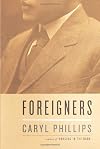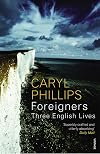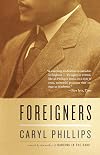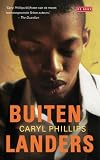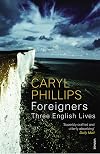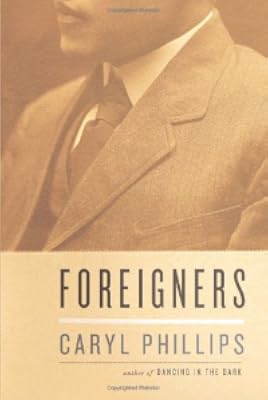
Foreigners
by Caryl Phillips
On This Page
Description
"A powerful and affecting new book from Caryl Phillips: a hybrid of reportage, fiction, and historical fact that tells the stories of three black men whose lives speak resoundingly to the place and role of the foreigner in English society," "Francis Barber, "given" to the great eighteenth-century writer Samuel Johnson, more companion than servant, afforded an unusual depth of freedom that, after Johnson's death, hastened his wretched demise ... Randolph Turpin, who made history in 1951 by show more defeating Sugar Ray Robinson, becoming Britain's first black world-champion boxer, a top-class fighter for twelve years whose life ended in debt and despair ... David Oluwale, a Nigerian stowaway who arrived in Leeds in 1949, the events of whose life called into question the reality of English justice, and whose death at the hands of police in 1969 served as a wake-up call for the entire nation." "Each of these men's stories is rendered in a different, perfectly realized voice, Each illuminates the complexity and drama that lie behind the simple notions of haplessness that have been used to explain the tragedy of these lives. And each explores, in entirely new ways, the themes - at once timeless and urgent - that have been at the heart of all of Caryl Phillips's work: belonging, identity, and race."--BOOK JACKET. show lessTags
Recommendations






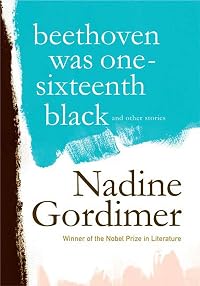
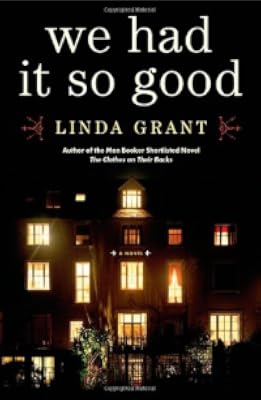
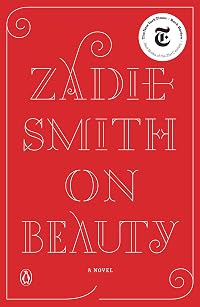


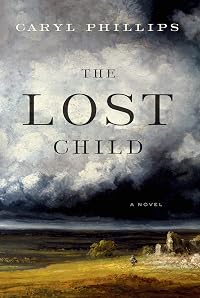






Member Recommendations

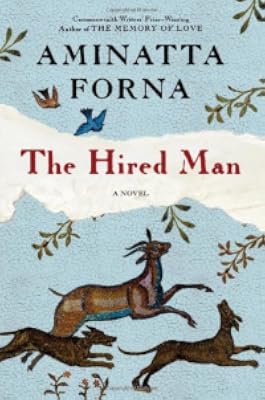
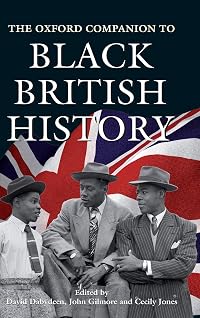
charl08 Kester's book is a non-fiction account of Oluwale's life featured in Phillips' book.
Member Reviews
Foreigners is a novel constructed of three stories, each about a Black man who migrated to England, each of them in different circumstances and in different times. First is Francis Barber, a slave given to the writer Samuel Johnson in the 18th century. This story is narrated by a caring colleague of Johnson's who compassionately observes Barber at his master's funeral but rationalizes his failure to reach out to the now freed but unrooted "immigrant." He seeks out Barber many years later and describes the man's attempt to build an honorable life in the face of social isolation, marginalization, and neglect.
The second story is that of Randolph Turpin, the son of an immigrant from British Guiana who defeats middleweight champion Sugar show more ray Reynolds in the boxing ring in 1951. Turpin's own status as champion is short-lived and this story, which especially reads like non-fiction (they all do, but in differing voices), again illustrates the challenge of a Black man making it in England. Social isolation, marginalization, neglect ---- yep, they collude to undermine his ability to break out of the one-dimensional mold established for the boxer by privileged society.
Finally, the third story is of a young immigrant (stowaway) from Nigeria and his too-short life in Leeds in the 1950s. A target of abusive and degrading "entertainment" by local police officers, David Oluwale is found dead in a river and "Northern Lights" reads like a series of reports or interviews by anonymous citizens who knew him while he was living rough in the streets of Leeds. We are also provided excerpts from the trial of the two police officers charged with manslaughter in David's death.
I think this is an excellent novel with its dispassionate and paradoxically emotional exploration of being "other," of being a "foreigner" living on the margins of society. Phillips considers the different manner in which each of these men tries to cope with their situation, which can be and is considered by some to amount to their own contributions to their tragic endings. Whether they try to assimilate and adapt, or fight, or passively allow their detractors to abuse and torment them, the ending is basically the same. White society sees the men in unidimensional, stereotyped say; no behavioral route on their part will change the story.
It sounds depressing and, in fact, it is. It's also a beautifully narrated story with tremendous depth for a reader who's willing to go there. show less
The second story is that of Randolph Turpin, the son of an immigrant from British Guiana who defeats middleweight champion Sugar show more ray Reynolds in the boxing ring in 1951. Turpin's own status as champion is short-lived and this story, which especially reads like non-fiction (they all do, but in differing voices), again illustrates the challenge of a Black man making it in England. Social isolation, marginalization, neglect ---- yep, they collude to undermine his ability to break out of the one-dimensional mold established for the boxer by privileged society.
Finally, the third story is of a young immigrant (stowaway) from Nigeria and his too-short life in Leeds in the 1950s. A target of abusive and degrading "entertainment" by local police officers, David Oluwale is found dead in a river and "Northern Lights" reads like a series of reports or interviews by anonymous citizens who knew him while he was living rough in the streets of Leeds. We are also provided excerpts from the trial of the two police officers charged with manslaughter in David's death.
I think this is an excellent novel with its dispassionate and paradoxically emotional exploration of being "other," of being a "foreigner" living on the margins of society. Phillips considers the different manner in which each of these men tries to cope with their situation, which can be and is considered by some to amount to their own contributions to their tragic endings. Whether they try to assimilate and adapt, or fight, or passively allow their detractors to abuse and torment them, the ending is basically the same. White society sees the men in unidimensional, stereotyped say; no behavioral route on their part will change the story.
It sounds depressing and, in fact, it is. It's also a beautifully narrated story with tremendous depth for a reader who's willing to go there. show less
Caryl Phillips writes with great power and beauty. Many of his books create a world in which the familiar becomes unfamiliar, as Phillips often writes from the point of view of new immigrants. Caryl Phillips latest work, "Foreigners: Three English Lives", combines three separate tales of black men in Great Britain. All three characters are based on actual individuals whose biographies are mixed by Philips with invented narration and moment.
The first novella concerns Francis Barber who found himself in an awkward place as both servant and friend to the 18th century English intellectual Dr. Johnson - who is best remembered as the originator of the dictionary. The second novella brings us up to the 1950's as we consider boxer Randy show more Turpin and his surprising defeat of the champion Sugar Ray Robinson for boxing's middleweight title in a fierce match in 1951. The third novella tracks, through multiple viewpoints and voices, the death of David Oluwale at the hands of the British police in 1968.
Caryl Phillips, by combining three disparate experiences of black men in Britain, forces us to break free from our stereotypes and look at Barber, Turpin and Oluwale as individuals. The three men are united by the color of their skin and the prejudices they experienced, but their separate and precious lives stand out as jewels on velvet. Highly recommended. show less
The first novella concerns Francis Barber who found himself in an awkward place as both servant and friend to the 18th century English intellectual Dr. Johnson - who is best remembered as the originator of the dictionary. The second novella brings us up to the 1950's as we consider boxer Randy show more Turpin and his surprising defeat of the champion Sugar Ray Robinson for boxing's middleweight title in a fierce match in 1951. The third novella tracks, through multiple viewpoints and voices, the death of David Oluwale at the hands of the British police in 1968.
Caryl Phillips, by combining three disparate experiences of black men in Britain, forces us to break free from our stereotypes and look at Barber, Turpin and Oluwale as individuals. The three men are united by the color of their skin and the prejudices they experienced, but their separate and precious lives stand out as jewels on velvet. Highly recommended. show less
 This review was written for LibraryThing Early Reviewers.
The three novellas in this book recount the stories of three black men in Britain, one from the eighteenth century, and two from the mid-twentieth. These three men were real historical people, and so the stories are doubly reconstructions: they are Phillips' fictionalized narratives on the one hand, but they are each also attempts by various narrators in the text to piece together and retell these men's lives, always retrospectively. Their stories are told through a range of voices and points of view -- first person in one, third-person journalistic in another, and, in the last novella, multiple first-person, third-person, and even some strikingly lyrical second-person narration -- but never from these men's own perspectives. As such, show more the central characters remain something of a mystery, always seen from outside, an effect that reinforces the profound isolation that these men all share, in Phillips' telling. Phillips avoids easy or simplistic messages, giving us instead a complex picture not only of three flawed, struggling, alienated, yet sympathetic characters but also of the complicated ways that race has inflected British society and history. (for LTER) show less
This review was written for LibraryThing Early Reviewers.In Foreigners, Caryl Philips, presents three profiles of black men in England: Francis Barber, the servant and companion of dictionary creator Dr. Johnson; boxer Randy Turpin, who beat Sugar Ray Robinson for the world middleweight title in 1951; and David Oluwale, who’s 1968 racially-motivated killing by police scandalized Britain. Although technically novellas, the main characters were real people and the profiles combine fiction with biography and journalism.
The three pieces are united by the theme of “foreignness,” examining how each of the three men were outsiders in their worlds, but vary in their style and impact. “Dr. Johnson’s Watch,” about Barber, is a formal, first person account. “Made in Wales,” about Turpin, show more is straightforwardly biographical. The final piece, “Northern Lights,” about Oluwale, entwines multiple narrative voices with excerpts from public records. The lack of stylistic continuity – especially the radically different style of the last story – is distracting and weakens the thematic coherence of the book.
I prefered the second piece. Turpin's rags-to-riches-to-rags story really dragged me in. On the other hand, the final story about Oluwale was too disjointed and abstract for my taste.
None of the profiles is fully sympathetic. The main characters are shown with all their faults and weaknesses, and from a historic perspective that distances the reader. While this adds to the idea that the three men are foreign from those around them, it lessens the reader’s ability to fully engage with the book. show less
The three pieces are united by the theme of “foreignness,” examining how each of the three men were outsiders in their worlds, but vary in their style and impact. “Dr. Johnson’s Watch,” about Barber, is a formal, first person account. “Made in Wales,” about Turpin, show more is straightforwardly biographical. The final piece, “Northern Lights,” about Oluwale, entwines multiple narrative voices with excerpts from public records. The lack of stylistic continuity – especially the radically different style of the last story – is distracting and weakens the thematic coherence of the book.
I prefered the second piece. Turpin's rags-to-riches-to-rags story really dragged me in. On the other hand, the final story about Oluwale was too disjointed and abstract for my taste.
None of the profiles is fully sympathetic. The main characters are shown with all their faults and weaknesses, and from a historic perspective that distances the reader. While this adds to the idea that the three men are foreign from those around them, it lessens the reader’s ability to fully engage with the book. show less
This review was written for LibraryThing Early Reviewers.These are three interlocking "stories" dissecting the lives of three black men in Britain. Diverse yet oddly interconnected, written so that the fictional and non-fictional are indistinguishable (and thus earning the ellipses around "stories"), the stories set out rather straightforwardly tales of the everyday, even when the figures are public and visible. Phillips writes excruciatingly well, and I especially enjoyed the last story, where he drifts in and out of the heads of many observers, maintaining a rarely genuine voice for each separate observer.
This is a subtle book and a thoughtful book, but not an engrossing or compelling work. I had to keep reading, and some of the images and tableaus will not leave me, but nothing in the book show more grabbed and held me, or left me feeling I had discovered new, unexpected or particularly profound insight into any of the characters or their world. The reading experience was peculiarly ordinary. Yet, I keep thinking about it. show less
This is a subtle book and a thoughtful book, but not an engrossing or compelling work. I had to keep reading, and some of the images and tableaus will not leave me, but nothing in the book show more grabbed and held me, or left me feeling I had discovered new, unexpected or particularly profound insight into any of the characters or their world. The reading experience was peculiarly ordinary. Yet, I keep thinking about it. show less
This review was written for LibraryThing Early Reviewers.With this review, I read the other reviews posted first. Since I am a big fan of Caryl Philips I wanted to see how this book appeared to others. The first book that I read by Carlyl Phillips was "Cambridge" published in 1992. I was hooked. I do think Foreigners deserves at least 4 stars because it is so well written. It is literature. It is actually not a novel but 3 novellas and each must be treated separately. The common bond is little more than their colour and country but that is a great deal where Britain is concerned. It might also be looked at as the stories of 3 men who, in spite of certain advantages, ruined their own lives. This would only, however, be applicable to the first 2 stories. The 3rd story is not so straightforward show more yet David Oluwale by his sheer stubbornness and dignity also walked away from opportunities which might have made his life easier. The story of David is in a class of its own, combining history and an imagined inner life of a person who really existed but was not himself an historical figure like the other characters. I am assuming that the history is correct as it seems carefully researched but in this story the author must insert more of his imagination.
If I were to choose among the novellas, I would have to say that I enjoyed the story of "Made in Wales" the least. I find the sport of boxing repugnant even today simply because of its history which is not common knowledge or at least is ignored. Hundreds of young men in the US, mostly black, have died from the sport. Scores more have been permanently brain damaged. Turpin chooses his career but does he in fact have less choice than if he had been white? Is that also true for many American black men? Otherwise, Turpin's story differs little from the stories of many boxers, white or black, who make poor personal and financial choices and end up penniless when they leave the ring. Mr Phillips never drives a point home with a sledge hammer and we have a story where we can make our own judgments of Mr Turpin.
The story of Francis Barber is both amusing and sad. We see the conflicting attitudes of Dr Johnson to his servant who was a friend (but how), his servant (not a slave but should not leave his master), a companion (but mostly one-sided) and someone who should be given a classical education (but why). The story doesn't really tell how or why the generous sum left to Mr Barber in Dr. Johnson's will disappeared resulting in poverty for himself and family. There is a hint that he may have been cheated by the Executors but nothing substantial. Otherwise we are left with the conclusion that he has done it to himself by being foolish in his expenditures. The treatment of his family is interesting but hardly surprising. There was severe prejudice against black people in Britain but it was different than the US. In Britain blacks were initially brought as novelty servants for the rich, but some also emigrated on their own. They never had, until the end of the 20th century, the sheer numbers of the US. The British at that time (has anything changed?) disliked any kind of foreigners and black faces would always be foreigners.
These are very readable stories and I highly recommend them. show less
If I were to choose among the novellas, I would have to say that I enjoyed the story of "Made in Wales" the least. I find the sport of boxing repugnant even today simply because of its history which is not common knowledge or at least is ignored. Hundreds of young men in the US, mostly black, have died from the sport. Scores more have been permanently brain damaged. Turpin chooses his career but does he in fact have less choice than if he had been white? Is that also true for many American black men? Otherwise, Turpin's story differs little from the stories of many boxers, white or black, who make poor personal and financial choices and end up penniless when they leave the ring. Mr Phillips never drives a point home with a sledge hammer and we have a story where we can make our own judgments of Mr Turpin.
The story of Francis Barber is both amusing and sad. We see the conflicting attitudes of Dr Johnson to his servant who was a friend (but how), his servant (not a slave but should not leave his master), a companion (but mostly one-sided) and someone who should be given a classical education (but why). The story doesn't really tell how or why the generous sum left to Mr Barber in Dr. Johnson's will disappeared resulting in poverty for himself and family. There is a hint that he may have been cheated by the Executors but nothing substantial. Otherwise we are left with the conclusion that he has done it to himself by being foolish in his expenditures. The treatment of his family is interesting but hardly surprising. There was severe prejudice against black people in Britain but it was different than the US. In Britain blacks were initially brought as novelty servants for the rich, but some also emigrated on their own. They never had, until the end of the 20th century, the sheer numbers of the US. The British at that time (has anything changed?) disliked any kind of foreigners and black faces would always be foreigners.
These are very readable stories and I highly recommend them. show less
This review was written for LibraryThing Early Reviewers.LT early reviewer:
My strongest overall impression of this work is the apparent deterioration in the treatment of black men in England between the first story (1700s) and the third and last story (mid to late 1900s). Phillips brings us the mostly tragic true (but embellished) stories of three black men from English history - Dr. Johnson's servant; a boxing champion; and an African immigrant. Dr. Johnson's servent seems to come to a tragic end mostly due to his own inability to find his way after his long-term employer's death. Turpin, the boxer, is much his own worst enemy, but is also "fed upon" by white and black hangers-on, and the white community which was his home failed to provide support or assistance once he was no longer a star. show more The African immigrant's story, however, is more like that of an American inner-city black - a story of closed doors, no opportunity, hopelessness, and police brutality, at a time when the idea that racial prejudice is inhumane was just beginning to be more generally accepted.
Overall, an interesting and fairly enjoyable read. Certainly educational. That combined with the importance of the subject matter make this a strongly recommended work.
The memoirist/reporter style is a bit dry for the long haul, but the structure and the subject matter provide plenty to keep the reader plugged in. The multiple voices in the last story, switching without much warning and often without clear identification, make it a bit difficult. But it does achieve the documentary feel that is apparently intended.
Os. show less
My strongest overall impression of this work is the apparent deterioration in the treatment of black men in England between the first story (1700s) and the third and last story (mid to late 1900s). Phillips brings us the mostly tragic true (but embellished) stories of three black men from English history - Dr. Johnson's servant; a boxing champion; and an African immigrant. Dr. Johnson's servent seems to come to a tragic end mostly due to his own inability to find his way after his long-term employer's death. Turpin, the boxer, is much his own worst enemy, but is also "fed upon" by white and black hangers-on, and the white community which was his home failed to provide support or assistance once he was no longer a star. show more The African immigrant's story, however, is more like that of an American inner-city black - a story of closed doors, no opportunity, hopelessness, and police brutality, at a time when the idea that racial prejudice is inhumane was just beginning to be more generally accepted.
Overall, an interesting and fairly enjoyable read. Certainly educational. That combined with the importance of the subject matter make this a strongly recommended work.
The memoirist/reporter style is a bit dry for the long haul, but the structure and the subject matter provide plenty to keep the reader plugged in. The multiple voices in the last story, switching without much warning and often without clear identification, make it a bit difficult. But it does achieve the documentary feel that is apparently intended.
Os. show less
This review was written for LibraryThing Early Reviewers.Members
- Recently Added By
Lists

Must-Read Books by Black Authors
114 works; 92 members
Author Information

31+ Works 2,405 Members
Caryl Phillips, 1958 - Author Caryl Phillips was born in St. Kitts on March 13, 1958. He received a B.A. with honors from Oxford University and soon after began his writing career. He is now professor at Yale University and a visiting professor at Barnard College of Columbia University. Phillips has received many awards and fellowships and was show more appointed to the post of chief editor of the Faber and Faber Caribbean writers' series. Phillips' writing explores the challenges of dealing with such divisions as race and heritage, and investigates how they were created in the first place. In "Cambridge," he presents his characters confused identities and frequently compares their personal histories and questions the process of how stories become known as history. He draws links between groups, like the Jews during the Holocaust or Victorian women, to make analogies for the West Indian situation. (Bowker Author Biography) Caryl Phillips is the author of seven previous books. He divides his time between New York City and London. (Publisher Provided) show less
Awards and Honors
Distinctions
Common Knowledge
- People/Characters
- Francis Barber; Randolph Turpin; David Oluwale
Classifications
Statistics
- Members
- 90
- Popularity
- 357,533
- Reviews
- 16
- Rating
- (3.48)
- Languages
- Dutch, English
- Media
- Paper, Audiobook, Ebook
- ISBNs
- 13
- ASINs
- 1