On This Page
Description
New York Times bestselling author Harry Turtledove has intrigued readers with such thought-provoking "what if..." scenarios as a conquered Elizabethan England in Ruled Britannia and a Japanese occupation of Hawaii in Days of Infamy and End of the Beginning. Now, in the first of a brand-new trilogy, he rewrites the history of the world with the existence of an eighth continent.Atlantis lies between Europe and the East Coast of Terranova. For many years, this land of opportunity lured dreamers show more from around the globe with its natural resources, offering a new beginning for those willing to brave the wonders of the unexplored land. show lessTags
Recommendations












Member Recommendations
Member Reviews
In this alternative history, Atlantis is a sizable land mass that sits in the Atlantic ocean between England and Terra Nova. Multiple generations of the Radcliffe family are followed in this book, starting in the 1400s during the War of the Roses. In Part 1, Edward Radcliffe and his family are the first Englishman to settle in Atlantis. Part 2 is set a few generations later. The family has split and William Radcliff wants nothing to do with his pirate cousin Red Rodney Radcliffe. Part 3 makes another jump in time and we follow Victor Radcliffe as his society comes to terms with slavery.
There was much to enjoy about this book. First, I really like how the author took this mythical land and made it a real place on the map, one to be show more discovered and settled in the 1400s. Since Atlantis has been isolated from other land masses for some time, there are some interesting critters. My inner biologist reveled in these details. Also, the flightless birds of various sizes made it easier for the new settlers to gain a foothold, the birds being easy to catch and cook. Yet there are some dangerous beasties as well, ones that can tear out a man’s vertebrae!
Since the book is divided into three parts, it was more like reading three novellas set in the same land but during different time periods. Since I wasn’t aware of that going into the book, I think I got the most attached to Edward and his two sons, Henry and Richard, from Part 1. They make the discoveries, set the sailing route to and from England, and also negotiate the first settler rights of the land. Also, this was a time of exploring the land and getting to know the wildlife, which I thoroughly enjoyed.
When we get to Part 2, Red Rodney’s daughter, Ethel, is the character that stole the show. She’s being raised by a roguish pirate and has aspirations of captaining her own pirate ship when she is grown. In fact, she is the only female character of note in the entire story. There are a few other ladies that get names; a few even get a few lines. While Ethel is a thoroughly enjoyable character, she doesn’t make up for the very obvious lack of integral female characters for the rest of the book.
Part 3 takes on a pretty serious subject: human slavery. Victor struggles with what he knows of slaves and former slaves he has befriended and what he knows about the economics of the day. Victor truly believes that Atlantis cannot continue to be a financially independent country without slavery to run the plantations that make up the backbone of economy. The author doesn’t turn a blind eye to the nastier side of slavery but he also doesn’t revel in the brutality of the subject.
Throughout the three parts, Atlantis is not solely British. The Spaniards and French also find their way to the large land mass and make settlements of their own. Eventually, there are clashes. Some of these rivalries are continuations of European wars; some of them are purely Atlantis squabbles. These interactions were mostly interesting and only sometimes got a little unwieldy, and hence, a little boring.
The Narration: Todd McLaren did a good job. He had distinct voices for all the male characters and the few female characters that had lines. His various accents were well done. His voice for Ethel was great! show less
There was much to enjoy about this book. First, I really like how the author took this mythical land and made it a real place on the map, one to be show more discovered and settled in the 1400s. Since Atlantis has been isolated from other land masses for some time, there are some interesting critters. My inner biologist reveled in these details. Also, the flightless birds of various sizes made it easier for the new settlers to gain a foothold, the birds being easy to catch and cook. Yet there are some dangerous beasties as well, ones that can tear out a man’s vertebrae!
Since the book is divided into three parts, it was more like reading three novellas set in the same land but during different time periods. Since I wasn’t aware of that going into the book, I think I got the most attached to Edward and his two sons, Henry and Richard, from Part 1. They make the discoveries, set the sailing route to and from England, and also negotiate the first settler rights of the land. Also, this was a time of exploring the land and getting to know the wildlife, which I thoroughly enjoyed.
When we get to Part 2, Red Rodney’s daughter, Ethel, is the character that stole the show. She’s being raised by a roguish pirate and has aspirations of captaining her own pirate ship when she is grown. In fact, she is the only female character of note in the entire story. There are a few other ladies that get names; a few even get a few lines. While Ethel is a thoroughly enjoyable character, she doesn’t make up for the very obvious lack of integral female characters for the rest of the book.
Part 3 takes on a pretty serious subject: human slavery. Victor struggles with what he knows of slaves and former slaves he has befriended and what he knows about the economics of the day. Victor truly believes that Atlantis cannot continue to be a financially independent country without slavery to run the plantations that make up the backbone of economy. The author doesn’t turn a blind eye to the nastier side of slavery but he also doesn’t revel in the brutality of the subject.
Throughout the three parts, Atlantis is not solely British. The Spaniards and French also find their way to the large land mass and make settlements of their own. Eventually, there are clashes. Some of these rivalries are continuations of European wars; some of them are purely Atlantis squabbles. These interactions were mostly interesting and only sometimes got a little unwieldy, and hence, a little boring.
The Narration: Todd McLaren did a good job. He had distinct voices for all the male characters and the few female characters that had lines. His various accents were well done. His voice for Ethel was great! show less
What if Atlantis was real, never sank into the ocean, but was uninhabited? Instead of discovering the New World, English, Spanish and French settlers discover Atlantis and settle there instead. Set in the 1400 - 1700's, this alternate history explores what might have happened if such a new territory existed. A fun read, but it read a lot like the history of the USA, without the native American issue.
Opening Atlantis is the start of a new AH Science fiction series by the indefatigable master of Alternate History, Harry Turtledove.
Turtledove's Alternate Histories have had a broad range of points of divergence, although he has been lately sticking to more recent changes--the Civil War and the Second World War in particular. He has done some more unusual changes-- "Down in the Bottomlands" (his only Hugo win to date) posited a Mediterranean basin which never filled up, and the stories of A Different Flesh were set in a North America where the biota were Pleistocene remnants (and pre-Homo Pithecanthropi)
It is this penchant for unusual organisms and environments which inspires Opening Atlantis. What if, tens of millions of years ago, the show more North American continent ripped asunder, producing two continents, one of which consists mostly of what is in our world the Eastern Seaboard to just beyond the Applachians. This continent, closer to Europe, is discovered in the mid 15th century in the first portion of the volume...and is named Atlantis. This continent, being so isolated, has an unusual set of plant and animal life, with birds of all kinds as the dominant species.
Opening Atlantis tells three stories of Atlantis, ranging from its discovery, through a conflict between two descendants of the original discover, one of whom is a pirate, and finally the story of the Seven Years War (aka the French and Indian War) in Atlantis.
Turtledove focuses on the unusual biota of Atlantis in the first story, and they play an increasingly smaller role in the other two stories. I get the feeling this is partially due to Turtledove focusing on the conflicts between the human characters and the nations, and because of the merciless way that the Europeans and European creatures out compete the Atlantean birds. Its analogous in our own world to the story of Australia, where the native marsupials have not fared well against invading mammals in the wake of extensive human colonization.
Sure, I would have liked to see more of that versus the more military/political historical aspects, although its all well written and I enjoyed the book immensely.
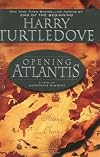
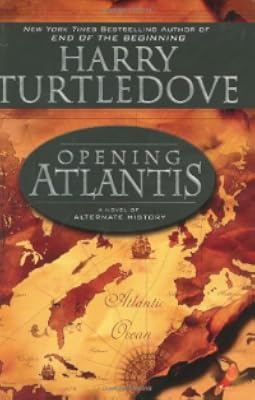
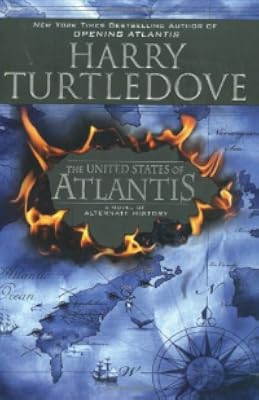
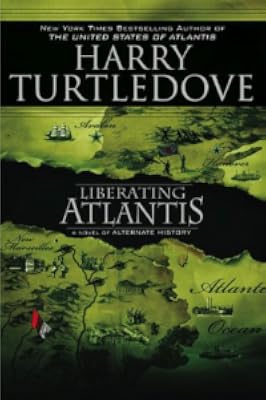
There is only one problem with the production values of the book. With a fractured and alternate geography like this, the book sorely needs and lacks, a map. The cover art has a fanciful (and clearly) wrong depiction of what the Western hemisphere with Atlantis might look like, but its not correct, and doesn't have any Atlantean cities on it.
The next volume will be called "The United States of Atlantis" and I suspect it will cover the Revolutionary War in Atlantis and beyond. Would I buy it? Without hesitation. show less
Turtledove's Alternate Histories have had a broad range of points of divergence, although he has been lately sticking to more recent changes--the Civil War and the Second World War in particular. He has done some more unusual changes-- "Down in the Bottomlands" (his only Hugo win to date) posited a Mediterranean basin which never filled up, and the stories of A Different Flesh were set in a North America where the biota were Pleistocene remnants (and pre-Homo Pithecanthropi)
It is this penchant for unusual organisms and environments which inspires Opening Atlantis. What if, tens of millions of years ago, the show more North American continent ripped asunder, producing two continents, one of which consists mostly of what is in our world the Eastern Seaboard to just beyond the Applachians. This continent, closer to Europe, is discovered in the mid 15th century in the first portion of the volume...and is named Atlantis. This continent, being so isolated, has an unusual set of plant and animal life, with birds of all kinds as the dominant species.
Opening Atlantis tells three stories of Atlantis, ranging from its discovery, through a conflict between two descendants of the original discover, one of whom is a pirate, and finally the story of the Seven Years War (aka the French and Indian War) in Atlantis.
Turtledove focuses on the unusual biota of Atlantis in the first story, and they play an increasingly smaller role in the other two stories. I get the feeling this is partially due to Turtledove focusing on the conflicts between the human characters and the nations, and because of the merciless way that the Europeans and European creatures out compete the Atlantean birds. Its analogous in our own world to the story of Australia, where the native marsupials have not fared well against invading mammals in the wake of extensive human colonization.
Sure, I would have liked to see more of that versus the more military/political historical aspects, although its all well written and I enjoyed the book immensely.
There is only one problem with the production values of the book. With a fractured and alternate geography like this, the book sorely needs and lacks, a map. The cover art has a fanciful (and clearly) wrong depiction of what the Western hemisphere with Atlantis might look like, but its not correct, and doesn't have any Atlantean cities on it.
The next volume will be called "The United States of Atlantis" and I suspect it will cover the Revolutionary War in Atlantis and beyond. Would I buy it? Without hesitation. show less
I was really hoping/expecting more sci-fi (or fantasy), and instead it's just an alternate look at what might happen if there was a landmass between the New World and Europe. It starts with the founding of a colony there and follows with a couple of stories involving people descended from the founder.
It's well written, but it's not something I would have read if not picked out for a book club.
It's well written, but it's not something I would have read if not picked out for a book club.
It was nice to read a Harry Turtledove book that was not about WWII. I had gotten tired of the Byzantine Empire before he did (although I still like the 4 Roman Legion books), and the same happened with WWII (WWII with aliens, WWII with dragons, WWII with the Confederate States, etc.)
This book is different from the last several of his that I have read or skimmed. It wasn't microfocused on a a few months or a year, but covered several hundred years by following members of the same family over time - and those several hundred years are not a time period I have seen him use before. I only caught a few instances of famous name dropping.
I found the premise interesting (an unsettled continent between Europe and North America). The people in show more the book periodically raised questions (why are the flora and fauna of Atlantis so different from that of Europe and the Americas?) that aren't explicitly answered in the course of the book - just like real life, all the answers weren't given.
On the other hand, various topics I think would have been interesting are barely covered. The book never has any naturalists come and explore the strange environment. It's not Turtledove's style, but I would have enjoy reading of a visit by Stephen Maturin (from Patrick O'Brian's Jack Aubrey novels) to the island. There's very little about the actual governing of Atlantis, the laws and taxes etc. It was an unsettled question when one episode ends, and when next began, it was settled, but we don't know how.
In fact, there is very little about everyday life, and the hopes and dreams of people in ordinary times. The book focuses on a few people (men, logically enough given the time periods covered) who by their actions played important parts in the history of Atlantis.
What Turtledove wrote makes for an exciting book, worth the shelf space. I would have also enjoyed a different book with a different focus about the same situation. show less
This book is different from the last several of his that I have read or skimmed. It wasn't microfocused on a a few months or a year, but covered several hundred years by following members of the same family over time - and those several hundred years are not a time period I have seen him use before. I only caught a few instances of famous name dropping.
I found the premise interesting (an unsettled continent between Europe and North America). The people in show more the book periodically raised questions (why are the flora and fauna of Atlantis so different from that of Europe and the Americas?) that aren't explicitly answered in the course of the book - just like real life, all the answers weren't given.
On the other hand, various topics I think would have been interesting are barely covered. The book never has any naturalists come and explore the strange environment. It's not Turtledove's style, but I would have enjoy reading of a visit by Stephen Maturin (from Patrick O'Brian's Jack Aubrey novels) to the island. There's very little about the actual governing of Atlantis, the laws and taxes etc. It was an unsettled question when one episode ends, and when next began, it was settled, but we don't know how.
In fact, there is very little about everyday life, and the hopes and dreams of people in ordinary times. The book focuses on a few people (men, logically enough given the time periods covered) who by their actions played important parts in the history of Atlantis.
What Turtledove wrote makes for an exciting book, worth the shelf space. I would have also enjoyed a different book with a different focus about the same situation. show less
Opening Atlantis is the first book of a new speculative fiction series from Harry Turtledove. I hope the pacing of this novel is not an indication of what is to come: an extended work that could easily be told in one volume. I found the pacing for this book almost unbearably slow. That is not to say there is no action in the book/ In fact, there is quite a bit of action in the opening and the ending, it is just the middle that I found so ponderous.
I know that speculative fiction or alternative history is supposed be present history as it never happened, but I have some problems with the foundation premise of this story. I have a hard time accepting a land mass the size of Turtledove’s Atlantis would have remained unknown for as long show more as it did. I also have a hard time that Portuguese fishermen would have stumbled onto this landmass and would not have claimed it and begun colonizing it. The time period for this happening coincides with the real beginning of the dominance of the Old World’s oceans and early colonization attempts by the Portuguese.
What follows is a slightly altered history of the world from the fifteenth through the eighteenth century. The English still fight the French who fight the Spanish and the Portuguese are forgotten except when they fight the Dutch. A subtext of destroying the land through over development and over hunting / fishing is also laid down. As I said, very ponderous reading.
The story ended just as I was starting to get into the politics of the characters. If I chance across and subsequent installments, I will probably read them. I did not find the story compelling enough to want to go out and pursue more of it. I do enjoy alternative history, I just did not find this story all that different.
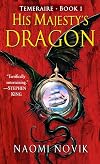
I’m going just above mediocre for my rating of this. If you are a fan of Harry Turtledove, you will probably want to get this for your collection. If you enjoy historical fiction, you might enjoy this. If you are looking for a more radical departure from history, this is not it; try His Majesty’s Dragon instead. show less
I know that speculative fiction or alternative history is supposed be present history as it never happened, but I have some problems with the foundation premise of this story. I have a hard time accepting a land mass the size of Turtledove’s Atlantis would have remained unknown for as long show more as it did. I also have a hard time that Portuguese fishermen would have stumbled onto this landmass and would not have claimed it and begun colonizing it. The time period for this happening coincides with the real beginning of the dominance of the Old World’s oceans and early colonization attempts by the Portuguese.
What follows is a slightly altered history of the world from the fifteenth through the eighteenth century. The English still fight the French who fight the Spanish and the Portuguese are forgotten except when they fight the Dutch. A subtext of destroying the land through over development and over hunting / fishing is also laid down. As I said, very ponderous reading.
The story ended just as I was starting to get into the politics of the characters. If I chance across and subsequent installments, I will probably read them. I did not find the story compelling enough to want to go out and pursue more of it. I do enjoy alternative history, I just did not find this story all that different.
I’m going just above mediocre for my rating of this. If you are a fan of Harry Turtledove, you will probably want to get this for your collection. If you enjoy historical fiction, you might enjoy this. If you are looking for a more radical departure from history, this is not it; try His Majesty’s Dragon instead. show less
The premise of the book seems to be that part of North American (everything east of the Mississippi, judging from the cover art) broke off from the main continent. This landmass is much closer to Europe than the New World was, and thus is discovered and colonized much quicker (1451).
Part 1 of the book covers the discovery of the new continent, which is quickly dubbed "Atlantis." Breton fishermen know of the existence of Atlantis, and give this knowledge to an English fisherman in exchange for a third of his catch. The Englishmen see Atlantis as a place ripe for colonization, and move quickly to start a settlement there.
Things go quite well for them, even as French and Spanish colonies are founded on the coast south of the English. show more Atlantis is, after all, big enough for everyone. Until an English noble who backed the wrong people in the Wars of the Roses is exiled to Atlantis, and decides to make it his own kingdom.
Part 1 has definite American Revolution overtones, with it's rejection of unfairly-imposed taxation. It also sets the stage for settler/European conflict which dots the rest of the book. Part 1 does it's job, though; it sets the stage for the book (and the trilogy, for that matter), and introduces us to the family whose history we will be following -- the Radcliffes.
Part 2 shows Atlantis 200 years later, and a conflict between pirates led by Red Rodney Radcliffe and the English settlers of Stuart led by his cousin William Radcliff. Red Rodney has been preying on all manner of shipping around Atlantis, and this has made him some enemies. The settlers ally themselves with English and Dutch sailors to fight the pirates.
We see more tension between Atlanteans and Europeans in part 2. This section parallels the battles with privateers and pirates in our own timeline in the 1600s. We start to see that Atlanteans view themselves as independent, and that their European cousins see them as backwoods bumpkins who certainly aren't proper subjects of the Crown.
Part 3 gives us this timeline's version of the French and Indian War. This is one of the things that I really don't enjoy in alternate history, and it's a weakness that I found in Turtledove's Great War/Settling Accounts saga -- the determination to present parallels to wars that were fought in our own timeline. It becomes very predictable, and you end up reading to see which character is going to be the new timeline's Lincoln, or Washington, or Rommel, etc. The account of English Atlantean guerilla warfare in French and Spanish territory was interesting, but I'm hoping that the next book in the series doesn't start out with a meeting of a doppleganger Continental Congress getting ready to declare independence from England.
I really liked the fact that Turtledove is focusing on one family as the movers and shakers of English Atlantis. That's something new for him, and I think it works well. The book was enjoyable, with a couple of reservations that I've mentioned above. I wish there was an actual map of Atlantis in the book, though that is a possibility for the second book, I'm sure. There are some anachronisms in the book, which reviewers on Amazon.com have been quick to point out, but those aren't glaring to me. I was amazed at the ability of the English to start a successful settlement right away in Atlantis, but these settlers did not face many of the challenges that the first settlers in North America faced when they arrived here. Opening Atlantis is not up to Turtledove's usual standards, and is far inferior to Ruled Britannia, but is still worth reading. I'll have to read the second book of this trilogy to see if it really has any promise, though. show less
Part 1 of the book covers the discovery of the new continent, which is quickly dubbed "Atlantis." Breton fishermen know of the existence of Atlantis, and give this knowledge to an English fisherman in exchange for a third of his catch. The Englishmen see Atlantis as a place ripe for colonization, and move quickly to start a settlement there.
Things go quite well for them, even as French and Spanish colonies are founded on the coast south of the English. show more Atlantis is, after all, big enough for everyone. Until an English noble who backed the wrong people in the Wars of the Roses is exiled to Atlantis, and decides to make it his own kingdom.
Part 1 has definite American Revolution overtones, with it's rejection of unfairly-imposed taxation. It also sets the stage for settler/European conflict which dots the rest of the book. Part 1 does it's job, though; it sets the stage for the book (and the trilogy, for that matter), and introduces us to the family whose history we will be following -- the Radcliffes.
Part 2 shows Atlantis 200 years later, and a conflict between pirates led by Red Rodney Radcliffe and the English settlers of Stuart led by his cousin William Radcliff. Red Rodney has been preying on all manner of shipping around Atlantis, and this has made him some enemies. The settlers ally themselves with English and Dutch sailors to fight the pirates.
We see more tension between Atlanteans and Europeans in part 2. This section parallels the battles with privateers and pirates in our own timeline in the 1600s. We start to see that Atlanteans view themselves as independent, and that their European cousins see them as backwoods bumpkins who certainly aren't proper subjects of the Crown.
Part 3 gives us this timeline's version of the French and Indian War. This is one of the things that I really don't enjoy in alternate history, and it's a weakness that I found in Turtledove's Great War/Settling Accounts saga -- the determination to present parallels to wars that were fought in our own timeline. It becomes very predictable, and you end up reading to see which character is going to be the new timeline's Lincoln, or Washington, or Rommel, etc. The account of English Atlantean guerilla warfare in French and Spanish territory was interesting, but I'm hoping that the next book in the series doesn't start out with a meeting of a doppleganger Continental Congress getting ready to declare independence from England.
I really liked the fact that Turtledove is focusing on one family as the movers and shakers of English Atlantis. That's something new for him, and I think it works well. The book was enjoyable, with a couple of reservations that I've mentioned above. I wish there was an actual map of Atlantis in the book, though that is a possibility for the second book, I'm sure. There are some anachronisms in the book, which reviewers on Amazon.com have been quick to point out, but those aren't glaring to me. I was amazed at the ability of the English to start a successful settlement right away in Atlantis, but these settlers did not face many of the challenges that the first settlers in North America faced when they arrived here. Opening Atlantis is not up to Turtledove's usual standards, and is far inferior to Ruled Britannia, but is still worth reading. I'll have to read the second book of this trilogy to see if it really has any promise, though. show less
Members
- Recently Added By
Lists

Best Alternate History
111 works; 60 members
Author Information

279+ Works 43,267 Members
Harry Turtledove was born in Los Angeles, California on June 14, 1949. He received a Ph.D. in Byzantine history from UCLA in 1977. From the late 1970's to the early 1980's, he worked as a technical writer for the Los Angeles County Office of Education. He left in 1991 to become full-time writer. His first two novels, Wereblood and Werenight, were show more published in 1979 under the pseudonym Eric G. Iverson because his editor did not think people would believe that Turtledove was his real name. He used this name until 1985 when he published Herbig-Haro and And So to Bed under his real name. He has received numerous awards including the Homer Award for Short Story for Designated Hitter in 1990, the John Esthen Cook Award for Southern Fiction for Guns of the Southand in 1993, and the Hugo Award for Novella for Down in the Bottomlands in 1994. (Bowker Author Biography) show less
Awards and Honors
Awards
Series

Common Knowledge
- Canonical title
- Opening Atlantis
- Original publication date
- 2007
- People/Characters
- Edward Radcliffe; Henry Radcliffe; Richard Radcliffe; William Radcliffe; Red Rodney Radcliffe; Ethel Radcliffe (show all 8); Victor Radcliffe; Blaise Black
- Important places
- Atlantis
- First words
- Edward Radcliffe steered the St. George toward Le Croisic.
- Last words
- (Click to show. Warning: May contain spoilers.)"I don't know," Victor said again.
- Blurbers
- D'Ammassa, Don
Classifications
Statistics
- Members
- 474
- Popularity
- 64,567
- Reviews
- 14
- Rating
- (3.34)
- Languages
- English, French
- Media
- Paper, Audiobook, Ebook
- ISBNs
- 13
- ASINs
- 6