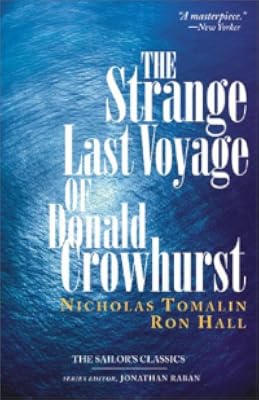
The Strange Last Voyage of Donald Crowhurst
by Nicholas Tomalin, Ron Hall
On This Page
Description
Now a major motion picture starring Colin Firth and Rachel Weisz, directed by James Marsh (The Theory of Everything). In 1968, Donald Crowhurst was trying to market a nautical navigation device he had developed, and saw the Sunday Times Golden Globe round the world sailing race as the perfect opportunity to showcase his product. Few people knew that he wasn't an experienced deep-water sailor. His progress was so slow that he decided to short-cut the journey, while falsifying his location show more through radio messages from his supposed course. Everyone following the race thought that he was winning, and a hero's welcome awaited him at home in Britain. But on 10 July 1968, eight months after he set off, his wife was told that his boat had been discovered drifting in mid-Atlantic. Crowhurst was missing, assumed drowned, and there was much speculation that this was one of the great mysteries of the sea. In this masterpiece of investigative journalism, Nicholas Tomalin and Ron Hall reconstruct one of the greatest hoaxes of our time. From in-depth interviews with Crowhurst's family and friends and telling excerpts from his logbooks, Tomalin and Hall develop a tale of tragic self-delusion and public deception, a haunting portrait of a complex, deeply troubled man and his journey into the heart of darkness. show lessTags
Recommendations


















Member Recommendations
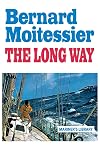
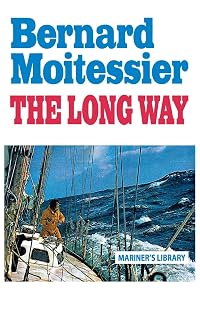
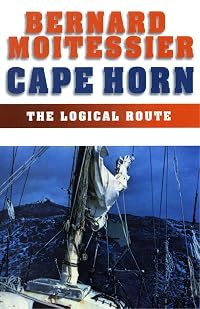
bluepiano What Tomalin wrote of Moitessier and the excerpts from Moitessier's log he quoted led me to read this. It's more a collection of descriptions of his voyage, his observations and thoughts, than an account of the contest but it's none the worse for that.
Member Reviews
In 1968, lone sailor Donald Crowhurst on his trimaran Teignmouth Electron was supposed to be sailing home to a heroes welcome in England having won a highly publicized around the world race. Instead, his boat was founding drifting abandoned, Crowhurst assumed tragically lost at sea. It slowly emerged as his logs were examined that in fact Crowhurst had been living a massive lie. Instead of circumnavigating the world, Crowhurst had realised his ill-prepared vessel was not up to the voyage. Unable to deal with the consequences of pulling out, he had had spent months idling in the South Atlantic sending out fake reports on his progress while he tried to deal with the inevitable consequences of his fraud. In the end, he literally went mad, show more writing sprawling and sometimes incoherent treatises on the nature of existence. Eventually, unable to live with his lies anymore, Crowhurst, literally describing his decision to end himself as THE MERCY, calmly stepped overboard and watched the yacht sail away without him. This fascinating book was actually written in 1970, after painstaking examination of his logs and messages. Incredibly detailed, written with obvious in depth knowledge of sailing and navigation, it is both a technically precise account of the voyage and a movingly haunting story of a brave if flawed man who made a massive miscalculation and in the end decided only his life would serve as atonement. A very sad story that merits a new audience. Great stuff. show less
A chilling story of madness at sea. Crowhurst scraped together a shattered and failed life in one last bid for redemption, entering an early around-the-world sailing race. His boat, and his life were a wreck even before he started, and it all went downhill from there. The extraordinary aspect to his story of deception is not that he faked his journey, but that in part he was responsible for the disaster's that overtook the rest of that fleet as they tried to keep up with his false reports of remarkable progress. In the end his plan of coming in somewhere in the 'middle of the pack' fell apart when as everyone else dropped out he was left the race leader. Knowing that he would be subject to intense investigation if he won (he was already show more under suspicion) he made a final attempt to falsify his log books in a final descent into madness, pieced together from the evidence he left aboard his abandoned boat in the middle of the Atlantic. show less
Crowhurst's over the top character can't match reality to his heroic self image. He's pushed out of the RAF and the army, and somehow this penniless failed businessman ends up as a competitor in the Observer single handed round the world yacht race. After dawdling around the Atlantic and creating a fake round the world log of record beating runs and adventures he's on the point of being caught so he changes the game and decides that he is God!!
I was a bit surprised by how completely arresting a read this turned out to be. I first heard of Donald Crowhurst and this account of his tragic voyage when reading about the conceptual artist, Bas Jan Ader. In attempting a trans-Atlantic voyage for the completion of his project In Search of the Miraculous, Ader also tragically lost his life at sea. Among his possessions left behind at home was a copy of The Strange Last Voyage of Donald Crowhurst.
This account of Crowhurst's trip is both fascinating and haunting. It is heart wrenching to read about his passage from ambition to deception, and finally to uncertainty and madness. The authors do an exceptional job of supporting the passages from Crowhurst's detailed log books with show more thoughtful exposition. A sad but engrossing read. show less
This account of Crowhurst's trip is both fascinating and haunting. It is heart wrenching to read about his passage from ambition to deception, and finally to uncertainty and madness. The authors do an exceptional job of supporting the passages from Crowhurst's detailed log books with show more thoughtful exposition. A sad but engrossing read. show less
This is a wonderful book about a truly remarkable, moving and literally tragic misadventure. I first stumbled across Donald Crowhurst's story through a terrific Channel 4 feature film, Deep Water, and was so captivated by it that I bought this and another account of the race (fellow competitor Bernard Moitessier's The Long Way (which, for the record, doesn't really touch on the Crowhurst story)).
The Bard himself could not have scripted a tragedy better than this. Crowhurst, a mercurial but fundamentally unremarkable director of a struggling electronics business, hits upon a means of saving his business and assuring his family's future: entering (and winning) the 1968 Sunday Times single-handed non-stop round-the-world yacht race.
Yes; show more quite.
Not only, he rationalises, will his entry publicise his firm's own brand of navigational equipment, but the £5000 prize will satisfy an ever more anxious major creditor. His plan to win, cobbled together from a standing start in six months, is to use an (at the time) almost unheard-of design: the trimaran, substantially of his own specification.
No matter that, a weekend yachtsman, Crowhurst has never been out of the Solent and has no realistic chance of beating the hoary old sea-dogs, renowned explorers and ex-navy officers already signed up for the race. No matter that preparing the boat involves raising further finance from the same major creditor who was already breathing down Crowhurst's neck (you do have to wonder what *he* was thinking, don't you). No matter that there is no time to have the boat properly finished, let alone thoroughly ocean-trialled.
And thereafter a perfect, inevitable, tragedy unfolds. Crowhurst is carried by events, some of his own making, to prosecute a plan it is plain, even to him, is madness. But events and circumstances spur him on. A BBC film crew is following him. A rather over-excited publicist inflates expectations. Before he knows it, Crowhurst is off the coast of Portugal in a slow, leaking, malfunctioning, poorly provisioned boat, fearing for his life if he should go on, and for his solvency and marriage should he not. He realises there his no hope of success, but is compellingly obliged to soldier on, stiff upper lip, and makes the hasty and fatal decision to exaggerate his progress. From that point on, fortune's wheel is set.
The ironies and twists of fate which thereafter play out and force events to their sorry conclusion are so cruel that one can hardly blame Crowhurst for reneging on a lifetime's atheism and laying his plight at the hands of a malicious (and game-playing) God. The saddest irony of all was the last: Crowhurst, never intending to do anything but come in a respectable but uninteresting last, announces (to add some drama!), that he is closing on the last remaining competitor who, in panic, redoubles his efforts to coax his own damaged, worn out and jury-rigged boat faster, causing it to break up entirely and sink - leaving Crowhurst to win (if he arrives home at all) by default - the one thing he simply cannot afford to do.
Tomalin and Hall's book, which came out within a year of the original event, is an expertly pieced-together and beautifully written forensic study of the whole awful saga, and charts sympathetically and extensively Crowhurst's descent into what they assume (plausibly enough to me) to have been a form of paranoid schizophrenia by the end of his life. The relation of Crowhurst's final plunge into the abyss, and his final burst of energy in recording his cosmic revelation is by turns dreadful and somehow uplifting: here is a hero going out in true Nietzschean style with the psychology of the tragic poet: "Not so as to get rid of pity and terror ... but beyond pity and terror, to realise in oneself the eternal joy of becoming - that joy which also encompasses the joy in destruction" show less
The Bard himself could not have scripted a tragedy better than this. Crowhurst, a mercurial but fundamentally unremarkable director of a struggling electronics business, hits upon a means of saving his business and assuring his family's future: entering (and winning) the 1968 Sunday Times single-handed non-stop round-the-world yacht race.
Yes; show more quite.
Not only, he rationalises, will his entry publicise his firm's own brand of navigational equipment, but the £5000 prize will satisfy an ever more anxious major creditor. His plan to win, cobbled together from a standing start in six months, is to use an (at the time) almost unheard-of design: the trimaran, substantially of his own specification.
No matter that, a weekend yachtsman, Crowhurst has never been out of the Solent and has no realistic chance of beating the hoary old sea-dogs, renowned explorers and ex-navy officers already signed up for the race. No matter that preparing the boat involves raising further finance from the same major creditor who was already breathing down Crowhurst's neck (you do have to wonder what *he* was thinking, don't you). No matter that there is no time to have the boat properly finished, let alone thoroughly ocean-trialled.
And thereafter a perfect, inevitable, tragedy unfolds. Crowhurst is carried by events, some of his own making, to prosecute a plan it is plain, even to him, is madness. But events and circumstances spur him on. A BBC film crew is following him. A rather over-excited publicist inflates expectations. Before he knows it, Crowhurst is off the coast of Portugal in a slow, leaking, malfunctioning, poorly provisioned boat, fearing for his life if he should go on, and for his solvency and marriage should he not. He realises there his no hope of success, but is compellingly obliged to soldier on, stiff upper lip, and makes the hasty and fatal decision to exaggerate his progress. From that point on, fortune's wheel is set.
The ironies and twists of fate which thereafter play out and force events to their sorry conclusion are so cruel that one can hardly blame Crowhurst for reneging on a lifetime's atheism and laying his plight at the hands of a malicious (and game-playing) God. The saddest irony of all was the last: Crowhurst, never intending to do anything but come in a respectable but uninteresting last, announces (to add some drama!), that he is closing on the last remaining competitor who, in panic, redoubles his efforts to coax his own damaged, worn out and jury-rigged boat faster, causing it to break up entirely and sink - leaving Crowhurst to win (if he arrives home at all) by default - the one thing he simply cannot afford to do.
Tomalin and Hall's book, which came out within a year of the original event, is an expertly pieced-together and beautifully written forensic study of the whole awful saga, and charts sympathetically and extensively Crowhurst's descent into what they assume (plausibly enough to me) to have been a form of paranoid schizophrenia by the end of his life. The relation of Crowhurst's final plunge into the abyss, and his final burst of energy in recording his cosmic revelation is by turns dreadful and somehow uplifting: here is a hero going out in true Nietzschean style with the psychology of the tragic poet: "Not so as to get rid of pity and terror ... but beyond pity and terror, to realise in oneself the eternal joy of becoming - that joy which also encompasses the joy in destruction" show less
What an excellent unravelling of an ocean mystery. A yachtsmen in a global race decides to hoax his success and the very success of that could contribute to the death of the rightful winner and catapulte the hoaxer to an uncomfortable first where his log books would be examined too closely. This all in the 1968 Sunday Times Golden Globe Race, the first round the world yacht race. Crowhurst's own log books reveal his trickery and philosophies and rantings that apparently led to his suicide after which is custom, experimental yacht was found ghosting the Atlantica as unmanned as his "computer" was incomplete.
On 14 June 1968 Robin Knox-Johnston left Falmouth in his 32-foot (9.8-metre) boat Suhaili, one of the smallest boats to enter the show more Sunday Times Golden Globe Race. Despite losing his self-steering gear off Australia, he rounded Cape Horn on 17 January 1969, 20 days before his closest competitor the mercurial Bernard Moitessier. Moitessier had sailed from Plymouth more than two months after Knox-Johnson, but he subsequently abandoned the race and instead sailed on to Tahiti. (In the book, it just says he started sailing around the world again in order to further dearly rejoining a modern world he despised. On on 18 March, Moitessier fired a slingshot message in a can onto a ship near the shore of Cape Town, announcing his new plans to a stunned world: "My intention is to continue the voyage, still nonstop, toward the Pacific Islands, where there is plenty of sun and more peace than in Europe. Please do not think I am trying to break a record. 'Record' is a very stupid word at sea. I am continuing nonstop because I am happy at sea, and perhaps because I want to save my soul.") The other seven competitors dropped out at various stages, leaving Knox-Johnston to win the race and become officially the first man to circumnavigate the globe non-stop and single-handed on 22 April 1969, the day he returned to Falmouth. Knox-Johnston donated his prize money for fastest competitor to the family of Donald Crowhurst.
Crowhurst's scheme left Tetley and Crowhurst apparently fighting for the £5,000 prize for fastest time. However, Tetley knew that he was pushing his boat too hard. On 20 May he ran into a storm near the Azores and began to worry about the boat's severely weakened state. Hoping that the storm would soon blow over, he lowered all sail and went to sleep with the boat lying ahull. In the early hours of the next day he was awoken by the sounds of tearing wood. Fearing that the bow of the port hull might have broken off, he went on deck to cut it loose, only to discover that in breaking away it had made a large hole in the main hull, from which Victress was now taking on water too rapidly to stop. He sent a Mayday, and luckily got an almost immediate reply. He abandoned ship just before Victress (upon whose design Crowhurst designed his own trimaran.) finally sank and was rescued from his liferaft that evening, having come to within 1,100 nautical miles of finishing what would have been the most significant voyage ever made in a multi-hulled boat. He may have just won if not for Crowhurst.
The tale of Crowhurst makes compelling reading and a book length treatment including Tetley, Knox-Johnston and Moitessier would be great, too, I think. Appendices cover much nautical tech. show less
On 14 June 1968 Robin Knox-Johnston left Falmouth in his 32-foot (9.8-metre) boat Suhaili, one of the smallest boats to enter the show more Sunday Times Golden Globe Race. Despite losing his self-steering gear off Australia, he rounded Cape Horn on 17 January 1969, 20 days before his closest competitor the mercurial Bernard Moitessier. Moitessier had sailed from Plymouth more than two months after Knox-Johnson, but he subsequently abandoned the race and instead sailed on to Tahiti. (In the book, it just says he started sailing around the world again in order to further dearly rejoining a modern world he despised. On on 18 March, Moitessier fired a slingshot message in a can onto a ship near the shore of Cape Town, announcing his new plans to a stunned world: "My intention is to continue the voyage, still nonstop, toward the Pacific Islands, where there is plenty of sun and more peace than in Europe. Please do not think I am trying to break a record. 'Record' is a very stupid word at sea. I am continuing nonstop because I am happy at sea, and perhaps because I want to save my soul.") The other seven competitors dropped out at various stages, leaving Knox-Johnston to win the race and become officially the first man to circumnavigate the globe non-stop and single-handed on 22 April 1969, the day he returned to Falmouth. Knox-Johnston donated his prize money for fastest competitor to the family of Donald Crowhurst.
Crowhurst's scheme left Tetley and Crowhurst apparently fighting for the £5,000 prize for fastest time. However, Tetley knew that he was pushing his boat too hard. On 20 May he ran into a storm near the Azores and began to worry about the boat's severely weakened state. Hoping that the storm would soon blow over, he lowered all sail and went to sleep with the boat lying ahull. In the early hours of the next day he was awoken by the sounds of tearing wood. Fearing that the bow of the port hull might have broken off, he went on deck to cut it loose, only to discover that in breaking away it had made a large hole in the main hull, from which Victress was now taking on water too rapidly to stop. He sent a Mayday, and luckily got an almost immediate reply. He abandoned ship just before Victress (upon whose design Crowhurst designed his own trimaran.) finally sank and was rescued from his liferaft that evening, having come to within 1,100 nautical miles of finishing what would have been the most significant voyage ever made in a multi-hulled boat. He may have just won if not for Crowhurst.
The tale of Crowhurst makes compelling reading and a book length treatment including Tetley, Knox-Johnston and Moitessier would be great, too, I think. Appendices cover much nautical tech. show less
A good read about the infamous Crowhurst mystery and an interesting insight into his character. His lack of preparation and readiness for the challenge ahead in all areas are obvious in the book. However, his belief and want for something greater propelled him over the starting line towards his own demise. My only criticism of the book was the authors' preference to be relatively absolute at the end, rather than present a range of possible scenarios.
Members
- Recently Added By
Published Reviews
Se video om boken her
added by KystbiblioteketOslo
Sent i oktober 1968 stakk Donald Crowhurst til sjøs som en av ni deltakere i Golden Globe race jorden rundt non stop. Åtte måneder senere ble hans fartøy, trimaranen Teignmouth Electron funnet drivende i Atlanteren i rolig sjø og i full orden, uten spor etter Crowhurst. I England var det gjort store forberedelser for å ta imot Crowhurst som vinner av racet. Radiomeldinger han hadde sendt show more hjem, viste at han lå godt foran sine konkurrenter. Men ved nærmere undersøkelse av loggbøker og notater kom det fram at Crowhurst hadde holdt verden for narr. I virkeligheten hadde han aldri vært ute av Atlanteren! Journalistene Tomalin og Hall har skrevet denne utrolige og underlige historien. En historie som gjennom de siste 35 årene har inspirert til romaner, teaterstykker, opera, musikkverk, multimediaforestillinger, radio-dokumentar, TV-teater og kunstverk. Den har blitt gitt ut en rekke ganger på den engelske markedet, men utrolig nok bare en gang i Norge.
Donald Crowhurst (1932-1969) ble født i India, han flyttet ti år gammel til Pakistan og ble som fjortenåring sendt på kostskole i England. Da Crowhurst som den siste av ni deltagere la av gårde 31. oktober 1968 var målet å bli den første til å seile jorden rundt non-stop. Han la avgårde sent og var dårlig forberedt. Turen skulle vise seg å bli hans endelikt. show less
Donald Crowhurst (1932-1969) ble født i India, han flyttet ti år gammel til Pakistan og ble som fjortenåring sendt på kostskole i England. Da Crowhurst som den siste av ni deltagere la av gårde 31. oktober 1968 var målet å bli den første til å seile jorden rundt non-stop. Han la avgårde sent og var dårlig forberedt. Turen skulle vise seg å bli hans endelikt. show less
added by KystbiblioteketOslo
Author Information
2+ Works 294 Members
2 Works 310 Members
Work Relationships
Inspired
Common Knowledge
- Canonical title*
- THE STRANGE LAST VOYAGE OF DONALD CROWHURST
- Original publication date
- 1970
- People/Characters
- Donald Crowhurst
- Important places
- Atlantic Ocean
- Important events
- Golden Globe round the world sailing race
- Related movies
- Les quarantièmes rugissants (1982 | IMDb); Deep Water (2006 | IMDb)
*Some information comes from Common Knowledge in other languages. Click "Edit" for more information.
Classifications
- Genres
- Nonfiction, General Nonfiction, Biography & Memoir, Travel, Sports and Leisure
- DDC/MDS
- 797 — Arts & recreation Recreation, sports, and performing arts Aquatic and air sports
- LCC
- G530 .C95 .T6 — Geography, Anthropology and Recreation Geography (General) Adventures, shipwrecks, buried treasure, etc.
- BISAC
Statistics
- Members
- 289
- Popularity
- 111,840
- Reviews
- 11
- Rating
- (4.08)
- Languages
- 7 — Chinese, Dutch, English, French, German, Italian, Norwegian (Bokmål)
- Media
- Paper, Ebook
- ISBNs
- 23
- UPCs
- 2
- ASINs
- 8