On This Page
Description
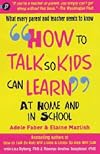
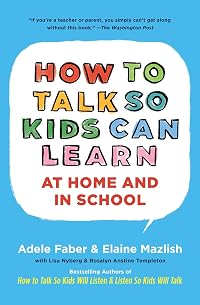
From America's leading experts on parent-child communication, authors of How To Talk So Kids Will Listen & Listen So Kids Will Talk and Siblings Without Rivalry, comes a breakthrough guide telling parents and teachers how to handle one of the burning issues of our day: how to motivate kids to succeed in school at a time when schools are rife with violence and many students are openly rebellious. Teaming up with two award-winning teachers who well know the problems of our faltering school show more system, Faber and Mazlish adapt their unique, time-tested communication strategies to the specific concerns of the classroom. Once again utilizing the dramatically effective "dialogue" technique (what to say and how and when to say it) that has made their work famous worldwide, they illustrate how to use this method to help kids handle the schoolwork and behavioral and peer problems that interfere with the learning process. show lessTags
Recommendations







Member Reviews
This book was shelved with the homeschooling books at the library, and although it's not specifically geared towards homeschoolers, it has a lot of great suggestions that I think will be useful to the homeschooler crowd (as well as teachers and parents of children going to school-school).
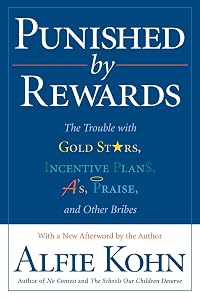
I love Alfie Kohn's ideas about avoiding punishments and rewards, but his books (at least the ones I've read) are pretty heavy on theory and pretty light on practical application. Faber and Mazlish offer heaps of real-world examples that I've been able to try out immediately with my own kiddos. I would love to have a conflict resolution workshop at my kids' homeschool co-op based on the ideas in this book (but in case any of my fellow co-op parents are show more reading this, I want to attach an emphatic "Not it" to this suggestion).
The only thing this book lacks is a chapter on what to do when your nine-year-old has read the book ahead of you and is now correcting your technique when you try to implement the suggestions. (This shared reading also led to an interesting conversation with my daughter that began, "Mom, in one chapter they imply that saying 'your mother' is an insult, and I can't figure out why that would be an insult.") show less
I love Alfie Kohn's ideas about avoiding punishments and rewards, but his books (at least the ones I've read) are pretty heavy on theory and pretty light on practical application. Faber and Mazlish offer heaps of real-world examples that I've been able to try out immediately with my own kiddos. I would love to have a conflict resolution workshop at my kids' homeschool co-op based on the ideas in this book (but in case any of my fellow co-op parents are show more reading this, I want to attach an emphatic "Not it" to this suggestion).
The only thing this book lacks is a chapter on what to do when your nine-year-old has read the book ahead of you and is now correcting your technique when you try to implement the suggestions. (This shared reading also led to an interesting conversation with my daughter that began, "Mom, in one chapter they imply that saying 'your mother' is an insult, and I can't figure out why that would be an insult.") show less
The subtitle of this book is ‘At home and in school’, and it’s intended primarily for teachers in schools. In today’s climate, where many children lack respect and motivation, it’s vital for a teacher to be able to inspire a child to think and participate, rather than (as happened too often in the past) by sarcasm, yelling, or punishments. The underlying thesis of this book is that most children do want to learn, if only they can be guided in the right direction, and treated with respect. It would also probably be of use to people leading children's groups or indeed to parents of large families.
Topics are covered loosely in separate chapters which include ‘The Pitfalls of Punishment’, ‘Solving Problems Together’, and show more ‘How to Free a Child’. The subject matter is very similar to that of the original classic, 'How to talk so kids will listen...', with the difference that other children are involved. Moreover the teacher is not in the same role as a parent: he does not need to teach the child morals or ethics, or even raise him. The teacher’s job is to impart information, skills and learning techniques.
Some of the scenarios in this book left me feeling exhausted, relieved not to be a teacher. But I found it extremely interesting nonetheless. I like the style, the writing pace is just right, the cartoons break up the text a little and put the message over in a slightly different way, and the advice all makes excellent sense. I know from experience that non-coercive respectful parenting is a great way to raise children - and am pleased to learn that this can be the case in the classroom, if teachers take the time to put these principles into practice -while acknowledging that no single book can provide all the answers.
Very highly recommended. show less
Topics are covered loosely in separate chapters which include ‘The Pitfalls of Punishment’, ‘Solving Problems Together’, and show more ‘How to Free a Child’. The subject matter is very similar to that of the original classic, 'How to talk so kids will listen...', with the difference that other children are involved. Moreover the teacher is not in the same role as a parent: he does not need to teach the child morals or ethics, or even raise him. The teacher’s job is to impart information, skills and learning techniques.
Some of the scenarios in this book left me feeling exhausted, relieved not to be a teacher. But I found it extremely interesting nonetheless. I like the style, the writing pace is just right, the cartoons break up the text a little and put the message over in a slightly different way, and the advice all makes excellent sense. I know from experience that non-coercive respectful parenting is a great way to raise children - and am pleased to learn that this can be the case in the classroom, if teachers take the time to put these principles into practice -while acknowledging that no single book can provide all the answers.
Very highly recommended. show less
if you don't have time to read this entire book then i would suggest just skimming through and finding their Quick Tip summary pages where they checklist format share the key strategies and tips which I ripped out for future reference,
some ideas that really resonated with me and I found helpful are the sections on:
1. Being a role model and model how to talk in front of kids
2. Say appreciative things about the child so that they overhear it
3. Find the good in children and appreciate that
4. I found the Teacher Parent relationship chapter to be amazing. They provide insights into the needs of both parents and teachers.
Some ideas I found helpful are...
With teachers at the parent teacher conference... share what works at home, the need show more that teachers have for parents to try to share information with the teacher about their child so they can learn more about your child and for parents to show appreciation and give feedback for the efforts that the teachers are making, create a plan collaboratively with the teacher according to what your child needs to work on and follow up to let the teacher know that you are trying out the plan, if teacher is giving feedback about your child then one can bring a notebook and rephrase it and write down and say aloud a solution focused action step such as "Ok, ... needs to read more"
5. Brainstorming for ideas with the child, including and listing all ideas (withholding evaluation) and then going through it afterwards to see which to try out show less
some ideas that really resonated with me and I found helpful are the sections on:
1. Being a role model and model how to talk in front of kids
2. Say appreciative things about the child so that they overhear it
3. Find the good in children and appreciate that
4. I found the Teacher Parent relationship chapter to be amazing. They provide insights into the needs of both parents and teachers.
Some ideas I found helpful are...
With teachers at the parent teacher conference... share what works at home, the need show more that teachers have for parents to try to share information with the teacher about their child so they can learn more about your child and for parents to show appreciation and give feedback for the efforts that the teachers are making, create a plan collaboratively with the teacher according to what your child needs to work on and follow up to let the teacher know that you are trying out the plan, if teacher is giving feedback about your child then one can bring a notebook and rephrase it and write down and say aloud a solution focused action step such as "Ok, ... needs to read more"
5. Brainstorming for ideas with the child, including and listing all ideas (withholding evaluation) and then going through it afterwards to see which to try out show less
This was actually a fun book to read with my 10-year-old daughter. It's such a positive book, it really hones in on what kind of communication is judgmental and off-putting and what kind is inspiring and uplifting. It is full of examples and question-and-answer sections, some of it is told in cartoon strips. Although it's written for teachers, it is useful to anyone who communicates with kids or, really, anyone in a leadership position.
Great stuff. Practical explication of the theories of Alfie Kohn. Like Kohn's work, it questions *the very basis of most theories of discipline*: that the exercise of power over children by adults is universally or intrinsically logical and desirable.
Great Book. It builds on their previous books with more examples. Love how they give scenarios which seem OK then show a better way. I will listen to this one again and use what I have learned here.
It's really short and easy to get through. 200 pages ~2 hours for a quick reader.
It features examples of discussions between grownups (teachers or parents) and kids and what most grownups do wrong and examples of how to better approach topics.
It's okay for a light read but not as enlightening now as it probably was back in 1996.
It features examples of discussions between grownups (teachers or parents) and kids and what most grownups do wrong and examples of how to better approach topics.
It's okay for a light read but not as enlightening now as it probably was back in 1996.
Members
- Recently Added By
Author Information

49+ Works 7,138 Members
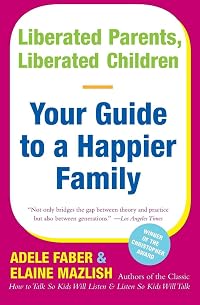
Adele Faber was born January 12, 1928 in New York to Morris and Betty Kamey Meyrowitz. She received a B.A. in 1949 from Queen's College and an M.A. in 1950 from New York University. Long involved in education and human development, Faber has taught speech at the New York School of Printing, English at the high school level in Brooklyn and at Long show more Island University. She led parenting workshops at C.W. Post College and at the New School for Social Research. A recognized authority on children and the parent-child relationship, Faber, along with Elaine Mazlish, has written several works about parent-child relationships. These include Liberated Parents/Liberated Children: Your Guide to a Happier Family (1974), Breaking Barriers: A Workshop Series in Human Relational Skills for Teenagers (1976), Siblings Without Rivalry (1987), and a children's book, Bobby and Breckles (1993). Faber has written television scripts such as "Mr. Sad-Sack" (1975) and "The Princess" (1975), both for ABC. Faber and Mazlish wrote a television script for Kentucky Educational Television called, "How to Talk So Kids Will Listen" (1990). In 1992, she and Mazlish also collaborated on a collection of audiocassettes and a workbook called How to Be the Parent You Always Wanted to Be. Adele Faber married Leslie Faber, a guidance counselor, in 1950. They have three children. (Bowker Author Biography) show less

9 Works 7,051 Members
Some Editions
Series

Classifications
- Genre
- Nonfiction
- DDC/MDS
- 371.10230973 — Society, government, & culture Education Schools and their activities; special education Teachers; Teaching personnel; Professors, masters instructors Personal influence
- LCC
- LB1033 .H69 — Education Theory and practice of education Theory and practice of education Teaching (Principles and practice)
- BISAC
Statistics
- Members
- 650
- Popularity
- 44,649
- Reviews
- 10
- Rating
- (3.96)
- Languages
- Chinese, English, Polish, Romanian
- Media
- Paper, Audiobook, Ebook
- ISBNs
- 15
- ASINs
- 6