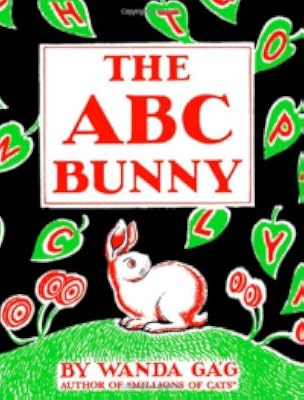
The ABC Bunny
by Wanda Gág
On This Page
Description
Follows a little bunny as it scampers through the alphabet.Tags
Recommendations




Member Reviews
Just another alphabet book. It starts strong, almost telling a story as the bunny travels through the alphabet, but then it just becomes a string of animals the bunny meets that serve only to fulfill the next letter. And then it really stumbles in the XYZ section, as so many alphabet books do.
SUMMARY
The book was an alphabet book that uses each letter to name an animal and what they are doing. The letters are used to describe what the bunny sees and encounters as his day goes on. He comes upon interesting animals, he eats, plays and then goes back home.
PERSONAL REACTION
I liked how the author used the alphabet to tell a story and had an easy flow to it. It uses rhyme throughout the book which helps to describe the setting. The letters stand out in the color red that helps children recognize them. I would have preferred the book be in color. I'm not into black and white books, they seem boring.
CLASSROOM EXTENSION IDEAS
1. Practice rhyming words that are age level appropriate to what they are reading.
2. Talk about the animals and show more their characteristics. Ex: how they look, feel, what they eat. show less
The book was an alphabet book that uses each letter to name an animal and what they are doing. The letters are used to describe what the bunny sees and encounters as his day goes on. He comes upon interesting animals, he eats, plays and then goes back home.
PERSONAL REACTION
I liked how the author used the alphabet to tell a story and had an easy flow to it. It uses rhyme throughout the book which helps to describe the setting. The letters stand out in the color red that helps children recognize them. I would have preferred the book be in color. I'm not into black and white books, they seem boring.
CLASSROOM EXTENSION IDEAS
1. Practice rhyming words that are age level appropriate to what they are reading.
2. Talk about the animals and show more their characteristics. Ex: how they look, feel, what they eat. show less
Holds up well, not sentimental, feels nostalgic but not old-fashioned. The art was truly poetic, and realistic (again, not sentimental or cutesy). I loved that some of the Words for the Letters were verbs as most alphabet picture-books rely on nouns.
I just wish I could read music so I could pick out the tune!
I just wish I could read music so I could pick out the tune!
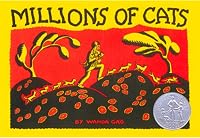
From Sheryl -"Holds up well, not sentimental, feels nostalgic but not old-fashioned. The art was truly poetic, and realistic (again, not sentimental or cutesy). I loved that some of the Words for the Letters were verbs as most alphabet picture-books rely on nouns." She also wrote Millions of Cats, a pivotal book in children's literature. It is credited as the first American picture storybook.
My students absolutely love this book when I read it to them. We talk about what's going on throughout each page of the book. I let the children tell me what they see or what they recognize in the pages throughout the book. There will be times when the children will me questions about things that they are not sure of that is happening in the book.
I have used these book at least three different times in past lesson plans. I would continue to do it because my students love the book. I don't really put this book in a theme, I just do art activities to go along with it.
I have used these book at least three different times in past lesson plans. I would continue to do it because my students love the book. I don't really put this book in a theme, I just do art activities to go along with it.
This book is about an adventure that a bunny takes when he gets lost. Each page uses a letter of the alphabet to describe the bunny’s encounters. In the end, the bunny makes it home, safe and sound.
This is a very interesting book. I enjoyed the illustrations. The only color used in the book is red. The only time that red is used is to color the letters of the alphabet.
This would be a great book to use when learning the alphabet. It is also a great book to use when learning to rhyme. After reading this book I would hand the children a book of their own made up of twenty-six pages. The assignment is to wriet their own book using a page for each letter of the alphabet.
This is a very interesting book. I enjoyed the illustrations. The only color used in the book is red. The only time that red is used is to color the letters of the alphabet.
This would be a great book to use when learning the alphabet. It is also a great book to use when learning to rhyme. After reading this book I would hand the children a book of their own made up of twenty-six pages. The assignment is to wriet their own book using a page for each letter of the alphabet.
This is a great illustrated book that shows the story of a bunny who leaves his home and goes out on an adventure through the whole alphabet. I have loved this book since I was a kid myself, and it was a joy to be able to reread it again for educational purposes. An early Childhood educator might use this book to introduce the children to the alphabet and have the class as a group write their own adventure story about the bunny.
Members
- Recently Added By
Lists

Best Newbery Honor Books
257 works; 30 members

Five in a Row
144 works; 8 members

Rabbit and Fox Story Books For Children
139 works; 7 members

Newbery Honor Books By Year - I - 1922-1980
199 works; 3 members

Best Alphabet Books
47 works; 3 members

Books Read in 2022
5,226 works; 112 members

Early Picture Books
467 works; 9 members
Author Information

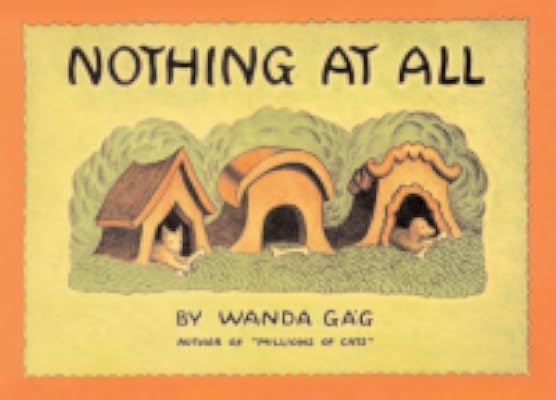
A highly touted writer and illustrator of children's picture books, Gag was born in New Ulm, Minnesota, to Anton Gag, also an artist, and Lisse Gag. She married Earle Marshall Humphreys in 1930. She studied art at the St. Paul Institute of Arts, the Minneapolis School of Art, and the Art Students League in New York City. Gag began her career show more illustrating for the children's section of the Minneapolis Journal; first had her works exhibited at the Weyrhe Gallery, New York City, 1926; and created the text and drawings for her most famous work, Millions of Cats, in 1928. The book was a runner-up for the John Newbery Medal in 1929, won first prize at the Philadelphia Lithograph Show in 1930, and won the Lewis Carroll Shelf Award in 1958. Other important works include ABC Bunny (1933), another runner-up for the Newbery award in 1934; Snow White and the Seven Dwarfs, a runner-up for the Caldecott award in 1939; and Nothing at All, also a runner-up for the Caldecott award in 1942. In 1993, the centennial of her birth was celebrated with special exhibits of her art and a number of evaluative articles. (Bowker Author Biography) show less
All Editions
Some Editions
Awards and Honors
Awards
Series
Belongs to Publisher Series
Common Knowledge
- Canonical title
- The ABC Bunny
- Original publication date
- 1933
- Dedication
- To Gary
- First words
- A for Apple, big and red.
- Last words
- (Click to show. Warning: May contain spoilers.)Z for Zero - close the book!
- Original language
- English
Classifications
Statistics
- Members
- 1,201
- Popularity
- 20,768
- Reviews
- 28
- Rating
- (3.79)
- Languages
- English
- Media
- Paper, Audiobook, Ebook
- ISBNs
- 14
- UPCs
- 1
- ASINs
- 13