On This Page
Tags
Recommendations










Member Reviews
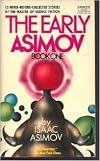
The Early Asimov covers (appropriately enough) the early stages of Isaac Asimov's career as a science fiction writer. Interspersed between comments by Asimov concerning his efforts to sell his stories, his relationships with editors, and what was generally happening in his life and the world around him are twenty-seven science fiction short stories arranged in the chronological order in which they were originally published.
The stories themselves show how Asimov developed from a weak, but promising writer to the creator of polished science fiction he became. The earliest stories are, at best, derivations on standard pulp fiction of the era - though they show flashes of the direction science fiction was moving under editors like Campbell. show more One thing that makes the collection interesting is that none of the stories contained are considered to be among Asimov's best works. Even The Endochronic Properties of Resublimated Thiotimoline only achieved enduring fame because it formed the basis for a long-running series of joke "scientific" papers Asimov published as fiction. In other words, even through eleven years of writing and publishing, Asimov had not hit his stride as a writer yet. This should be a sobering thought for those who have aspirations of becoming a writer. One can, however, see the seeds that formed the basis for his classic works of science fiction in the stories here.
The best parts of the book are the interstitial comments by Asimov, which gives a reader a clear insight into Asimov's thinking concerning the stories, and the struggles he had to get many of his works published. Some of the stories are quite good, others are so heavy handed in their moralizing that the story gets lost, and others are obviously the result of a writer groping his way to finding his own voice. As both an account of Asimov's personal experiences and development as a writer, and as a snap shot of the world of science fiction pulps in the beginning of the Campbell era, this book is a fantastic resource. show less
The stories themselves show how Asimov developed from a weak, but promising writer to the creator of polished science fiction he became. The earliest stories are, at best, derivations on standard pulp fiction of the era - though they show flashes of the direction science fiction was moving under editors like Campbell. show more One thing that makes the collection interesting is that none of the stories contained are considered to be among Asimov's best works. Even The Endochronic Properties of Resublimated Thiotimoline only achieved enduring fame because it formed the basis for a long-running series of joke "scientific" papers Asimov published as fiction. In other words, even through eleven years of writing and publishing, Asimov had not hit his stride as a writer yet. This should be a sobering thought for those who have aspirations of becoming a writer. One can, however, see the seeds that formed the basis for his classic works of science fiction in the stories here.
The best parts of the book are the interstitial comments by Asimov, which gives a reader a clear insight into Asimov's thinking concerning the stories, and the struggles he had to get many of his works published. Some of the stories are quite good, others are so heavy handed in their moralizing that the story gets lost, and others are obviously the result of a writer groping his way to finding his own voice. As both an account of Asimov's personal experiences and development as a writer, and as a snap shot of the world of science fiction pulps in the beginning of the Campbell era, this book is a fantastic resource. show less
I found a copy of this a year ago and started it soon after. I lost my original copy to a fire in 2013 and wasn't actively looking for a replacement, though I jumped on it when I saw one because it had a nostalgic longing for some of those lost pieces of my youth. As one can see from the date log, it took me a while to get through it...I am not a big fan of collections of short stories - even those of Asimov. Yes, he has exceptions - the robot shorts and the stories that became the Foundation trilogy; but those are somewhat serialized, or have the common theme/thread.
What I remembered from 45 years ago was not the stories, but Asimov's notes about his writings, publishing successes and rejections. Yes, I'd forgotten most of the show more stories. Certainly one titled "The Endochronic Properties of Resublimated Thiotimoline" that was a parody of research papers, complete with fictional citations. Written nearly fifty years before Alan Sokal's hoax perpetrated on the post-modern cultural studies anti-intellectuals, Asimov recalls with humor that some who read his story/pseudoarticle in Astounding Science Fiction, "I was told that weeks after its appearance the librarians of the New York Public Library were driven out of their minds by hordes of youngsters who demanded to see copies of the fake journals I had used as pseudo references."
The subtitle refers to his first eleven years of writing that this book covers - not all of his stories are in here...some are in the robot and Foundation books and a few in other anthology collections. You can see his maturation as a writer as they are arranged chronologically. Asimov noted much in his diaries, not the least how much he was paid because the money determined his career. "It paid enough to put me through school and not so much top lure me out of it. You'll see as we go along." He observes the stories that were rejected and lost, and which he recalled nothing save the titles noted in his journals. At a point in his career through, he began saving everything, which helped when he passed on a twenty year old manuscript to be revised and published. He lost eleven manuscripts, but no more after that.
Asimov credits his influences not that of "high-prestige literary figures as Kafka, Proust and Joyce." Rather, "I learned how to write science fiction by the attentive reading of science fiction, and among the major influences on my style was Clifford Simak." And he admits embarrassment at his naiveté wherein one of his stories his assumes an intelligent race on Mars sufficiently close to Earthmen as to make interbreeding possible. The story, "Half-breed" (the title alone dates him), made him say in his after notes "I can only shake my head wearily. I knew better in 1939; I really did. I just accepted science fiction clichés, that's all. Eventually, I stopped doing that."
He recalled once that John Campbell had found an Emerson quote "If the stars should appear one night in a thousand years, how would men believe and adore, and preserve for many generations the remembrance of the city of God." In a footnote, Asimov asked "Does anyone know in what essay, and in what connection, Emerson says this? Every once in a while I make a desultory search through quotation books or through a collection of Emerson but haven;t found it yet. I hope it exists and that the quote is given correctly." I hope he found it. The internet being what it is, I found that is was from an 1849 essay titled "Nature".
Asimov included a work which was a collaboration between him and Frederick Pohl, and noted that he'd only written two pieces of fiction is collaboration, not really enjoying the process. (He also didn't like the handful of nonfiction collaborations.) I know that some collaborate well (Niven and Pournelle), but also that some, like Clarke's collaborations, diminished the primary author. show less
What I remembered from 45 years ago was not the stories, but Asimov's notes about his writings, publishing successes and rejections. Yes, I'd forgotten most of the show more stories. Certainly one titled "The Endochronic Properties of Resublimated Thiotimoline" that was a parody of research papers, complete with fictional citations. Written nearly fifty years before Alan Sokal's hoax perpetrated on the post-modern cultural studies anti-intellectuals, Asimov recalls with humor that some who read his story/pseudoarticle in Astounding Science Fiction, "I was told that weeks after its appearance the librarians of the New York Public Library were driven out of their minds by hordes of youngsters who demanded to see copies of the fake journals I had used as pseudo references."
The subtitle refers to his first eleven years of writing that this book covers - not all of his stories are in here...some are in the robot and Foundation books and a few in other anthology collections. You can see his maturation as a writer as they are arranged chronologically. Asimov noted much in his diaries, not the least how much he was paid because the money determined his career. "It paid enough to put me through school and not so much top lure me out of it. You'll see as we go along." He observes the stories that were rejected and lost, and which he recalled nothing save the titles noted in his journals. At a point in his career through, he began saving everything, which helped when he passed on a twenty year old manuscript to be revised and published. He lost eleven manuscripts, but no more after that.
Asimov credits his influences not that of "high-prestige literary figures as Kafka, Proust and Joyce." Rather, "I learned how to write science fiction by the attentive reading of science fiction, and among the major influences on my style was Clifford Simak." And he admits embarrassment at his naiveté wherein one of his stories his assumes an intelligent race on Mars sufficiently close to Earthmen as to make interbreeding possible. The story, "Half-breed" (the title alone dates him), made him say in his after notes "I can only shake my head wearily. I knew better in 1939; I really did. I just accepted science fiction clichés, that's all. Eventually, I stopped doing that."
He recalled once that John Campbell had found an Emerson quote "If the stars should appear one night in a thousand years, how would men believe and adore, and preserve for many generations the remembrance of the city of God." In a footnote, Asimov asked "Does anyone know in what essay, and in what connection, Emerson says this? Every once in a while I make a desultory search through quotation books or through a collection of Emerson but haven;t found it yet. I hope it exists and that the quote is given correctly." I hope he found it. The internet being what it is, I found that is was from an 1849 essay titled "Nature".
Asimov included a work which was a collaboration between him and Frederick Pohl, and noted that he'd only written two pieces of fiction is collaboration, not really enjoying the process. (He also didn't like the handful of nonfiction collaborations.) I know that some collaborate well (Niven and Pournelle), but also that some, like Clarke's collaborations, diminished the primary author. show less
Hardcover omnibus.
For completists only. Most stories unfortunate. Scientifically ridiculous, written to sell to the teens who bought the nascent pulps (Asimov admits same himself), with nary a woman who is a person. Or a man, for that matter. Way too much of that 'psychohistory' stuff.
I did sort of like "Blind Alley," one of the last. It's got that hero in disguise thing going, that Asimov likes so much... but this time the guy is believable, and he's not a "Half-Breed" or otherwise an object of ridicule &/or pity.
Then there's the last story, "Mother Earth," which is a prequel for the Lije Baley stories. Asimov by then had gotten the hang of expressing his stance on anti-racism, anti-Eugenics, thank goodness. I don't know whether show more "Mother Earth" is a good story or not, but I enjoyed it because I recently enjoyed all the Lije Baley stories.
This book also had lots of biographical data between stories. Mostly pretty dry accountings derived from his 'journals.' I skimmed. show less
For completists only. Most stories unfortunate. Scientifically ridiculous, written to sell to the teens who bought the nascent pulps (Asimov admits same himself), with nary a woman who is a person. Or a man, for that matter. Way too much of that 'psychohistory' stuff.
I did sort of like "Blind Alley," one of the last. It's got that hero in disguise thing going, that Asimov likes so much... but this time the guy is believable, and he's not a "Half-Breed" or otherwise an object of ridicule &/or pity.
Then there's the last story, "Mother Earth," which is a prequel for the Lije Baley stories. Asimov by then had gotten the hang of expressing his stance on anti-racism, anti-Eugenics, thank goodness. I don't know whether show more "Mother Earth" is a good story or not, but I enjoyed it because I recently enjoyed all the Lije Baley stories.
This book also had lots of biographical data between stories. Mostly pretty dry accountings derived from his 'journals.' I skimmed. show less
Really, the very early Asimov, and not the best, but still worth reading. Asimov put together this collection of stories in 1972; the stories were written between 1939 and 1950, and first appeared in the science fiction magazines that were a staple of the period. Moreover, as Asimov tells us in the preface, this were stories that he had NOT put into the ten collections that appeared between 1950 and 1969, soooooooo --. Very dated, very mechanical, but fun.
Callistan Menace
Ring Around the Sun
Magnificent Possessions
Trends
Weapon to Dreadful to Use
Black Friar of the Flame
Half Breed
Secret Sence
Homo Sol
Half Breeds on Venus
Imaginary
Heredity
History
Christmans on Granymede
Little Man on the Subway
Hazing (Asimov Complete II)
Super Neutron
Not Final (asimov Complete II)
Legal Rites
Time Pussy
Author author
Death Sentence (Asimov Complete II)
Blind Alley (Asimov Complete...
Ring Around the Sun
Magnificent Possessions
Trends
Weapon to Dreadful to Use
Black Friar of the Flame
Half Breed
Secret Sence
Homo Sol
Half Breeds on Venus
Imaginary
Heredity
History
Christmans on Granymede
Little Man on the Subway
Hazing (Asimov Complete II)
Super Neutron
Not Final (asimov Complete II)
Legal Rites
Time Pussy
Author author
Death Sentence (Asimov Complete II)
Blind Alley (Asimov Complete...
Ratings
Members
- Recently Added By
Author Information

2,396+ Works 292,727 Members
Isaac Asimov was born in Petrovichi, Russia, on January 2, 1920. His family emigrated to the United States in 1923 and settled in Brooklyn, New York, where they owned and operated a candy store. Asimov became a naturalized U.S. citizen at the age of eight. As a youngster he discovered his talent for writing, producing his first original fiction at show more the age of eleven. He went on to become one of the world's most prolific writers, publishing nearly 500 books in his lifetime. Asimov was not only a writer; he also was a biochemist and an educator. He studied chemistry at Columbia University, earning a B.S., M.A. and Ph.D. In 1951, Asimov accepted a position as an instructor of biochemistry at Boston University's School of Medicine even though he had no practical experience in the field. His exceptional intelligence enabled him to master new systems rapidly, and he soon became a successful and distinguished professor at Columbia and even co-authored a biochemistry textbook within a few years. Asimov won numerous awards and honors for his books and stories, and he is considered to be a leading writer of the Golden Age of science fiction. While he did not invent science fiction, he helped to legitimize it by adding the narrative structure that had been missing from the traditional science fiction books of the period. He also introduced several innovative concepts, including the thematic concern for technological progress and its impact on humanity. Asimov is probably best known for his Foundation series, which includes Foundation, Foundation and Empire, and Second Foundation. In 1966, this trilogy won the Hugo award for best all-time science fiction series. In 1983, Asimov wrote an additional Foundation novel, Foundation's Edge, which won the Hugo for best novel of that year. Asimov also wrote a series of robot books that included I, Robot, and eventually he tied the two series together. He won three additional Hugos, including one awarded posthumously for the best non-fiction book of 1995, I. Asimov. "Nightfall" was chosen the best science fiction story of all time by the Science Fiction Writers of America. In 1979, Asimov wrote his autobiography, In Memory Yet Green. He continued writing until just a few years before his death from heart and kidney failure on April 6, 1992. (Bowker Author Biography) show less
Some Editions
Series

Belongs to Publisher Series
Work Relationships
Contains
Common Knowledge
- Canonical title
- The Early Asimov
- Original title
- The Early Asimov
- Alternate titles
- The Early Asimov; or, Eleven Years of Trying
- Original publication date
- 1972 (collection) (collection)
- People/Characters
- John Wood Campbell
- Epigraph
- [None]
- Dedication
- To the memory of John Wood Campbell, Jr. (1910-71) for reasons that this book will make amply obvious
- First words
- Although I have written over a hundred and twenty books, on almost every subject from astronomy to Shakespeare and from mathematics to satire, it is probably as a science fiction writer that I am best known.
Introdu... (show all)ction.
'Damn Jupiter!' growled Ambrose Whitefield viciously, and I nodded agreement.
The Callistan Menace. - Last words
- (Click to show. Warning: May contain spoilers.)And within, that tiny, bitter voice, repeating over and over again, 'You entered a normal man! You leave blind - blind - BLIND.'
- Original language
- English
- Disambiguation notice
- The full work of The Early Asimov was published in English as a 3 volume set (Volume 1, 2, 3 [Panther, Doubleday, Granada]) and a two book set (Book One, Book Two [Fawcett/Crest, Del Rey]). The Dutch version was a thre... (show all)e volume set broken down by years. The French and Italian versions were broken into 4 volumes, but it is unclear whether these versions contain the same stories per volume. As such, none of these should be mixed with each other nor should they be combined with the greater whole work. See http://www.isfdb.org/cgi-bin/title.cg...
Contents: Introduction -- 1. The Callistan Menace -- 2. Ring Around the Sun -- 3. The Magnificent Possession -- 4. Trends -- 5. The Weapon Too Dreadful to Use -- 6. Black Friar of the Flame -- 7. Half-Breed -- 8. The Secret Sense -- 9. Homo Sol -- 10. Half-Breeds on Venus -- 11. The Imaginary -- 12. Heredity -- 13. History -- 14. Christmas on Ganymede -- 15. The Little Man on the Subway -- 16. The Hazing -- 17. Super-Neutron -- 18. Not Final! -- 19. Legal Rites -- 20. Time Pussy -- 21. Author! Author! -- 22. Death Sentence -- 23. Blind Alley -- 24. No Connection -- 25. The Endochronic Properties of Resublimated Thiotimoline -- 26. The Red Queen's Race -- 27. Mother Earth
Classifications
Statistics
- Members
- 460
- Popularity
- 66,169
- Reviews
- 5
- Rating
- (3.51)
- Languages
- English, French, Italian, Portuguese
- Media
- Paper
- ISBNs
- 4
- ASINs
- 9