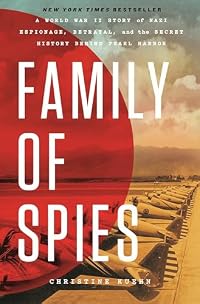
Family of Spies: A World War II Story of Nazi Espionage, Betrayal, and the Secret History Behind Pearl Harbor
by Christine Kuehn
On This Page
Description
"A propulsive, never-before-told story of one family's shocking involvement as Nazi and Japanese spies during WWII and the pivotal role they played in the bombing of Pearl Harbor It began with a call from a screenwriter, asking about a story. Your family. World War II. Nazi spies. Christine Kuehn was shocked and confused. When she asked her seventy-year-old father, Eberhard, what this could possibly be about, he stalled, deflected, demurred, and then he wept. He knew this day would come. The show more Kuehns, a once-prominent Berlin family, saw the rise of the Nazis as a way out of the hard times that had befallen them. When the daughter of the family, Eberhard's sister, Ruth, met Nazi leader Joseph Goebbels at a party, the two hit it off, and they had an affair. But Ruth had a secret-she was half Jewish-and Goebbels found out. Rather than having Ruth killed, Goebbels instead sent the entire Kuehn family to Hawaii, to work as spies half a world away. There, Ruth and her parents established an intricate spy operation from their home, just a few miles down the road from Pearl Harbor, shielding Eberhard from the truth. They passed secrets to the Japanese, leading to the devastating attack on Pearl Harbor. After Eberhard's father was arrested and tried for his involvement in planning the assault, Eberhard learned the harsh truth about his family and faced a decision that would change the path of the Kuehn family forever. Jumping back and forth between Christine discovering her family's secret and the untold past of the spies in Germany, Japan, and Hawaii, Family of Spies is fast-paced history at its finest, and will rewrite the narrative of December 7, 1941"-- Provided by publisher. show lessTags
Recommendations










Member Reviews
Family of Spies is must-read. It’s like a spy novel: mysterious, exciting, dangerous, thrilling, riveting, fast-paced. Characters that are not who you thought they were, who do horrible things. Twists, turns and surprises you don’t see coming, couldn’t even imagine. Except it’s not a novel; it’s real, and it’s a nightmare.
The twists, turns and surprises are part of a story all right, a story about a devastating time in history. And those horrible characters who did horrible things? A German family that moved to the United States, to Hawaii. Your family.
It’s hard to even begin to understand how it would feel to discover that your grandfather, grandmother, aunt played a part in the bombing of Pearl Harbor by the Japanese, show more and that your father knew. Author Christine Kuehn does a remarkable job of describing just how it did feel to be approached by a screenwriter for a story - her family, World War II, Nazi spies – and how these unbelievable words were only the tip of the iceberg. As she and her husband began to do their own research, Kuehn discovered that her father wasn’t just reluctant to talk about his childhood, he was keeping huge secrets. Not only did they spy in Hawaii for the Germans and provide information to the Japanese, but they and the rest of the family – Kuehn’s uncle and aunt - also had significant roles and connections in Hitler’s regime long before they left Germany. Nazis and proud of it, right down to their approval of the plan to eliminate the Jews.
Family of Spies is detailed, well-researched, expertly written and impossible to put down. Just when you think you’ve read the worst thing, Kuehn provides another example of just how deeply embedded they were with the Nazi organization and how she had to learn to cope with this horror, wondering if anything she was told was true.
I received an advance copy of Family of Spies from Celadon Books via NetGalley. According to their press releases Celadon Books publishes a highly curated list of twenty to twenty-five new titles a year, both fiction and nonfiction. As a Celadon Reader fortunate enough to read many of these books, I have seen the evidence over and over again that the books they choose to publish are the cream of the crop. I was immersed in Family of Spies and recommend it without hesitation. I voluntarily leave this review; all opinions are my own. show less
The twists, turns and surprises are part of a story all right, a story about a devastating time in history. And those horrible characters who did horrible things? A German family that moved to the United States, to Hawaii. Your family.
It’s hard to even begin to understand how it would feel to discover that your grandfather, grandmother, aunt played a part in the bombing of Pearl Harbor by the Japanese, show more and that your father knew. Author Christine Kuehn does a remarkable job of describing just how it did feel to be approached by a screenwriter for a story - her family, World War II, Nazi spies – and how these unbelievable words were only the tip of the iceberg. As she and her husband began to do their own research, Kuehn discovered that her father wasn’t just reluctant to talk about his childhood, he was keeping huge secrets. Not only did they spy in Hawaii for the Germans and provide information to the Japanese, but they and the rest of the family – Kuehn’s uncle and aunt - also had significant roles and connections in Hitler’s regime long before they left Germany. Nazis and proud of it, right down to their approval of the plan to eliminate the Jews.
Family of Spies is detailed, well-researched, expertly written and impossible to put down. Just when you think you’ve read the worst thing, Kuehn provides another example of just how deeply embedded they were with the Nazi organization and how she had to learn to cope with this horror, wondering if anything she was told was true.
I received an advance copy of Family of Spies from Celadon Books via NetGalley. According to their press releases Celadon Books publishes a highly curated list of twenty to twenty-five new titles a year, both fiction and nonfiction. As a Celadon Reader fortunate enough to read many of these books, I have seen the evidence over and over again that the books they choose to publish are the cream of the crop. I was immersed in Family of Spies and recommend it without hesitation. I voluntarily leave this review; all opinions are my own. show less
Loveable but imposing. Those are the words that Christine Kuehn uses to describe her father in the very first paragraph of Family of Spies, her debut book. He loved to tell stories but at the same time avoided relaying any tales about his own family history. Growing up, the Kuehns spent summer vacations with Christine’s mother’s side of the family. Christine knew her father had grown up in Hawaii, and had fought in World War II, but as for the rest of her father’s family all the young girl knew was that his father had died in a car crash, and his mother went back to Germany after World War II and died there. She had an aunt, her father’s sister, who he sometimes spoke of, but she had never met the aunt, who remained as show more mysterious as the rest of her father’s past.
In 1994 Christine Keuhn is raising a family of her own in suburban Maryland. One summer day she receives a letter in the mail from a screenwriter. The screenwriter writes that he’s looking for information about her grandfather. The screenwriter is working on a movie about World War II, including the Japanese attack on Pearl Harbor, and the German spies who had a role in that tragedy. He wants to know what her then 70-year-old father might be able to tell him about his father, Otto Kuehn the Nazi.
Kuehn is stunned by the letter. Her father had always told her that his father had also served with the US armed forces during the war. Kuehn takes reassurance from her husband that “there are a lot of Kuehns in the phonebook” and that the screenwriter must have the wrong family. The next morning, she wakes up after a restless night. Slowly at first, and with little help from her father, who would prefer the memories remain buried, she begins the journey to uncover the story of her father’s family and their intimate ties with Nazi leadership. Her journey involves research in books, family history archives, and requesting materials including the FBI file on her grandfather, all beginning in a time before the world wide web.
Much of the rest of the book is taken up with Kuehn’s sharing of the story she uncovered, and what a story it is. I don’t want to reveal too much but let’s just say the facts of the story are compelling, and the way Kuehn tells it is almost like a novel. The amount of detail she’s uncovered, especially through the FBI files but later added to by family she discovers along the way, is amazing. She’s done a great job for a first-time author.
This is such a good book that I finished it in two sittings. If you like history told from a personal perspective, have an interest in World War II or are just looking for a good nonfiction story that reads like a novel, pick this one up. show less
In 1994 Christine Keuhn is raising a family of her own in suburban Maryland. One summer day she receives a letter in the mail from a screenwriter. The screenwriter writes that he’s looking for information about her grandfather. The screenwriter is working on a movie about World War II, including the Japanese attack on Pearl Harbor, and the German spies who had a role in that tragedy. He wants to know what her then 70-year-old father might be able to tell him about his father, Otto Kuehn the Nazi.
Kuehn is stunned by the letter. Her father had always told her that his father had also served with the US armed forces during the war. Kuehn takes reassurance from her husband that “there are a lot of Kuehns in the phonebook” and that the screenwriter must have the wrong family. The next morning, she wakes up after a restless night. Slowly at first, and with little help from her father, who would prefer the memories remain buried, she begins the journey to uncover the story of her father’s family and their intimate ties with Nazi leadership. Her journey involves research in books, family history archives, and requesting materials including the FBI file on her grandfather, all beginning in a time before the world wide web.
Much of the rest of the book is taken up with Kuehn’s sharing of the story she uncovered, and what a story it is. I don’t want to reveal too much but let’s just say the facts of the story are compelling, and the way Kuehn tells it is almost like a novel. The amount of detail she’s uncovered, especially through the FBI files but later added to by family she discovers along the way, is amazing. She’s done a great job for a first-time author.
This is such a good book that I finished it in two sittings. If you like history told from a personal perspective, have an interest in World War II or are just looking for a good nonfiction story that reads like a novel, pick this one up. show less
I feel fortunate to read an early release of Christine Kuehn’s debut in non-fiction. Her writing captured me from the first page until the very end. Not many people who look into their family history can find as compelling and controversial information as what Kuehn found once she started looking into her grandparent’s past.
Because her father Eberhard was old enough to remember living in Germany, then in Hawaii, he had a unique view of what went on in the years leading up to World War II. As a result, he was compelled to abandon his family and pretend they didn’t exist. He married and had children of his own, while never telling them much of his past.
When Christine is contacted about a story featuring WWII spies, she is prompted show more to start asking questions. As her father ages and dementia sets in, she relies on official records and stories from family and others who were able to remember what happened around WWII.
Within the family there were four children. The oldest, Leopold, became a staunch Nazi supporter. His sister Ruth was also supportive and active in Nazi propaganda, but her time in Germany came to an abrupt end and she traveled to Hawaii with her parents and brothers, Eberhard and Hans.
Hans was much younger than Eberhard and he certainly paid a high price for the actions of his parents. Forced to stay with friends and neighbors, he wasn’t taken care of as a child should have been and his later life took a sad turn.
Overall, I found their family story to be a sad one, but also one of resilience and strength during difficult times.
Many thanks to NetGalley and Celadon Books for allowing me to read an advance copy. I am pelased to offer my honest review and recommend Family of Spies to other readers. show less
Because her father Eberhard was old enough to remember living in Germany, then in Hawaii, he had a unique view of what went on in the years leading up to World War II. As a result, he was compelled to abandon his family and pretend they didn’t exist. He married and had children of his own, while never telling them much of his past.
When Christine is contacted about a story featuring WWII spies, she is prompted show more to start asking questions. As her father ages and dementia sets in, she relies on official records and stories from family and others who were able to remember what happened around WWII.
Within the family there were four children. The oldest, Leopold, became a staunch Nazi supporter. His sister Ruth was also supportive and active in Nazi propaganda, but her time in Germany came to an abrupt end and she traveled to Hawaii with her parents and brothers, Eberhard and Hans.
Hans was much younger than Eberhard and he certainly paid a high price for the actions of his parents. Forced to stay with friends and neighbors, he wasn’t taken care of as a child should have been and his later life took a sad turn.
Overall, I found their family story to be a sad one, but also one of resilience and strength during difficult times.
Many thanks to NetGalley and Celadon Books for allowing me to read an advance copy. I am pelased to offer my honest review and recommend Family of Spies to other readers. show less
In this nonfiction that reads at times like fiction, the author has undertaken the difficult task of researching her family history that has always been hidden from her. A letter from a stranger sets her off on her mission to discover if in fact her grandparents were somehow complicit in the bombing of Pearl Harbor. Her father and aunt had actively rejected the family legacy and kept it secret, whether out of shame or to protect the next generation. Learning the facts about her German relatives' embrace of Naziism, her aunt's affairs with Hitler's closest associates, and her grandfather's active sharing of critical information about Pearl Harbor with the Japanese, was difficult for Kuehn, and she found it easy to set aside her research. show more But then new information would be brought to her attention until she completed the whole story. This book presents a fascinating glimpse into pre-war Germany and the day-to-day process of spying. show less
I have discovered some surprises in my genealogy researches, one of which was so upsetting I elected not to tell family members. But what Christine Kuehn discovered about her grandparents impacted not just her family but was connected to the ‘day of infamy’ that brought America into WWII: the bombing of Pearl Harbor by the Japanese.
Kuehn’s family were Nazis who left Germany to spy on America, paid by Japan to report on activities at the military base at Pearl Harbor. They were given a fortune and used it to live the high life with social events that brought them into contact with unwitting sources of information.
Her father was young enough to have embraced America as his country. He hated what the Nazis stood for and what they show more were doing in Europe. But his social butterfly and beautiful older sister, and a brother who remained in Germany, and even his little brother, were in deep.
Kuehn was distraught to see her great-uncle in his Nazi uniform in his wedding photo and shocked to learn that her great-aunt was once involved with Goebbels until he learned she was half Jewish. It was Goebbels who came up with the idea of sending the family to Hawaii.
Otto would be Tokyo’s man in Hawaii, a mole hiding in plain sight in Hawaii’s upper crust. from Family of Spies by Christine Kuehn
This history is quite the page turner!
Kuehn collected information for ten years, often overwhelmed by what she learned. Her father could not talk about what had happened, it was so painful. And with dementia, the memories were missing.
We all have family secrets, don’t we, connected to acts in our bloodline from long ago? But we’re not locked into following that path. from Family of Spies by Christine Kuehn
A stunning and shocking story.
Thanks to the publisher for a free book through NetGalley. show less
Kuehn’s family were Nazis who left Germany to spy on America, paid by Japan to report on activities at the military base at Pearl Harbor. They were given a fortune and used it to live the high life with social events that brought them into contact with unwitting sources of information.
Her father was young enough to have embraced America as his country. He hated what the Nazis stood for and what they show more were doing in Europe. But his social butterfly and beautiful older sister, and a brother who remained in Germany, and even his little brother, were in deep.
Kuehn was distraught to see her great-uncle in his Nazi uniform in his wedding photo and shocked to learn that her great-aunt was once involved with Goebbels until he learned she was half Jewish. It was Goebbels who came up with the idea of sending the family to Hawaii.
Otto would be Tokyo’s man in Hawaii, a mole hiding in plain sight in Hawaii’s upper crust. from Family of Spies by Christine Kuehn
This history is quite the page turner!
Kuehn collected information for ten years, often overwhelmed by what she learned. Her father could not talk about what had happened, it was so painful. And with dementia, the memories were missing.
We all have family secrets, don’t we, connected to acts in our bloodline from long ago? But we’re not locked into following that path. from Family of Spies by Christine Kuehn
A stunning and shocking story.
Thanks to the publisher for a free book through NetGalley. show less
Based on historically accurate events, the author tells the remarkable story of her own family's involvement with the Nazi party and their role in the attack on Pearl Harbor. She cites numerous works throughout, and the validity of her story is solid. This clearly happened, and the research behind it is thorough and well-documented.
Unfortunately, while the content is fascinating, the writing itself falls short. I kept hoping the storytelling would take off and do justice to the material, especially since she has such interesting and important subject matter to relay. This is genuinely significant history that deserves to be shared and remembered.
However, I also kept wishing she had given this all to another author or co-authored it with show more someone who knew how to craft the narrative that her research and familial information truly deserves. The raw materials are there, the family stories, the historical documents, the personal connection to these events, but they needed stronger storytelling to bring it all to life in a compelling way.
It's a frustrating read because you can see the incredible book this could have been with more polished writing. The history is important and the personal angle is unique, but the execution doesn't match the power of the story itself.
If you're interested in Pearl Harbor history or Nazi spy networks, and can overlook weak writing for important historical content, there's value here. Just be prepared for a story that's more compelling in its facts than in its telling.
*I was invited to read by the publisher, through NetGalley, for an honest review (Celadon Books) show less
Unfortunately, while the content is fascinating, the writing itself falls short. I kept hoping the storytelling would take off and do justice to the material, especially since she has such interesting and important subject matter to relay. This is genuinely significant history that deserves to be shared and remembered.
However, I also kept wishing she had given this all to another author or co-authored it with show more someone who knew how to craft the narrative that her research and familial information truly deserves. The raw materials are there, the family stories, the historical documents, the personal connection to these events, but they needed stronger storytelling to bring it all to life in a compelling way.
It's a frustrating read because you can see the incredible book this could have been with more polished writing. The history is important and the personal angle is unique, but the execution doesn't match the power of the story itself.
If you're interested in Pearl Harbor history or Nazi spy networks, and can overlook weak writing for important historical content, there's value here. Just be prepared for a story that's more compelling in its facts than in its telling.
*I was invited to read by the publisher, through NetGalley, for an honest review (Celadon Books) show less
This book could have been extraordinary; certainly the story is remarkable. Unfortunately, the author is not. The result is a book that is all over the place: interesting at times, boring at others, filled with cliches ("fell on deaf ears" TWICE?), sometimes cutesy (how the family is amused when the author's father put on Mickey Mouse ears at DisneyWorld), often very clumsy.
Christine Kuehn learns about the Nazi past of her family, headed by Otto Kuehn, and that is compelling. This - the story of Otto and Christine's reaction to it - should have been the focus of the book. Instead, the text is weighed down with dreary details of the author's life (why she stopped writing about this topic for a time, then returned to it, where her kids show more went to college, etc.) and too much information about historical events. (Yes, certainly, explain Pearl Harbor because there's always someone who hasn't heard of it - but be judicious with your language because almost everyone who will pick up this book already knows.) As a result of all this drivel and unncecessary detail, the real story gets lost and readers lose interest. I certainly did.
Please remember: Just because you have a great story to tell does not mean you're the best one to tell it. show less
Christine Kuehn learns about the Nazi past of her family, headed by Otto Kuehn, and that is compelling. This - the story of Otto and Christine's reaction to it - should have been the focus of the book. Instead, the text is weighed down with dreary details of the author's life (why she stopped writing about this topic for a time, then returned to it, where her kids show more went to college, etc.) and too much information about historical events. (Yes, certainly, explain Pearl Harbor because there's always someone who hasn't heard of it - but be judicious with your language because almost everyone who will pick up this book already knows.) As a result of all this drivel and unncecessary detail, the real story gets lost and readers lose interest. I certainly did.
Please remember: Just because you have a great story to tell does not mean you're the best one to tell it. show less
Members
- Recently Added By
Published Reviews
ThingScore 100
Kuehn weaves this sensational story—which includes the FBI’s cat-and-mouse attempts to uncover the spy ring—with her own personal journey from disbelief to reckoning with her family’s Nazi past. It’s a propulsive and disturbing tale.
added by ablachly
Lists

Books Read in 2025
4,090 works; 97 members

To Read
133 works; 1 member
Author Information
2+ Works 221 Members
Classifications
Statistics
- Members
- 220
- Popularity
- 147,733
- Reviews
- 14
- Rating
- (4.22)
- Languages
- English
- Media
- Paper, Audiobook, Ebook
- ISBNs
- 5
- ASINs
- 2