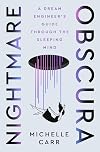
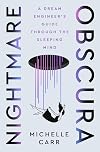
Nightmare Obscura: A Dream Engineer's Guide Through the Sleeping Mind
by Michelle Carr
On This Page
Description
"A leading sleep expert reveals the latest science behind the dreaming brain and why we have nightmares-offering key insights into how harnessing dreams can improve your sleep and health. To most, dreams are things that slip away when you reemerge into the waking world, their remnants jumbled up and only half recalled. At their best, they are populated by pleasant recollections and surreal experiences. But at their worst, they can be traumatizing and prevent us from receiving the necessary show more benefits of sleep. So why do we dream at all? What makes a person prone to nightmares? How do our bodies interface with our brains when we're not awake? And how can we harness our sleeping minds to improve our waking lives? In Nightmare Obscura, dream researcher Michelle Carr unlocks the science behind the sleeping body, exploring the relationship between dreams and mental health, with a deep dive into the neuroscience behind some of the most interesting aspects of dreaming: nightmares, lucid dreams, and the cutting-edge field of dream engineering"-- Provided by publisher. show lessTags
Recommendations






























Member Reviews
I have never seen the phrase "dream engineer" in a job posting/description.
I'll bet you haven't, either. But that is the job title of Michelle Carr, the author of _Nightmare Obscura_, an exciting new book about dreaming (with more focus on nightmares).
Note: this is not, except superficially in a couple of places, a book about dream interpretation. Outside of noting a few common dream and nightmare themes, Carr isn't really here to tell you what your dreams mean -- so don't come here looking for that, because you will come away disappointed.
Instead, Carr relates fresh revelations from the forefront of dream science: how to effectively treat those who suffer from chronic nightmares ... what the various stages of sleep hold ... how to show more learn and use lucid dreaming in tandem with a professional or completely on your own in order to improve your sleep health -- and by extension, your waking physical, mental and emotional health.
Because make no mistake, dreaming, and healthy dreaming is integral to the health of the whole mind and body. If Carr convinces us of one thing, that is it (and she does more than this, but this may be one of the more important messages in the book).
I was particularly intrigued by her descriptions of recent work that effectuates real communication between [lucid] dreamers and the outside world, and researchers standing by. This is nothing less than revolutionary, and most closely approaches the "science fiction" feel of recent research.
I didn't feel this was a perfect book. It strikes a very good balance between hard-core "science writing" (which I know from my own job is often deadly dull) and "popular" science reporting, but the overall tone is, well, fairly sedate. The writing is by no means bad, but I sometimes found it hard to stick with ... because it was just so dang calming! Maybe a final edit could punch it up a little, without straying from clinical truth.
I would also -- and here I run the risk of sounding Just Plain Stupid -- have appreciated an occasional graphic. Even just some brain-wave graphs, or illustrations of some of the tech ... or a brain diagram: show me where the freakin' amygdala is, yo (yes, I know I can look it up on Wikipedia, but it'd be nice to have it right ... there). I don't know -- I could be alone in this.
This is an important book, and eminently worthy of your attention. If you suffer from nightmares, it should give you plenty of hope. show less
I'll bet you haven't, either. But that is the job title of Michelle Carr, the author of _Nightmare Obscura_, an exciting new book about dreaming (with more focus on nightmares).
Note: this is not, except superficially in a couple of places, a book about dream interpretation. Outside of noting a few common dream and nightmare themes, Carr isn't really here to tell you what your dreams mean -- so don't come here looking for that, because you will come away disappointed.
Instead, Carr relates fresh revelations from the forefront of dream science: how to effectively treat those who suffer from chronic nightmares ... what the various stages of sleep hold ... how to show more learn and use lucid dreaming in tandem with a professional or completely on your own in order to improve your sleep health -- and by extension, your waking physical, mental and emotional health.
Because make no mistake, dreaming, and healthy dreaming is integral to the health of the whole mind and body. If Carr convinces us of one thing, that is it (and she does more than this, but this may be one of the more important messages in the book).
I was particularly intrigued by her descriptions of recent work that effectuates real communication between [lucid] dreamers and the outside world, and researchers standing by. This is nothing less than revolutionary, and most closely approaches the "science fiction" feel of recent research.
I didn't feel this was a perfect book. It strikes a very good balance between hard-core "science writing" (which I know from my own job is often deadly dull) and "popular" science reporting, but the overall tone is, well, fairly sedate. The writing is by no means bad, but I sometimes found it hard to stick with ... because it was just so dang calming! Maybe a final edit could punch it up a little, without straying from clinical truth.
I would also -- and here I run the risk of sounding Just Plain Stupid -- have appreciated an occasional graphic. Even just some brain-wave graphs, or illustrations of some of the tech ... or a brain diagram: show me where the freakin' amygdala is, yo (yes, I know I can look it up on Wikipedia, but it'd be nice to have it right ... there). I don't know -- I could be alone in this.
This is an important book, and eminently worthy of your attention. If you suffer from nightmares, it should give you plenty of hope. show less
 This review was written for LibraryThing Early Reviewers.
Nightmares. Most of us have experienced a sudden awakening with heart pounding and the sensation of falling or being chased or desperately trying to scream—only to discover that we are safe in our bed and there are no monsters.
Carr is a dream engineer (not an everyday job title) who has researched dreams and nightmares for decades. She covers what we know about how and why we dream and why some of us recall dreams more easily (greater white matter density and higher activation of the attention and memory areas of the brain). Dreams help with emotional regulation; if the process goes awry the result can be a bad dream or nightmare.
Chapter seven on dreams and health was enlightening. Frequent nightmares are actually a significant risk show more factor for a psychiatric disorder such as psychosis or schizophrenia, or suicide. Poor health, depression or PTSD may also be associated with nightmares.
Carr’s description of sleep and dreams is sometimes vague and repetitious but that may be because we still don’t know much about the purpose of dreams or how they work. I found it a bit difficult to remember the differences between “targeted reactivation”, “targeted forgetting”, and “targeted dream incubation” because the names are similar. I think there may have been other terms that I have already forgotten. Carr includes self-therapy steps and how to overcome nightmares through lucid dreaming. show less
Carr is a dream engineer (not an everyday job title) who has researched dreams and nightmares for decades. She covers what we know about how and why we dream and why some of us recall dreams more easily (greater white matter density and higher activation of the attention and memory areas of the brain). Dreams help with emotional regulation; if the process goes awry the result can be a bad dream or nightmare.
Chapter seven on dreams and health was enlightening. Frequent nightmares are actually a significant risk show more factor for a psychiatric disorder such as psychosis or schizophrenia, or suicide. Poor health, depression or PTSD may also be associated with nightmares.
Carr’s description of sleep and dreams is sometimes vague and repetitious but that may be because we still don’t know much about the purpose of dreams or how they work. I found it a bit difficult to remember the differences between “targeted reactivation”, “targeted forgetting”, and “targeted dream incubation” because the names are similar. I think there may have been other terms that I have already forgotten. Carr includes self-therapy steps and how to overcome nightmares through lucid dreaming. show less
This review was written for LibraryThing Early Reviewers.This was a well-timed ARC, as the day I picked it up to start reading I had just had an amazing dream about several marmots falling asleep in my lap! Dreams are one of the most universal yet persistently mysterious human experiences. In this work Carr, director of a dream laboratory in Montreal, offers a sneak peek into some of the fascinating, newly-emerging science of sleep, from the basics surrounding the different stages of sleep and what physiological and cerebral activity occurs in each, to exploration of nightmares and their causes and treatment — in fact, one of the most exciting and optimistic themes in the book concerns the surprisingly successful treatment of chronic nightmares through dream therapy. Some chapters lean a show more bit more toward the clinical/dry, but overall it was welcomingly enlightening, in some cases even giving me insight and labels for experiences I hadn't realized I lacked words for (e.g., microdreams, hypnogogic dreaming, non-REM dreaming, etc.). I've always been rather fascinated by science of sleep and dreaming. Sadly, I'm the only member of my immediate family who recalls dreams with any regularity, and I have been blessed by a lifetime of highly entertaining and goofy ones, so there is a bit of eye-rolling and "here we go again" when I launch into my latest, though I frequently wish I were on the receiving end of someone else's wacky dream narrations now and then.
I received this ARC via LibraryThing's Early Reviewers program. show less
I received this ARC via LibraryThing's Early Reviewers program. show less
This review was written for LibraryThing Early Reviewers.This book has been getting rave reviews. I have to offer a different perspective: I didn't even try to finish it.
That deserves an explanation: I effectively never remember dreams. At most one or two a year. Frankly, I have so few that if people didn't constantly say dreams existed, I would never believe in such improbable-sounding things based solely on my own experience. I didn't request this book to learn about managing dreams; I requested it to learn about neuroscience. There is a big part of this book about managing nightmares. Good, for those who suffer nightmares -- but I'm afraid to try the techniques lest they make me start remembering my nightmares!
So: I can't speak to the second half of the book. I did learn a few things from show more the first half. For instance, I'd suspected for some time that one reason I don't remember dreams is that I am not a visual person; I have no "mind's eye" and can't remember images. The book seems to confirm that: Those with better visual memories tend to remember dreams better, too. And while it has been thought for some time that dreaming is involved in consolidating memories, this book has more detail about how that works than any book I've read.
But that raises another question, and that question bugs me: Where did dreaming come from? You can't just say that "This is the purpose of dreaming in humans" -- because we know that non-human animals dream, too. Obviously we don't know what they dream, but we observe the dream behavior.
Observe what this means: Dreaming existed before humans did. It goes far back in our lineage. At least to early mammals, and maybe earlier. Do birds dream? Frogs? I'm sure someone knows; I don't know. And that's important, because the use of dreams that author Michelle Carr talks about involve communications between the frontal cortex and the limbic system.
But that doesn't work nearly as well as an explanation for dreaming in non-human mammals, since their cortices are smaller, and if non-mammals dream, then it's hardly an explanation at all, because a lot of critters don't have a frontal cortex at all.
I suppose you could say that this is a good "owner's manual" for dealing with dreaming in the human brain, but it isn't really much explanation of dreaming as an animal phenomenon. And that really disappoints me.
Bottom line: If you want a manual for managing your dreams, especially nightmares, and if you have nightmares, this book may well be extremely useful. But if you don't dream much, and want to understand how dreams evolved, there is nothing here for you. show less
That deserves an explanation: I effectively never remember dreams. At most one or two a year. Frankly, I have so few that if people didn't constantly say dreams existed, I would never believe in such improbable-sounding things based solely on my own experience. I didn't request this book to learn about managing dreams; I requested it to learn about neuroscience. There is a big part of this book about managing nightmares. Good, for those who suffer nightmares -- but I'm afraid to try the techniques lest they make me start remembering my nightmares!
So: I can't speak to the second half of the book. I did learn a few things from show more the first half. For instance, I'd suspected for some time that one reason I don't remember dreams is that I am not a visual person; I have no "mind's eye" and can't remember images. The book seems to confirm that: Those with better visual memories tend to remember dreams better, too. And while it has been thought for some time that dreaming is involved in consolidating memories, this book has more detail about how that works than any book I've read.
But that raises another question, and that question bugs me: Where did dreaming come from? You can't just say that "This is the purpose of dreaming in humans" -- because we know that non-human animals dream, too. Obviously we don't know what they dream, but we observe the dream behavior.
Observe what this means: Dreaming existed before humans did. It goes far back in our lineage. At least to early mammals, and maybe earlier. Do birds dream? Frogs? I'm sure someone knows; I don't know. And that's important, because the use of dreams that author Michelle Carr talks about involve communications between the frontal cortex and the limbic system.
But that doesn't work nearly as well as an explanation for dreaming in non-human mammals, since their cortices are smaller, and if non-mammals dream, then it's hardly an explanation at all, because a lot of critters don't have a frontal cortex at all.
I suppose you could say that this is a good "owner's manual" for dealing with dreaming in the human brain, but it isn't really much explanation of dreaming as an animal phenomenon. And that really disappoints me.
Bottom line: If you want a manual for managing your dreams, especially nightmares, and if you have nightmares, this book may well be extremely useful. But if you don't dream much, and want to understand how dreams evolved, there is nothing here for you. show less
This review was written for LibraryThing Early Reviewers.Full of interesting information about dream research! Dreams, she suggests, are remixes of content from life, “consistently social in nature,” which may play a role in reinforcing social skills overnight. People in sleep labs often dream about trying to sleep well or perform other experimental tasks. At home, dreams also often include repeated attempts to achieve a goal—“process rather than completion,” which might enable rehearsal of useful skills. Dreams might also be like play—trying out new behaviors. By erasing details, dreams support generalization, which can be good for remembering—and even for moving past trauma.
You may have heard that dreams can consolidate learning. While lucid dreamers can definitely improve show more their performance on puzzles they practice in dreams, I was amused to learn that the ones who fail tend to look to other dream characters for help, who are useless. Still, targeted dreaming often led to insights. The hyper-associative state of REM sleep can also be a source of creative insights—even 1 minute can be enough, so maybe an “upright nap” can help you out with a problem. And discussing dreams in a group or with a partner turns out to lead people to valuable insights—more than discussing waking events. “Through the fictional and story-like façade of dreams we more readily disclose sensitive or personal topics that we might otherwise try to hide or avoid.”
Schizophrenic patients generally don’t recall their dreams as well as non-schizophrenic patients, and their dreams feature more strangers and fewer familiar people. Depressed patients play relatively passive roles in their dreams, and also may have emotionally flat and colorless dreams. Four out of five patients with addiction have drug dreams in the first months of abstinence, with increased cravings the next day. Gambling addicts have similar gambling dreams. But dreams in which dreamers resist drugs or feel relief on awakening can be a good sign for recovery, and the frequency of such dreams tends to decline over time.
Trauma also predisposes people to nightmares. (Deaf adults apparently have more nightmares than hearing adults, connected to early experiences of communication barriers.) And untreated nightmares can reinforce the trauma. Most nightmare sufferers describe repeating themes, often traceable back to emotional memories. Nightmares also disrupt REM sleep, which is important for recovery. People prone to nightmares are often more easily overwhelmed by sensory input like bright lights or loud noises; they may also be more likely to somatize stress: “to experience bodily symptoms such as chest pain or headaches in response to psychological stress.” People who have difficulty identifying or describing their feelings are also more prone to nightmares. But nightmare-prone people are also more open to experience generally, including positive experiences, and are better able than less-sensitive people to detect small differences in photos of landscapes and to detect real words when listening to messed-up audio, suggesting greater visual and aural sensitivity. Still, nightmares themselves are bad: they’re a risk factor for suicide and PTSD, which may be related to REM disruptions.
One thing that doesn’t work: trying to suppress thoughts while awake can worsen nightmares. She also doesn’t like treating nightmares with medications, since they generally suppress REM sleep too and can lead to a nightmare rebound when medication stops. She wants people to work with their nightmares, not avoid or suppress them.
More than half of psychosis patients have nightmares, which can predict spikes in symptoms. And suicide-related dreams can predict a suicidal crisis. She makes the case for using nightmares as a diagnostic tool for both populations. She also speculates that feeling out of control in life and in nightmares is linked, and that helping people with emotion regulation can help both sleep and waking.
Carr argues that treating nightmares can be valuable in itself and to make it easier to treat other problems. Lucid dreaming, where the dreamer is aware she’s dreaming and even able to intervene in the dream, can often be taught, and people who can refuse the nightmare or change some of the conditions within it can usually reduce or eliminate nightmares. Carr ties this to a greater sense of control over one’s life/emotions. More control over dreams could also help people reframe drug-seeking or other distressing dreams, and might even improve chronic pain (at least just by increasing sleep quality).
People trying to dream lucidly can take various steps, though a couple of them—including disrupting your sleep-wake cycle to trigger the kind of morning REM cycle that’s most conducive to lucid dreaming—may not be advisable for people having sleep problems. Nonetheless, Carr says people who follow all the steps have about a 50% chance of having a lucid dream within a week, which seems like a pretty effective protocol! Also, video gamers apparently have more lucid dreams than non-gamers; controlling a virtual avatar might be sufficiently like dreaming to prime that. Flying dreams have also been linked to lucid dreaming, because flying can be a clue that you’re in a dream.
You can also do nightmare therapy by listening to sounds while rehearsing positive images, and then having the sounds repeat while you’re asleep (“targeted reactivation”). Similarly, having a pleasant scent present while you’re sleeping can help. But, while she thinks some tech can help some people, there’s also a risk of a nocebo effect—“using wearable devices can actually worsen one’s sleep perception” and make people feel worse/more tired just because they know they didn’t get as much deep sleep as was “best.” Likewise, trying to dream lucidly can lead to sleep loss—succeeding is worth it, but if you fail, your sleep quality can be worse. Also, lucid dreaming might not be a good idea for people prone to psychosis, because the techniques used, including wake-up-go-back-to-sleep and “reality testing,” where you try to figure out if you’re in a dream, “are to some extent designed to blur the boundaries between sleep and wake states,” which is not a good idea for that at-risk population. “In fact, frequent use of lucid dream induction techniques has been associated with an increase in dissociative symptoms.” So people with PTSD may need gentler techniques like the sound/smell targeted reactivation described above, or even just “intention-setting” where you think while awake about having a peaceful/controlled night. Also, treating sleep apnea with a CPAP machine can decrease nightmares (whereas other nightmare treatments don’t work well for apnea-induced nightmares).
There’s also other interesting stuff about sleep—REM sleep behavior disorder (RBD) involves people physically acting out their dreams because sleep paralysis stopped working. It’s rare (1%) in the general population but can develop suddenly in men over sixty (8% prevalence), and up to 90% of RBD suffers develop a neurogenerative disease within a decade of their diagnosis. show less
You may have heard that dreams can consolidate learning. While lucid dreamers can definitely improve show more their performance on puzzles they practice in dreams, I was amused to learn that the ones who fail tend to look to other dream characters for help, who are useless. Still, targeted dreaming often led to insights. The hyper-associative state of REM sleep can also be a source of creative insights—even 1 minute can be enough, so maybe an “upright nap” can help you out with a problem. And discussing dreams in a group or with a partner turns out to lead people to valuable insights—more than discussing waking events. “Through the fictional and story-like façade of dreams we more readily disclose sensitive or personal topics that we might otherwise try to hide or avoid.”
Schizophrenic patients generally don’t recall their dreams as well as non-schizophrenic patients, and their dreams feature more strangers and fewer familiar people. Depressed patients play relatively passive roles in their dreams, and also may have emotionally flat and colorless dreams. Four out of five patients with addiction have drug dreams in the first months of abstinence, with increased cravings the next day. Gambling addicts have similar gambling dreams. But dreams in which dreamers resist drugs or feel relief on awakening can be a good sign for recovery, and the frequency of such dreams tends to decline over time.
Trauma also predisposes people to nightmares. (Deaf adults apparently have more nightmares than hearing adults, connected to early experiences of communication barriers.) And untreated nightmares can reinforce the trauma. Most nightmare sufferers describe repeating themes, often traceable back to emotional memories. Nightmares also disrupt REM sleep, which is important for recovery. People prone to nightmares are often more easily overwhelmed by sensory input like bright lights or loud noises; they may also be more likely to somatize stress: “to experience bodily symptoms such as chest pain or headaches in response to psychological stress.” People who have difficulty identifying or describing their feelings are also more prone to nightmares. But nightmare-prone people are also more open to experience generally, including positive experiences, and are better able than less-sensitive people to detect small differences in photos of landscapes and to detect real words when listening to messed-up audio, suggesting greater visual and aural sensitivity. Still, nightmares themselves are bad: they’re a risk factor for suicide and PTSD, which may be related to REM disruptions.
One thing that doesn’t work: trying to suppress thoughts while awake can worsen nightmares. She also doesn’t like treating nightmares with medications, since they generally suppress REM sleep too and can lead to a nightmare rebound when medication stops. She wants people to work with their nightmares, not avoid or suppress them.
More than half of psychosis patients have nightmares, which can predict spikes in symptoms. And suicide-related dreams can predict a suicidal crisis. She makes the case for using nightmares as a diagnostic tool for both populations. She also speculates that feeling out of control in life and in nightmares is linked, and that helping people with emotion regulation can help both sleep and waking.
Carr argues that treating nightmares can be valuable in itself and to make it easier to treat other problems. Lucid dreaming, where the dreamer is aware she’s dreaming and even able to intervene in the dream, can often be taught, and people who can refuse the nightmare or change some of the conditions within it can usually reduce or eliminate nightmares. Carr ties this to a greater sense of control over one’s life/emotions. More control over dreams could also help people reframe drug-seeking or other distressing dreams, and might even improve chronic pain (at least just by increasing sleep quality).
People trying to dream lucidly can take various steps, though a couple of them—including disrupting your sleep-wake cycle to trigger the kind of morning REM cycle that’s most conducive to lucid dreaming—may not be advisable for people having sleep problems. Nonetheless, Carr says people who follow all the steps have about a 50% chance of having a lucid dream within a week, which seems like a pretty effective protocol! Also, video gamers apparently have more lucid dreams than non-gamers; controlling a virtual avatar might be sufficiently like dreaming to prime that. Flying dreams have also been linked to lucid dreaming, because flying can be a clue that you’re in a dream.
You can also do nightmare therapy by listening to sounds while rehearsing positive images, and then having the sounds repeat while you’re asleep (“targeted reactivation”). Similarly, having a pleasant scent present while you’re sleeping can help. But, while she thinks some tech can help some people, there’s also a risk of a nocebo effect—“using wearable devices can actually worsen one’s sleep perception” and make people feel worse/more tired just because they know they didn’t get as much deep sleep as was “best.” Likewise, trying to dream lucidly can lead to sleep loss—succeeding is worth it, but if you fail, your sleep quality can be worse. Also, lucid dreaming might not be a good idea for people prone to psychosis, because the techniques used, including wake-up-go-back-to-sleep and “reality testing,” where you try to figure out if you’re in a dream, “are to some extent designed to blur the boundaries between sleep and wake states,” which is not a good idea for that at-risk population. “In fact, frequent use of lucid dream induction techniques has been associated with an increase in dissociative symptoms.” So people with PTSD may need gentler techniques like the sound/smell targeted reactivation described above, or even just “intention-setting” where you think while awake about having a peaceful/controlled night. Also, treating sleep apnea with a CPAP machine can decrease nightmares (whereas other nightmare treatments don’t work well for apnea-induced nightmares).
There’s also other interesting stuff about sleep—REM sleep behavior disorder (RBD) involves people physically acting out their dreams because sleep paralysis stopped working. It’s rare (1%) in the general population but can develop suddenly in men over sixty (8% prevalence), and up to 90% of RBD suffers develop a neurogenerative disease within a decade of their diagnosis. show less
This review was written for LibraryThing Early Reviewers.Michelle Carr’s Nightmare Obscura provides a fascinating look into the science of dreams, especially nightmares. Carr, a dream researcher, explains why we have bad dreams, how they’re connected to trauma and emotions, and what we can do to change them. She introduces “dream engineering” techniques—practical tools to reduce nightmares and even use dreams for healing or creativity. The book is accessible, well-researched, and blends neuroscience with self-help. While some parts can be a bit dense, it’s a valuable read for anyone curious about their inner dream world or looking for ways to better understand their sleep and its effect on the waking mind.
This review was written for LibraryThing Early Reviewers.An absolutely fascinating narrative about the science of nightmares. Michelle Carr writes clearly and concisely—this is an accessible text for anyone. She presents the science of our dreaming minds and gives the lowdown on why some are more prone to nightmares and what they might signal about one’s health. It’s a quick read and quite insightful for those of us who may frequently experience these types of lucid dreams. I enjoyed the conclusion and how one might harness one’s dreams as a creative outlet.
The cover to this is also perfect. This was one of my highly anticipated titles and it did not disappoint.
Thanks very much to Holt for providing a free ARC in exchange for a review through LibraryThing.
The cover to this is also perfect. This was one of my highly anticipated titles and it did not disappoint.
Thanks very much to Holt for providing a free ARC in exchange for a review through LibraryThing.
This review was written for LibraryThing Early Reviewers.Members
- Recently Added By
Lists

Science: Health & Medical
100 works; 1 member
Author Information
1 Work 85 Members
Common Knowledge
- Canonical title
- Nightmare Obscura: A Dream Engineer's Guide Through the Sleeping Mind
- Original publication date
- 2025-09-04
- Epigraph
- I believe that the nightmare, far from being a failed or aberrant dream, is one of the most important kinds of dream, and the one in which we can most easily observe a process which probably occurs in all dream. In this sense... (show all) the nightmare is the most useful of dreams.
— Dr. Ernest Hartmann - Dedication
- For the days and nights of reverie in
the Dream and Nightmare Lab - First words
- Most people think of nightmares as something to forget about, to leave behind in the dark of night.
- Last words
- (Click to show. Warning: May contain spoilers.)Never have I felt that science has been so close to cracking the mystery as now.
- Publisher's editor
- Everington, Izzy
- Original language
- English
Classifications
- Genres
- Nonfiction, Science & Nature, General Nonfiction
- DDC/MDS
- 154.632 — Philosophy & psychology Psychology Subconscious and altered states and processes In Sleep Dreams Types of Dreams
- LCC
- BF1099 .N53 .C377 — Philosophy, Psychology and Religion Psychology Parapsychology Hallucinations. Sleep. Dreaming. Visions
- BISAC
Statistics
- Members
- 95
- Popularity
- 338,913
- Reviews
- 25
- Rating
- (3.63)
- Languages
- English
- Media
- Paper, Ebook
- ISBNs
- 4
- ASINs
- 1