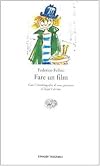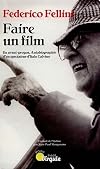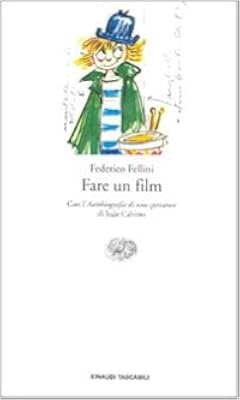
Fare un film
by Federico Fellini
72 Members (4.33)
On This Page
Description
Italian filmmaker Federico Fellini (1920-1993) is one of the most renowned figures in world cinema. Director of a long list of critically acclaimed motion pictures, including La strada, La dolce vita, 81/2, and Amarcord, Fellini's success helped strengthen the international prestige of Italian cinema from the 1950s onward. Often remembered as an eccentric auteur with a vivid imagination and a penchant for quasi-autobiographical works, the carnivalesque, and Rubenesque women, Fellini's show more inimitable films celebrate the creative potential of cinema as a medium and also provide thought-provoking evocations of various periods in Italian history, from the years of fascism to the age of Silvio Berlusconi's media empire. In Making a Film Fellini discusses his childhood and adolescence in the coastal town of Rimini, the time he spent as a cartoonist, journalist, and screenwriter in Rome, his decisive encounter with Roberto Rossellini, and his own movies, from Variety Lights to Casanova. The director explains the importance of drawing to his creative process, the mysterious ways in which ideas for films arise, his collaborations with his wife, Giulietta Masina, his thoughts on fascism, Jung, and the relationship between cinema and television. Often comic, sometimes tragic, and rife with insightful comments on his craft, Making a Film sheds light on Fellini's life and reveals the motivations behind many of his most fascinating movies. Available for the first time in its entirety in English, this volume contains the complete translation of Fare un film, the authoritative collection of writings edited and reworked by Fellini and initially published by Giulio Einaudi in 1980. The text includes a new translation of the Italo Calvino essay "A Spectator's Autobiography," an introduction by Italian film scholar Christopher B. White, and an afterward by Fellini's longtime friend and collaborator Liliana Betti. show lessTags
Recommendations





















Member Reviews
Members
- Recently Added By
Author Information

141+ Works 2,358 Members
Federico Fellini, the Italian film director and writer, is known for the extravagant personal style he developed early in his career, with its ornate visual effects, uninhibited sentiment, mischievous humor, and romantic fantasy. His collaboration with Roberto Rossellini on Open City (1945) brought him widespread critical acclaim in Italy. Fellini show more first attracted attention abroad with I Vitelloni (1953) and La Strada (1955), which focuses on the poor in a deeply sensitive manner touched with poetry. The latter brought him international success, as did La Dolce Vita (1959), with its portrait of the rich and rootless in a decadent Rome, the autobiographical 8? (1963), and the supple Juliet of the Spirits (1965), inspired by his actress-wife Giulietta Massina. Fellini's penchant for obscurity, his symbolism, and his sharp satire have made him controversial from time to time, but his imaginative impact is uncontested. (Bowker Author Biography) show less
Series
Belongs to Publisher Series
Common Knowledge
- Canonical title*
- Fare un film
*Some information comes from Common Knowledge in other languages. Click "Edit" for more information.
Classifications
- Genres
- Nonfiction, Biography & Memoir, Art & Design, Literature Studies and Criticism, History
- DDC/MDS
- 791.430233092 — Arts & recreation Recreation, sports, and performing arts Public performances Motion pictures, radio, television, podcasting Motion pictures Standard subdivisions Supervision Film direction History, geographic treatment, biography Directors
- LCC
- PN1998.3 .F45 .A3 — Language and Literature Literature (General) Literature (General) Drama Motion pictures
- BISAC
Statistics
- Members
- 72
- Popularity
- 438,194
- Rating
- (4.33)
- Languages
- 6 — English, French, Italian, Portuguese, Russian, Spanish
- Media
- Paper
- ISBNs
- 9