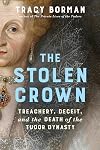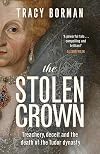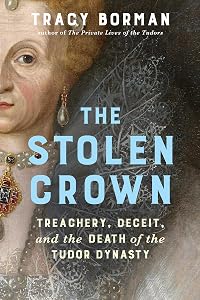
The Stolen Crown: Treachery, Deceit and the Death of the Tudor Dynasty
by Tracy Borman
On This Page
Description
In March 1603, Queen Elizabeth I, the last Tudor monarch, lies dying at Richmond Palace. The queen's ministers cluster round her bedside, urging her to name her successor, something she has stubbornly resisted throughout her reign. Almost with her last breath she whispers that James VI of Scotland should succeed her. She dies shortly afterwards and the throne of England passes peacefully from Tudor to Stuart. Or so we've been led to believe. But, as enthralling new research shows, this is show more not what happened. In the years that followed, history was literally re-written on the orders of James VI to hide the truth: Elizabeth went to her grave without formally naming an heir. The notion of an approved succession from Tudors to Stuarts is little more than an elaborately constructed fiction. And so James's rule in England began with a lie that went on to have devastating consequences. The Stuart regime rapidly descended into turbulence and uncertainty, conspiracy and persecution, witchcraft and gunpowder, culminating in the destruction of the monarchy in the English Civil War. show lessTags
Recommendations








Member Recommendations

Member Reviews
Tracy Borman's The Stolen Crown: Treachery, Deceit, and the Death of the Tudor Dynasty is an ideal read for anyone with a layperson's interest in Tudor history. It's focused on the actual end of the Tudor dynasty and the beginning of the Jacobean. I've read a number of biographies of Elizabeth I and this historical moment is generally reported along the lines of "Elizabeth stopped talking and lay on her death bed, but managed through a gesture to convey her determination that James VI should be the next King of England, becoming James VI and I."
There's always a bit of speculation about whether Elizabeth's gesture actually meant this or if her counsellors chose to see this because they were committed to putting a man on the throne, and show more he was the best available candidate.
Borman complicates the Tudor to Jacobean story in several ways:
• Borman goes into detail about the decades James spent trying to persuade Elizabeth to name him her heir, the voluminous correspondence, and the way Elizabeth refused to name James in advance.
• Borman also explores the different figures in Elizabeth's court who he communicated with and tried to win to his side, particularly once it became clear that Elizabeth's death was immanent.
• Borman considers the role gender played in all this political maneuvering. Elizabeth was determined not to name an heir so that there was no candidate others could embrace while she lived. Her counsellors, frustrated with Elizabeth's style of rule wanted a return to "normal," and normal meant male and regal, so who better than a man who was already a king? The general populace dreaded going through another reign by a woman who might or might not ever bear children—and, not surprisingly, they were also hungry for "normal."
What readers come to appreciate that the story of the naming of James as an heir began long before Elizabeth was on her deathbed and was continuously pursued by James himself.
Borman is clear about her sources, and the book comes with an excellent bibliography.
I received a free electronic review copy of this title; the opinions are my own. show less
There's always a bit of speculation about whether Elizabeth's gesture actually meant this or if her counsellors chose to see this because they were committed to putting a man on the throne, and show more he was the best available candidate.
Borman complicates the Tudor to Jacobean story in several ways:
• Borman goes into detail about the decades James spent trying to persuade Elizabeth to name him her heir, the voluminous correspondence, and the way Elizabeth refused to name James in advance.
• Borman also explores the different figures in Elizabeth's court who he communicated with and tried to win to his side, particularly once it became clear that Elizabeth's death was immanent.
• Borman considers the role gender played in all this political maneuvering. Elizabeth was determined not to name an heir so that there was no candidate others could embrace while she lived. Her counsellors, frustrated with Elizabeth's style of rule wanted a return to "normal," and normal meant male and regal, so who better than a man who was already a king? The general populace dreaded going through another reign by a woman who might or might not ever bear children—and, not surprisingly, they were also hungry for "normal."
What readers come to appreciate that the story of the naming of James as an heir began long before Elizabeth was on her deathbed and was continuously pursued by James himself.
Borman is clear about her sources, and the book comes with an excellent bibliography.
I received a free electronic review copy of this title; the opinions are my own. show less
Ratings
Members
- Recently Added By
Author Information

22 Works 2,763 Members
Tracy Borman is a British writer and historian. She studied and taught history at the University of Hull and was awarded a Ph. D in 1997. Tracy is now Chief Executive of the Heritage Education Trust, a charity that encourages children to visit and learn from historic properties. She has recently been appointed Interim Chief Curator for Historic show more Royal Palaces, the charity that manages Hampton Court Palace, the Tower of London, Kensington Palace, Kew Palace and the Banqueting House, Whitehall. Her works include: Elizabeth's Women: The Hidden Story of the Virgin Queen, Henrietta Howard: King's Mistress, Queen's Servant, and Witches: A Tale of Sorcery, Scandal and Seduction. (Bowker Author Biography) show less
Awards and Honors
Notable Lists
Classifications
- Genres
- History, Nonfiction, General Nonfiction
- DDC/MDS
- 941.061 — History & geography History of Europe British Isles Historical periods of British Isles 1603-1714, House of Stuart and Commonwealth periods
- LCC
- DA355 .B676 — History of Europe, Asia, Africa and Oceania Great Britain History of Great Britain England History By period Modern, 1485- Tudors, 1485-1603 Elizabeth I, 1558-1603. Elizabethan age
- BISAC
Statistics
- Members
- 81
- Popularity
- 397,834
- Reviews
- 1
- Rating
- (3.58)
- Languages
- English
- Media
- Paper, Ebook
- ISBNs
- 6
- ASINs
- 2