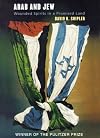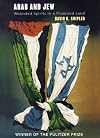
Arab and Jew: Wounded Spirits in a Promised Land
by David K. Shipler
On This Page
Description
Examines the relationships, mutual images, and stereotypes that have evolved between Arabs and Jews in Israel and in territorities under Israeli control.Tags
Recommendations














































Member Recommendations

Member Reviews
Originally published in 1986 shortly before the first intifada, I listened to the updated version from 2002 (post Oslo, during the second intifada). Of course a lot has changed since both of those dates, but the book does an excellent job at providing context for the underlying attitudes on both sides of the conflict. Which sadly hasn't changed all that much in the ensuing years.
The book is very well written, and does a good job of both providing unbiased accounts of how various people interviewed and larger segments of society feel about certain issues, while also providing the author's own opinions in specific instances. He clearly delineates when the views expressed are his own, and otherwise remains neutral but invested.
Despite show more the length, this is not meant as a comprehensive history of the conflict, nor does it choose sides. Both have done plenty of awful things, and the attempt is mostly to understand the rhetoric and cut through the propaganda to understand both its origins and its impact. Of particular interest were the extensive quotes from textbooks, both in Hebrew and Arabic, and how they were designed to instill hatred and distrust which in turn served to perpetuate the conflict.
The original book concluded with a cautious message of hope for a better future, and it's so tragic to see how possible it could have been, had the majority been able to keep extremists on both sides in check. Alas, the current situation shows that such optimism was more a wish than a prediction. Still, we see that only when both sides are willing to see the other as equally deserving of basic human rights will things improve. And considering the vast gulf and decades of bloodshed, it's hard to be hopeful right now.
Audiobook: in a pleasant surprise, the narrator mostly manages to properly pronounce both Arabic and Hebrew words without sounding like a tortured cat. show less
The book is very well written, and does a good job of both providing unbiased accounts of how various people interviewed and larger segments of society feel about certain issues, while also providing the author's own opinions in specific instances. He clearly delineates when the views expressed are his own, and otherwise remains neutral but invested.
Despite show more the length, this is not meant as a comprehensive history of the conflict, nor does it choose sides. Both have done plenty of awful things, and the attempt is mostly to understand the rhetoric and cut through the propaganda to understand both its origins and its impact. Of particular interest were the extensive quotes from textbooks, both in Hebrew and Arabic, and how they were designed to instill hatred and distrust which in turn served to perpetuate the conflict.
The original book concluded with a cautious message of hope for a better future, and it's so tragic to see how possible it could have been, had the majority been able to keep extremists on both sides in check. Alas, the current situation shows that such optimism was more a wish than a prediction. Still, we see that only when both sides are willing to see the other as equally deserving of basic human rights will things improve. And considering the vast gulf and decades of bloodshed, it's hard to be hopeful right now.
Audiobook: in a pleasant surprise, the narrator mostly manages to properly pronounce both Arabic and Hebrew words without sounding like a tortured cat. show less
An even-handed approach to a dangerous, complex strife that humanizes the conflict in this volatile region, this compelling book shows how both sides suffer in the constant ruining and rebuilding of Arab and Jewish cultures. Mr. Shipler, who was the bureau chief in Jerusalem for the New York Times in the early 1980s, brings to life the “irony” and “symmetry” of the many tragic similarities of the Palestinians and Jewish Zionists who are locked in a “prolonged state of twilight warfare” and “intricately bound up together.” He captures the diverse moods and attitudes of the people who inhabit this volatile region, which he paints vividly. The book, originally written in 1986 and updated in 2015, notes how much more show more entrenched the two sides have become in their historical grievances and clash of national narratives, which have become more distorted by fresh terroristic acts by both sides. There are no winners here; only many losers in this seemingly never-ending, intractable conflict. show less
At the end of the Foreword to Arab and Jew, David Shipler writes, "The partisan will not find satisfaction in this book; at least I hope not. I hope to bother him, to nag him into facing unpleasantness. If he is tempted to stop when he first meets a difficult fact, I would only urge him to read on." This is an accurate description, and valuable advice. Reading this book as a Jew who was raised with a love of Israel was very difficult but fascinating and educational.
The first edition of Arab and Jew won the Pulitzer Prize, so I don't need to elaborate on its quality. It is extremely well-written and comprehensive, and seems to be about as unbiased an account as you can get on this topic (he is pretty clearly in favor of the more liberal show more contingents on both sides, but only out of an appreciation for rationality and the value of human life). Shipler's perception, empathy, and integrity as a journalist are obvious. He provides a look into a wide cross-section of Israeli and Palestinian history and society. This is not a vehicle for Shipler's political opinions or prescriptions - most of the text is interviews with actual Israelis and Palestinians, skillfully woven together. This may be the only time I've read about the Israeli-Arab conflict and felt I was truly getting all sides of the story.
This new edition provides updates on political developments and public opinion polls where appropriate, though most of the material is unchanged since the first edition (from 1986), since as Shipler says, most of the fundamentals are depressingly unchanged. The updates are always interesting, and if anything, I would have liked more of them (though on the other hand, I'm not sure I could have handled more than the almost-700 already very dense pages)
Throughout the book, both Jewish and Arab figures provoked sympathy, admiration, and horror. Though I have always thought of myself as a fairly liberal-minded Jew, it made me reevaluate many of my (often subconscious) beliefs. A warning: the book is long, dense, and rarely pleasant to read, and I wonder if the abundance of details might overwhelm a reader who doesn't have a background and personal stake in the conflict. But I highly recommend this book to anyone who wants a fair-minded, deeply educational look at this topic. show less
The first edition of Arab and Jew won the Pulitzer Prize, so I don't need to elaborate on its quality. It is extremely well-written and comprehensive, and seems to be about as unbiased an account as you can get on this topic (he is pretty clearly in favor of the more liberal show more contingents on both sides, but only out of an appreciation for rationality and the value of human life). Shipler's perception, empathy, and integrity as a journalist are obvious. He provides a look into a wide cross-section of Israeli and Palestinian history and society. This is not a vehicle for Shipler's political opinions or prescriptions - most of the text is interviews with actual Israelis and Palestinians, skillfully woven together. This may be the only time I've read about the Israeli-Arab conflict and felt I was truly getting all sides of the story.
This new edition provides updates on political developments and public opinion polls where appropriate, though most of the material is unchanged since the first edition (from 1986), since as Shipler says, most of the fundamentals are depressingly unchanged. The updates are always interesting, and if anything, I would have liked more of them (though on the other hand, I'm not sure I could have handled more than the almost-700 already very dense pages)
Throughout the book, both Jewish and Arab figures provoked sympathy, admiration, and horror. Though I have always thought of myself as a fairly liberal-minded Jew, it made me reevaluate many of my (often subconscious) beliefs. A warning: the book is long, dense, and rarely pleasant to read, and I wonder if the abundance of details might overwhelm a reader who doesn't have a background and personal stake in the conflict. But I highly recommend this book to anyone who wants a fair-minded, deeply educational look at this topic. show less
 This review was written for LibraryThing Early Reviewers.
A comprehensive look at the longstanding tension between the Jews and the Arabs. Shipler exams the many facets of the conflict and cultural tensions that have plagued the region for such a long time. He takes a fair-minded stance and gives us a compassionate and humane look at the people themselves and the burdens that the conflict places upon them. The pace of the book is steady and keeps the reader engaged. The author cites a tremendous range of primary sources.
A great behind-the-scenes look at the complicated issues that prevent real movement toward reconciliation and peace.
A great behind-the-scenes look at the complicated issues that prevent real movement toward reconciliation and peace.
This review was written for LibraryThing Early Reviewers.This book explains a LOT - so much that it made me not want to ever visit the Middle East. It’s way fucked up. With that said, Shipler is a genius at teasing out all the nuances of the conflict and laying them out for the reader to comprehend. He tries not to make anyone the bad guy, keeping it all fact-based and objective. [Facts, however, have a way of picking sides on their own.]
Anyway, if you're confused as to why Israel/Palestine just CAN'T SEEM TO MAKE PEACE ALREADY, read this. It will help. But please get the up-to-date edition. The whole time I was reading the one printed in 1984, I couldn’t stop wondering what’s changed… though the answer to that, sadly, is probably: not much.
Anyway, if you're confused as to why Israel/Palestine just CAN'T SEEM TO MAKE PEACE ALREADY, read this. It will help. But please get the up-to-date edition. The whole time I was reading the one printed in 1984, I couldn’t stop wondering what’s changed… though the answer to that, sadly, is probably: not much.
This is the history of the relationship between Arab and Jew. Shipler painstakingly traces the prejudice back to its origin and examines the cultural, religious, and socioeconomic divide that has existed ever since. Shipler's reporting is exemplary. He is unbiased but obviously very concerned about the everyday ordinary people just trying to survive in this land of unrest. Shipler's voice is at once delicate and forthright in his descriptions and details involving terrorism, nationalism, and political conflict. He refers frequently to information he has collected from textbooks of various grade levels to demonstrate the education & "miseducation" of middle eastern children.
This book by David Shipler deserves great praise. It is a comprehensive discussion of the distressing situation in Israel between Arabs and Jews. Readers will gain incredible insight into the cultures of both groups and better understand the reasons for the small chance for a peaceful agreement between these populations.
After reading this book, I felt discouraged that there will ever be peace. There is such animosity coming from the Arabs who are resentful that they were expelled from their homes when the Jews were given their place in Israel. Ironically, the Jews lost their homes and over 6 million lost their lives before having a homeland in Israel. The Arabs were rejected by their fellow Arabs, received no help from Jordan and found show more themselves in poor conditions in temporary camps which became permanent for most. The struggle to regain the West Bank creates such tension between both sides. Many feel that the heart of the conflict is the lack of acceptance of Jews in Israel by the Arabs and the compelling desire of Arabs to go back to old times rather than move forward and create a two state solution. Many Arabs want their land back. It is as hopeless as the Jews saying they want their European lands back or the Native Americans saying they want their land back in North America! The author points out that most Arabs know very little about the Holocaust. They do not want to see the Jews as victims like themselves. Sadly, there is coexistence without integration between the two groups. One out of every seven Israelis is Arab but they are second class citizens creating frustration and anger toward their government.
This book is a valuable collection of the feelings of both sides of the conflict and I suggest you read it if this situation in the Middle East is important to you. I feel much more informed after reading it and you will too. show less
After reading this book, I felt discouraged that there will ever be peace. There is such animosity coming from the Arabs who are resentful that they were expelled from their homes when the Jews were given their place in Israel. Ironically, the Jews lost their homes and over 6 million lost their lives before having a homeland in Israel. The Arabs were rejected by their fellow Arabs, received no help from Jordan and found show more themselves in poor conditions in temporary camps which became permanent for most. The struggle to regain the West Bank creates such tension between both sides. Many feel that the heart of the conflict is the lack of acceptance of Jews in Israel by the Arabs and the compelling desire of Arabs to go back to old times rather than move forward and create a two state solution. Many Arabs want their land back. It is as hopeless as the Jews saying they want their European lands back or the Native Americans saying they want their land back in North America! The author points out that most Arabs know very little about the Holocaust. They do not want to see the Jews as victims like themselves. Sadly, there is coexistence without integration between the two groups. One out of every seven Israelis is Arab but they are second class citizens creating frustration and anger toward their government.
This book is a valuable collection of the feelings of both sides of the conflict and I suggest you read it if this situation in the Middle East is important to you. I feel much more informed after reading it and you will too. show less
This review was written for LibraryThing Early Reviewers.Members
- Recently Added By
Author Information

11+ Works 2,837 Members
Journalist and author David K. Shipler was born on December 3, 1942 in Orange, N. J. He was schooled at Dartmouth College and Columbia University's Russian Institute. Shipler was a foreign correspondent for the New York Times and a former senior associate at the Carnegie Foundation for International Peace. Over ten years of work went into show more Shipler's book, A Country of Strangers: Blacks and Whites in America. He won the Pulitzer Prize for his novel, Arab and Jew: Wounded Spirits in a Promised Land. (Bowker Author Biography) show less
Awards and Honors
Awards
Distinctions
Work Relationships
Common Knowledge
- Related movies
- Arab and Jew: Wounded Spirits in a Promised Land (1989 | IMDb); Arab and Jew: Return to the Promised Land (2002 | IMDb)
Classifications
- Genres
- Nonfiction, History, General Nonfiction, Religion & Spirituality
- DDC/MDS
- 956.9405 — History & geography History of Asia Middle East Asia: Turkey, Iraq, Syria, Lebanon, Israel, Jordan The Levant Israel and Palestine
- LCC
- DS119.7 .S476 — History of Europe, Asia, Africa and Oceania Asia History of Asia Israel (Palestine). The Jews
- BISAC
Statistics
- Members
- 725
- Popularity
- 39,099
- Reviews
- 18
- Rating
- (4.14)
- Languages
- English, French
- Media
- Paper, Audiobook, Ebook
- ISBNs
- 21
- UPCs
- 2
- ASINs
- 12