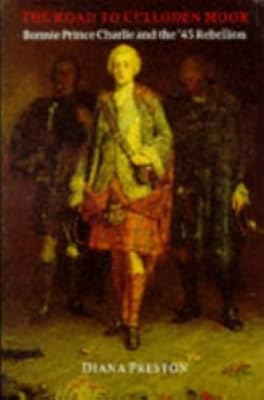
The Road to Culloden Moor: Bonnie Prince Charlie and the '45 Rebellion
by Diana Preston
On This Page
Description
This book focuses on how and why Charles Edward, the Young Pretender, and his failed campaign of 1745 should have found such an enduring place in our popular memory.Tags
Recommendations




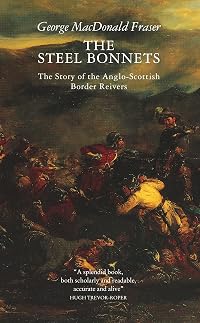

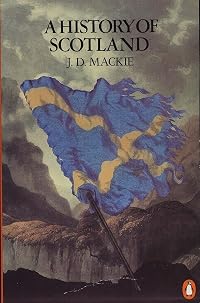
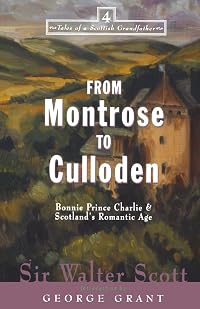
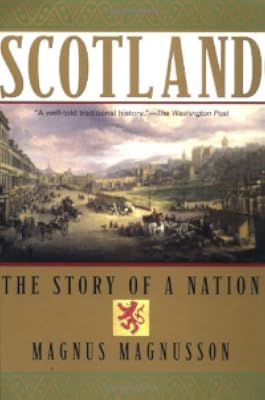








Member Reviews
This is a colourful and very readable account of the life of Prince Charles Stuart, the Young Pretender, and his doomed attempt in 1745-6 to recapture the throne from the unpopular Hanoverian king George II. Charles was born in Italy and had never visited the country over which he claimed sovereignty at that time. While Charles Stuart was almost the epitome of a romantic leader whose followers would die for him, he lacked the necessary grasp of strategy and tactics to execute a successful invasion. He made a number of key misjudgements: relying on French support which was never forthcoming (though that was not truly his fault); underestimating the military strength of the British government, as he appears to have assumed many British show more soldiers would not fight him as they would recognise him as their rightful king; and overestimating the willingness and capacity of both Scottish Lowlanders and English Jacobites to rise up in his favour. More generally, while the country didn't much like the Hanoverian rulers, the economy was expanding and the country was richer, and simply too many people had too much of a stake in this society to risk supporting a Jacobite invasion and rebellion, even if they may have sympathised with Charles Stuart's cause.
All this said, he did attract considerable early success, winning a military victory at Prestonpans, capturing Edinburgh and later, after crossing into England, easily capturing Carlisle and famously marching as far south as Derby. But it was not sustainable, and the government, after being initially caught on the hop, had amassed considerable forces to oppose the Young Pretender. The idealistic Charles was frequently at loggerheads with his more hardheaded chiefs who realised the advance could not be sustained and the support for his challenge just not wide or deep enough. The last few chapters tell the bloody story of the battle of Culloden itself, a battle that lasted only 30 minutes but which presaged the bloody suppression of the Highlanders and their whole way of life, including breaking up the clan system and even banning tartans, plaids and kilts for decades. And, of course, Charles's retreat and wanderings through the Hebrides and the role of Flora Macdonald. After he eventually slipped away from Scotland, eluding his pursuers, he spent the remaining 40 plus years of his life (he was only 25/26 at the time of the invasion), bitterly regretting his failures and turning increasingly to alcohol. His is a fascinating and colourful and tragic story though. show less
All this said, he did attract considerable early success, winning a military victory at Prestonpans, capturing Edinburgh and later, after crossing into England, easily capturing Carlisle and famously marching as far south as Derby. But it was not sustainable, and the government, after being initially caught on the hop, had amassed considerable forces to oppose the Young Pretender. The idealistic Charles was frequently at loggerheads with his more hardheaded chiefs who realised the advance could not be sustained and the support for his challenge just not wide or deep enough. The last few chapters tell the bloody story of the battle of Culloden itself, a battle that lasted only 30 minutes but which presaged the bloody suppression of the Highlanders and their whole way of life, including breaking up the clan system and even banning tartans, plaids and kilts for decades. And, of course, Charles's retreat and wanderings through the Hebrides and the role of Flora Macdonald. After he eventually slipped away from Scotland, eluding his pursuers, he spent the remaining 40 plus years of his life (he was only 25/26 at the time of the invasion), bitterly regretting his failures and turning increasingly to alcohol. His is a fascinating and colourful and tragic story though. show less
Members
- Recently Added By
Author Information

18+ Works 3,021 Members
Diana Preston is a prize-winning historian and author of A Higher Form of Killing, Lusitania: An Epic Tragedy, Before the Fallout: From Marie Curie to Hiroshima (winner of the Los Angeles Times Book Prize for Science and Technology), The Boxer Rebellion, Paradise in Chains, and A Pirate of Exquisite Mind, among other works of acclaimed narrative show more history. She and her husband, Michael, live in London. show less
Common Knowledge
- People/Characters
- Charles Edward Stuart, "Bonnie Prince Charlie"
- Important places
- Scotland, UK
Classifications
- Genres
- History, Nonfiction, General Nonfiction, Biography & Memoir
- DDC/MDS
- 941.1072092 — History & geography History of Europe British Isles Scotland
- LCC
- DA814 .A5 .P74 — History of Europe, Asia, Africa and Oceania Great Britain History of Great Britain Scotland History By period 1603-1707/1745 1707-1745. Jacobite movements
Statistics
- Members
- 42
- Popularity
- 701,203
- Reviews
- 1
- Rating
- (5.00)
- Languages
- English
- Media
- Paper, Ebook
- ISBNs
- 2
- ASINs
- 2