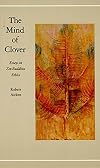
The Mind of Clover: Essays in Zen Buddhist Ethics
by Robert Aitken
On This Page
Description
A look at the Ten Grave Precepts of Zen Buddhism, the core of Zen ethics, and how they apply to modern Western society. "As an American who has trained in Zen practice for many years Aitken Roshi has a special understanding of the problems and questions which plague Western students of Zen." -Yamada Koun Roshi In Taking the Path of Zen, Robert Aitken provided a concise guide to zazen (Zen meditation) and other aspects of the practice of Zen. In The Mind of Clover he addresses the world show more beyond the zazen cushions, illuminating issues of appropriate personal and social action through an exploration of the philosophical complexities of Zen ethics. Aitken's approach is clear and sure as he shows how our minds can be as nurturing as clover, which enriches the soil and benefits the environment as it grows. The opening chapters discuss the Ten Grave Precepts of Zen, which, Aitken points out, are "not commandments etched in stone but expressions of inspiration written in something more fluid than water." Aitken approaches these precepts, the core of Zen ethics, from several perspectives, offering many layers of interpretation. Like ripples in a pond, the circles of his interpretation increasingly widen, and he expands his focus to confront corporate theft and oppression, the role of women in Zen and society, abortion, nuclear war, pollution of the environment, and other concerns. The Mind of Clover champions the cause of personal responsibility in modern society, encouraging nonviolent activism based on clear convictions. It is a guide that engages, that invites us to realize our own potential for confident and responsible action. show lessTags
Recommendations


































Member Reviews
Buddhist Ethics? Is that not an oxymoron?
Aitken takes us on the eightfold path, and lays out the ethos of compassion for Buddhist. Non-dogmatic, yet also firm in his convictions, Aitken will tweak your best preconceptions in a productive way.
Aitken takes us on the eightfold path, and lays out the ethos of compassion for Buddhist. Non-dogmatic, yet also firm in his convictions, Aitken will tweak your best preconceptions in a productive way.
Aitken is dope.
Very rational, down to earth exploration of Buddhist ethics.
Very rational, down to earth exploration of Buddhist ethics.
So much to think about in this book. I really enjoyed going over the precepts one by one with Aitken's commentary. His use of quotes from Bohidharma and Dogen and others was very nice as well. Highly recommended for precept study.
In Taking the Path of Zen, Robert Aitken provided a concise guide to zazen (Zen meditation) and other aspects of the practice of Zen. In The Mind of Clover he addresses the world beyond the zazen cushions, illuminating issues of appropriate personal and social action through an exploration of the philosophical complexities of Zen ethics.
Aitken's approach is clear and sure as he shows how our minds can be as nurturing as clover, which enriches the soil and benefits the environment as it grows. The opening chapters discuss the Ten Grave Precepts of Zen, which, Aitken points out, are "not commandments etched in stone but expressions of inspiration written in something more fluid than water." Aitken approaches these precepts, the core of show more Zen ethics, from several perspectives, offering many layers of interpretation. Like ripples in a pond, the circles of his interpretation increasingly widen, and he expands his focus to confront corporate theft and oppression, the role of women in Zen and society, abortion, nuclear war, pollution of the environment, and other concerns.
The Mind of Clover champions the cause of personal responsibility in modern society, encouraging nonviolent activism based on clear convictions. It is a guide that engages, that invites us to realize our own potential for confident and responsible action. show less
Aitken's approach is clear and sure as he shows how our minds can be as nurturing as clover, which enriches the soil and benefits the environment as it grows. The opening chapters discuss the Ten Grave Precepts of Zen, which, Aitken points out, are "not commandments etched in stone but expressions of inspiration written in something more fluid than water." Aitken approaches these precepts, the core of show more Zen ethics, from several perspectives, offering many layers of interpretation. Like ripples in a pond, the circles of his interpretation increasingly widen, and he expands his focus to confront corporate theft and oppression, the role of women in Zen and society, abortion, nuclear war, pollution of the environment, and other concerns.
The Mind of Clover champions the cause of personal responsibility in modern society, encouraging nonviolent activism based on clear convictions. It is a guide that engages, that invites us to realize our own potential for confident and responsible action. show less
> Babelio : https://www.babelio.com/livres/Aitken-Agir-zen--Une-morale-vivante/527166
> Une vision vivante des Préceptes bouddhiques
Par Zuihô (Livresbouddhistes.com), le 1 janv. 2019 (Sur Amazon.fr) 4/5
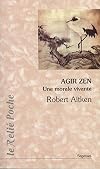
> AGIR ZEN, de Robert Aitken - Éd. du Relié. — Si vous vous intéressez au Zen, à sa philosophie, à sa pratique et à la façon dont on peut appliquer ses préceptes dans la vie quotidienne, il ne faut pas rater cet ouvrage qui m’a supérieurement intéressé. Le problème en effet de beaucoup de livres qui paraissent aujourd’hui sur les mêmes sujets, c’est qu’ils sont des sortes de compilation de choses déjà vues, déjà lues, accommodées à une sauce différente. Et c’est là que la vigilance de notre comité de lecture doit show more s’appliquer surtout sur des sujets comme celui-ci. Car le Zen est à la mode, l’expression "soyons zen" ou l’injonction "sois zen" font partie du langage courant mais, au delà de cet appel à être plus relax, qu’en est-il ? Et c’est là l’immense mérite du livre de Robert Aitken, vieux moine zen qui peut se targuer d’une cinquantaine d’années de pratique, que de nous introduire à la vraie profondeur de cette sagesse, ancrée dans une forte tradition mais dont la modernité ne cesse de nous surprendre. Basé sur les dix préceptes majeurs du bouddhisme zen, cet ouvrage nous permet vraiment de nous approfondir et "d’aller au delà du par delà". Admirablement traduit, nous pensons qu’il est l’ouvrage qu’il faut avoir lu aujourd’hui pour agir et vivre zen !
*Robert Aitken découvre la méditation zen pendant la Seconde Guerre mondiale alors qu’il est interné à Guam dans un camp japonais. En 1959, il établit un centre zen à Hawai. En 1974, il reçoit le titre de Röshi de son maître Yamada K. Roshi. Depuis lors, il n’a cessé de transmettre l’esprit du zen. (Marc de SMEDT)
—Nouvelles Clés show less
> Une vision vivante des Préceptes bouddhiques
Par Zuihô (Livresbouddhistes.com), le 1 janv. 2019 (Sur Amazon.fr) 4/5
> AGIR ZEN, de Robert Aitken - Éd. du Relié. — Si vous vous intéressez au Zen, à sa philosophie, à sa pratique et à la façon dont on peut appliquer ses préceptes dans la vie quotidienne, il ne faut pas rater cet ouvrage qui m’a supérieurement intéressé. Le problème en effet de beaucoup de livres qui paraissent aujourd’hui sur les mêmes sujets, c’est qu’ils sont des sortes de compilation de choses déjà vues, déjà lues, accommodées à une sauce différente. Et c’est là que la vigilance de notre comité de lecture doit show more s’appliquer surtout sur des sujets comme celui-ci. Car le Zen est à la mode, l’expression "soyons zen" ou l’injonction "sois zen" font partie du langage courant mais, au delà de cet appel à être plus relax, qu’en est-il ? Et c’est là l’immense mérite du livre de Robert Aitken, vieux moine zen qui peut se targuer d’une cinquantaine d’années de pratique, que de nous introduire à la vraie profondeur de cette sagesse, ancrée dans une forte tradition mais dont la modernité ne cesse de nous surprendre. Basé sur les dix préceptes majeurs du bouddhisme zen, cet ouvrage nous permet vraiment de nous approfondir et "d’aller au delà du par delà". Admirablement traduit, nous pensons qu’il est l’ouvrage qu’il faut avoir lu aujourd’hui pour agir et vivre zen !
*Robert Aitken découvre la méditation zen pendant la Seconde Guerre mondiale alors qu’il est interné à Guam dans un camp japonais. En 1959, il établit un centre zen à Hawai. En 1974, il reçoit le titre de Röshi de son maître Yamada K. Roshi. Depuis lors, il n’a cessé de transmettre l’esprit du zen. (Marc de SMEDT)
—Nouvelles Clés show less
Oct 3, 2019 (Edited)French
Ratings
Members
- Recently Added By
Author Information

22+ Works 1,973 Members
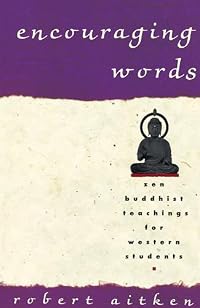
Robert Aitken was the author of more than a dozen books about Buddhism, including A Zen Wave, Encouraging Words, and Taking the Path of Zen. A dedicated Buddhist for most of his life, he was an abbot and roshi of the Honolulu Diamond Sangha in Hawaii, which he co-founded with his late wife Anne Hopkins Aitken in 1959. He died in 2010.
Common Knowledge
- Original publication date
- 1984
Classifications
- Genres
- Religion & Spirituality, Nonfiction, General Nonfiction, Philosophy
- DDC/MDS
- 294.35 — Religion Other religions Buddhism/Hinduism Buddhism Buddhism - ethics
- LCC
- BQ5495 .A57 — Philosophy, Psychology and Religion Buddhism Buddhism Practice of Buddhism. Forms of worship Religious life Precepts for laymen
- BISAC
Statistics
- Members
- 268
- Popularity
- 120,185
- Reviews
- 5
- Rating
- (4.00)
- Languages
- English, French, Spanish
- Media
- Paper, Ebook
- ISBNs
- 5
- ASINs
- 2