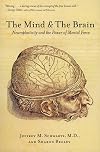
The Mind and the Brain: Neuroplasticity and the Power of Mental Force
by Jeffrey M. Schwartz, Sharon Begley
On This Page
Description
A groundbreaking work of science that confirms, for the first time, the independent existence of the mind-and demonstrates the possibilities for human control over the workings of the brain. Conventional science has long held the position that 'the mind' is merely an illusion, a side effect of electrochemical activity in the physical brain. Now in paperback, Dr Jeffrey Schwartz and Sharon Begley's groundbreaking work, The Mind and the Brain, argues exactly the opposite: that the mind has a show more life of its own. Dr. Schwartz, a leading researcher in brain dysfunctions, and Wall Street Journal science columnist Sharon Begley demonstrate that the human mind is an independent entity that can shape and control the functioning of the physical brain. Their work has its basis in our emerging understanding of adult neuroplasticity-the brain's ability to be rewired not just in childhood, but throughout life, a trait only recently established by neuroscientists. Through decades of work treating patients with obsessive-compulsive disorder (OCD), Schwartz made an extraordinary finding: while following the therapy he developed, his patients were effecting significant and lasting changes in their own neural pathways. It was a scientific first: by actively focusing their attention away from negative behaviors and toward more positive ones, Schwartz's patients were using their minds to reshape their brains-and discovering a thrilling new dimension to the concept of neuroplasticity. The Mind and the Brain follows Schwartz as he investigates this newly discovered power, which he calls self-directed neuroplasticity or, more simply, mental force. It describes his work with noted physicist Henry Stapp and connects the concept of 'mental force' with the ancient practice of mindfulness in Buddhist tradition. And it points to potential new applications that could transform the treatment of almost every variety of neurological dysfunction, from dyslexia to stroke-and could lead to new strategies to help us harness our mental powers. Yet as wondrous as these implications are, perhaps even more important is the philosophical dimension of Schwartz's work. For the existence of mental force offers convincing scientific evidence of human free will, and thus of man's inherent capacity for moral choice. show lessTags
Recommendations
















Member Reviews
Jeffrey Schwartz, M.D., with help from the talented Sharon Begley, has written a sort of masterpiece exploring the mind's effect on the brain. He restores volition as agent in what has been predominantly a materialistic reduction in the explanation of the mind.
In this terrific book, he explores how history has reduced the view to mainly one that states that the mind arises solely and deterministically from the biological functioning of the brain.
What is particularly fascinating is his assertion that this view is wrong - that the mind, to a great exent, actually "creates the brain" - which he supports by his own well-known work with helping (and studying) patients with Obsessive Compulsive Disorder (OCD), as well as related work by show more other imminent researchers, such as Michael Merzenich, Edward Taub, and many others. He indicates that OCD is particularly valuable to studying the mind and brain, because OCD sufferers are cognizant of the faulty nature of their obsessions and compulsions, even if unable to control them.
Hence, there is an opportunity to study what appears, at first, as a mind/brain dichotomy in OCD sufferers, and Schwartz has helped patients use their "independent observer" (mindfulness) ability to build mindful awareness and attention in a four step program to re-label, re-attribute, re-focus, and revalue to overcome their disorder and actually physically change their brains. Volition in choosing what what pays attention to is what effects the change, and is, according to the great American psychologist William James, an essentially moral act. The mind and brain appear to be both separate and united at once.
There is brief periodic mention of Buddhist prescient observations about much of what neuroscience is now discovering - many parallels can be noted.
Schwartz explains how he and physicist Henry Stapp have collaborated to theorize how quantum physics explains the probabilistic window of opportunity in which volition and attention can act to change the brain.
It is somewhat difficult to do justice to, and accurately explain, the concepts in this book in a short review, because the book itself carefully builds in a way that I cannot do in a few sentences. I therefore recommend that one read this very interesting book! show less
In this terrific book, he explores how history has reduced the view to mainly one that states that the mind arises solely and deterministically from the biological functioning of the brain.
What is particularly fascinating is his assertion that this view is wrong - that the mind, to a great exent, actually "creates the brain" - which he supports by his own well-known work with helping (and studying) patients with Obsessive Compulsive Disorder (OCD), as well as related work by show more other imminent researchers, such as Michael Merzenich, Edward Taub, and many others. He indicates that OCD is particularly valuable to studying the mind and brain, because OCD sufferers are cognizant of the faulty nature of their obsessions and compulsions, even if unable to control them.
Hence, there is an opportunity to study what appears, at first, as a mind/brain dichotomy in OCD sufferers, and Schwartz has helped patients use their "independent observer" (mindfulness) ability to build mindful awareness and attention in a four step program to re-label, re-attribute, re-focus, and revalue to overcome their disorder and actually physically change their brains. Volition in choosing what what pays attention to is what effects the change, and is, according to the great American psychologist William James, an essentially moral act. The mind and brain appear to be both separate and united at once.
There is brief periodic mention of Buddhist prescient observations about much of what neuroscience is now discovering - many parallels can be noted.
Schwartz explains how he and physicist Henry Stapp have collaborated to theorize how quantum physics explains the probabilistic window of opportunity in which volition and attention can act to change the brain.
It is somewhat difficult to do justice to, and accurately explain, the concepts in this book in a short review, because the book itself carefully builds in a way that I cannot do in a few sentences. I therefore recommend that one read this very interesting book! show less
The Mind and the Brain, written by Jeffrey M. Schwartz and Sharon Begley, published in 2002, examines the mind-body problem introduced by Descartes, and attempts to reconcile material determinism with free will, and resolve the conflict between science and moral philosophy. In this effort, the book cites past thinkers such as the Buddha and William James, and discusses research in the areas of neuroplasticity, mindfulness meditation and quantum physics, to support the concept of mental force as a force that can be developed and applied to exercise free will at the quantum level in the brain, to use the power of the mind to shape the brain.
One central thesis of the book is very attractive - that our brain continues to grow and change as we get older, and that there is something we can do about it. The most interesting part was the discussion of treating obsessive-compulsive disorder, which was too short.
But when Schwartz gets onto the bigger canvas of mind-brain relationship that he so wants to paint on, he is just sloppy. He portrays himself and the people he has worked with as rebels against an establishment, but I think he is just wrong.
His take on Buddhism is limited. His ideas about "quantum consciousness" are very simplistic. His interpretation of other, more subtle, thinkers are, in the cases I know, wrong. His discussions of mind-brain relationship are sloppy in show more the extreme.
If you follow this by something like "Consciousness: A Very Short Introduction" by Susan Blackmore, you'll see the difference. Blackmore says far more in a much shorter book.
Disappointing. show less
But when Schwartz gets onto the bigger canvas of mind-brain relationship that he so wants to paint on, he is just sloppy. He portrays himself and the people he has worked with as rebels against an establishment, but I think he is just wrong.
His take on Buddhism is limited. His ideas about "quantum consciousness" are very simplistic. His interpretation of other, more subtle, thinkers are, in the cases I know, wrong. His discussions of mind-brain relationship are sloppy in show more the extreme.
If you follow this by something like "Consciousness: A Very Short Introduction" by Susan Blackmore, you'll see the difference. Blackmore says far more in a much shorter book.
Disappointing. show less
I enjoyed hearing Dr. Schwartz speak in person on this topic at the U of MN some years ago and finally got a hold of this book. The concepts and evidences presented are very interesting and I think immediately useful. The writing itself is a bit repetitive, but I'm glad I stuck it out. The measurable data and the relationship to quantum theory are fascinating.
BTW, I wa able to check this out for free as an .epub from the Saint Paul Public Library system.
BTW, I wa able to check this out for free as an .epub from the Saint Paul Public Library system.
Good overview of neuroplasticity for the lay audience, but not up to date to recent research.
Fascinating subject capable of changing our approach to life. However this book is heavy going. It is far too technical for the everyday reader, especially with its heavy emphasis on quantum physics.
A good book. Wish there were more details given about brain function. Maybe that just means I was sorry there wasn't more of it to read.
Members
- Recently Added By
Author Information
6+ Works 1,450 Members
Jeffrey M. Schwartz M. D. is a psychiatrist and researcher in neuroplasticity and its connection to obeseeive-compulsive disorder. He is a believer in mind/body dualism and feels that science and religion should not be separated. Dr. Schwartz coined the term Brain Lock to describe obsessive-compulsive behavior and the treatment plan he formulated show more and wrote about in his book Brain Lock: Free Yourself from Obsessive-Compulsive Behavior. In his book Schwartz claims that obsessive-compulsive disorders (OCD) are a result of a bio-chemical imbalance where brain functions will get "locked" in an obsessive-compulsive pattern and that OCD can be self-treated by following four steps. His book outlines these steps as Relabel, Reattribute, Refocus and Revalue. His other books include The mind and the brain: Neuroplasticity and the power of mental force and You Are Not Your Brain: The 4-Step Solution for Changing Bad Habits, Ending Unhealthy Thinking, and Taking Control of Your Life. (Bowker Author Biography) show less

5+ Works 1,852 Members
Sharon Begley is the senior science writer at STAT, the life sciences publication of the Boston Globe. The author of the New York Times bestseller Train Your Mind, Change Your Brain, she has received numerous awards for her writings about science.
Common Knowledge
- Canonical title
- The Mind and the Brain: Neuroplasticity and the Power of Mental Force
- Original publication date
- 2002
- Epigraph
- When he speaks of "reality" the layman usually means something obvious and well-known, whereas it seems to me that precisely the most important and extremely difficult task of our time is to work on elaborating a new idea of ... (show all)reality. This is also what I mean when I always emphasize that science and religion must be related in some way." -Wolfgang Pauli, letter to M. Fierz, August 12, 1948
It is interesting from a psychological-epistemological point of view that, although consciousness is the only phenomenon for which we have direct evidene, many people deny its reality. The question: "If all that exists are s... (show all)ome complicated chemical processes in your brain, why do you care what those processes are" is countered with evasion. One is led to believe that...the word "reality" does not have the same meaning for all of us. -Nobel physicist Eugene Wigner, 1967 - Dedication
- To my parents, who never stopped believing in me; and to Ned, Sarah, and Daniel, for enduring. -Sharon Begley
To the Venerable U Silananda Sayadaw on the occasion of his seventy-fifth birthday. -Jeffrey M. Schwartz
May all beings be well, happy, and peaceful - First words
- Of all the thousands of pages and millions of words devoted to the puzzle of the mind and the brain, to the mystery of how something as sublime and insubstantial as thought or consciousness can emerge from three pounds of gel... (show all)atinous pudding inside the skull, my favorite statement of the problem is not that of the great philosophers of history, but a science fiction writer.
- Last words
- (Click to show. Warning: May contain spoilers.)As we establish ourselves in the third millennium, the Law of Karma elaborated so eloquently by Gotama five hundred years before the first millennium still resonates: "All Beings are owners of their Karma. Whatever volitional actions they do, good or evil, of those they shall become the heir."
- Canonical DDC/MDS
- 153
- Canonical LCC
- QP360.S377
Classifications
Statistics
- Members
- 748
- Popularity
- 37,517
- Reviews
- 10
- Rating
- (3.97)
- Languages
- English, Turkish
- Media
- Paper, Audiobook, Ebook
- ISBNs
- 5
- ASINs
- 4