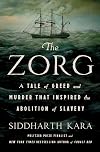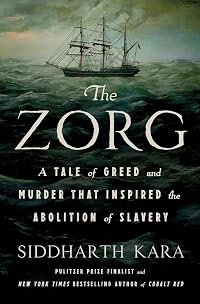
The Zorg: A Tale of Greed and Murder That Inspired the Abolition of Slavery
by Siddharth Kara
On This Page
Description
"In late October 1780, a slave ship set sail from the Netherlands, bound for Africa's Windward and Gold Coasts, where it would take on its human cargo. The Zorg (a Dutch word meaning "care") was one of thousands of such ships, but the harrowing events that ensued on its doomed journey were unique. After reaching Africa, the Zorg was captured by a privateer and came under British command. With a new captain and crew, the ship was crammed with 442 slaves and departed in 1781 for Jamaica. But a show more series of unpredictable weather events and mistakes in navigation left the ship drastically off course and running out of water. So a proposition was put forth: Save the crew and the most valuable of the slaves -- by throwing dozens of people, starting with women and children, overboard. What followed was a fascinating legal drama in England's highest court that turned the brutal calculus of slavery into front-page news. The case of the Zorg catapulted the nascent anti-slavery movement from a minor evangelical cause to one of the most consequential moral campaigns in history -- sparking the abolitionist movement in both England and the young United States. Siddharth Kara utilizes primary-source research, gripping storytelling, and painstaking investigation to uncover the Zorg's journey, the lives and fates of the slaves on board, and the mysterious identity of the abolitionist who finally revealed the truth of what happened on the ship." -- show lessTags
Recommendations










Member Reviews
Rating: 5* of five
The Publisher Says: From Pulitzer finalist and New York Times bestselling author of Cobalt Red: A notorious slave ship incident that led to the abolition of slavery in the UK and sparked the US abolitionist movement
In late October 1780, a slave ship set sail from the Netherlands, bound for Africa’s Windward and Gold Coasts, where it would take on its human cargo. The Zorg (a Dutch word meaning “care”) was one of thousands of such ships, but the harrowing events that ensued on its doomed journey were unique.
After reaching Africa, the Zorg was captured by a privateer and came under British command. With a new captain and crew, the ship was crammed with 442 slaves and departed in 1781 for Jamaica. But a series of show more unpredictable weather events and mistakes in navigation left the ship drastically off course and running out of water. So a proposition was put forth: Save the crew and the most valuable of the slaves—by throwing dozens of people, starting with women and children, overboard.
What followed was a fascinating legal drama in England’s highest court that turned the brutal calculus of slavery into front-page news. The case of the Zorg catapulted the nascent anti-slavery movement from a minor evangelical cause to one of the most consequential moral campaigns in history—sparking the abolitionist movement in both England and the young United States.
Siddharth Kara utilizes primary-source research, gripping storytelling, and painstaking investigation to uncover the Zorg’s journey, the lives and fates of the slaves on board, and the mysterious identity of the abolitionist who finally revealed the truth of what happened on the ship.
I RECEIVED A DRC FROM THE PUBLISHER VIA NETGALLEY. THANK YOU.
My Review: Whistleblowers are reviled by the greedy capitalists because they interfere with the satiation of the actually evil levels of greed that propel acts like these in the book.
There is a reason y'all's religions, one and all, condemn greed. Not that it ever has the tiniest effect on most "religious" people's behavior, nor the behavior of those who claim they work for the common good, nor really any other human being I've ever known. Yes, before some annoying twidgee says it, I include myself.
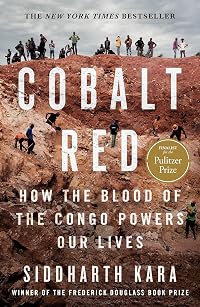
Like Cobalt Red (q.v.), Author Kara knows exactly what will give you nightmares, and deploys that thing in search of your conscience. It's history, not current events, I hear you echoing my bleat of self-justification. Back to Cobalt Red you should go.
The relief from guilt is the sheer outrageousness of the court case fought over this murderous event. It's something that I definitely see making a huge splash in the press of the day. It would be a Frontline documentary today. In any event, it is historical record, so there is no escaping the ugly truth:
We have known the facts of slavery for generations and done the bare minimum to end it, more to ameliorate our feelings of greed and guilt than because we see the enslaved as real people.
Sleep tight. show less
The Publisher Says: From Pulitzer finalist and New York Times bestselling author of Cobalt Red: A notorious slave ship incident that led to the abolition of slavery in the UK and sparked the US abolitionist movement
In late October 1780, a slave ship set sail from the Netherlands, bound for Africa’s Windward and Gold Coasts, where it would take on its human cargo. The Zorg (a Dutch word meaning “care”) was one of thousands of such ships, but the harrowing events that ensued on its doomed journey were unique.
After reaching Africa, the Zorg was captured by a privateer and came under British command. With a new captain and crew, the ship was crammed with 442 slaves and departed in 1781 for Jamaica. But a series of show more unpredictable weather events and mistakes in navigation left the ship drastically off course and running out of water. So a proposition was put forth: Save the crew and the most valuable of the slaves—by throwing dozens of people, starting with women and children, overboard.
What followed was a fascinating legal drama in England’s highest court that turned the brutal calculus of slavery into front-page news. The case of the Zorg catapulted the nascent anti-slavery movement from a minor evangelical cause to one of the most consequential moral campaigns in history—sparking the abolitionist movement in both England and the young United States.
Siddharth Kara utilizes primary-source research, gripping storytelling, and painstaking investigation to uncover the Zorg’s journey, the lives and fates of the slaves on board, and the mysterious identity of the abolitionist who finally revealed the truth of what happened on the ship.
I RECEIVED A DRC FROM THE PUBLISHER VIA NETGALLEY. THANK YOU.
My Review: Whistleblowers are reviled by the greedy capitalists because they interfere with the satiation of the actually evil levels of greed that propel acts like these in the book.
There is a reason y'all's religions, one and all, condemn greed. Not that it ever has the tiniest effect on most "religious" people's behavior, nor the behavior of those who claim they work for the common good, nor really any other human being I've ever known. Yes, before some annoying twidgee says it, I include myself.
Like Cobalt Red (q.v.), Author Kara knows exactly what will give you nightmares, and deploys that thing in search of your conscience. It's history, not current events, I hear you echoing my bleat of self-justification. Back to Cobalt Red you should go.
The relief from guilt is the sheer outrageousness of the court case fought over this murderous event. It's something that I definitely see making a huge splash in the press of the day. It would be a Frontline documentary today. In any event, it is historical record, so there is no escaping the ugly truth:
We have known the facts of slavery for generations and done the bare minimum to end it, more to ameliorate our feelings of greed and guilt than because we see the enslaved as real people.
Sleep tight. show less
The Zorg is the name of a ship acquired by a Liverpool-backed syndicate involved in the transatlantic slave trade in 1781. This book details the horrific journey in which the Zorg set off from Accra across the Middle Passage with 442 enslaved Africans on board. Despite knowing the cruelty and deprivations of slave ships, Kara's visceral description of the conditions for the enslaved people is shocking. This journey is even worse due to the gross incompetence of the understaffed crew. The ship's captain was actually a surgeon with no sailing experience, and his illness plus navigational errors lead to a total breakdown of command on the ship.
When the ship's supply of water was close to exhaustion, the ship's crew threw 130 of the show more enslaved people overboard to die. We know the details of this atrocity because the ship's owners made an insurance claim on the dead Africans, which lead to a series of court cases. Olaudah Equiano, a free Black abolitionist, brought news of the massacre to the attention of prominent white abolitionist Granville Sharp. With publicity from Sharp, the Zorg massacre became a cause célèbre in Britain and drew more people into the abolition movement.
I was not familiar with the history of the Zorg before I read this book. It is an unsettling book to read but I think an important work. Additionally, has done a lot of research that offers new insights in details of what happened on the ship, and the anonymous sources in the case. show less
When the ship's supply of water was close to exhaustion, the ship's crew threw 130 of the show more enslaved people overboard to die. We know the details of this atrocity because the ship's owners made an insurance claim on the dead Africans, which lead to a series of court cases. Olaudah Equiano, a free Black abolitionist, brought news of the massacre to the attention of prominent white abolitionist Granville Sharp. With publicity from Sharp, the Zorg massacre became a cause célèbre in Britain and drew more people into the abolition movement.
I was not familiar with the history of the Zorg before I read this book. It is an unsettling book to read but I think an important work. Additionally, has done a lot of research that offers new insights in details of what happened on the ship, and the anonymous sources in the case. show less
The Zorg, Dutch for care, ‘an unintended irony’ as author Siddharth Kahn points out given its history, was a Dutch merchant ship captured by the British and sold to slavers. In 1781, with half the crew normally considered necessary, its hold overfilled with 442 slaves which was twice the amount that a ship of its size was equipped to carry, and under stocked with provisions, it set out for Jamaica. But, later, siting bad weather and crew errors that pushed the ship off course and claiming a shortage of water, the captain would order 132 slaves be thrown overboard.
Insurance companies normally would cover the cost of slaves lost during a voyage but, in this case, they balked and the ensuing court battles would reveal the shocking show more reality of slavery to the public and lead to a rise in abolitionist movements and the eventual end to slavery in Britain in 1807 and in the rest of the Empire by 1838.
In The Zorg, Kahn uses mainly primary sources to write a very well-researched, very interesting, very powerful, and, perhaps, most importantly, a very readable account of one shocking event of the slave trade and its repercussions that helped to bring about the end of slavery throughout the British Empire. This was not always an easy read given its subject matter but it is an important one and definitely one of the best nonfiction books I have read this year. I recommend it highly.
Thanks to Netgalley and St. martin’s Press for the opportunity to read this book in exchange for an honest review show less
Insurance companies normally would cover the cost of slaves lost during a voyage but, in this case, they balked and the ensuing court battles would reveal the shocking show more reality of slavery to the public and lead to a rise in abolitionist movements and the eventual end to slavery in Britain in 1807 and in the rest of the Empire by 1838.
In The Zorg, Kahn uses mainly primary sources to write a very well-researched, very interesting, very powerful, and, perhaps, most importantly, a very readable account of one shocking event of the slave trade and its repercussions that helped to bring about the end of slavery throughout the British Empire. This was not always an easy read given its subject matter but it is an important one and definitely one of the best nonfiction books I have read this year. I recommend it highly.
Thanks to Netgalley and St. martin’s Press for the opportunity to read this book in exchange for an honest review show less
A fascinating tale, a bit grim in parts. What a horrible thing this exposes! I'm glad this is out there to enlighten folks. It is very engaging and a real page turner. It had me on the edge of my seat even though it is nonfiction!
3.5 stars
The Zorg was the name of a British-run ship that brought Africans in the 1780s to the Caribbean as slaves. The people were crammed in, there was bad weather, and the crew had trouble with navigation. As they were running low on water, they used this as an excuse to throw some of the people overboard to “save” the rest (by making sure there was enough water). Insurance companies usually paid for lost slaves on the way, but they were fighting it this time since more than half of them had died. What had really happened? After the trial, this gave abolitionists something more to work with to turn public opinion.
It took me a while to get “into” this (though that may have been due to everything going on with me when I show more started reading the book), so I missed a few things here and there, including during some of the passage over the ocean. But I really got interested during the trial after the fact, maybe a bit before that… probably around the time they decided to throw people overboard. I’d like to say it picked up more at that point, but it might also just be that my life slowed down just a little bit and I could focus better. show less
The Zorg was the name of a British-run ship that brought Africans in the 1780s to the Caribbean as slaves. The people were crammed in, there was bad weather, and the crew had trouble with navigation. As they were running low on water, they used this as an excuse to throw some of the people overboard to “save” the rest (by making sure there was enough water). Insurance companies usually paid for lost slaves on the way, but they were fighting it this time since more than half of them had died. What had really happened? After the trial, this gave abolitionists something more to work with to turn public opinion.
It took me a while to get “into” this (though that may have been due to everything going on with me when I show more started reading the book), so I missed a few things here and there, including during some of the passage over the ocean. But I really got interested during the trial after the fact, maybe a bit before that… probably around the time they decided to throw people overboard. I’d like to say it picked up more at that point, but it might also just be that my life slowed down just a little bit and I could focus better. show less
This is a tough read, slavery as a whole could be called a tale of greed and murder, so the fact that this event is singled out makes it so much worse. I have read a lot of fiction regarding the enslaved people tossed overboard, but there is literally no mercy here in the nonfiction realm.
In 1781, The Zorg sailed from England as part of the triangle slave trade of the time. Somewhere in the months-long journey, the captain and crew made a series of terrible decisions that eventually led to changes in English law and the abolition of slavery. The Zorg by Siddhartha Kara is a historical account of the journey and subsequent legal battles. This is a book for readers interested in the history of the slave trade and the ultimate abolition of slavery in England.
Members
- Recently Added By
Lists

To Read
140 works; 1 member

Check Library
176 works; 1 member
Author Information

6 Works 903 Members
Siddharth Kara is director of the Program on Human Trafficking and Modern Slaver at the John F. Kennedy School of Government at Harvard University and a lecturer at the University of Columbia Berkeley. He is the author of Bonded Labor: Tackling the System of Slavery in South Asia (2012) and Modern Slavery: A Global Perspective (2017), both from show more Columbia University Press. show less
Awards and Honors
Awards
Distinctions
Common Knowledge
- Original publication date
- 2025-10-14
- People/Characters
- Robert Stubbs; James Kelsall; Luke Collingwood; Olaudah Equiano; Granville Sharp; William Gregson
- Important events
- The Zong massacre
- Epigraph
- We have been sold as a carnage to the market, and as a prey to profligate wicked men, to torture and lash us as they please, and as their caprice may think fit, to murder us at discretion.
--Ottobah Cugoano - Dedication
- For Aditi, forever
- Original language
- English
- Canonical DDC/MDS
- 306.362
Classifications
- Genres
- Nonfiction, History, General Nonfiction
- DDC/MDS
- 306.362 — Society, government, & culture Social sciences, sociology & anthropology Social Behavior - Dating, Marriage, Divorce Economic institutions Systems of labor Slavery
- LCC
- HT1164 .L5 .K373 — Social sciences Communities. Classes. Races Communities. Classes. Races Classes Slavery
- BISAC
Statistics
- Members
- 227
- Popularity
- 143,539
- Reviews
- 9
- Rating
- (4.13)
- Languages
- Dutch, English
- Media
- Paper, Audiobook, Ebook
- ISBNs
- 8
- ASINs
- 3