On This Page
Description
Omoo: A Narrative of the South Seas is the sequel to Melville's Typee, both fictional yet highly autobiographical. The narrator ships on a whaling vessel to Tahiti, where the crew mutinies and are imprisoned. The narrative is full of his observations of the Tahitian customs and way of life. Omoo is based on Melville's experiences in the Society Islands..
Tags
Recommendations






















Member Reviews
Omoo, a sequel to Typee, continues the adventures of an American sailor in Polynesia. After leaving the Typee, he hitches a ride aboard the whaler Julia, but finds conditions that are far from ideal. The crew are a set of rascals, the food is poor even by the standards of ocean-going craft at the time, and rats and cockroaches abound inside the hull. The cockroaches swarm out regularly in a nightly ‘jubilee’, some flying, and others running over the sick if they couldn’t get up to flee with the rest of the sailors. They’re so numerous that “they did not live among you, but you among them.” Worse yet, however, the captain is inexperienced and withdrawn, and the first mate, left in power, is a drunk who is both impulsive and show more secretive as to where the ship is going. All of this leads to mutinous thoughts on the part of the sailors, most of whom want nothing more than to be let out of their obligations, and dropped off on an island.
Ultimately they do get their wish in Tahiti, and after spending some time in a stockade, the narrator and his buddy ‘Doctor Long Ghost’ are freed. They meander about the island, enjoying the considerable hospitality of the natives, and try to figure out what to do next. The book is at its best in the beginning, and loses a little steam in the second half, partly because the adventures are subdued, and partly because Melville had already done a good job describing Polynesian culture in Typee.
Melville has a sense for the big moments in life, for example when partings are final, and also for the bigger picture as it related to the Tahitians’ ultimate fate in the face of English and French missionaries, who vied for control. I love his writing style, which is honest, intelligent, and has wry bits of humor. He observes and does not judge either the natives, who are so open and kind, though indolent, or the Europeans, whose missionaries zealously proselytize. The latter sent out ‘religious police’ to force natives to attend church services, went around spying on amorous encounters to denounce them, and outlawed so many simple and beautiful things that they believed related to heathenism – the wearing of necklaces and garlands of flowers, the singing of ballads, and the playing of athletic games such as wrestling, foot-racing, throwing the javelin, and archery. It’s sad, and insane. Does it remind one of anything today, say, the Taliban?
Melville is balanced and doesn’t go on a diatribe against religion or the Europeans, he just sees the inevitable end – the doom and extinction of the natives, or at least, their way of life. In one chapter he cites several other books and reports on the natives, e.g. Captain Wilson, who first took missionaries to Tahiti, saying that in many ways the natives had in many things, “more refined ideas of decency than ourselves”, as well as Kotzebue, a Russian navigator, who has this to say: “A religion like this, which forbids every innocent pleasure, and cramps or annihilates every mental power, is a libel on the divine founder of Christianity. It is true that the religion of the missionaries has, with a great deal of evil, effected some good. It has restrained the vices of theft and incontinence; but it has given birth to ignorance, hypocrisy, and a hatred of all other modes of faith, which was once foreign to the open and benevolent character of the Tahitian.”
The book provides a window into a lost world and a tragedy of the 19th century, just as it provided readers in 1847 a window into this exotic land. Imagine their reaction when reading of a completely different way of life, and things like the moonlit ‘Lory-Lory’ dance of the native women:
“Again the two leaders wave their hands, when the rest pause; and now, far apart, stand in the still moonlight like a circle of fairies. Presently, raising a strange chant, they softly sway themselves, gradually quickening the movement, until, at length, for a few passionate moments, with throbbing bosoms and glowing cheeks, they abandon themselves to all the spirit of the dance, apparently lost to everything around. But soon subsiding again into the same languid measure as before, they become motionless; and then, reeling forward on all sides, their eyes swimming in their heads, join in one wild chorus, and sink into each other’s arms.”
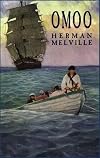
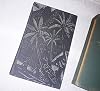
It’s hard to imagine life at this time, or the adventure of wandering around on an island, shoeless and in clothes quickly becoming tattered, meeting natives and various castaway sailors, and living off of them. Melville lets us do that. I also loved this particular edition from 1924, with beautiful thick pages and eight color illustrations.
Quotes:
On beauty:
“The girl was certainly fair to look upon. Many heavens were in her sunny eyes; and the outline of that arm of hers, peeping forth from a capricious tappa robe, was the very curve of beauty.”
On the friendliness of the Tahitians:
“Filled with love and admiration for the first whites who came among them, the Polynesians could not testify the warmth of their emotions more strongly than by instantaneously making the abrupt proffer of friendship. Hence, in old voyages we read of chiefs coming off from the shore in their canoes, and going through with strange antics, expressive of the desire. In the same way, their inferiors accosted the seamen; and thus the practice had continued in some islands down to the present day.”
On racism:
“Wanton acts of cruelty like this are not unusual on the part of sea captains landing at islands comparatively unknown. Even at the Pomotu group, but a day’s sail from Tahiti, the islanders coming down to the shore have several times been fired at by trading schooners passing through their narrow channels; and this too as a mere amusement on the part of the ruffians.
Indeed, it is almost incredible, the light in which many sailors regard these naked heathens. They hardly consider them human. But it is a curious fact, that the more ignorant and degraded men are, the more contemptuously they look upon those whom they deem their inferiors.”
These illustrate Melville’s writing style:
On cleaning him up after having been with the Typee, a haircut:
“While this was going on, someone removing my tappa cloak slipped on a blue frock in its place; and another, actuated by the same desire to make a civilized mortal of me, flourished about my head a great pair of sheepshears, to the imminent jeopardy of both ears, and the certain destruction of hair and beard.”
On choosing members of the crew that were most trustworthy:
“After considerable deliberation on the part of the captain and mate, four of the seamen were pitched upon as the most trustworthy; or rather they were selected from a choice assortment of suspicious characters as being of an inferior order of rascality.”
On weeding:
“Now, though the pulling of weeds was considered by our employers an easy occupation (for which reason they had assigned it to us), and although as a garden recreation it may be pleasant enough, for those who like it – still, long persisted in, the business becomes excessively irksome.
Nevertheless, we toiled away for some time, until the doctor, who, from his height, was obliged to stoop at a very acute angle, suddenly sprang upright; and with one hand propping his spinal column, exclaimed, ‘Oh, that one’s joints were but provided with holes to drop a little oil through!’
Vain as the aspiration was for this proposed improvement upon our species, I cordially responded thereto; for every vertebra in my spine was articulating in sympathy.”
Lastly, this one from a Tahitian priest, who saw their doom. It reminds me of similar poetry from Native Americans later in the 19th century:
“A harree ta fow,
A toro ta farraro,
A now ta tarrarta.
The palm-tree shall grow,
The coral shall spread,
But man shall cease.” show less
Ultimately they do get their wish in Tahiti, and after spending some time in a stockade, the narrator and his buddy ‘Doctor Long Ghost’ are freed. They meander about the island, enjoying the considerable hospitality of the natives, and try to figure out what to do next. The book is at its best in the beginning, and loses a little steam in the second half, partly because the adventures are subdued, and partly because Melville had already done a good job describing Polynesian culture in Typee.
Melville has a sense for the big moments in life, for example when partings are final, and also for the bigger picture as it related to the Tahitians’ ultimate fate in the face of English and French missionaries, who vied for control. I love his writing style, which is honest, intelligent, and has wry bits of humor. He observes and does not judge either the natives, who are so open and kind, though indolent, or the Europeans, whose missionaries zealously proselytize. The latter sent out ‘religious police’ to force natives to attend church services, went around spying on amorous encounters to denounce them, and outlawed so many simple and beautiful things that they believed related to heathenism – the wearing of necklaces and garlands of flowers, the singing of ballads, and the playing of athletic games such as wrestling, foot-racing, throwing the javelin, and archery. It’s sad, and insane. Does it remind one of anything today, say, the Taliban?
Melville is balanced and doesn’t go on a diatribe against religion or the Europeans, he just sees the inevitable end – the doom and extinction of the natives, or at least, their way of life. In one chapter he cites several other books and reports on the natives, e.g. Captain Wilson, who first took missionaries to Tahiti, saying that in many ways the natives had in many things, “more refined ideas of decency than ourselves”, as well as Kotzebue, a Russian navigator, who has this to say: “A religion like this, which forbids every innocent pleasure, and cramps or annihilates every mental power, is a libel on the divine founder of Christianity. It is true that the religion of the missionaries has, with a great deal of evil, effected some good. It has restrained the vices of theft and incontinence; but it has given birth to ignorance, hypocrisy, and a hatred of all other modes of faith, which was once foreign to the open and benevolent character of the Tahitian.”
The book provides a window into a lost world and a tragedy of the 19th century, just as it provided readers in 1847 a window into this exotic land. Imagine their reaction when reading of a completely different way of life, and things like the moonlit ‘Lory-Lory’ dance of the native women:
“Again the two leaders wave their hands, when the rest pause; and now, far apart, stand in the still moonlight like a circle of fairies. Presently, raising a strange chant, they softly sway themselves, gradually quickening the movement, until, at length, for a few passionate moments, with throbbing bosoms and glowing cheeks, they abandon themselves to all the spirit of the dance, apparently lost to everything around. But soon subsiding again into the same languid measure as before, they become motionless; and then, reeling forward on all sides, their eyes swimming in their heads, join in one wild chorus, and sink into each other’s arms.”
It’s hard to imagine life at this time, or the adventure of wandering around on an island, shoeless and in clothes quickly becoming tattered, meeting natives and various castaway sailors, and living off of them. Melville lets us do that. I also loved this particular edition from 1924, with beautiful thick pages and eight color illustrations.
Quotes:
On beauty:
“The girl was certainly fair to look upon. Many heavens were in her sunny eyes; and the outline of that arm of hers, peeping forth from a capricious tappa robe, was the very curve of beauty.”
On the friendliness of the Tahitians:
“Filled with love and admiration for the first whites who came among them, the Polynesians could not testify the warmth of their emotions more strongly than by instantaneously making the abrupt proffer of friendship. Hence, in old voyages we read of chiefs coming off from the shore in their canoes, and going through with strange antics, expressive of the desire. In the same way, their inferiors accosted the seamen; and thus the practice had continued in some islands down to the present day.”
On racism:
“Wanton acts of cruelty like this are not unusual on the part of sea captains landing at islands comparatively unknown. Even at the Pomotu group, but a day’s sail from Tahiti, the islanders coming down to the shore have several times been fired at by trading schooners passing through their narrow channels; and this too as a mere amusement on the part of the ruffians.
Indeed, it is almost incredible, the light in which many sailors regard these naked heathens. They hardly consider them human. But it is a curious fact, that the more ignorant and degraded men are, the more contemptuously they look upon those whom they deem their inferiors.”
These illustrate Melville’s writing style:
On cleaning him up after having been with the Typee, a haircut:
“While this was going on, someone removing my tappa cloak slipped on a blue frock in its place; and another, actuated by the same desire to make a civilized mortal of me, flourished about my head a great pair of sheepshears, to the imminent jeopardy of both ears, and the certain destruction of hair and beard.”
On choosing members of the crew that were most trustworthy:
“After considerable deliberation on the part of the captain and mate, four of the seamen were pitched upon as the most trustworthy; or rather they were selected from a choice assortment of suspicious characters as being of an inferior order of rascality.”
On weeding:
“Now, though the pulling of weeds was considered by our employers an easy occupation (for which reason they had assigned it to us), and although as a garden recreation it may be pleasant enough, for those who like it – still, long persisted in, the business becomes excessively irksome.
Nevertheless, we toiled away for some time, until the doctor, who, from his height, was obliged to stoop at a very acute angle, suddenly sprang upright; and with one hand propping his spinal column, exclaimed, ‘Oh, that one’s joints were but provided with holes to drop a little oil through!’
Vain as the aspiration was for this proposed improvement upon our species, I cordially responded thereto; for every vertebra in my spine was articulating in sympathy.”
Lastly, this one from a Tahitian priest, who saw their doom. It reminds me of similar poetry from Native Americans later in the 19th century:
“A harree ta fow,
A toro ta farraro,
A now ta tarrarta.
The palm-tree shall grow,
The coral shall spread,
But man shall cease.” show less
An unpopular, conniving sea captain on a long voyage to the South Seas. A mistreated crew filled with thoughts of vengeance. A mutiny in Tahiti. Incarceration and then an escape to another Polynesian island. Another retelling of The Mutiny on the Bounty? No, it is Omoo, Melville's sequel to his popular first book, Typee.
It begins with the narrator being rescued from the the vale of the Typees in the Marquesas and leads to an extended journey to Tahiti. Soon, the comparisons between the "noble savages" of Nukuheva and the Christianized inhabitants of Tahiti breaks down, all in the favor of the Typees, in retrospect. For the impact of Europeans on the Tahitians has left them childlike, lazy, without virtue, and worst of all without a show more meaning for life or their traditions. Omoo is an indictment of Europeans and European ways.
This becomes all the more apparent with the descriptions of the Europeans themselves. Although never directly stated, Melville leaves an image in mind of smelly, unwashed, dirty, sweaty, scraggly whiskered drunkards with broken teeth and malodorous breath whose behavior is rude, violent, and impulsive. One of the greatest offenders is the narrator's friend, Doctor Long Ghost, who attempts to bespoil young girls and maidens, avoids work, feigns sickness, and puts on airs of superiority. Additionally, it is made known that European contact has not only spiritually but physically marred the Tahitians, with the effects of small pox, syphilis, and the measles wreaking havoc throughout the islands.
Like Typee, this is a fictionalized account of Melville's own experiences in the South Seas. But it lacks the strong central storyline of the earlier novel. Here, the adventure is not so grand, and the suspense is left mainly for the "trial" of the mutineers. The story becomes a series of vignettes linked by the travels of the two companions, the narrator and Doctor Long Ghost. And wherever they go, the picture of exploitation, disease, and nature under assault follows. In the end, the romance decays into an image of Polynesian life dissipating into eventual death. It is a dismal picture. show less
It begins with the narrator being rescued from the the vale of the Typees in the Marquesas and leads to an extended journey to Tahiti. Soon, the comparisons between the "noble savages" of Nukuheva and the Christianized inhabitants of Tahiti breaks down, all in the favor of the Typees, in retrospect. For the impact of Europeans on the Tahitians has left them childlike, lazy, without virtue, and worst of all without a show more meaning for life or their traditions. Omoo is an indictment of Europeans and European ways.
This becomes all the more apparent with the descriptions of the Europeans themselves. Although never directly stated, Melville leaves an image in mind of smelly, unwashed, dirty, sweaty, scraggly whiskered drunkards with broken teeth and malodorous breath whose behavior is rude, violent, and impulsive. One of the greatest offenders is the narrator's friend, Doctor Long Ghost, who attempts to bespoil young girls and maidens, avoids work, feigns sickness, and puts on airs of superiority. Additionally, it is made known that European contact has not only spiritually but physically marred the Tahitians, with the effects of small pox, syphilis, and the measles wreaking havoc throughout the islands.
Like Typee, this is a fictionalized account of Melville's own experiences in the South Seas. But it lacks the strong central storyline of the earlier novel. Here, the adventure is not so grand, and the suspense is left mainly for the "trial" of the mutineers. The story becomes a series of vignettes linked by the travels of the two companions, the narrator and Doctor Long Ghost. And wherever they go, the picture of exploitation, disease, and nature under assault follows. In the end, the romance decays into an image of Polynesian life dissipating into eventual death. It is a dismal picture. show less
You may have heard of the author. This is one of his lesser-read works, although not the least read, that would be Clarel. Even though part of this novel takes place on a whaleship, and has preachers in high pulpits, a Maori, a negro cook, and uses the word gallied, it is quite different from Moby Dick.
This novel is a straightforward first-person account of adventure by a sensitive, well-read sailor called consecutively Typee and Paul. He escapes from his previous novel (where he was called Tammo) to a whaleship, becomes a mutineer, is clapped in a Tahitian calabooza, and then released to explore the nearby island of Eimeo. He finds the farther he is from Western influence the happier are the natives. That’s it.
Two things stand out show more in this wisp of an adventure story. One is Melville’s humor. “There was no absolute deformity about the man, he was symmetrically ugly.” “About the eyes, there was no mistaking him; with a villainous cast in one, they seemed suspicious of each other.” “The very men he flogged loved him as a brother, for he had such an irresistibly good-natured way of knocking them down, that no one could find it in his heart to bear malice against him.”
The other is Melville’s prophetic outlook. He seems more like us, more at home in our liberal, tolerant, 21st century Obama democracy, than he does in his own era. This comes across when he laments the decimation of the Tahitian people from 200,000 at the time of Cook to barely 9,000 people in 1842; deplores the introduction of western commerce which left the Polynesians with nothing to do; and regrets the effort to civilize and christianize the natives which brought about "ignorance, hypocrisy and hatred of other faiths."
I’ll end with a digression. At times I felt insulted by the editor. Editors have to decide who is my audience? what should I assume they know? It would seem natural to believe that anyone bothering to read this book has a high degree of cultural literacy and is more likely to read literature than adventure tales. I would bet we’re reading this book because we like Melville. However, this gal Edwards believes her audience knows NOTHING. As a result she wastes a good deal of ink correcting Melville’s spelling, and needlessly explaining obvious things like what are casks, harpooners and pearl-oysters, where are Palermo and Cape Horn, who were Napoleon and Lord Nelson, and that Taurus is a constellation. It would have been better if she had followed the example of Beaver in Penguin’s excellent 1972 edition of Moby Dick: maps of the Society Islands, a couple of diagrams of a whaleship indicating the technical names of its structure and sails, and notes that identify obscure technical terms, literary allusions and repeated themes. show less
This novel is a straightforward first-person account of adventure by a sensitive, well-read sailor called consecutively Typee and Paul. He escapes from his previous novel (where he was called Tammo) to a whaleship, becomes a mutineer, is clapped in a Tahitian calabooza, and then released to explore the nearby island of Eimeo. He finds the farther he is from Western influence the happier are the natives. That’s it.
Two things stand out show more in this wisp of an adventure story. One is Melville’s humor. “There was no absolute deformity about the man, he was symmetrically ugly.” “About the eyes, there was no mistaking him; with a villainous cast in one, they seemed suspicious of each other.” “The very men he flogged loved him as a brother, for he had such an irresistibly good-natured way of knocking them down, that no one could find it in his heart to bear malice against him.”
The other is Melville’s prophetic outlook. He seems more like us, more at home in our liberal, tolerant, 21st century Obama democracy, than he does in his own era. This comes across when he laments the decimation of the Tahitian people from 200,000 at the time of Cook to barely 9,000 people in 1842; deplores the introduction of western commerce which left the Polynesians with nothing to do; and regrets the effort to civilize and christianize the natives which brought about "ignorance, hypocrisy and hatred of other faiths."
I’ll end with a digression. At times I felt insulted by the editor. Editors have to decide who is my audience? what should I assume they know? It would seem natural to believe that anyone bothering to read this book has a high degree of cultural literacy and is more likely to read literature than adventure tales. I would bet we’re reading this book because we like Melville. However, this gal Edwards believes her audience knows NOTHING. As a result she wastes a good deal of ink correcting Melville’s spelling, and needlessly explaining obvious things like what are casks, harpooners and pearl-oysters, where are Palermo and Cape Horn, who were Napoleon and Lord Nelson, and that Taurus is a constellation. It would have been better if she had followed the example of Beaver in Penguin’s excellent 1972 edition of Moby Dick: maps of the Society Islands, a couple of diagrams of a whaleship indicating the technical names of its structure and sails, and notes that identify obscure technical terms, literary allusions and repeated themes. show less
I love Moby Dick, and I remember enjoying Typee, although I read that one nearly half a century ago. Somehow I couldn't really get into this however. Perhaps if I read Typee again first (it is a sequel), but then again perhaps not.
Continues Melville's adventures in the Pacific, at first aboard a very miserable and poorly commanded whaler, then at Tahiti and a nearby island with his comic sidekick, Doctor Long Ghost. Very entertaining and thought provoking.
I really liked Typee, but Omoo just really dragged for me. It felt very disjointed with no cohesive theme. That is probably because it was more of a diary than a novel. I prefer novels.
Herman Melville's “Omoo” is no “Moby Dick.” Instead, it is a boring and repetitive narrative about a malcontent and undisciplined crew on a whaling ship in the South Seas. My Kindle says I persevered for 32% of this plodding going-nowhere story before I quit.
Members
- Recently Added By
Lists

Fiction (Mostly) in Selective Bibliography of American Literature 1775-1900
431 works; 3 members

Evan's Wish List
86 works; 2 members

Book Titles Mentioned In Newberry Medal And Honor Books
884 works; 3 members
Author Information

661+ Works 78,643 Members
Herman Melville (August 1, 1819 - September 28, 1891) was born into a seemingly secure, prosperous world, a descendant of prominent Dutch and English families long established in New York State. That security vanished when first, the family business failed, and then, two years later, in young Melville's thirteenth year, his father died. Without show more enough money to gain the formal education that professions required, Melville was thrown on his own resources and in 1841 sailed off on a whaling ship bound for the South Seas. His experiences at sea during the next four years were to form in part the basis of his best fiction. Melville's first two books, Typee (1846) and Omoo (1847), were partly romance and partly autobiographical travel books set in the South Seas. Both were popular successes, particularly Typee, which included a stay among cannibals and a romance with a South Sea maiden. During the next several years, Melville published three more romances that drew upon his experiences at sea: Redburn (1849) and White-Jacket (1850), both fairly realistic accounts of the sailor's life and depicting the loss of innocence of central characters; and Mardi (1849), which, like the other two books, began as a romance of adventure but turned into an allegorical critique of contemporary American civilization. Moby Dick (1851) also began as an adventure story, based on Melville's experiences aboard the whaling ship. However, in the writing of it inspired in part by conversations with his friend and neighbor Hawthorne and partly by his own irrepressible imagination and reading of Shakespeare and other Renaissance dramatists Melville turned the book into something so strange that, when it appeared in print, many of his readers and critics were dumbfounded, even outraged. By the mid-1850s, Melville's literary reputation was all but destroyed, and he was obliged to live the rest of his life taking whatever jobs he could find and borrowing money from relatives, who fortunately were always in a position to help him. He continued to write, however, and published some marvelous short fiction pieces Benito Cereno" (1855) and "Bartleby, the Scrivener" (1853) are the best. He also published several volumes of poetry, the most important of which was Battle Pieces and Aspects of the War (1866), poems of occasionally great power that were written in response to the moral challenge of the Civil War. His posthumously published work, Billy Budd (1924), on which he worked up until the time of his death, became Melville's last significant literary work, a brilliant short novel that movingly describes a young sailor's imprisonment and death. Melville's reputation, however, rests most solidly on his great epic romance, Moby Dick. It is a difficult as well as a brilliant book, and many critics have offered interpretations of its complicated ambiguous symbolism. Darrel Abel briefly summed up Moby Dick as "the story of an attempt to search the unsearchable ways of God," although the book has historical, political, and moral implications as well. Melville died at his home in New York City early on the morning of September 28, 1891, at age 72. The doctor listed "cardiac dilation" on the death certificate. He was interred in the Woodlawn Cemetery in The Bronx, New York, along with his wife, Elizabeth Shaw Melville. (Bowker Author Biography) show less

Herman Melville has a Legacy Library. Legacy libraries are the personal libraries of famous readers, entered by LibraryThing members from the Legacy Libraries group.
Series

Belongs to Publisher Series
Work Relationships
Is contained in
Common Knowledge
- Original publication date
- 1847
- People/Characters
- Typee; Doctor Long Ghost; Captain Bob; Captain Guy
- Important places
- Tahiti; Marquesas Islands
- Original language
- English
Classifications
Statistics
- Members
- 582
- Popularity
- 50,558
- Reviews
- 9
- Rating
- (3.79)
- Languages
- 6 — English, Finnish, French, German, Italian, Spanish
- Media
- Paper, Audiobook, Ebook
- ISBNs
- 71
- UPCs
- 1
- ASINs
- 57