On This Page
Description
When Ping admits that he is the only child in China unable to grow a flower from the seeds distributed by the Emperor, he is rewarded for his honesty.Tags
Recommendations





Member Reviews
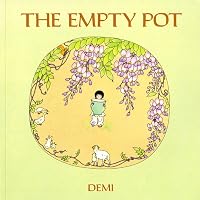
The Empty Pot is a traditional Chinese folktale about a boy named Ping who is given the opportunity to grow a beautiful flower for the emperor in a contest to determine who will become the future emperor. Ping loves gardening, especially growing flowers, and the emperor shares his passion. As he grows older and prepares to choose a successor, the emperor announces a competition: every child in the kingdom will receive a seed, and after one year they must return with the flower they have grown. When the year is over, Ping sadly brings his empty pot to the palace, surrounded by children carrying magnificent flowers. As the emperor walks among the children, he appears disappointed until he reaches Ping. He asks why Ping's pot is empty, and show more Ping honestly explains that he did everything he could, but the seed never sprouted. The emperor then reveals that all of the seeds had been cooked and were incapable of growing. Ping was the only child who had been honest, and because of his integrity and courage, the emperor chose him to become the next ruler. I think the story's message is clear, meaningful, and easy for children to understand. It teaches that honesty is more important than success achieved through dishonesty and reminds readers that even when everyone around us seems to be doing something different, we should stay true to ourselves. I think this is something kids can easily relate to. Trying to be honest amongst the pressure of peers and the fear of failure or disappointing an authority figure.
The illustrations are beautiful and complement the story well. Having lived in China for many years, I especially enjoy sharing Chinese folktales. They not only teach timeless values but also provide an opportunity to explore Chinese culture and appreciate stories from different traditions. show less
The illustrations are beautiful and complement the story well. Having lived in China for many years, I especially enjoy sharing Chinese folktales. They not only teach timeless values but also provide an opportunity to explore Chinese culture and appreciate stories from different traditions. show less
I’m not quite sure of what I think of this book. I like that it rewards individuals who have pure intentions and work hard, but the story is so unrealistic. However, I appreciated how the book was filled with culturally appropriate illustrations of a Chinese-adopted Japanese teahouse, festivals, clothing, etc.. My favorite part of the book is when Ping’s father overhears Ping’s friend tease him of his lack of progress and tells his son, “You did your best, and your best is good enough to present to the Emperor.” Ping’s father’s words remind me that our standards shouldn’t solely rely on our results, but also on our efforts to achieve our goals. With this piece of wisdom and reassurance, Ping gains the confidence to show show more the Emperor his empty pot, despite all the beautiful potted plants his peers offer. As a reward for his genuine heart, he is rewarded the seat of the Emperor. I appreciate the lesson that having a pure heart and leaking it into what you do can bring monumental change, but the story highly lacks a sense of reality, like many other modern children’s books. show less
An honest young boy named Ping gets his just desserts in this picture book retelling of a Chinese folktale from prolific author/artist Demi. When the aging Emperor announces that the child who can grow the most beautiful flower from the seeds he gives out will succeed him, all of the young people in the kingdom are eager to do their best. Ping, who has a true way with plants, does everything he can to cultivate the seed given to him, but despite all of his efforts, at the end of the year he has nothing to show but an empty pot. Will the Emperor be offended, or will Ping's offering turn out to be the best of all...?
One of Demi's most popular titles, The Empty Pot is a book I first read years ago, but am only now reviewing, as I read my show more way through some of this creator's work. It is listed on the colophon as Chinese folklore, although there is no other reference, in the form of either dust-jacket description or author's note, to this fact. If it is a folktale, I do wish some information about source material had been included. If it isn't actually a folktale, it nevertheless reads like it is, with its honest hero who is rewarded for his virtue. The conclusion, in which it turns out thatall of the seeds handed out by the Emperor were infertile , and Ping is therefore the only honest child in the kingdom may not be that surprising, but is certainly satisfying. The accompanying artwork, which looks to be done in paint and ink, has Demi's trademark delicacy, although lacks some of the vibrant hues she has used in other books. All in all, while this isn't my favorite title from Demi, it has solid appeal, and is one I would recommend to young folklore enthusiasts, as well as fans of the artist. show less
One of Demi's most popular titles, The Empty Pot is a book I first read years ago, but am only now reviewing, as I read my show more way through some of this creator's work. It is listed on the colophon as Chinese folklore, although there is no other reference, in the form of either dust-jacket description or author's note, to this fact. If it is a folktale, I do wish some information about source material had been included. If it isn't actually a folktale, it nevertheless reads like it is, with its honest hero who is rewarded for his virtue. The conclusion, in which it turns out that
The emperor needs to choose a successor. He gives each child a seed and tells them whoever can show up in the best in a year’s time will be the next emperor. The protagonist Ping has nothing to show at the end of the year. His pot is empty. His father tells him “You did your best, and your best is enough to present to the Emperor.” Ping brings his empty pot to the emperor. All the other children had beautiful flowers to show the emperor. The emperor saw Ping’s empty pot and announced “I have found him! I have found the one person worthy of being an emperor!” He turns to the other children, “Where you got your seeds from, I do not know. For the seeds I gave you had all been cooked.” This story speaks to the value of show more telling the truth even when it is hard. show less
In my opinion, this is a very good book. I liked the book for three reasons. First, I liked the plot of the story. It was easy to follow, but was not completely predictable. For instance, when the emperor gave out the seeds, and Ping was having trouble with it, I knew that the emperor had something up his sleeve. However, I didn’t expect the seeds to be cooked! This leads to my second reason as to why I enjoyed the story. I loved the characters! The emperor was wise and smart. He was looking for a child to be truthful, and not cut corners to make his or herself look good. Therefore, I think it was slick for him to give all the children cooked seeds. I also loved Ping. He really demonstrated hard work and honesty, and it paid off. The show more third reason I enjoyed this story is because it forces readers to think about tough situations. The story allows readers to think about how they would respond if they were in Ping’s situation. For instance, Ping, who was great at taking care of plants, struggled with growing the seed from the emperor. When it was time to take the plant back to the emperor, Ping want going to go. He didn’t want to show up with an empty pot. However, his father told him to go because Ping did his best, and that was good enough. Therefore, the story’s central message is honesty, and hard work. Ping worked his hardest to get the emperor’s seed to grow, but it didn’t; when it was time, Ping grew the courage to go to the emperor with an empty pot, and explain why it was empty. show less
The Empty Pot is a tale from Chinese folklore exquisitely drawn and interpreted by Demi. The protagonist is Ping, a young boy with a gift for gardening. Ping and all the other children of the kingdom are given flower seeds by the elderly Emperor for a competition to “show their best in a year’s time” to succeed the emperor to the throne. Ping painstakingly tends the seed for a year, but the seed fails to grow into a flower. Ping is afraid to bring the empty pot to the Emperor, but his father tells him to go because, “You did your best, and your best is good enough to present to the Emperor.” Ping cries as he presents his pot to the Emperor because all the other children have beautiful flowers, but the Emperor smiles and says, show more “I have found the one person worthy of being Emperor!” The seeds the Emperor gave to the children had been cooked and could not grow; thus Ping’s honesty and courage are rewarded. Demi’s illustrations, meticulously rendered ink drawings in oval panels in the style of Chinese paintings, relate the parable of honest labor and courage rewarded in gentle and contemplative manner. show less
Love this story! When the Chinese emperor proclaims that his successor will be the child who grows the most beautiful flowers from the seeds the emperor distributes, Ping is overjoyed. Like the emperor, he loves flowers and anything he plants bursts into bloom. But the emperor's seed will not grow, despite months of loving care, and Ping goes before the emperor carrying only his empty pot. The emperor ignores the beautiful blossoms brought by the other children and chooses Ping, revealing that the seeds he handed out had been cooked and could not grow. This simple story with its clear moral is illustrated with beautiful paintings.
Members
- Recently Added By
Lists

Brightly Beaming Curriculum Books
281 works; 8 members

CCE 1000 Good Books List
1,033 works; 12 members

Youth: DEI
296 works; 2 members

The Story of the World: History for the Classical Child: Activity Book One
291 works; 3 members

The Story of the World: History for the Classical Child: Activity Book Two
415 works; 2 members

Precious People
119 works; 1 member

Favorite Picture and Board Books
480 works; 1 member
Author Information

113+ Works 11,671 Members
Some Editions
Awards and Honors
Awards
Series

Belongs to Publisher Series
Common Knowledge
- Canonical title
- The Empty Pot
- Original publication date
- 1990
- People/Characters
- Ping; The Emperor
- Important places
- Ancient China
- First words
- A long time ago in China there was a boy named Ping who loved flowers.
- Quotations
- Ping's father...said "You did your best, and your best is good enough to present to the Emperor."
Classifications
Statistics
- Members
- 2,846
- Popularity
- 6,413
- Reviews
- 106
- Rating
- (4.45)
- Languages
- 6 — English, French, Hebrew, Hmong, Portuguese, Spanish
- Media
- Paper, Ebook
- ISBNs
- 23
- ASINs
- 8