
This Perfect Day
by Ira Levin
On This Page
Description
By the author of Rosemary's Baby, a horrifying journey into a future only Ira Levin could imagine. Considered one of the great dystopian novels-alongside Anthony Burgess' A Clockwork Orange and Aldous Huxley's Brave New World-Ira Levin's frightening glimpse into the future continues to fascinate readers even forty years after publication. The story is set in a seemingly perfect global society. Uniformity is the defining feature; there is only one language and all ethnic groups have been show more eugenically merged into one race called "The Family." The world is ruled by a central computer called UniComp that has been programmed to keep every single human on the surface of the earth in check. People are continually drugged by means of regular injections so that they can never realize their potential as human beings, but will remain satisfied and cooperative. They are told where to live, when to eat, whom to marry, when to reproduce. Even the basic facts of nature are subject to UniComp's will-men do not grow facial hair, women do not develop breasts, and it only rains at night. With a vision as frightening as any in the history of the science fiction genre, This Perfect Day is one of Ira Levin`s most haunting novels. show lessTags
Recommendations

















Member Recommendations


Member Reviews
In my opinion, this is the best book written by Ira Levin. The premise of the benevolent unicomp controlling people and forcing them to conform to its will is not a new one. Except, Ira knows how to frame the realities of tyrannical rule. Some would say he's too structured in his plot and subplots - the twists are programmed like clockwork - but I didn't care. The book kept my suspense, nonetheless. The more immersed I was in Ira's tale, the more I felt that I was the protagonist Chip. I wanted to get the squirm out of the clutches of unicomp; disappear from sight; and live off an island far, far way. I fear, however, it's impossible to do this today. You can't be "what you want to be" - flawed and left alone. No man (or woman) is an show more island, after all. show less
It’s gotta be hard to come up with something really new to say in a dystopian novel. I mean, you have the All-Powerful State, presiding over a homogeneous, controlled, and more-or-less happy populace (even if their happiness is artificially induced), and along comes some young whippersnapper who wants to do, or be, or have something The Powers That Be don’t want him/her to do, be, or have. And he goes off and finds a bunch of other malcontents and they overthrow TPTB and the ones who survive live happily ever after. Or fail and get hauled off to some nihilistic fate worse than death.
Ira Levin does find something new to say by the end of This Perfect Day, but it’s a long haul, and only the last quarter of the book really starts show more looking at new ideas – among them that humanity in general is selfish, short-sighted, arrogant, combative, and possibly not worth the effort it would take to redeem it. Each reader is going to have to decide whether the ending is happy or not.
Meanwhile, there’s all that prep stuff to grind through, as we are introduced to Chip (we can tell he’s going to be the protagonist because he rejects the officially-sanctioned “nameber” assigned to him at birth) and follow him through his occasional youthful questioning of “why” – aided and abetted by a grandfather who’s also somewhat of a rebel at heart. Then puberty rears its priapic head (so to speak), and things get sidetracked for a couple hundred pages as we are invited to consider a culture that allows pretty much everybody to sleep with everybody else (though one would have to look pretty deeply and make some inferences to find anything but hetero-cis relationships here). Sleeping with is okay – even encouraged (but only on Saturdays) – though marriage and the right to procreate are, like virtually everything else, controlled by Uni – the life-giving/controlling computer system that runs the “family”. And, predictably, Chip is found by a small underground group vaguely interested in talking about destroying Uni, but really more interested in accessing forbidden substances like tobacco, perfume, and alcohol.
The long middle section deals mainly with Chip’s experiences in this group, and Levin doesn’t hesitate to pull the rug out from under the reader with great vigor and regularity until finally, after much wavering and recidivism, it looks like Chip is actually going to develop and carry out a workable revolt.
The weakest part of the novel, and perhaps the component which has aged most poorly since 1960, is the way in which the female characters are portrayed. Particularly Lilac, the girl with whom Chip becomes obsessed and subsequently kidnaps and rapes, seems to consider herself unfairly victimized for, oh, maybe five or six hours, and then everything is hunky-dory and they become a devoted couple, risking all kinds of peril to stay together. Even for emotionally-stunted automatons, this feels a bit unlikely, and in fact seems to be one of those “she loves him because the author says she does, and besides, he needed that relationship for the rest of the plot to work” gimmicks.
This is not always an easy read, and while it does take a look at the very real kinds of human failings that could realistically lie at the bottom of a dystopian society, it’s dated in many ways and leaves a Chinese banquet’s worth of plot noodles dangling. show less
Ira Levin does find something new to say by the end of This Perfect Day, but it’s a long haul, and only the last quarter of the book really starts show more looking at new ideas – among them that humanity in general is selfish, short-sighted, arrogant, combative, and possibly not worth the effort it would take to redeem it. Each reader is going to have to decide whether the ending is happy or not.
Meanwhile, there’s all that prep stuff to grind through, as we are introduced to Chip (we can tell he’s going to be the protagonist because he rejects the officially-sanctioned “nameber” assigned to him at birth) and follow him through his occasional youthful questioning of “why” – aided and abetted by a grandfather who’s also somewhat of a rebel at heart. Then puberty rears its priapic head (so to speak), and things get sidetracked for a couple hundred pages as we are invited to consider a culture that allows pretty much everybody to sleep with everybody else (though one would have to look pretty deeply and make some inferences to find anything but hetero-cis relationships here). Sleeping with is okay – even encouraged (but only on Saturdays) – though marriage and the right to procreate are, like virtually everything else, controlled by Uni – the life-giving/controlling computer system that runs the “family”. And, predictably, Chip is found by a small underground group vaguely interested in talking about destroying Uni, but really more interested in accessing forbidden substances like tobacco, perfume, and alcohol.
The long middle section deals mainly with Chip’s experiences in this group, and Levin doesn’t hesitate to pull the rug out from under the reader with great vigor and regularity until finally, after much wavering and recidivism, it looks like Chip is actually going to develop and carry out a workable revolt.
The weakest part of the novel, and perhaps the component which has aged most poorly since 1960, is the way in which the female characters are portrayed. Particularly Lilac, the girl with whom Chip becomes obsessed and subsequently kidnaps and rapes, seems to consider herself unfairly victimized for, oh, maybe five or six hours, and then everything is hunky-dory and they become a devoted couple, risking all kinds of peril to stay together. Even for emotionally-stunted automatons, this feels a bit unlikely, and in fact seems to be one of those “she loves him because the author says she does, and besides, he needed that relationship for the rest of the plot to work” gimmicks.
This is not always an easy read, and while it does take a look at the very real kinds of human failings that could realistically lie at the bottom of a dystopian society, it’s dated in many ways and leaves a Chinese banquet’s worth of plot noodles dangling. show less
This Perfect Day by Ira Levin is a near future dystopian in the same vein as Nineteen Eighty-Four or Brave New World. It follows Li (aka Chip) from childhood through middle age as he questions, accepts, rejects and tries to escape from Uni — the all encompassing society built on the ashes of our current nations.
The how and why of Uni's creation is never fully described but hints are dropped, much in the same way that B&L's domination and destruction of Earth in Wall-E is. Chip's situation unique in that he is related to someone who both knows how things came to be and was apparently an active participant (for better or worse).
Much of This Perfect Day, though, is a quiet observation of the ways in which Chip and the others are so show more blindly complacent. Levin's rather bland narrative tone serves to underscore the oppression imposed by Uni by not commenting on it. Instead everything is presented as routine and even somewhat mundane.
It's not until about two-thirds through the novel that Chip comes to realize something is not right with how things work. It is also in these last few pages that Levin begins to weave in most of Uni's back story.
It is easy, though, to just take the events as described at face value. Therein, is the second layer of warning about just how easy it is to deceive and to be deceived. Though this is a quiet book, pay attention and question everything you read. show less
The how and why of Uni's creation is never fully described but hints are dropped, much in the same way that B&L's domination and destruction of Earth in Wall-E is. Chip's situation unique in that he is related to someone who both knows how things came to be and was apparently an active participant (for better or worse).
Much of This Perfect Day, though, is a quiet observation of the ways in which Chip and the others are so show more blindly complacent. Levin's rather bland narrative tone serves to underscore the oppression imposed by Uni by not commenting on it. Instead everything is presented as routine and even somewhat mundane.
It's not until about two-thirds through the novel that Chip comes to realize something is not right with how things work. It is also in these last few pages that Levin begins to weave in most of Uni's back story.
It is easy, though, to just take the events as described at face value. Therein, is the second layer of warning about just how easy it is to deceive and to be deceived. Though this is a quiet book, pay attention and question everything you read. show less
This Perfect Day by Ira Levin One of the Dystopian Classics
I enjoyed this one.Written in the 60's so there's a good smattering of sex written in that naive, slightly misogynistic way that was common then. (see the digression below)The book jaunts along to a not-so-surprising ending that was nevertheless enjoyable.What I really like were the descriptions of Uni and the well thought out world of Uni complete with songs and aphorisms. Reminiscent of both Brave New World and 1984. If you like dystopian novels and want to fill in a few historical blanks then have ago at this, an easy read.[DIGRESSION]Given the previous era's repressive phobia about sex I guess that's not surprising though. I seldom come across any sex these days, what show more happened along the way huh? And I do not count 50 shades as valid sex either given the 2 dimensional characters.I've had a browse of some those Amazon female-porn novels by women authors that abound. I was shocked to read words like "his throbbing member" and "her sex ached for him". If they were written by men there would be a rightful outcry about the degrading nature of it. It is so badly written that if it wasn't for the sexual content they could be seen for what they really are which is cheap crap.I did read that the advent of the Kindle meant that women could now buy porn, albeit soft, without the humiliation of doing that in a real bookstore and hence the proliferation of those mummy-porn novels. What happened to real sex in books? If you know of any please reply to this review, I'd be interested in both gender viewpoints.[END DIGRESSION] show less
I enjoyed this one.Written in the 60's so there's a good smattering of sex written in that naive, slightly misogynistic way that was common then. (see the digression below)The book jaunts along to a not-so-surprising ending that was nevertheless enjoyable.What I really like were the descriptions of Uni and the well thought out world of Uni complete with songs and aphorisms. Reminiscent of both Brave New World and 1984. If you like dystopian novels and want to fill in a few historical blanks then have ago at this, an easy read.[DIGRESSION]Given the previous era's repressive phobia about sex I guess that's not surprising though. I seldom come across any sex these days, what show more happened along the way huh? And I do not count 50 shades as valid sex either given the 2 dimensional characters.I've had a browse of some those Amazon female-porn novels by women authors that abound. I was shocked to read words like "his throbbing member" and "her sex ached for him". If they were written by men there would be a rightful outcry about the degrading nature of it. It is so badly written that if it wasn't for the sexual content they could be seen for what they really are which is cheap crap.I did read that the advent of the Kindle meant that women could now buy porn, albeit soft, without the humiliation of doing that in a real bookstore and hence the proliferation of those mummy-porn novels. What happened to real sex in books? If you know of any please reply to this review, I'd be interested in both gender viewpoints.[END DIGRESSION] show less
A particularly well thought out world. It actually feels quite real rather than a collection of clichés. Very Levinesque in it’s exploration of horrible things being done to people without their consent. Also explores moral questions around personal accountability.
Basically, people in the past (our future) have programmed a computer to control the entire population through a combination of drugs, and genetic and social engineering. Basically condemning their own descendents to a half lived life and the end of which they are killed.
There’s a great twist at the end which luckily I’d managed to forgot in the thirty years since I last read it. Be careful what you read about it before starting.
Basically, people in the past (our future) have programmed a computer to control the entire population through a combination of drugs, and genetic and social engineering. Basically condemning their own descendents to a half lived life and the end of which they are killed.
There’s a great twist at the end which luckily I’d managed to forgot in the thirty years since I last read it. Be careful what you read about it before starting.
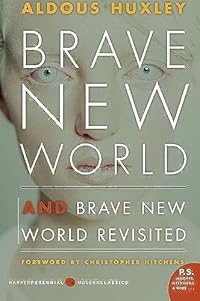
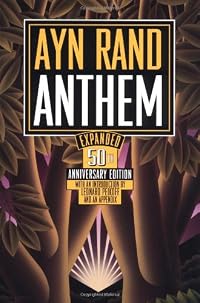
I tell people I don't like dystopias, then I go and read them again and again. What can I say? There are a lot of good ones--including this one, even if it's not a great one. Atwood of A Handmaid's Tale is the strongest living prose stylist I've read. Ayn Rand's Anthem (don't sneer) is almost a prose poem--even two liberal friends of mine admit to liking it. Huxley's Brave New World and Bradbury's Fahrenheit 451 both have many striking, quotable lines. And Orwell's 1984 has so many phrases that have entered the language like "newspeak" and "Big Brother." Each have aspects to their societies that are distinct and memorable; Anthem, Fahrenheit 451 and 1984 are of the strain that tries to control the mind, particularly through language. show more
Levin's future world hews closer to Brave New World with its control of the body through genetics and drugs. It doesn't feel as distinct a world as the other, and though with a clean style doesn't seem to be as strongly written as the above. Also one thing--and I'm no Christian, but it bugged me that one of the four ideologies that rules this society is supposed to be that of Jesus Christ (that of Karl Marx another) but, other than a nod at the value of "helping" your fellow man and knocks against selfishness, this doesn't strike me as remotely Christian in feel or design. That's one reason why it doesn't get a five.
It dipped below a four mostly for what happens from page 192 to 194--and then what doesn't happen. Our hero rapes his love and she tells him not a day later not to feel awful, that "It was perfectly natural." If I thought this was meant as commentary on how that controlled society pushed him, and if it had negative consequences for him, her and their relationship, I'd be fine with it--but you get the feeling that it's what it's said to be--something "perfectly natural." In which case, either Levin really needs to get a clue, or it's sloppy writing. But I don't see the need for the scene if there aren't consequences, and it bugged me.
But the novel is short, well-paced, kept me turning pages and had several surprises--it went in directions I wasn't expecting it to go. So good book, even if not great book. show less
Levin's future world hews closer to Brave New World with its control of the body through genetics and drugs. It doesn't feel as distinct a world as the other, and though with a clean style doesn't seem to be as strongly written as the above. Also one thing--and I'm no Christian, but it bugged me that one of the four ideologies that rules this society is supposed to be that of Jesus Christ (that of Karl Marx another) but, other than a nod at the value of "helping" your fellow man and knocks against selfishness, this doesn't strike me as remotely Christian in feel or design. That's one reason why it doesn't get a five.
It dipped below a four mostly for what happens from page 192 to 194--and then what doesn't happen. Our hero rapes his love and she tells him not a day later not to feel awful, that "It was perfectly natural." If I thought this was meant as commentary on how that controlled society pushed him, and if it had negative consequences for him, her and their relationship, I'd be fine with it--but you get the feeling that it's what it's said to be--something "perfectly natural." In which case, either Levin really needs to get a clue, or it's sloppy writing. But I don't see the need for the scene if there aren't consequences, and it bugged me.
But the novel is short, well-paced, kept me turning pages and had several surprises--it went in directions I wasn't expecting it to go. So good book, even if not great book. show less
Il genere fantapolitica non è tra i miei preferiti. Ho letto qualcosa, certo, gli irrinunciabili, e mi sono piaciuti, ma sono tutt'altro che un'estimatrice del genere. Anche "Questo giorno perfetto" mi è piaciuto molto, per il modo in cui è scritto e per come si sviluppa la storia. Mi è piaciuto il fatto che l'autore presenta la situazione del mondo di Uni piano piano, nel corso del romanzo, senza svelare tutto subito: ad esempio, è solo alla fine del romanzo che apprendiamo che nel mondo di Uni non piove mai di giorno. Mi è piaciuto il personaggio del protagonista e, soprattutto, mi è piaciuto molto il finale: quando ero preparata a una conclusione amara ecco il colpo di scena, il twist. Un vaso di Pandora in cui la speranza è show more al fondo, ma c'è.
Probabilmente non era l'intenzione dell'autore, ma per me è stato facile trovare una doppia chiave di lettura del romanzo: quella, evidente, che si rifà all'allegoria degli assolutismi e a come il successo di questi si basa sull'appiattimento dell'individualità delle persone. L'altra, riconducibile alle convenzioni, alla morale pubblica vs morale privata: al fatto che, anche libere da un regime assolutista, le persone sono necessariamente condizionate per il fatto stesso di vivere in una società fondata su regole (scritte e no). show less
Probabilmente non era l'intenzione dell'autore, ma per me è stato facile trovare una doppia chiave di lettura del romanzo: quella, evidente, che si rifà all'allegoria degli assolutismi e a come il successo di questi si basa sull'appiattimento dell'individualità delle persone. L'altra, riconducibile alle convenzioni, alla morale pubblica vs morale privata: al fatto che, anche libere da un regime assolutista, le persone sono necessariamente condizionate per il fatto stesso di vivere in una società fondata su regole (scritte e no). show less
Members
- Recently Added By
Published Reviews
A futuristic society run entirely by computer, and an individual's rebellion against it.
added by KayCliff
In de toekomst wordt de wereld bestuurd door een computer die een in bepaalde opzichten ideale maatschappij heeft gecreëerd (geen honger, rassendiscriminatie e.d.) waarin echter alle persoonlijke vrijheid verdwenen is. De hoofdpersoon komt in verzet, vlucht naar een eiland, vindt daar medestanders, etc. met andere woorden: een traditionele anti-utopie, gebaseerd op het (m.i. valse) dilemma show more tussen de ideale staat en de persoonlijke vrijheid. Huxley en Orwell, wier invloed diudelijk is, zijn beter, maar omgekeerd is Levin weer veel beter dan de doorsnee-sf. Het boek is overigens uitgebracht als een 'thriller', waarschijnlijk om de niet-sf-lezer niet af te schrikken. Vrij kleine druk. show less
added by karnoefel
Lists

Best Dystopias
280 works; 276 members

Best Science Fiction Novels
816 works; 430 members

Dystopian and Apocalyptic Literature
350 works; 74 members

Libertarian Books
102 works; 19 members

1970s
657 works; 23 members

Books Read in 2012
815 works; 34 members

Favourite Books
1,817 works; 316 members

Published in 1970
58 works; 7 members

Blue Pyramid 1,276 Best Books of All Time
1,248 works; 32 members

thinking of reading in 2016
99 works; 1 member

Books With Time Words in the Title
160 works; 4 members

Books Read in 2022
5,164 works; 111 members

1970 Club
85 works; 2 members
Favorite Science Fiction
452 works; 215 members
Talk Discussions
Past Discussions
futuristic drugged society in Name that Book (April 2012)
Author Information

42+ Works 16,352 Members
Ira levin was born on August 27, 1929 in the Bronx, New York. He is best remembered for his novels which were made into feature films, Rosemary's Baby (1968, with Mia Farrow), The Boys from Brazil (1978) and The Stepford Wives (1975 and 2004). Levin's best-known play is Deathtrap, which holds the record as the longest-running comedy-thriller on show more Broadway. (It was also made into a feature film in 1982, starring Christpher Reeve.) His first novel, A Kiss Before Dying, earned him the 1954 Edgar Award for Best First Novel. Ira Levin died in Manhattan from a heart attack on November 12, 2007. (Bowker Author Biography) show less
Some Editions
Awards and Honors
Awards
Series
Belongs to Publisher Series
Lanterne (L 170)
Zwarte Beertjes (1835)
Work Relationships
Is contained in
Common Knowledge
- Canonical title*
- En fullkommen dag
- Original title
- This Perfect Day
- Original publication date
- 1970
- People/Characters
- Chip; Lilac
- Epigraph
- Christ, Marx, Wood, and Wei
Led us to this perfect day.
Marx, Wood, Wei and Christ;
All but Wei were sacrificed.
Wood, Wei, Christ, and Marx
Gave us lovely schools and parks.
Wei, Christ, Marx, and Wood
M... (show all)ade us humble, made us good.
- child's rhyme for bouncing a ball - Dedication
- COMPLETED IN JUNE, 1969 IN NEW YORK CITY AND DEDICATED TO ADAM LEVIN, JED LEVIN, AND NICHOLAS LEVIN
- First words
- A city's blank white concrete slabs, the giant ones ringed by the less giant, gave space in their midst to a broad pink-floored plaza, a playground in which some two hundred young children played and exercised under the care ... (show all)of a dozen supervisors in white coveralls.
- Quotations
- "[You're going to see] the machine that's going to classify you and give you your assignments, that's going to decide where you'll live and whom you'll marry, whether you'll have children and what they'll be named."
"What do you think a treatment consists of?" ... "Vaccines, enzymes, contraceptive, tranquilizer, & LPK."
"What do you do when you're programming a computer to maintain a perfectly efficient, perfectly stable, perfectly cooperative society? How do you allow for biological freaks, `incurables', possible trouble-makers?" - Original language*
- Engels
*Some information comes from Common Knowledge in other languages. Click "Edit" for more information.
Classifications
Statistics
- Members
- 1,432
- Popularity
- 16,336
- Reviews
- 40
- Rating
- (3.82)
- Languages
- 10 — Czech, Danish, Dutch, English, French, German, Norwegian (Bokmål), Norwegian, Spanish, Swedish
- Media
- Paper, Audiobook, Ebook
- ISBNs
- 46
- ASINs
- 41