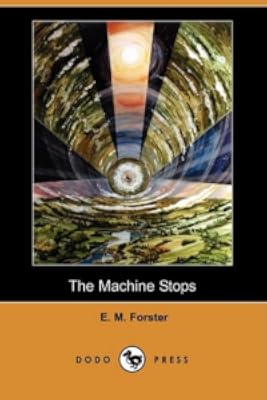
The Machine Stops
by E. M. Forster
On This Page
Description
E. M. Forster (1879-1970) was an English novelist, short story writer, essayist, and librettist. He is known best for his ironic and well-plotted novels examining class difference and hypocrisy in early 20th-century British society. Forster's humanistic impulse toward understanding and sympathy may be aptly summed up in the epigraph to his 1910 novel, Howards End: "Only " His 1908 novel, A Room with a View, is his most optimistic work, while A Passage to India (1924) brought him his greatest show more success. First published in 1909, Forster's short science fiction work, "The Machine Stops," posits a technology-dependent humanity now living underground, its every need serviced by machines. But what happens if-or when-the machines stop? "The Machine Stops" was named one of the greatest science fiction novellas published before 1965 by the Science Fiction Writers of America. show lessTags
Recommendations
















Member Recommendations


Member Reviews
There’s a certain kind of horror that doesn’t arrive with teeth or blood or a man in the dark—it arrives clean, efficient, helpful. It arrives as comfort. As optimization. As a system that works so well you forget what it replaced.
That’s The Machine Stops.
Written in 1909—before screens, before feeds, before we outsourced our attention piece by piece like we were shedding skin—E. M. Forster saw something coming. Not the specifics. Not the devices. But the posture. The quiet surrender.
This isn’t a long read. You can finish it in a sitting. But it doesn’t leave in a sitting.
It follows a world where humanity lives underground, each person sealed in their own room, tended to by an all-providing Machine. You don’t travel. show more You don’t touch. You don’t look someone in the eye and risk being seen. You press a button. You call it connection. You call it progress. You call it enough.
And maybe that’s the most unsettling part—no one in this world thinks they’re missing anything. The Machine has replaced the need to want.
Reading it now feels less like fiction and more like a mirror you didn’t ask for. Not a perfect reflection—but close enough to make you uncomfortable. The obsession with ideas over experience. The performance of intellect without the weight of living. The way convenience dulls something essential, slowly, politely, without resistance.
There’s a moment in the story where the system begins to fail—not all at once, not dramatically—but with small errors. Friction. Things not working quite right. And instead of questioning the Machine, they worship it harder. They double down.
That part sticks.
Because it’s easy to imagine collapse as loud, as obvious. But Forster understood something quieter: that decay often looks like loyalty.
This isn’t a book that tells you to throw your phone into the ocean or move into the woods and start again. It’s more precise than that. It just asks a question you won’t be able to ignore once it’s asked:
What have you handed over without noticing?
Read it if you want something quick. Read it if you want something that lingers. Read it if you suspect—somewhere under the routines and systems and optimized days—that there’s a part of you going quiet.
And maybe don’t read it on a screen. show less
That’s The Machine Stops.
Written in 1909—before screens, before feeds, before we outsourced our attention piece by piece like we were shedding skin—E. M. Forster saw something coming. Not the specifics. Not the devices. But the posture. The quiet surrender.
This isn’t a long read. You can finish it in a sitting. But it doesn’t leave in a sitting.
It follows a world where humanity lives underground, each person sealed in their own room, tended to by an all-providing Machine. You don’t travel. show more You don’t touch. You don’t look someone in the eye and risk being seen. You press a button. You call it connection. You call it progress. You call it enough.
And maybe that’s the most unsettling part—no one in this world thinks they’re missing anything. The Machine has replaced the need to want.
Reading it now feels less like fiction and more like a mirror you didn’t ask for. Not a perfect reflection—but close enough to make you uncomfortable. The obsession with ideas over experience. The performance of intellect without the weight of living. The way convenience dulls something essential, slowly, politely, without resistance.
There’s a moment in the story where the system begins to fail—not all at once, not dramatically—but with small errors. Friction. Things not working quite right. And instead of questioning the Machine, they worship it harder. They double down.
That part sticks.
Because it’s easy to imagine collapse as loud, as obvious. But Forster understood something quieter: that decay often looks like loyalty.
This isn’t a book that tells you to throw your phone into the ocean or move into the woods and start again. It’s more precise than that. It just asks a question you won’t be able to ignore once it’s asked:
What have you handed over without noticing?
Read it if you want something quick. Read it if you want something that lingers. Read it if you suspect—somewhere under the routines and systems and optimized days—that there’s a part of you going quiet.
And maybe don’t read it on a screen. show less
“Beware of firsthand ideas!”
This is Forster's only foray into Sci Fi. Yes, that Forster--A Room With a View, A Passage to India, Merchant Ivory films--same guy.
I wouldn't call it his best writing style but his ideas are first rate Sci Fi. I'd even go so far to say it includes some never before broached "firsthand ideas." Originally published in 1909, before airplanes and TV, before even radio and telephones were in most homes, Forster saw enough new technologies, their unstoppable march, their impacts, and then wrote this creepily prescient short story, a peek into 2025.
Forster splendidly depicts how the modes of communication actually isolate and how the ease that we can receive goods will make us complacent and physically weak. show more The Machine is so complicated that no one truly understands it--it is an interconnected system headed by separate committees of departments.
Humanity has been so pampered for so long by the Machine, that people need not do anything, the primary pastime is thinking of "ideas." But even ideas have transformed from what we think of as ideas. The guiding philosophy is they should not be grounded in firsthand knowledge! Ideas are simply rehashing generations of thinkers, and each successive thinkers thoughts on the previous thinkers. Ideas are relative histories of ideas. Lectures covering history, kept within this concept, are popular entertainments.
Nature is abhorred, a mere necessary resource. That includes the natural human physical connection and the story has but two characters: a mother and son, the pair a sufficient example of the limited experiences available for human life with The Machine.
The Machine is not an evil entity. It's just technology humming along, one that we would recognize as having some AI adjacent abilities. Not sentient. Not extraterrestrial. Simply mankind's own man-made future.
"Humanity, in its desire for comfort, had overreached itself. It had exploited the riches of nature too far. Quietly and complacently, it was sinking into decadence, and progress had come to mean the progress of the Machine."
Alexa, read out loud The Machine Stops. show less
This is Forster's only foray into Sci Fi. Yes, that Forster--A Room With a View, A Passage to India, Merchant Ivory films--same guy.
I wouldn't call it his best writing style but his ideas are first rate Sci Fi. I'd even go so far to say it includes some never before broached "firsthand ideas." Originally published in 1909, before airplanes and TV, before even radio and telephones were in most homes, Forster saw enough new technologies, their unstoppable march, their impacts, and then wrote this creepily prescient short story, a peek into 2025.
Forster splendidly depicts how the modes of communication actually isolate and how the ease that we can receive goods will make us complacent and physically weak. show more The Machine is so complicated that no one truly understands it--it is an interconnected system headed by separate committees of departments.
Humanity has been so pampered for so long by the Machine, that people need not do anything, the primary pastime is thinking of "ideas." But even ideas have transformed from what we think of as ideas. The guiding philosophy is they should not be grounded in firsthand knowledge! Ideas are simply rehashing generations of thinkers, and each successive thinkers thoughts on the previous thinkers. Ideas are relative histories of ideas. Lectures covering history, kept within this concept, are popular entertainments.
Nature is abhorred, a mere necessary resource. That includes the natural human physical connection and the story has but two characters: a mother and son, the pair a sufficient example of the limited experiences available for human life with The Machine.
The Machine is not an evil entity. It's just technology humming along, one that we would recognize as having some AI adjacent abilities. Not sentient. Not extraterrestrial. Simply mankind's own man-made future.
"Humanity, in its desire for comfort, had overreached itself. It had exploited the riches of nature too far. Quietly and complacently, it was sinking into decadence, and progress had come to mean the progress of the Machine."
Alexa, read out loud The Machine Stops. show less
"You talk as if a god had made the Machine," cried the other. "I believe that you pray to it when you are unhappy. Men made it, do not forget that. Great men, but men. The Machine is much, but not everything."
“Cannot you see, cannot all you lecturers see, that it is we that are dying, and that down here the only thing that really lives is the Machine? We created the Machine, to do our will, but we cannot make it do our will now. It has robbed us of the sense of space and of the sense of touch, it has blurred every human relation and narrowed down love to a carnal act, it has paralyzed our bodies and our wills, and now it compels us to worship it. The Machine develops - but not on our lies. The Machine proceeds - but not to our goal. show more We only exist as the blood corpuscles that course through its arteries, and if it could work without us, it would let us die.”
“Man is the measure. That was my first lesson. Man's feet are the measure for distance, his hands are the measure for ownership, his body is the measure for all that is lovable and desirable and strong.” show less
“Cannot you see, cannot all you lecturers see, that it is we that are dying, and that down here the only thing that really lives is the Machine? We created the Machine, to do our will, but we cannot make it do our will now. It has robbed us of the sense of space and of the sense of touch, it has blurred every human relation and narrowed down love to a carnal act, it has paralyzed our bodies and our wills, and now it compels us to worship it. The Machine develops - but not on our lies. The Machine proceeds - but not to our goal. show more We only exist as the blood corpuscles that course through its arteries, and if it could work without us, it would let us die.”
“Man is the measure. That was my first lesson. Man's feet are the measure for distance, his hands are the measure for ownership, his body is the measure for all that is lovable and desirable and strong.” show less
Pretty damn prescient on not only the idea of the Internet, but the consuming nature of it. Also a nicely ironic abstraction of 'ideas' from experience, which itself almost feels like a bit of foresight on the supposedly modern trend of 'fake news', subjective reality, the favouring of parroting other opinion and secondary research over primary research, and the reconstruction of facts through a lens of ideology (the ideology in this case being that of 'The Machine')
Guess our modern problems aren't so modern.
Guess our modern problems aren't so modern.
In the future Vashti lives, like everyone else on earth, in a small cell underground. The surface is not safe to inhabit, but everything she needs in life is provided for her by The Machine. She has fresher air than could ever exist naturally, full control of the temperature and lights, and can spend her days lecturing and watching lectures and talking to her friends (whom she never sees in person) on a video screen. Because no one ever experiences anything new, all of the lectures are just lectures about other lectures. Vashti visits her son in-person, at his request, who tells her that he has been outside and it is wonderful. She rejects what he tells her about life without The Machine, as she and others have started to worship The show more Machine. Eventually The Machine starts to fail, playing the usual background music out of tune and filling the rooms with smoggy air. The lights go out, but the inhabitants worship The Machine harder, arguing that it has always treated them well so they should just be happy with what they get, but to no avail.
Published in 1909, this is the only science fiction written by Forster, and it’s obviously quite prescient. How did he do it?? I feel particularly called-out by the lectures - I usually think of access to information as a clear positive to technology, but it does sometimes prevent you from touching grass.
The writing can be a little tedious so I’m not quite giving it 5 stars but wow! What a thing to read at this moment in time. This story is in the public domain in the United States, and can be read for free at https://archive.org/details/e.-m.-forster-the-machine-stops_202008 show less
Published in 1909, this is the only science fiction written by Forster, and it’s obviously quite prescient. How did he do it?? I feel particularly called-out by the lectures - I usually think of access to information as a clear positive to technology, but it does sometimes prevent you from touching grass.
The writing can be a little tedious so I’m not quite giving it 5 stars but wow! What a thing to read at this moment in time. This story is in the public domain in the United States, and can be read for free at https://archive.org/details/e.-m.-forster-the-machine-stops_202008 show less
Would you panic more at losing your wallet or your phone?
A few years ago, the question would be ridiculous, but now, it’s a tough call, and many of us fear losing our smartphone more, even with data synced in the cloud. Our world, and all our access to it, is there. I no longer know the phone numbers of my closest family.
We have outsourced our knowledge, and maybe ourselves, to our devices. Perhaps by recording my thoughts on this website, rather than trying to remember them in my head, I’m compounding that.
As machines become more human, will we become cyborgs, and then machines - or worse, irrelevant?
Update, January 2019: I was recently without a smartphone, and locked out of all data and apps for four weeks, and at a show more particularly difficult time. Sorting it out, and managing in the interim was far, far worse than the time my wallet was stolen.
Setup
This short story is told in three chapters. The first describes the situation, and has a hook as to what follows. The middle has someone questioning, and the third explores consequences.
The surface of the earth cannot support life, so everyone lives underground. Identical, solitary, sedentary lives, their every need provided by the Machine at the press of a button. People give and watch lectures, always on a quest for “ideas”, and ever grateful to the omnipotent and benevolent Machine. Each has their own Book of the Machine, with “instructions against every possible contingency”. That appeals to the technical writer in me.
Civilized people neither need nor want to be polluted by touch or smell. Contact with others is invariably by videocall, even between Vashti and her adult son, Kuno:
"‘Parents, duties of,’ said the book of the Machine, ‘cease at the moment of birth. P.422327483.’".
They have everything they need, but nothing that matters to being human.
“Men seldom moved their bodies; all unrest was concentrated in the soul.”
Do you have a soul when there’s so little opportunity for emotional engagement with anything, let alone anyone?
Only Connect
"Only connect! That was the whole of her sermon. Only connect the prose and the passion, and both will be exalted, and human love will be seen at its height. Live in fragments no longer."
From Howards End.
Like GoodReaders, the people in this story are hyperconnected: simultaneously always and never alone.
“She knew several thousand people, in certain directions human intercourse had advanced enormously.”
Can one have meaningful friendships with so many? Can you even remember who’s who? Having so many connections surely dilutes the value of each one. Maybe hyperconnectivity makes us more isolated, despite the veneer of popularity?
Vashti has an isolation knob, mainly used when sleeping.
What if GoodReads capped friends at 500 instead of 5000?
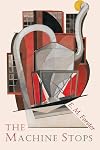
Image: cover of Hawkwind’s concept album, The Machine Stops, from 2016
Title track (audio+video), A Solitary Man, HERE.
God in the Machine, or God IS the Machine?
Humans may have created the Machine, but now it bestows life, sustains life, and chooses when to allow life to end. Reverence, rituals, and liturgy accrue to the Machine, and to the Book of the Machine. Eventually, the Machine seems to believe as well, and to institutionalise and coerce that faith, gaslighting as it goes. Humans subjugate themselves to the Machine their forefathers made to serve them.
“We only exist as the blood corpuscles that course through its arteries.”
I asked the same question about God and the Machine of Harlan Ellison’s 1967 story, I Have No Mouth and I Must Scream (see my review HERE), last week. That also has people living underground, their lives controlled by an omnipotent computer, but in that, it’s the machine itself that usurps the mantle of God, and with very different consequences.
For a different and more comical slant on the apocalyptic danger of big brains, see Vonnegut's Galapagos, which I reviewed HERE.
Edwardian Sci-Fi
You can read it, free, HERE.
EM Forster wrote this staggeringly prescient short story in 1909, set a few hundred years in his future, though we’re almost there now. He was 30, had published A Room with a View the previous year, and would publish Howards End (see my review HERE) the year after. Queen Victoria had died only eight years earlier, and The Great War wouldn’t start for another five years. A world or three away from now, even allowing for the technological and industrial progress of his age. I almost wonder if he had access to HG Wells’ The Time Machine, as he describes things close to Skype, Spotify/streaming, MOOCs, online shopping, social media, virtual reality, and post-truth, fake news.
Quotes
• “Just as the imponderable bloom of the grape was ignored by the manufacturers of artificial fruit. Something ‘good enough’ had long since been accepted by our race.” Note, the anonymous narrator says “our race”.
• “I see something like you in this plate, but I do not see you. I hear something like you through this telephone, but I do not hear you.” Skype and virtual reality are not quite reality.
• “The [previous] civilization that had mistaken the functions of the [airship] system, and had used it for bringing people to things, instead of for bringing things to people.”
• “We have lost the sense of space... I determined to recover it, and I began by walking... and so did recapture the meaning of “Near” and “Far”... Man is the measure.”
• “Man must be adapted to his surroundings, must he not? In the dawn of the world our weakly must be exposed on Mount Taygetus, in its twilight our strong will suffer euthanasia... that the Machine may progress eternally.”
• “On atavism the Machine can have no mercy.”
• "There will come a generation that had got beyond facts, beyond impressions, a generation absolutely colourless, a generation seraphically free from taint of personality.”
Cartoon: Are we there yet?! (Source.)
Update, May 2020. Will Gompertz, BBC arts editor, thinks we're there. He writes about the specific parallels with Coronavirus Covid-19 lockdown, HERE. show less
A few years ago, the question would be ridiculous, but now, it’s a tough call, and many of us fear losing our smartphone more, even with data synced in the cloud. Our world, and all our access to it, is there. I no longer know the phone numbers of my closest family.
We have outsourced our knowledge, and maybe ourselves, to our devices. Perhaps by recording my thoughts on this website, rather than trying to remember them in my head, I’m compounding that.
As machines become more human, will we become cyborgs, and then machines - or worse, irrelevant?
Update, January 2019: I was recently without a smartphone, and locked out of all data and apps for four weeks, and at a show more particularly difficult time. Sorting it out, and managing in the interim was far, far worse than the time my wallet was stolen.
Setup
This short story is told in three chapters. The first describes the situation, and has a hook as to what follows. The middle has someone questioning, and the third explores consequences.
The surface of the earth cannot support life, so everyone lives underground. Identical, solitary, sedentary lives, their every need provided by the Machine at the press of a button. People give and watch lectures, always on a quest for “ideas”, and ever grateful to the omnipotent and benevolent Machine. Each has their own Book of the Machine, with “instructions against every possible contingency”. That appeals to the technical writer in me.
Civilized people neither need nor want to be polluted by touch or smell. Contact with others is invariably by videocall, even between Vashti and her adult son, Kuno:
"‘Parents, duties of,’ said the book of the Machine, ‘cease at the moment of birth. P.422327483.’".
They have everything they need, but nothing that matters to being human.
“Men seldom moved their bodies; all unrest was concentrated in the soul.”
Do you have a soul when there’s so little opportunity for emotional engagement with anything, let alone anyone?
Only Connect
"Only connect! That was the whole of her sermon. Only connect the prose and the passion, and both will be exalted, and human love will be seen at its height. Live in fragments no longer."
From Howards End.
Like GoodReaders, the people in this story are hyperconnected: simultaneously always and never alone.
“She knew several thousand people, in certain directions human intercourse had advanced enormously.”
Can one have meaningful friendships with so many? Can you even remember who’s who? Having so many connections surely dilutes the value of each one. Maybe hyperconnectivity makes us more isolated, despite the veneer of popularity?
Vashti has an isolation knob, mainly used when sleeping.
What if GoodReads capped friends at 500 instead of 5000?
Image: cover of Hawkwind’s concept album, The Machine Stops, from 2016
Title track (audio+video), A Solitary Man, HERE.
God in the Machine, or God IS the Machine?
Humans may have created the Machine, but now it bestows life, sustains life, and chooses when to allow life to end. Reverence, rituals, and liturgy accrue to the Machine, and to the Book of the Machine. Eventually, the Machine seems to believe as well, and to institutionalise and coerce that faith, gaslighting as it goes. Humans subjugate themselves to the Machine their forefathers made to serve them.
“We only exist as the blood corpuscles that course through its arteries.”
I asked the same question about God and the Machine of Harlan Ellison’s 1967 story, I Have No Mouth and I Must Scream (see my review HERE), last week. That also has people living underground, their lives controlled by an omnipotent computer, but in that, it’s the machine itself that usurps the mantle of God, and with very different consequences.
For a different and more comical slant on the apocalyptic danger of big brains, see Vonnegut's Galapagos, which I reviewed HERE.
Edwardian Sci-Fi
You can read it, free, HERE.
EM Forster wrote this staggeringly prescient short story in 1909, set a few hundred years in his future, though we’re almost there now. He was 30, had published A Room with a View the previous year, and would publish Howards End (see my review HERE) the year after. Queen Victoria had died only eight years earlier, and The Great War wouldn’t start for another five years. A world or three away from now, even allowing for the technological and industrial progress of his age. I almost wonder if he had access to HG Wells’ The Time Machine, as he describes things close to Skype, Spotify/streaming, MOOCs, online shopping, social media, virtual reality, and post-truth, fake news.
Quotes
• “Just as the imponderable bloom of the grape was ignored by the manufacturers of artificial fruit. Something ‘good enough’ had long since been accepted by our race.” Note, the anonymous narrator says “our race”.
• “I see something like you in this plate, but I do not see you. I hear something like you through this telephone, but I do not hear you.” Skype and virtual reality are not quite reality.
• “The [previous] civilization that had mistaken the functions of the [airship] system, and had used it for bringing people to things, instead of for bringing things to people.”
• “We have lost the sense of space... I determined to recover it, and I began by walking... and so did recapture the meaning of “Near” and “Far”... Man is the measure.”
• “Man must be adapted to his surroundings, must he not? In the dawn of the world our weakly must be exposed on Mount Taygetus, in its twilight our strong will suffer euthanasia... that the Machine may progress eternally.”
• “On atavism the Machine can have no mercy.”
• "There will come a generation that had got beyond facts, beyond impressions, a generation absolutely colourless, a generation seraphically free from taint of personality.”
Cartoon: Are we there yet?! (Source.)
Update, May 2020. Will Gompertz, BBC arts editor, thinks we're there. He writes about the specific parallels with Coronavirus Covid-19 lockdown, HERE. show less
Rating: 3.5* of five
The Publisher Says: The Machine Stops is a science fiction short story (12,300 words) by E. M. Forster. After initial publication in The Oxford and Cambridge Review (November 1909), the story was republished in Forster's The Eternal Moment and Other Stories in 1928. After being voted one of the best novellas up to 1965, it was included that same year in the populist anthology Modern Short Stories. In 1973 it was also included in The Science Fiction Hall of Fame, Volume Two. The book is particularly notable for predicting new technologies such as instant messaging and the internet.
My Review: As amazing as reading about the Internet, streaming video, and instant messaging must have been in 1909, it's more amazing in show more 2014 to think that, 105 years ago, the ubiquity of such central facets of out lives was placed in a far distant future.
I mean really, what's 105 years in the sweep of history? It's even less impressive measured in geologic time. Electric lighting was still in its infancy then, though, and the automobile was a plaything for the very rich. Much like computers in 1989 and the Internet in 1999.
Well then. Sobering perspective on the speed of change in the modern world, eh what?
What mars this read for me is the vast amount of SFnal reading I've done in my life. Unlike the readers of 1909, I've imbibed the waters of the Styx and forgotten more than they ever knew about things predictive. And the trope of "civilization is making meat-sacks of us all, woe woe" has moved from startling insight and clarion warning to the dreary moaning of the Longface Puritans League that says not to eat anything that has any taste, do anything that is remotely fun, and NEVER EVER EVER have sex. Be miserable, it builds character, as Calvin's father would say! Live longer, as Doctor Oz would say!
What ever for?
Anyway, the story's free here and it'll take about a half-hour to read. I come down on the side of that being a worthwhile investment. Barely.
This work is licensed under a Creative Commons Attribution-NonCommercial-ShareAlike 3.0 Unported License. show less
The Publisher Says: The Machine Stops is a science fiction short story (12,300 words) by E. M. Forster. After initial publication in The Oxford and Cambridge Review (November 1909), the story was republished in Forster's The Eternal Moment and Other Stories in 1928. After being voted one of the best novellas up to 1965, it was included that same year in the populist anthology Modern Short Stories. In 1973 it was also included in The Science Fiction Hall of Fame, Volume Two. The book is particularly notable for predicting new technologies such as instant messaging and the internet.
My Review: As amazing as reading about the Internet, streaming video, and instant messaging must have been in 1909, it's more amazing in show more 2014 to think that, 105 years ago, the ubiquity of such central facets of out lives was placed in a far distant future.
I mean really, what's 105 years in the sweep of history? It's even less impressive measured in geologic time. Electric lighting was still in its infancy then, though, and the automobile was a plaything for the very rich. Much like computers in 1989 and the Internet in 1999.
Well then. Sobering perspective on the speed of change in the modern world, eh what?
What mars this read for me is the vast amount of SFnal reading I've done in my life. Unlike the readers of 1909, I've imbibed the waters of the Styx and forgotten more than they ever knew about things predictive. And the trope of "civilization is making meat-sacks of us all, woe woe" has moved from startling insight and clarion warning to the dreary moaning of the Longface Puritans League that says not to eat anything that has any taste, do anything that is remotely fun, and NEVER EVER EVER have sex. Be miserable, it builds character, as Calvin's father would say! Live longer, as Doctor Oz would say!
What ever for?
Anyway, the story's free here and it'll take about a half-hour to read. I come down on the side of that being a worthwhile investment. Barely.
This work is licensed under a Creative Commons Attribution-NonCommercial-ShareAlike 3.0 Unported License. show less
Members
- Recently Added By
Lists

Best Dystopias
280 works; 276 members

Best Science Fiction Novels
816 works; 426 members

Survey of Classic Dystopias
29 works; 4 members

Dystopian and Apocalyptic Literature
350 works; 74 members

An End of the World Reading List
63 works; 4 members

1900s (Decade, not century)
73 works; 17 members

Books Read in 2012
816 works; 31 members

Books Read in 2015
3,299 works; 129 members

Books With Complete Sentence Titles
374 works; 15 members
Favorite Science Fiction
456 works; 218 members

Books Read By artturnerjr - 2026
3 works; 1 member
Author Information

185+ Works 56,898 Members
Edward Morgan Forster was born on January 1, 1879, in London, England. He never knew his father, who died when Forster was an infant. Forster graduated from King's College, Cambridge, with B.A. degrees in classics (1900) and history (1901), as well as an M.A. (1910). In the mid-1940s he returned to Cambridge as a professor, living quietly there show more until his death in 1970. Forster was named to the Order of Companions of Honor to the Queen in 1953. Forster's writing was extensively influenced by the traveling he did in the earlier part of his life. After graduating from Cambridge, he lived in both Greece and Italy, and used the latter as the setting for the novels Where Angels Fear to Tread (1905) and A Room with a View (1908). The Longest Journey was published in 1907. Howard's End was modeled on the house he lived in with his mother during his childhood. During World War I, he worked as a Red Cross Volunteer in Alexandria, aiding in the search for missing soldiers; he later wrote about these experiences in the nonfiction works Alexandria: A History and Guide and Pharos and Pharillon. His two journeys to India, in 1912 and 1922, resulted in A Passage to India (1924), which many consider to be Forster's best work; this title earned the James Tait Black Memorial Prize. Forster wrote only six novels, all prior to 1925 (although Maurice was not published until 1971, a year after Forster's death, probably because of its homosexual theme). For much of the rest of his life, he wrote literary criticism (Aspects of the Novel) and nonfiction, including biographies (Goldsworthy Lowes Dickinson), histories, political pieces, and radio broadcasts. Howard's End, A Room with a View, and A Passage to India have all been made into successful films. (Bowker Author Biography) show less
Some Editions
Awards and Honors
Awards
Notable Lists
Series
Belongs to Publisher Series
2000X (05b)
Work Relationships
Is contained in
Howards End / The Longest Journey / The Machine Stops / A Room With A View / Where Angels Fear to Tread by E. M. Forster
The Science Fiction Hall of Fame, Volume Two B: The Greatest Science Fiction Novellas of All Time by Ben Bova
The Science Fiction Hall of Fame, Volume I, IIA, IIB, the Greatest Science Fiction Novellas of All Time (Boxed Set, in Slipcase) by Robert Silverberg (indirect)
The Ultimate Science Fiction Mega Collection: 24 of the Best Sci-Fi Books of All Time: A Journey to the Center of the Earth, 20,000 Leagues Under the Sea, Around the World in 80 Days, John Carter of Mars Trilogy, The War of the Worlds, The Time Machine, Frankenstein, Dr. Jekyll and Mr. Hyde, 3 Ray Bradbury Stories, Flatland, & More by Jules Verne
Inspired
Has as a reference guide/companion
Common Knowledge
- Canonical title
- The Machine Stops
- Original publication date
- 1909-11 (The Oxford and Cambridge Review) (The Oxford and Cambridge Review)
- First words
- Imagine, if you can, a small room, hexagonal in shape, like the cell of a bee.
- Quotations
- Men seldom moved their bodies; all unrest was concentrated in the soul.
It has robbed us of the sense of space and of the sense of touch, it has blurred every human relation and narrowed down love to a carnal act, it has paralysed our bodies and our wills, and now it compels us to worship it.
First-hand ideas do not really exist. They are but the physical impressions produced by live and fear, and on this gross foundation who could erect a philosophy? Let your ideas be second-hand, and if possible tenth-hand, for ... (show all)then they will be far removed from that disturbing element--direct observation.
No one confessed the Machine was out of hand. Year by year it was served with increased efficiency and decreased intelligence.
...and in all the world there was not one who understood the monster as a whole. - Last words
- (Click to show. Warning: May contain spoilers.)For a moment they saw the nations of the dead, and, before they joined them, scraps of the untainted sky.
- Disambiguation notice
- This is the record for the single work. Do not combine it with other works containing multiple works.
Classifications
Statistics
- Members
- 905
- Popularity
- 29,643
- Reviews
- 56
- Rating
- (3.88)
- Languages
- 7 — Dutch, English, French, German, Italian, Portuguese, Spanish
- Media
- Paper, Audiobook, Ebook
- ISBNs
- 68
- ASINs
- 36