On This Page
Description
The adventurous wanderings of a boy and girl to find the keyhole which fits the rainbow's golden key.Tags
Recommendations








Member Reviews
Fascinated by a tale told him by his great-aunt about a golden key hidden by the fairies at the end of the rainbow, a boy sees a rainbow in the woods at sundown and goes to investigate. Fearful that the three bears of her story book are at her door a girl escapes from her bedroom window and runs into the woods. Thus Mossy the boy and Tangle the girl embark on their adventure in Fairyland.
Their fairy tale quest is also a surreal and metaphysical tale of recurring existence, filled with hints of Christian metaphors. Three times is often the charm for MacDonald beginning with the reference to the folktale Silverhair (more commonly known now as Goldilocks and the three bears). The protagonists, Mossy, the boy and Tangle, the girl, encounter show more three men in various stages of their lives: old, young, and infant. These men or boys aid them on their way. Mossy and Tangle themselves also experience these three ages, but like their three guides, it’s not necessarily in the usual chronological order, indicating that the fairyland through which they journey is outside the bounds of time and space. It is a place of reoccurrence and resurrection and also one of separation and reunion. And as Yolen points out in the afterword, it’s also “an extended metaphor of life and death.” show less
Their fairy tale quest is also a surreal and metaphysical tale of recurring existence, filled with hints of Christian metaphors. Three times is often the charm for MacDonald beginning with the reference to the folktale Silverhair (more commonly known now as Goldilocks and the three bears). The protagonists, Mossy, the boy and Tangle, the girl, encounter show more three men in various stages of their lives: old, young, and infant. These men or boys aid them on their way. Mossy and Tangle themselves also experience these three ages, but like their three guides, it’s not necessarily in the usual chronological order, indicating that the fairyland through which they journey is outside the bounds of time and space. It is a place of reoccurrence and resurrection and also one of separation and reunion. And as Yolen points out in the afterword, it’s also “an extended metaphor of life and death.” show less
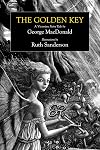
When I was young, I was spellbound by George Macdonald's fairytale books like The Princess and the Goblins, The Princess and Curdie, and At the Back of the North Wind. He has a knack for the small and beautiful - or disquieting - detail. Now illustrator Ruth Sanderso] has created a new edition of his The Golden Key, breaking the story into chapters and accompanying it with her enchanting illustrations.
A young boy named Mossy hears about a golden key to be found at the end of a rainbow, and determines to search for it. However, no one knows what it will open if found. Along the way, he meets a runaway girl named Tangle in an enchanted cottage, and they set out together to find the key's purpose. The somewhat simple overall story is show more filled with magical detail, and Sanderson has rightly gauged that an illustrated edition targeted to middle graders should find an audience. Her illustrations are terrific, and enhance the story as only the best illustrations can. If you have a young child, this would be an entrancing book to read together, and a good introduction to the tales of George MacDonald. show less
A young boy named Mossy hears about a golden key to be found at the end of a rainbow, and determines to search for it. However, no one knows what it will open if found. Along the way, he meets a runaway girl named Tangle in an enchanted cottage, and they set out together to find the key's purpose. The somewhat simple overall story is show more filled with magical detail, and Sanderson has rightly gauged that an illustrated edition targeted to middle graders should find an audience. Her illustrations are terrific, and enhance the story as only the best illustrations can. If you have a young child, this would be an entrancing book to read together, and a good introduction to the tales of George MacDonald. show less
 This review was written for LibraryThing Early Reviewers.
Having previously owned and read other editions of this book, I was mostly interested to read this version for the illustrations.
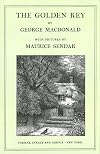
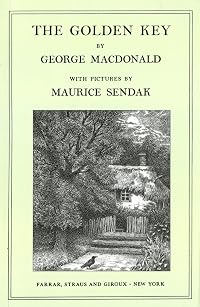
It's amazing what a difference Sanderson's pictures make in my experience of the story! The Sendak version features illustrations that, while lovely, are far less frequent and unobtrusive-- and the actual book was much smaller, which for some reason makes me think of it as intended for older readers.
In this edition, the actual volume is larger-- and the print matches. Both the scale and type size remind me of an Easy Reader style book, though the story is longer than one would expect from those.
And, of course: the illustrations: far more than mere occasional decorations, they appear at least every other show more page-turn, with frequent two-page spreads that invite pause and careful consideration. at other points, the pictures intrude upon and interact with the text itself, truly shaping a remarkably realistic-- and fanciful-- vision of the fairy world.
My one recommendation, which is a very picky one, would be to have a complete sentence end before each two-page illustration. Even with dissertation formatting requirements, I know how difficult it is to fit figures on the page and control widows and orphans, etc. However, I always feel rushed when turning the page mid-sentence, and I'm afraid some of the incredible illustrations will receive short shrift from readers for this reason. show less
It's amazing what a difference Sanderson's pictures make in my experience of the story! The Sendak version features illustrations that, while lovely, are far less frequent and unobtrusive-- and the actual book was much smaller, which for some reason makes me think of it as intended for older readers.
In this edition, the actual volume is larger-- and the print matches. Both the scale and type size remind me of an Easy Reader style book, though the story is longer than one would expect from those.
And, of course: the illustrations: far more than mere occasional decorations, they appear at least every other show more page-turn, with frequent two-page spreads that invite pause and careful consideration. at other points, the pictures intrude upon and interact with the text itself, truly shaping a remarkably realistic-- and fanciful-- vision of the fairy world.
My one recommendation, which is a very picky one, would be to have a complete sentence end before each two-page illustration. Even with dissertation formatting requirements, I know how difficult it is to fit figures on the page and control widows and orphans, etc. However, I always feel rushed when turning the page mid-sentence, and I'm afraid some of the incredible illustrations will receive short shrift from readers for this reason. show less
This review was written for LibraryThing Early Reviewers.Full disclosure: The biggest reason I requested a copy of The Golden Key was Ruth Sanderson's illustrations, which, I'm happy to report, were breathtaking. Scratchboard art blows my mind; being a non-artist, I just can't wrap my brain around how artists like Ruth create such beauty by scratching away at solid black to reveal bit by bit a complete picture. The proportions, the balance, the fine details...beautiful!
As for George MacDonald's fairy tale, which I read in one sitting, I found it easily adaptable to the reader's interpretation and I like stories where I'm given leeway to apply my own meaning. But I can certainly see where this tale could be presented as a Christian fairy tale for those so inclined. I found Ruth's art the show more perfect complement to the tale, and MacDonald's Fairyland was how I always imagine it: full of creatures both light and dark.
4 stars (5 stars for the illustrations; 3 stars for the fairy tale) show less
As for George MacDonald's fairy tale, which I read in one sitting, I found it easily adaptable to the reader's interpretation and I like stories where I'm given leeway to apply my own meaning. But I can certainly see where this tale could be presented as a Christian fairy tale for those so inclined. I found Ruth's art the show more perfect complement to the tale, and MacDonald's Fairyland was how I always imagine it: full of creatures both light and dark.
4 stars (5 stars for the illustrations; 3 stars for the fairy tale) show less
This review was written for LibraryThing Early Reviewers.I don't know how I missed this for so many years. I read MacDonald's other children's books years ago. I am grateful that I finally got around to it as part of my children's fantasy reading project.
It is a beautiful and moving story, and Sendak's illustrations are perfect. In the afterward, W.H. Auden says it better than I can: "MacDonald's most extraordinary , and precious, gift is his ability . . . to create an atmosphere of goodness about which there is nothing phony or moralistic. Nothing is rarer in literature."
It is interesting to contrast this with Pilgrim's Progress, another influential religious allegory/fantasy about the journey through life and the afterlife. MacDonald must have read it, or at least known about it. And he show more clearly rejected it. The Golden Key is filled with a sense of wonder, innocence, and beauty completely missing from Pilgrim's Progress. It is also a much better story. I love the flying fish! show less
It is a beautiful and moving story, and Sendak's illustrations are perfect. In the afterward, W.H. Auden says it better than I can: "MacDonald's most extraordinary , and precious, gift is his ability . . . to create an atmosphere of goodness about which there is nothing phony or moralistic. Nothing is rarer in literature."
It is interesting to contrast this with Pilgrim's Progress, another influential religious allegory/fantasy about the journey through life and the afterlife. MacDonald must have read it, or at least known about it. And he show more clearly rejected it. The Golden Key is filled with a sense of wonder, innocence, and beauty completely missing from Pilgrim's Progress. It is also a much better story. I love the flying fish! show less
I don’t remember if I’d read this before or not. If I did, it was when I was a child. I read ‘The Princess and the Goblin’ and ‘The Light Princess’ dozens of times, and loved them. I know I also read ‘At the Back of the North Wind’ and didn’t care for it as much. I’m not at all sure I would’ve loved this when I was little, but I loved it now. It does feature the same Grandmother/Lady seen in ‘The Princess and the Goblin,’ with her magical baths. She has got to be one of my favorite characters in fiction, and even a brief appearance is wonderful. Plus, air-fish! I loved the air fish! (After having an Oscar in a tank for some years, I used to dream about fish ‘swimming’ around my room, through the air.) show more
Plot-wise, this is sort of a cross between a religious allegory and Plato’s ‘parable of the cave.’ Two innocents, one of whom finds a golden key at the end of the rainbow, go on a quest to find the ‘land from whence the (sublimely beautiful) shadows come.’
The story is odd and allusive, rather than didactic, and quite lovely.
[re-read 4/19/15] show less
Plot-wise, this is sort of a cross between a religious allegory and Plato’s ‘parable of the cave.’ Two innocents, one of whom finds a golden key at the end of the rainbow, go on a quest to find the ‘land from whence the (sublimely beautiful) shadows come.’
The story is odd and allusive, rather than didactic, and quite lovely.
[re-read 4/19/15] show less
This fairytale has always been captivating (and, in many ways, quite unusual and thought provoking), and the illustrations in this particular version are beautiful. Rather than being an afterthought, they actually add to the story.
This review was written for LibraryThing Early Reviewers.Members
- Recently Added By
Lists

CCE 1000 Good Books List
1,033 works; 12 members

Books Read in 2015
3,299 works; 126 members

Honey For a Child's Heart
1,152 works; 25 members

Books Read in 2024
4,727 works; 128 members
Author Information

384+ Works 38,928 Members
George MacDonald was born on December 10, 1824 in Huntley, Aberdeenshire, Scotland. He attended University in Aberdeen in 1840 and then went on to Highbury College in 1848 where he studied to be a Congregational Minister, receiving his M. A. After being a minister for several years, he became a lecturer in English literature at Kings College in show more London before becoming a full-time writer. He wrote fiction, non-fiction, and poetry. In 1955, he wrote his first important original work, a long religious poem entitled Within and Without. He is best known for his fantasy novels Phantastes, The Princess and the Goblin, At the Back of the North Wind, and Lilith and fairy tales including The Light Princess, The Golden Key, and The Wise Woman. In 1863, he published David Eiginbrod, the first of a dozen novels that were set in Scotland and based on the lives of rural Scots. He died on September 18. 1905. (Bowker Author Biography) show less
Some Editions
Series

Belongs to Publisher Series
Work Relationships
Is contained in
The Stories of George MacDonald: The Lost Princess, The Princess and the Goblin, The Princess and Curdie, The Golden Key and Other Stories by George MacDonald (indirect)
Fantasy Stories of George Macdonald (4 vols., The Wise Woman, The Golden Key, The Gray Wolf, The Light Princess) by George MacDonald
Common Knowledge
- Canonical title
- The Golden Key
- Original title
- The Golden Key
- Original publication date
- 1867
- People/Characters
- Mossy; Tangle; Tangle's Grandmother; Old Man of the Sea; Old Man of the Earth; Old Man of the Fire
- Dedication
- To Mary and the memory of Randall. M.S.
- First words
- There was a boy who used to sit in the twilight and listen to his great-aunt's stories.
- Last words
- (Click to show. Warning: May contain spoilers.)And by this time I think they must have got there.
- Blurbers
- Tolkien, J. R. R.
- Disambiguation notice
- This is the single tale by MacDonald entitled "The Golden Key." Collections of MacDonald's tales with Golden Key in the title should not be combined with this work.
Classifications
Statistics
- Members
- 959
- Popularity
- 27,718
- Reviews
- 22
- Rating
- (4.03)
- Languages
- 5 — English, French, German, Japanese, Spanish
- Media
- Paper, Audiobook, Ebook
- ISBNs
- 39
- ASINs
- 20