On This Page
Description
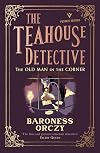
Mysteries! There is no such thing as a mystery in connection with any crime, provided intelligence is brought to bear upon its investigation. So says a rather down-at-heel elderly gentleman to young Polly Burton of the Evening Observer, in the corner of the ABC teashop on Norfolk Street one afternoon. Once she has forgiven him for distracting her from her newspaper and luncheon, Miss Burton discovers that her interlocutor is as brilliantly gifted as he is eccentric - able to solve mysteries show more that have made headlines and baffled the finest minds of the police without once leaving his seat in the teahouse. As the weeks go by, she listens to him unravelling the trickiest of puzzles and solving the most notorious of crimes, but still one final mystery remains: the mystery of the old man in the corner himself. The Old Man in the Corner is a classic collection of mysteries featuring the Teahouse Detective - a contemporary of Sherlock Holmes, with a brilliant mind and waspish temperament to match that of Conan Doyle's creation. show lessTags
Recommendations


















Member Recommendations
ari.joki Non-typical detective work from the sidelines, not for the benefit of the police or a client. For Chesterton, please be warned that the author doesn't hide his abhorrence of atheism, which he calls skepticism.
Member Reviews
The Publisher Says: A classic collection of mysteries by the author of The Scarlet Pimpernel
Mysteries! There is no such thing as a mystery in connection with any crime, provided intelligence is brought to bear upon its investigation.
So says a rather down-at-heel elderly gentleman to young Polly Burton of the Evening Observer, in the corner of the ABC teashop on Norfolk Street one afternoon. Once she has forgiven him for distracting her from her newspaper and luncheon, Miss Burton discovers that her interlocutor is as brilliantly gifted as he is eccentric—able to solve mysteries that have made headlines and baffled the finest minds of the police without once leaving his seat in the teahouse. As the weeks go by, she listens to him show more unravelling the trickiest of puzzles and solving the most notorious of crimes, but still one final mystery remains: the mystery of the old man in the corner himself.
The Old Man in the Corner is a classic collection of mysteries, featuring the Teahouse Detective - a contemporary of Sherlock Holmes, with a brilliant mind and waspish temperament to match that of Conan Doyle's creation.
I RECEIVED A DRC FROM THE PUBLISHER VIA EDELWEISS+. THANK YOU.
My Review: The stories are much of a muchness when read at a gulp, so don't do that! Space them out, one a week or so, and they become less predictable and more pleasantly familiar. I made the mistake of gulping and paid the price of thinking, halfway through, that I would not be finishing the read. I took a long time off, and mirabile dictu, returned with a happy heart.
Pushkin Vertigo does a lot of excellent mystery publishing, though I suspect these very old-fashioned tales won't be bestsellers. They should please us Golden Agers who read Mary Roberts Rinehart.
Kindle editions are only $9.99, and honestly if read as they were originally published...occasionally...you can't have better value for money spent. show less
Mysteries! There is no such thing as a mystery in connection with any crime, provided intelligence is brought to bear upon its investigation.
So says a rather down-at-heel elderly gentleman to young Polly Burton of the Evening Observer, in the corner of the ABC teashop on Norfolk Street one afternoon. Once she has forgiven him for distracting her from her newspaper and luncheon, Miss Burton discovers that her interlocutor is as brilliantly gifted as he is eccentric—able to solve mysteries that have made headlines and baffled the finest minds of the police without once leaving his seat in the teahouse. As the weeks go by, she listens to him show more unravelling the trickiest of puzzles and solving the most notorious of crimes, but still one final mystery remains: the mystery of the old man in the corner himself.
The Old Man in the Corner is a classic collection of mysteries, featuring the Teahouse Detective - a contemporary of Sherlock Holmes, with a brilliant mind and waspish temperament to match that of Conan Doyle's creation.
I RECEIVED A DRC FROM THE PUBLISHER VIA EDELWEISS+. THANK YOU.
My Review: The stories are much of a muchness when read at a gulp, so don't do that! Space them out, one a week or so, and they become less predictable and more pleasantly familiar. I made the mistake of gulping and paid the price of thinking, halfway through, that I would not be finishing the read. I took a long time off, and mirabile dictu, returned with a happy heart.
Pushkin Vertigo does a lot of excellent mystery publishing, though I suspect these very old-fashioned tales won't be bestsellers. They should please us Golden Agers who read Mary Roberts Rinehart.
Kindle editions are only $9.99, and honestly if read as they were originally published...occasionally...you can't have better value for money spent. show less
This is a collection of detective stories written by Baroness Orczy who was also the author of “The Scarlet Pimpernel”. Each story is narrated by the “Old Man in the Corner” of a teashop in London. They are somewhat similar to the Sherlock Holmes mysteries, but are usually more realistic. And the reader has a fair chance of guessing the perpetrators of the crimes because the ol’ Baroness actually provides the clues you need to solve it yourself. It was also nice that some of the stories were about robberies rather than just about murders, unlike basically all modern detective fiction.
Some might think that the “Old Man in the Corner” is just a rip off of Sherlock Holmes stories because it was written in 1901 while S.H. show more started in 1887. BUT Arthur Conan Doyle was very blatantly ripping off Edgar Allan Poe’s amateur detective, C. Auguste Dupin from 1841. So if Doyle can do it, so can the Baroness!
In conclusion, if you are in the market for some old fashion, mostly unstressful, detective stories, then look no further. show less
Some might think that the “Old Man in the Corner” is just a rip off of Sherlock Holmes stories because it was written in 1901 while S.H. show more started in 1887. BUT Arthur Conan Doyle was very blatantly ripping off Edgar Allan Poe’s amateur detective, C. Auguste Dupin from 1841. So if Doyle can do it, so can the Baroness!
In conclusion, if you are in the market for some old fashion, mostly unstressful, detective stories, then look no further. show less
A female reporter has ongoing meetings in a teashop with a mysterious stranger who, like Sherlock and Mycroft Holmes, solves crimes by deductive reasoning, though for some reason never seems to aid the constabulary to ensure that crime is punished and the wrong suspect is not hanged. I found that the pattern got a bit wearisome towards the end, not sure if it was the stories or me. Overall, enjoyed this much and will likely hunt up another in the series at some point. There is one with Miss Elliott in the title... I feel I must read that one at least.
Simple and entertaining series of stories featuring an old man providing his own commentary on a number of "national" crimes to a young reporter who he meets in a teashop.
An afternoon of escapism, as twelve short mysteries are played out before the reader. It is only a matter of solving them before their final denoument!
An afternoon of escapism, as twelve short mysteries are played out before the reader. It is only a matter of solving them before their final denoument!
The old man in the corner is a logical "rationicationator" worthy to rival Sherlock Holmes. There is less action, as the old man prefers to not advice the officers of the law -- for reasons that are made clear later. The exposition of the cases, the logical examination of the evidence, and the masterly avoidance of hidden knowledge so typical of later Holmes and many Christie works.
The old man in the corner is much more interesting than the dashing Scarlet Pimpernel. The writing breaks the great rule of storytelling, that of showing not telling, but the telling is captivating.
The old man in the corner is much more interesting than the dashing Scarlet Pimpernel. The writing breaks the great rule of storytelling, that of showing not telling, but the telling is captivating.
This was under the "Detective" bookshelf on Gutenberg, but it's not quite so. Our lady reporter protagonist makes an odd acquaintance who fills her in on his theories of recent crimes. It's satisfying in that the twist to each one is moderately novel and well-explained. Though I'm all up for question-mark endings, it's nice to get a bunch of stories wrapped in a bow (including a fun surprise bow at the end).
This is one on my list of Orczy books to read, and if you have a version without the pictures do pop over the the Gutenberg version here and take a look at the one frontpiece illustration (it's the only illustration, actually).
Why am I reading Orczy? Ages ago I read the Scarlet Pimpernel and while Orczy is waaaay into the over-the-top melodrama, there's just something about her stories that I want to study. Not that I can quite put my finger on it. I can't say I'm fascinated or enthralled or anything - but I'm usually amused by her. I also am interested in her biography - she did not lead a dull life, that's for certain. It's likely that her prose will bore many folk to tears though, so I don't know that I'd recommend her to show more everyone.
Anyway, this series of stories is about The Old Man, who apparently has no name, and who is forever bumping into our heroine Polly, lady journalist, in a cafe or drug store. In these meetings he proceeds to tell her about a notable mystery (which as a journalist she usually has heard of and has opinions about) and his solution of it. He also has an uncontrollable habit of knotting and unknotting a piece of string while he talks. Yes, symbolism, we get it - untying the mystery, right? But then I never said Orczy was subtle. Also the Old Man is somewhat goofy looking and wears suits that amuse onlookers.
Here's the problem, for those of us who like mysteries. Part of the solution of the mystery - in the case of a crime - is usually the bringing of the guilty to justice. But nope, not in these stories. And that is primarily what leaves me annoyed - I like to see the guilty punished - depending on the case of course, and who you end up feeling sympathy for. But so far everyone's getting away with it, and no action occurs to actually solve the case in real life - these are only mental exercises of the Old Man. Currently I'm only half way through the book so perhaps this will change.
Here's a conversation between Polly and the Old Man, with the Old Man speaking the first lines quoted:
I should probably also add that it's really obvious what the solution to the mystery is going to be. Mostly because the cast of characters is usually small and thus the guilty party stands out like a sore thumb.
...I like to post quotes like the following because 1) we need to be reminded how casually certain words were used (especially for people not familiar with this) and 2) I do like to alert people who don't normally read old books to what they may bump into in literature of the times.
...And I did not see the surprise coming! I was all into the pattern of the mysteries and spotting the guilty and - well, let's just say that the end of the series of stories was nicely tied up. Heh. show less
Why am I reading Orczy? Ages ago I read the Scarlet Pimpernel and while Orczy is waaaay into the over-the-top melodrama, there's just something about her stories that I want to study. Not that I can quite put my finger on it. I can't say I'm fascinated or enthralled or anything - but I'm usually amused by her. I also am interested in her biography - she did not lead a dull life, that's for certain. It's likely that her prose will bore many folk to tears though, so I don't know that I'd recommend her to show more everyone.
Anyway, this series of stories is about The Old Man, who apparently has no name, and who is forever bumping into our heroine Polly, lady journalist, in a cafe or drug store. In these meetings he proceeds to tell her about a notable mystery (which as a journalist she usually has heard of and has opinions about) and his solution of it. He also has an uncontrollable habit of knotting and unknotting a piece of string while he talks. Yes, symbolism, we get it - untying the mystery, right? But then I never said Orczy was subtle. Also the Old Man is somewhat goofy looking and wears suits that amuse onlookers.
Here's the problem, for those of us who like mysteries. Part of the solution of the mystery - in the case of a crime - is usually the bringing of the guilty to justice. But nope, not in these stories. And that is primarily what leaves me annoyed - I like to see the guilty punished - depending on the case of course, and who you end up feeling sympathy for. But so far everyone's getting away with it, and no action occurs to actually solve the case in real life - these are only mental exercises of the Old Man. Currently I'm only half way through the book so perhaps this will change.
Here's a conversation between Polly and the Old Man, with the Old Man speaking the first lines quoted:
Chapter XXI - The Dublin MysteryI feel like Orczy is trying to do a Sherlock Holmes here, and though Holmes was very much the bored observer (until there was a puzzle to intrigue him) he also had a strong sense of justice and fairness, such that he would get involved to make the guilty pay, or at least help the innocent who were unjustly accused. The Old Man seems happy just to solve the puzzle and otherwise not get involved. Weird. Though of course there's no reason the police should listen to him if he did go to them (which is probably why he always repeated that bit about being an amateur), but Holmes certainly manged to get around that issue.
(59% in, in my ebook)
"...Personally I don't wonder that the police were completely at sea. If a member of that highly estimable force happened to be as clever as the clever author of that forged will, we should have very few undetected crimes in this country."
"That is why I always try to persuade you to give our poor ignorant police the benefit of your great insight and wisdom," said Polly, with a smile.
"I know," he said blandly, "you have been most kind in that way, but I am only an amateur. Crime interests me only when it resembles a clever game of chess, with many intricate moves which all tend to one solution, the checkmating of the antagonist—the detective force of the country. Now, confess that, in the Dublin mystery, the clever police there were absolutely checkmated."
"Absolutely."
I should probably also add that it's really obvious what the solution to the mystery is going to be. Mostly because the cast of characters is usually small and thus the guilty party stands out like a sore thumb.
...I like to post quotes like the following because 1) we need to be reminded how casually certain words were used (especially for people not familiar with this) and 2) I do like to alert people who don't normally read old books to what they may bump into in literature of the times.
Chapter XXV - The PrisonerNot to most horrible example casual racism - for that I'll point you to my review of The Wisdom of Father Brown.
(69% in, in the ebook version)
"Do you care for the seaside?" asked the man in the corner when he had finished his lunch. "I don't mean the seaside at Ostend or Trouville, but honest English seaside with nigger minstrels, three-shilling excursionists, and dirty, expensive furnished apartments, where they charge you a shilling for lighting the hall gas on Sundays and sixpence on other evenings. Do you care for that?"
...And I did not see the surprise coming! I was all into the pattern of the mysteries and spotting the guilty and - well, let's just say that the end of the series of stories was nicely tied up. Heh. show less
Members
- Recently Added By
Lists

Books mentioned in Julian Symons’ Bloody Murder
438 works; 6 members

Best Mysteries With a Historical Setting
292 works; 160 members

Haycraft Queen Cornerstones
181 works; 3 members

Must Read Detective Stories (Nick Fuller)
278 works; 2 members
Author Information

214+ Works 14,685 Members
46+ Works 756 Members
All Editions
Awards and Honors
Notable Lists
Series

Work Relationships
Common Knowledge
- Canonical title
- The Old Man In The Corner
- Original publication date
- 1908
- People/Characters
- Old Man in the Corner; Miss Polly Burton; Polly Burton
- Important places
- London, England, UK; York, North Yorkshire, England, UK; Liverpool, England, UK; Edinburgh, Scotland, UK; Dublin, Ireland; ABC Tea-Shop, Norfolk Street, Strand, London, England, UK
- Dedication
- To my dear Uncle and Aunt
Count and Countess Wass of Czege
In remembrance
of many happy days spent
in Transylvania
October, 1908
To
my dear Uncle and Aunt
Count and Countess Wass of Czege
in remembrance of many happy days
spent in Transylvania
October, 1908 - First words
- The man in the corner pushed aside his glass, and leant across the table.
- Last words
- (Click to show. Warning: May contain spoilers.)She has never set eyes on the man in the corner from that day to this.
- Blurbers
- Queen, Ellery
- Original language
- English
- Disambiguation notice
- "The Old Man in the Corner: Twelve Mysteries", edited by E. F. Bleiler, published by Dover with the ISBN 0-486-23972-1, is a selection of 12 stories from all the Old Man stories unique to Dover, not a reprint of the 1909 volu... (show all)me titled "The Old Man in the Corner."
This is the 1909 volume and should not be combined with the Dover reprint.
"The Old Man in the Corner: Twelve Mysteries", edited by E. F. Bleiler, published by Dover with the ISBN 0-486-23972-1, is a selection of 12 stories from all the Old Man stories unique to Dover, not a reprint of the 1909 volu... (show all)me titled "The Old Man in the Corner."
Pushkin Vertigo reprinted the 1909 edition in 2018 (ISBN: 978-1-78227-523-7).
Classifications
Statistics
- Members
- 289
- Popularity
- 111,669
- Reviews
- 12
- Rating
- (2.99)
- Languages
- 5 — Chinese, Dutch, English, French, Italian
- Media
- Paper, Audiobook, Ebook
- ISBNs
- 46
- UPCs
- 1
- ASINs
- 20