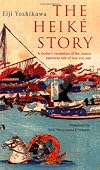
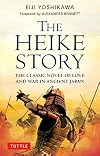
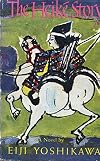
The Heike Story
by Eiji Yoshikawa
On This Page
Description
The Heike Story is a modern translation of a Japanese classic. Kyoto in the twelfth century was a magnificent city, but crime, disorder, and lust were rampant. The people were abused by the nobility, while armed Buddhist monks terrorized court and commoner alike. In despair, the Emperor called upon the Heike and Genji clans to quell civil disturbances. Although the clans succeeded, they quarreled over the spoils of war and plunged the country into a century of warfare. The Heike Story show more describes the rise to power of Kiyomori of the Heike clan during this turbulent time. From a youth sunk in poverty, Kiyomori eventually rose to become the Emperor's Chief Councilor. Although he was a gentle, enlightened man, he left a trail of bloodshed and ruin in his wake. The strange twists of Kiyomori's fate are the core of this epic novel. Its exotic atmosphere, narrative power, pageantry, and poetry will enthrall readers and provide an entertaining introduction to an important source of Japanese culture. This new edition features a foreword by Dr. Davinder Bhowmik that introduces this celebrated author and book to modern readers. show lessTags
Recommendations








Member Reviews
The Heiké Story is a modern (1956) retelling of the The Heiké Monogatari, a Japanese epic from the thirteenth century that related the feudal wars that had raged throughout Japan during the previous centuries between the powerful, Heiké, Fujiwara and Genji clans. The action of Yoshikawa's modernization takes place during the 12th century, and centers around the maturation, education, rise to power and reign of Heita Kiyomori of the Heiké. (Reminiscent somewhat of watching Prince Hal grow to become Henry V.) The original epic, as we're told in the helpful translator's afterward, is essentially a chronicle of "the deeds of warriors and princes." Yoshikawa brings the story to a personal level, following the lives of several characters show more in both the dueling Heiké and Genji clans, also portraying the subservient lives that the culture's women were forced to endure. There are some battle scenes, to be sure, and these are pretty well done, without much graphic gore. But the dominant themes of Yoshikawa's narrative are clearly the burdens of power, the tragedy and futility of war, and the folly of human (particularly male) pride, as personified by the warrior class, whose members refuse to foreswear vengeance and bloodshed even when they know that the resulting wars will lead to suffering, starvation, disease and death for thousands of innocent people. Still, we spend time with characters working to mute these cultural imperatives, and the power of both family and romantic love is a theme that runs through the narrative, as well. According to the historical translator's afterward, the influence of the clans and the warrior culture in Japan endured right through the events of World War II, and those events clearly influenced Yoshikawa's work.
It was a little frustrating to read in the afterward that the translation (by Fuki Wooyenaka Uramatsu) was more than a straight Japanese to English translation: "It would be more accurate to call it an English version, since with the author's generous consent, The Heiké Story has been modified considerably for Western readers. Much tat is significant and of great interest to a Japanese audience familiar with the historical setting has been omitted in Translation; entire chapters have been condense and a large number of sub-plots and subsidiary characters entirely left out. This translation is therefore only a partial one and fails to do justice to the complexity and diversity of the original. None the less, it is the translator's fervent with that The Heiké Story will give Western readers an opportunity to share some of the delight that it gives readers here and also provide a diverting introduction to Japan and the Japanese." We are also told that at the time of the publishing, Yoshikawa had only completed about 2/3 of his rewriting of The Heiké Monogatari. All this is kind of frustrating to read after the event, but on the other hand, I guess I'd say that the 621 pages that are presented here were actually quite enough for me. So all in all I'd say that the author and translator had accomplished their stated mission with this publication, as I found The Heiké Story in the version I read to be engaging enough to be enjoyable in the reading and interesting in its historical context as well. Whether Yoshikawa ever finished his retelling of the epic I don't know. I assume it would be easy enough to find out, but I'll leave that research to others. show less
It was a little frustrating to read in the afterward that the translation (by Fuki Wooyenaka Uramatsu) was more than a straight Japanese to English translation: "It would be more accurate to call it an English version, since with the author's generous consent, The Heiké Story has been modified considerably for Western readers. Much tat is significant and of great interest to a Japanese audience familiar with the historical setting has been omitted in Translation; entire chapters have been condense and a large number of sub-plots and subsidiary characters entirely left out. This translation is therefore only a partial one and fails to do justice to the complexity and diversity of the original. None the less, it is the translator's fervent with that The Heiké Story will give Western readers an opportunity to share some of the delight that it gives readers here and also provide a diverting introduction to Japan and the Japanese." We are also told that at the time of the publishing, Yoshikawa had only completed about 2/3 of his rewriting of The Heiké Monogatari. All this is kind of frustrating to read after the event, but on the other hand, I guess I'd say that the 621 pages that are presented here were actually quite enough for me. So all in all I'd say that the author and translator had accomplished their stated mission with this publication, as I found The Heiké Story in the version I read to be engaging enough to be enjoyable in the reading and interesting in its historical context as well. Whether Yoshikawa ever finished his retelling of the epic I don't know. I assume it would be easy enough to find out, but I'll leave that research to others. show less
I was a bit annoyed to read in the 'about the author' section at the end how this English version of this novel was adjusted for Western readers- most Western readers who would read a 600 pg historical novel on Japan would probably appreciate the chapters and subplots and details that were cut, and it is rather patronizing to assume otherwise. That said, the novel is well written and readable, and while there are a lot of very similar names and complicated character relationships to keep track of, and characters change names regularly, this book was no harder to follow than Tolkien's Silmarillion or Jordan's Wheel of Time series. Without knowing what was left out, I can't know for sure whether the story would be richer, but there did show more not seem to be gaping holes where chapters were cut, and the story was fairly seamless. It ends rather abruptly, but does convey the sense that we already know what will happen, since the names change but the wars look pretty much the same from one generation to the next. I did wish there were more maps, since so much of the story relies on geography and the layouts of towns and cities. show less
Cette chronique est celle de la région de Kyôto, au XIIe siècle. Son héros, Kiyomori de Heiké, est un jeune garçon pauvre que nous allons suivre jusqu'à son accession aux plus hautes fonctions. Entre l'enfance en guenilles et l'ivresse du pouvoir, il y a des années de combats sanglants, contre les moines armés qui terrorisent la province, mais aussi contre le clan des Genji, grands rivaux des Heiké. Au gré des saisons, au fil des années, revit une société où raffinement et violence se côtoient pour former un étonnant contraste. On tue son frère si l'honneur l'exige, puis on se retire dans la montagne pour écrire des poèmes et dessiner des fleurs... Fascinés, nous avançons pas à pas dans ce monde inconnu et nous show more prenons à rêver: qui serions-nous aujourd'hui, si nos ancêtres étaient nés du côté du soleil levant ? show less
Nov 21, 2010French
Ratings
Members
- Recently Added By
Author Information

169+ Works 4,136 Members
Awards and Honors
Notable Lists
Work Relationships
Is a retelling of
Common Knowledge
- Canonical title
- The Heike Story
- Original title
- Shin Heiké Monogatari; 新平家物語
- Original publication date
- 1956
- Important places
- Kyoto, Japan
Classifications
- Genres
- Fiction and Literature, General Fiction, Historical Fiction
- DDC/MDS
- 895 — Literature & rhetoric Literatures of other languages Literatures of East and Southeast Asia
- LCC
- PZ3 .Y8238 .H — Language and Literature Fiction and juvenile belles lettres Fiction and juvenile belles lettres Fiction in English
- BISAC
Statistics
- Members
- 207
- Popularity
- 157,098
- Reviews
- 3
- Rating
- (4.15)
- Languages
- English, French, Spanish
- Media
- Paper
- ISBNs
- 6
- ASINs
- 8