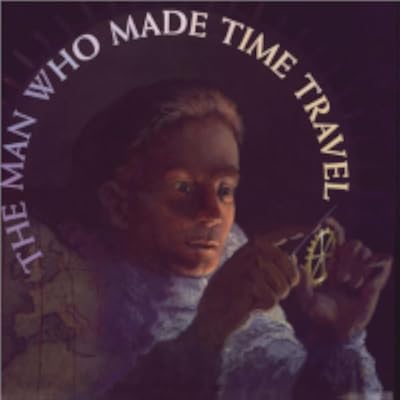
The Man Who Made Time Travel
by Kathryn Lasky
On This Page
Description
Describes the need for sailors to be able to determine their position at sea and the efforts of John Harrison, an eighteenth century man who spent his life refining instruments to enable them to do this.Tags
Recommendations





Member Reviews
A good introduction to the subject and excellent illustrations, but the text is somewhat sloppy. It gives the impression that the writer understood the drama but not the technology.
Summary:
Back in the day, many ships were lost at sea because they didnt know where they were. Longitude was immeasurable and this made it hard to get across the ocean. Many sailors died and this had to end. In 1714 the Longitude Prize (20,000 pounds) was offered to anyone who could create a reliable way to measure Longitude. Many scientists attempted it but it came down to a clockmaker who came up with this concept that changed history. He made five designs and the last one was the best. He was never officially awarded the prize or named the winner, he did however, get the money.
Personal Reaction:
I liked this book because it was very interesting and my husband is in the Navy and spends a lot of time on ships. It was nice to see a piece show more of history, I only wish the man got credit for what he invented.
Classroom Extension Ideas:
1. Design your own clock and explain how it would work.
2. Learn about coordinates and traveling on the sea show less
Back in the day, many ships were lost at sea because they didnt know where they were. Longitude was immeasurable and this made it hard to get across the ocean. Many sailors died and this had to end. In 1714 the Longitude Prize (20,000 pounds) was offered to anyone who could create a reliable way to measure Longitude. Many scientists attempted it but it came down to a clockmaker who came up with this concept that changed history. He made five designs and the last one was the best. He was never officially awarded the prize or named the winner, he did however, get the money.
Personal Reaction:
I liked this book because it was very interesting and my husband is in the Navy and spends a lot of time on ships. It was nice to see a piece show more of history, I only wish the man got credit for what he invented.
Classroom Extension Ideas:
1. Design your own clock and explain how it would work.
2. Learn about coordinates and traveling on the sea show less
Summary: The story of John Harrison and his life long quest to create a reliable timepiece that would allow sailors to determine their exact longitude while at sea.
Response: Immensely interesting and readable. This book explains the difficulty early sailors had in navigating the seas because they had no way to accurately measure their longitude. Wonderful illustrations take a complicated subject and make it approachable for a child in primary grades.
Classroom connection: Show various clocks set to different times and determine the longitude of the different time zones.
Response: Immensely interesting and readable. This book explains the difficulty early sailors had in navigating the seas because they had no way to accurately measure their longitude. Wonderful illustrations take a complicated subject and make it approachable for a child in primary grades.
Classroom connection: Show various clocks set to different times and determine the longitude of the different time zones.
This is a book about the history of the clock and how it became so portable. The problem started out when sailors were not able to determine their position at sea. Was there an easy way to do so? There were many proposed solutions; many of which were absurd but a man named John Harrison decided that he could build a clock that would keep time even at sea. He was an uneducated young man and was not taken seriously at first but as he improved his model his clocks became more and more accurate. He was competing for a very large sum of money but it took him decades to receive his prize. Eventually he did and he is responsible for many explorers finding their way.
I found this book a little dry. It was long but contained good information. The show more illustrations were not compelling and I barely noticed them although the ones at the end that showed the cocks in more detail were interesting. I feel like it could have been a very interesting subject had the author reduced the length but I am glad to have read it and learned the history behind the clocks that we now have. I had no idea! show less
I found this book a little dry. It was long but contained good information. The show more illustrations were not compelling and I barely noticed them although the ones at the end that showed the cocks in more detail were interesting. I feel like it could have been a very interesting subject had the author reduced the length but I am glad to have read it and learned the history behind the clocks that we now have. I had no idea! show less
In the 1700s, there was no way to know the time or the longitude when sailors were out on the sea. A group of men came together and created the Board of Longitude, which would award somone the prize of 20,000 pounds if they created a way to keep time and longitude on a sailing ship. Many men tried, and failed, but John Harrison had a love for clocks and bells, so he gave it a shot. After making five clocks, that worked almost perfectly, he was never awarded the prize. Harrison petitioned the king, and when he saw that the clock had all of the requirements and worked, he gave the prize to Harrison. Harrison dedicated his entire adult life to making the perfect clock for sailors to use on their ship. This book could be used to teach about show more nonfiction, biographies, or a chain of events, because it tells the story in chronological order, and goes through Harrisons' entire life. show less
Lovely picture book about Harrison's quest to measure longitude. Great example to children: we're all capable of great things.
It was only 300 years ago, that ships where still having difficulty navigating the high seas, and were constantly getting lost due to not being able to triangulate their location with accurate longitude (east-west bearing). After a great tragedy at sea, Brittan set a large prize for anyone who could solve this problem. John Harrison, a simple carpenter made it his life's work to build a clock that could keep accurate time at sea, allowing distances to be measured by comparing them to Brittan's time. It takes his who life and several tries, but John is successful an has given the world what is now know as a chronometer. I recommend this book to anyone who enjoys learning new things, and enjoying a good book.
Members
- Recently Added By
Published Reviews
ThingScore 100
Carolyn Mott Ford (Children's Literature)
This is a story of persistence. John Harrison was a man who never gave up his dream despite problems, setbacks and the failure of others to take him seriously. In 1714 the British Parliament passed the Longitude Act, offering a prize of 20,000 pounds sterling for a workable way to measure longitude. Many British ships were sinking because, although show more sailors could measure latitude, the north-south position, they had no means to measure longitude, the east-west position and could not know their ship's true location. The entries ranged from the scientific to the ridiculous, but a young carpenter combined his working experience with his independent study of mathematics and the laws of motion to solve the problem. John Harrison fashioned a sea clock, known as H1. Harrison was accorded little respect because of his lack of education, but he continued to improve the sea clock. His fifth model, H5, met the requirements, but the prize money was not given to the now seventy-nine-year old John Harrison until his son William presented the case to King George III. The Longitude Prize was never officially awarded but any reader of this story will be aware that John Harrison was a winner. He never gave up, he accomplished what he set out to do and he made voyages safer for all seafarers. 2003, Melanie Kroupa Books/Farrar Straus and Giroux, $17.00. Ages 8 to 12. show less
This is a story of persistence. John Harrison was a man who never gave up his dream despite problems, setbacks and the failure of others to take him seriously. In 1714 the British Parliament passed the Longitude Act, offering a prize of 20,000 pounds sterling for a workable way to measure longitude. Many British ships were sinking because, although show more sailors could measure latitude, the north-south position, they had no means to measure longitude, the east-west position and could not know their ship's true location. The entries ranged from the scientific to the ridiculous, but a young carpenter combined his working experience with his independent study of mathematics and the laws of motion to solve the problem. John Harrison fashioned a sea clock, known as H1. Harrison was accorded little respect because of his lack of education, but he continued to improve the sea clock. His fifth model, H5, met the requirements, but the prize money was not given to the now seventy-nine-year old John Harrison until his son William presented the case to King George III. The Longitude Prize was never officially awarded but any reader of this story will be aware that John Harrison was a winner. He never gave up, he accomplished what he set out to do and he made voyages safer for all seafarers. 2003, Melanie Kroupa Books/Farrar Straus and Giroux, $17.00. Ages 8 to 12. show less
added by kthomp25
Carolyn Phelan (Booklist, Mar. 1, 2003 (Vol. 99, No. 13))
Executed in an oversize format, which allows plenty of space for Hawkes' dramatic pictures, this tells the story of John Harrison, an eighteenth-century clock maker who solved the problem of tracking longitude in shipboard navigation. The book begins with a shipwreck, dramatizing the fact that the longitude puzzle was not just a matter show more of academic or economic importance but a life-and-death question for those who sailed the seas. After introducing some of the more absurd solutions proposed for tracking longitude, the discussion turns to young John Harrison, who was 21 when the Longitude Prize was offered by the British Parliament. Lasky shows how, over the next half-century, Harrison worked to design and perfect a timepiece that would earn the prize. Not every child will understand the technical challenge discussed; however, the text makes absorbing reading both for its sidelights on history and for the personal drama portrayed. Harrison emerges as an admirable, if idiosyncratic, individual whose story is well worth telling. Atmospherically lit and richly colored, Hawkes' large-scale paintings are often striking in their overall effects and intriguing in their details. Unexpected elements of humor in both the historical narrative and the illustrations lighten what could have been a dry, weighty treatment in other hands. Teachers looking for books for units on inventors will find this a memorable choice for reading aloud. Category: Books for Middle Readers--Nonfiction. 2003, Farrar/Melanie Kroupa, $17. Gr. 3-5 show less
Executed in an oversize format, which allows plenty of space for Hawkes' dramatic pictures, this tells the story of John Harrison, an eighteenth-century clock maker who solved the problem of tracking longitude in shipboard navigation. The book begins with a shipwreck, dramatizing the fact that the longitude puzzle was not just a matter show more of academic or economic importance but a life-and-death question for those who sailed the seas. After introducing some of the more absurd solutions proposed for tracking longitude, the discussion turns to young John Harrison, who was 21 when the Longitude Prize was offered by the British Parliament. Lasky shows how, over the next half-century, Harrison worked to design and perfect a timepiece that would earn the prize. Not every child will understand the technical challenge discussed; however, the text makes absorbing reading both for its sidelights on history and for the personal drama portrayed. Harrison emerges as an admirable, if idiosyncratic, individual whose story is well worth telling. Atmospherically lit and richly colored, Hawkes' large-scale paintings are often striking in their overall effects and intriguing in their details. Unexpected elements of humor in both the historical narrative and the illustrations lighten what could have been a dry, weighty treatment in other hands. Teachers looking for books for units on inventors will find this a memorable choice for reading aloud. Category: Books for Middle Readers--Nonfiction. 2003, Farrar/Melanie Kroupa, $17. Gr. 3-5 show less
added by kthomp25
Lists

Children's Books About Science and Math
461 works; 12 members
Author Information

198+ Works 58,914 Members
Kathryn Lasky was born in Indianapolis, Indiana on June 24, 1944, and knew she wanted to be a writer from the time she was ten. She majored in English in college and after graduation wrote for various magazines and taught. Her first book, I Have Four Names for My Grandfather, was published while she was teaching. She has written more than seventy show more books for children and young adults on everything from historical fiction to picture books and nonfiction books including the Dear America books and the Guardians of Ga'Hoole series. Many of her books are illustrated with photographs by her husband, Christopher Knight. She has received many awards for her titles including Sugaring Time which was a Newberry Honor Book; The Night Journey which won the National Jewish Book Award for Children; Pageant which was an ALA Notable Children's book; and Beyond the Burning Time which was an ALA Best Book for Young Adults. She has also received the Washington Post's Children's Book Guild Award for her contribution to children's nonfiction. She lives in Cambridge, Massachusetts. (Bowker Author Biography) show less
All Editions
Awards and Honors
Distinctions
Common Knowledge
- Canonical title
- The Man Who Made Time Travel
Classifications
Statistics
- Members
- 217
- Popularity
- 150,812
- Reviews
- 10
- Rating
- (3.79)
- Languages
- English, Spanish
- Media
- Paper, Audiobook
- ISBNs
- 7
- ASINs
- 5