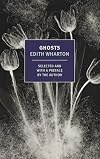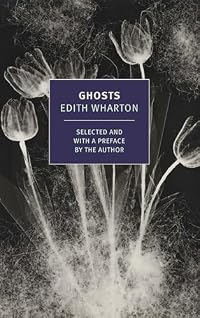
Ghosts
by Edith Wharton
On This Page
Description
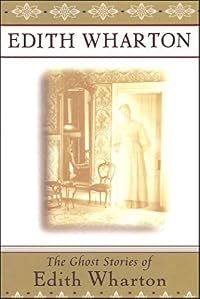
"No history of the American uncanny tale would be complete without mention of Edith Wharton, yet many of Wharton's most dedicated admirers are unaware that she was a master of the form. In fact, one of Wharton's final literary acts was assembling Ghosts, a personal selection of her own most chilling stories, written between 1902 and 1937. In "The Lady's Maid's Bell," the earliest tale included here, a servant's dedication to her mistress continues from beyond the grave, and in "All Souls," show more the last story Wharton wrote, an elderly woman treads the permeable line between life and the hereafter. In all her writing, Wharton's great gift was to mercilessly illuminate the motives of men and women, and her ghost stories never stray far from the preoccupations of the living, using the supernatural to investigate such worldly matters as violence within marriage, the horrors of aging, the rot at the root of new fortunes, the darkness that stares back from the abyss of one's own soul. These are stories to "send a cold shiver down one's spine," not to terrify, and as Wharton explains her in her preface, her goal in writing them was to counter "the hard grind of modern speeding-up" by preserving that ineffable space of "silence and continuity" which is not merely the prerogative of humanity, but--"in the fun of the shudder"--its delight"-- show lessTags
Recommendations













Member Reviews
Edith Wharton put this together shortly before her death, collecting ghost stories that she had written over a number of years. Perhaps ghost stories is a misnomer. Not all feature ghosts in the truest sense. Macabre might be more accurate. Strange things happen, people disappear, and, very occasionally, a ghost is seen. The last story, "A Bottle of Perrier," is not really a ghost story at all, but certainly is disquieting with a shocking end. Wharton's style is the stories chief attraction.
The settings are drawn from Wharton's own experience: country houses of the well to do in New York/New England, England, Brittany. One is set in a townhouse in NYC; another something of an outlier, in an old Crusader castle in an unspecified Middle show more Eastern location. Many feature people on the edge of society--a private secretary, a lady's maid, an old maid sister--and their travails.
Wharton excels at describing a scene and creating an atmosphere:
"I knew nothing of the history of Kerfol--I was new to Brittany, and Lanrivain had never mentioned the name to me till the day before--but one couldn't as much as glance at that pile without feeling in it a long accumulation of history. What kind of history I was not prepared to guess: perhaps only that sheer weight of many associated lives and deaths which gives a majesty to all old houses."
(one of the best description of the feeling of old houses that I have read)
"The blast that swept him came off New Hampshire snow-fields and ice-hung forests. It seemed to have traversed interminable leagues of frozen silence, filling them with the same cold roar and sharpening its edge against the same bitter black-and-white landscape."
(reminds of waiting for an evening bus in the blizzards of '77 and '78)
Narrative, however, is not Wharton's strength. Some of the longer stories drag a bit (which undermines the suspense). Endings are sometimes lame; "Mr Jones" has good build up, but the end is a model of irresolution. I started to give this four stars, but decided that in the end style can only take you so far.
And Friday the thirteenth is a good day to finish a book of ghost stories. show less
The settings are drawn from Wharton's own experience: country houses of the well to do in New York/New England, England, Brittany. One is set in a townhouse in NYC; another something of an outlier, in an old Crusader castle in an unspecified Middle show more Eastern location. Many feature people on the edge of society--a private secretary, a lady's maid, an old maid sister--and their travails.
Wharton excels at describing a scene and creating an atmosphere:
"I knew nothing of the history of Kerfol--I was new to Brittany, and Lanrivain had never mentioned the name to me till the day before--but one couldn't as much as glance at that pile without feeling in it a long accumulation of history. What kind of history I was not prepared to guess: perhaps only that sheer weight of many associated lives and deaths which gives a majesty to all old houses."
(one of the best description of the feeling of old houses that I have read)
"The blast that swept him came off New Hampshire snow-fields and ice-hung forests. It seemed to have traversed interminable leagues of frozen silence, filling them with the same cold roar and sharpening its edge against the same bitter black-and-white landscape."
(reminds of waiting for an evening bus in the blizzards of '77 and '78)
Narrative, however, is not Wharton's strength. Some of the longer stories drag a bit (which undermines the suspense). Endings are sometimes lame; "Mr Jones" has good build up, but the end is a model of irresolution. I started to give this four stars, but decided that in the end style can only take you so far.
And Friday the thirteenth is a good day to finish a book of ghost stories. show less
58. Ghosts by Edith Wharton
OPD: 1937
format: 253-page Nook ebook
acquired: October 2 read: Oct 9-27 time reading: 10:37, 2.5 mpp
rating: 4
genre/style: short stories theme: Wharton
locations: New York, Dorset, Kent, other places in Europe,
about the author: 1862-1937. Born Edith Newbold Jones on West 23rd Street, New York City. Relocated permanently to France after 1911.
I don't want to leave the wrong impression. Wharton was a lovely writer, with vivid characters, and a sense of place, especially opulent places. That is all here, making this a nice little collection. And I thoroughly enjoyed it. It's not, mind you, a collection of amazing, or of particularly haunting stories.
Each story, well except maybe one, but mostly each story drew me show more in, and had me curious, and sometime tensely turning pages. And then each finished in a way that was little unsatisfying. But yet, even knowing this, I would happily hop into the next story.
This is recommended for anyone who wants a light fun sample of Wharton's writing.
2023
https://www.librarything.com/topic/354226#8268185 show less
OPD: 1937
format: 253-page Nook ebook
acquired: October 2 read: Oct 9-27 time reading: 10:37, 2.5 mpp
rating: 4
genre/style: short stories theme: Wharton
locations: New York, Dorset, Kent, other places in Europe,
about the author: 1862-1937. Born Edith Newbold Jones on West 23rd Street, New York City. Relocated permanently to France after 1911.
I don't want to leave the wrong impression. Wharton was a lovely writer, with vivid characters, and a sense of place, especially opulent places. That is all here, making this a nice little collection. And I thoroughly enjoyed it. It's not, mind you, a collection of amazing, or of particularly haunting stories.
Each story, well except maybe one, but mostly each story drew me show more in, and had me curious, and sometime tensely turning pages. And then each finished in a way that was little unsatisfying. But yet, even knowing this, I would happily hop into the next story.
This is recommended for anyone who wants a light fun sample of Wharton's writing.
2023
https://www.librarything.com/topic/354226#8268185 show less
4.5/5 Wharton's criterion for a good ghost story was the following: “If it sends a cold shiver down one‘s spine, it has done its job and done it well“ (The New Yorker). I couldn't agree more. Her gorgeous writing also built up the suspense, which kept me turning those pages. Most of her endings were ambiguous--like perhaps the amorphous idea of a ghost itself. All were Gothic but also representative of the 20th-century psychological approach to horror.
Ratings
Members
- Recently Added By
Lists

Backlisted
109 works; 9 members

Books Read in 2022
5,164 works; 111 members

Ghost Stories That Thrill Us
256 works; 115 members
Author Information

378+ Works 63,654 Members
Edith Wharton was a woman of extreme contrasts; brought up to be a leisured aristocrat, she was also dedicated to her career as a writer. She wrote novels of manners about the old New York society from which she came, but her attitude was consistently critical. Her irony and her satiric touches, as well as her insight into human character, show more continue to appeal to readers today. As a child, Wharton found refuge from the demands of her mother's social world in her father's library and in making up stories. Her marriage at age 23 to Edward ("Teddy") Wharton seemed to confirm her place in the conventional role of wealthy society woman, but she became increasingly dissatisfied with the "mundanities" of her marriage and turned to writing, which drew her into an intellectual community and strengthened her sense of self. After publishing two collections of short stories, The Greater Inclination (1899) and Crucial Instances (1901), she wrote her first novel, The Valley of Decision (1902), a long, historical romance set in eighteenth-century Italy. Her next work, the immensely popular The House of Mirth (1905), was a scathing criticism of her own "frivolous" New York society and its capacity to destroy her heroine, the beautiful Lily Bart. As Wharton became more established as a successful writer, Teddy's mental health declined and their marriage deteriorated. In 1907 she left America altogether and settled in Paris, where she wrote some of her most memorable stories of harsh New England rural life---Ethan Frome (1911) and Summer (1917)---as well as The Reef (1912), which is set in France. All describe characters forced to make moral choices in which the rights of individuals are pitted against their responsibilities to others. She also completed her most biting satire, The Custom of the Country (1913), the story of Undine Spragg's climb, marriage by marriage, from a midwestern town to New York to a French chateau. During World War I, Wharton dedicated herself to the war effort and was honored by the French government for her work with Belgian refugees. After the war, the world Wharton had known was gone. Even her Pulitzer Prize-winning novel, The Age of Innocence (1920), a story set in old New York, could not recapture the former time. Although the new age welcomed her---Wharton was both a critical and popular success, honored by Yale University and elected to The National Institute of Arts and Letters---her later novels show her struggling to come to terms with a new era. In The Writing of Fiction (1925), Wharton acknowledged her debt to her friend Henry James, whose writings share with hers the descriptions of fine distinctions within a social class and the individual's burdens of making proper moral decisions. R.W.B. Lewis's biography of Wharton, published in 1975, along with a wealth of new biographical material, inspired an extensive reevaluation of Wharton. Feminist readings and reactions to them have focused renewed attention on her as a woman and as an artist. Although many of her books have recently been reprinted, there is still no complete collected edition of her work. (Bowker Author Biography) show less
Series
Belongs to Publisher Series
Work Relationships
Contains
Common Knowledge
- Canonical title*
- Fantasmi
- Original title
- Ghosts
- Original publication date
- 1937
- Dedication*
- Affido i miei spettrali passeggeri in piedi
con gratitudine e ammirazione
a Walter de la Mare - First words*
- "Credi nei fantasmi?" è l'inutile domanda che viene posta spesso da chi è incapace di sentire le influenze spettrali a chi... no, non dico a chi vede i fantasmi, che è sempre una rarità, ma piuttosto… a chi sente i fant... (show all)asmi, ovvero chi è sensibile a correnti invisibili che si trovano in certi luoghi e in certe ore.
- Last words*
- (Click to show. Warning: May contain spoilers.)La luna, che oscillava in alto sopra i bastioni, mandò una lancia di luce penetrante nell'oscurità colpevole del pozzo.
- Original language
- English
- Disambiguation notice
- Do not combine with different collections of ghost stories. This one contains: Author's Preface; All Souls'; The Eyes; Afterward; The Lady Maid's Bell; Kerfol; The Triumph of Night; Miss Mary Pask; Bewitched; Mr. Jones; Pomeg... (show all)ranate Seed; A Bottle of Perrier.
*Some information comes from Common Knowledge in other languages. Click "Edit" for more information.
Classifications
Statistics
- Members
- 208
- Popularity
- 156,639
- Reviews
- 3
- Rating
- (3.64)
- Languages
- English, Italian
- Media
- Paper, Audiobook, Ebook
- ISBNs
- 6
- ASINs
- 1