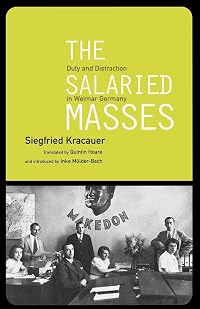
The Salaried Masses: Duty and Distraction in Weimar Germany
by Siegfried Kracauer
On This Page
Description
First published in 1930, Siegfried Kracauer's work was greeted with great acclaim and soon attained the status of a classic. The object of his inquiry was the new class of salaried employees who populated the cities of Weimar Germany. Spiritually homeless, divorced from all custom and tradition, these white-collar workers sought refuge in entertainment--or the "distraction industries," as Kracauer put it--but, only three years later, were to flee into the arms of Adolf Hitler. Eschewing the show more instruments of traditional sociological scholarship, but without collapsing into mere journalistic reportage, Kracauer explores the contradictions of this caste. Drawing on conversations, newspapers, adverts and personal correspondence, he charts the bland horror of the everyday. In the process he succeeds in writing not just a prescient account of the declining days of the Weimar Republic, but also a path-breaking exercise in the sociology of culture which has sharp relevance for today. show lessTags
Recommendations















































Member Reviews
Members
- Recently Added By
Author Information

63+ Works 1,572 Members
Series
Belongs to Publisher Series
Common Knowledge
- Original title
- Die Angestellten aus dem neuesten Deutschland
- Original publication date
- 1930
- Important places
- Germany; Berlin, Deutschland
- Important events
- Weimar Republic
- Dedication*
- A Benno Reifenberg,
in segno della nostra amicizia
e del nostra lavoro in comune - Quotations*
- [...] una comunità non si forma mai come surrogato per il crollo delle forze psichiche, consiste di uomini la cui esistenza è determinata in modo decisivo daconoscenze giuste. Certi sintomi paiono dimostrare che le organizz... (show all)azioni sindacali degli impiegati tendono a considerare il collettivismo in quanto tale come fonte della loro forza. [...] L'uomo cge sta solo di fronte alla morte non entra nel collettivo che vorrebbe erigersi a scopo finale. Non lo forma la comunità in quanto tale, ma la conoscenza, attraverso la quale può nascere anche la comunità. L'atteggiamento dottrinario con cui le associazioni di impiegati peccano non di rado contro la realtà umana conferma, indirettamente, che il collettivo come tale è una costruzione falsa. Ciò che importa non è che le istuzioni siano cambiate, è che gli uomini cambino le istituzioni.
- Original language
- German
- Disambiguation notice*
- 'Die Angesllten' erschien in Fortsetzungen 1929 in der Frankfurter Zeitung, dort untertitelt 'Aus dem neuesten Deutschland'
*Some information comes from Common Knowledge in other languages. Click "Edit" for more information.
Classifications
- Genres
- Nonfiction, Sociology, History, Literature Studies and Criticism, General Nonfiction
- DDC/MDS
- 305.55609430904 — Society, government, & culture Social sciences, sociology & anthropology Social group - Age, Gender, Ethnicity People by social and economic levels Middle Class
- LCC
- HD8039 .M4 .G35 — Social sciences Industries. Land use. Labor Industries. Land use. Labor Labor. Work. Working class By industry or trade
- BISAC
Statistics
- Members
- 120
- Popularity
- 272,290
- Reviews
- 1
- Rating
- (3.80)
- Languages
- 5 — English, German, Italian, Slovenian, Spanish
- Media
- Paper
- ISBNs
- 6
- UPCs
- 1