On This Page
Description
A once selfish giant welcomes the children to his previously forbidden garden and is eventually rewarded by an unusual little child.Tags
Recommendations















Member Recommendations

Member Reviews
I read this book because Jacqueline Woodson referred to it in "Black Girl Dreaming" as the book that so inspired her, that she read it again and again until she memorized it. Of course I had to see how hard it might be to memorize...as well as how engaging the story might be. It reads like a fairy tale, which must have helped make it memorizable. However, I am baffled with the Christian references coming from Oscar Wilde. I have a hard time separating the witty playwright from the...moralizing? sentimental? storyteller. I'm curious to know more about what inspired him to write this story. As for what about it excited Jacqueline Woodson, I wonder if connected with her childhood experiences as a Jehovah's Witness.
Being reminded of this short story is a recollection of my childhood, or at least of the day when I was a 14 year old plowing through an Oscar Wilde complete anthology book. I remember thinking that it was so much better than the pithy and pathetic morals found in the Smurfs and for some really odd reason, I wanted a really great moral story with lots of protein when I at this one. I smacked my lips and felt full afterwards.
Of course, like many compulsive word-overeaters, I ignored my appetite and continued the anthology until I wasn't even digesting the moral verbiage anymore. I suppose I ought to have stopped at this story, at least for a day or two. Too much of a good thing can still give you a stomach-ache.
I know, I know! I'm show more speaking of Oscar Wilde, Mr. Wit and convicted homosexual, and I'm propping him up as a moral giant! And yet, his writing shows us his depth and I appreciated it. The Selfish-Giant was one of my favorite short stories of his. I only gave it 4 stars because it kinda felt too preachy. :) show less
Of course, like many compulsive word-overeaters, I ignored my appetite and continued the anthology until I wasn't even digesting the moral verbiage anymore. I suppose I ought to have stopped at this story, at least for a day or two. Too much of a good thing can still give you a stomach-ache.
I know, I know! I'm show more speaking of Oscar Wilde, Mr. Wit and convicted homosexual, and I'm propping him up as a moral giant! And yet, his writing shows us his depth and I appreciated it. The Selfish-Giant was one of my favorite short stories of his. I only gave it 4 stars because it kinda felt too preachy. :) show less
While a giant is away, children come and play in his wonderful garden. When the giant returns, however, he is selfish, and blocks off the garden from all the children. The flowers and trees miss the children, and fall into an eternal winter. When the children sneak in to play in the garden again, the giant sees how Spring comes again, and changes his mind. He allows all the children to play in his garden, and even helps one little boy climb a tree. However, the little boy never comes again and the children do not know who he is. One day, the giant sees the little boy and rushes out to greet him. Upon seeing that the boy is wounded, he is enraged, but the boy tells him that the wounds were made from love. The giant is in awe of the boy show more and asks who he is, and the boy tells him that as the selfish giant allowed him to play in the giant's paradise, the boy will allow the giant to play in his. The other children come to the garden to find that the giant - no longer selfish - has passed away and is covered in white blossoms.
Oscar Wilde flirted with Christianity, particularly Catholicism, off and on throughout his life, and many of his fairy tales for children reflect his interest. The Selfish Giant in particular is explicit with the connection: the little boy has wounds on the palms of his hands (stigmata), and even the language changes to reflect the more Biblical leanings, as when the giant asks, "Who art thou?". The overtly Christian message may turn off many people, but the story is well told in a distinctly fairy tale rhythm and language.
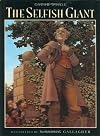
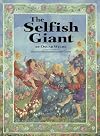
Most impressive are the paintings. Ritva Voutila chose to render the scenes on every page in oils, which is unusual for a children's book. However, the results are astounding. The style is classical, with a distinct feel of Hieronymus Bosch. Each painting is lavishly attentive: tiny people, meticulous in their detailing, lurk above stone arches and in the corners of rooftops. The scenes of the flowers blossoming in the garden are a sensation of color painted in rich blues and vibrant purples. Watercolors or acrylics could have never captured the lushness of hue that Voutila achieves on every page. Not surprisingly, the paintings took over a year to complete, but the talent shines on every page. At times, the paintings can feel dark; there is a distinct gloomy pall over them. However, for a child or adult who loves poring over paintings to capture the most tiny detail, Voutila's work is bound to amaze and capture their attention. show less
Oscar Wilde flirted with Christianity, particularly Catholicism, off and on throughout his life, and many of his fairy tales for children reflect his interest. The Selfish Giant in particular is explicit with the connection: the little boy has wounds on the palms of his hands (stigmata), and even the language changes to reflect the more Biblical leanings, as when the giant asks, "Who art thou?". The overtly Christian message may turn off many people, but the story is well told in a distinctly fairy tale rhythm and language.
Most impressive are the paintings. Ritva Voutila chose to render the scenes on every page in oils, which is unusual for a children's book. However, the results are astounding. The style is classical, with a distinct feel of Hieronymus Bosch. Each painting is lavishly attentive: tiny people, meticulous in their detailing, lurk above stone arches and in the corners of rooftops. The scenes of the flowers blossoming in the garden are a sensation of color painted in rich blues and vibrant purples. Watercolors or acrylics could have never captured the lushness of hue that Voutila achieves on every page. Not surprisingly, the paintings took over a year to complete, but the talent shines on every page. At times, the paintings can feel dark; there is a distinct gloomy pall over them. However, for a child or adult who loves poring over paintings to capture the most tiny detail, Voutila's work is bound to amaze and capture their attention. show less
Oscar Wilde! Oscar Wilde is awesome, right? Not to mention decadent, unconventional...?
Well, you wouldn't guess it from this tale.
This is a saccharine, moralizing story with a bit of a priggish attitude. The Christian allegory could not be more blatant if this were a retelling of a Bible verse.
A selfish giant doesn't allow any of the children to play in his garden. Because of his attitude, the garden becomes a bleak place where spring never blooms. But he eventually learns to mend his ways, and reaps the rewards...
Well, you wouldn't guess it from this tale.
This is a saccharine, moralizing story with a bit of a priggish attitude. The Christian allegory could not be more blatant if this were a retelling of a Bible verse.
A selfish giant doesn't allow any of the children to play in his garden. Because of his attitude, the garden becomes a bleak place where spring never blooms. But he eventually learns to mend his ways, and reaps the rewards...
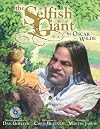
It’s always interesting to me when someone can take a classic and remake it to the point where current generations can find beauty within it. Honestly, it’s been a long time since I have taken the time to go through a book with my son. He’s 10 years old now and he reads long chapter books without the need for me to help him, so when Noteworthy Books asked me to review The Selfish Giant by Oscar Wilde, Musical Adaptation by Dan Goeller, Illustrations by Chris Beatrice and Narration by Martin Jarvis, I jumped at the chance to not only spend time with my little guy, but also to read a good book and hear some beautiful music.
I wasn’t disappointed.
The Selfish Giant is a heartfelt story that addresses topics such as selfishness, show more kindness, forgiveness and redemption. I hadn’t heard the story before so I was somewhat shocked at the ending, which was of a Christian nature. It wasn’t a bad ending, just unexpected for me because I hadn’t heard the story before and wasn’t expecting it. The included cd is narrated with the resounding and pleasant voice of Martin Jarvis, who kept me and my son enchanted throughout the 30-minute narration of the book. As a parent, holding a book for that length of time isn’t a pleasant experience, so I caution you to snuggle up with your kid of any age and put a book under your arm. It’s as good an excuse as any to snuggle.
The illustrations in the book are truly beautiful and thoughtfully done. You can almost feel them coming to life as the story is being read to you. My son couldn’t take his eyes off of them and I found myself looking through them for little bits and pieces of the story as well as unnoted commentary. In a book that accompanies a 30-minute cd, the illustrations must be interesting and aesthetically pleasing if you are going to look at a page for any length of time and these were both.
My favorite part of the book was the music. I’m a music lover and I found the music to be perfectly matched to the tone of the book. A few times I found myself closing my eyes to just enjoy what I was hearing and allow myself to drift into the story. At the end of the story there is a 4 minute up-beat montage of children’s music that is just beautiful and my son couldn’t stop bobbing his head to it. I can think of no better compliment.
In conclusion, the book was beautifully put together and definitely worth the time spent putting it together. This would make a wonderful bedtime book. What caught my attention, as well, is that the included cd would be wonderful for a long car ride with little ones. As a parent, getting kids to be quiet for 30 minutes on a long ride is a true blessing and with the beautiful music, excellent narration and amazing pictures, this would be a wonderful addition to any backseat package. Parents, this is a must have and not just for little ones. Like I said, mine is 10 and it held his attention for 30 minutes. Well done. show less
I wasn’t disappointed.
The Selfish Giant is a heartfelt story that addresses topics such as selfishness, show more kindness, forgiveness and redemption. I hadn’t heard the story before so I was somewhat shocked at the ending, which was of a Christian nature. It wasn’t a bad ending, just unexpected for me because I hadn’t heard the story before and wasn’t expecting it. The included cd is narrated with the resounding and pleasant voice of Martin Jarvis, who kept me and my son enchanted throughout the 30-minute narration of the book. As a parent, holding a book for that length of time isn’t a pleasant experience, so I caution you to snuggle up with your kid of any age and put a book under your arm. It’s as good an excuse as any to snuggle.
The illustrations in the book are truly beautiful and thoughtfully done. You can almost feel them coming to life as the story is being read to you. My son couldn’t take his eyes off of them and I found myself looking through them for little bits and pieces of the story as well as unnoted commentary. In a book that accompanies a 30-minute cd, the illustrations must be interesting and aesthetically pleasing if you are going to look at a page for any length of time and these were both.
My favorite part of the book was the music. I’m a music lover and I found the music to be perfectly matched to the tone of the book. A few times I found myself closing my eyes to just enjoy what I was hearing and allow myself to drift into the story. At the end of the story there is a 4 minute up-beat montage of children’s music that is just beautiful and my son couldn’t stop bobbing his head to it. I can think of no better compliment.
In conclusion, the book was beautifully put together and definitely worth the time spent putting it together. This would make a wonderful bedtime book. What caught my attention, as well, is that the included cd would be wonderful for a long car ride with little ones. As a parent, getting kids to be quiet for 30 minutes on a long ride is a true blessing and with the beautiful music, excellent narration and amazing pictures, this would be a wonderful addition to any backseat package. Parents, this is a must have and not just for little ones. Like I said, mine is 10 and it held his attention for 30 minutes. Well done. show less
A literary fairy tale in which a giant keeps children out of his garden only to realize that it is they who bring the seasons and joy to it. At the end, a small child with "the wounds of love" takes him to the eternal garden.
The Selfish Giant is a story about a giant who discovers two children playing in his garden. He then builds a wall around his garden to prevent them from playing. His garden remains in winter without the children. When he hears music outside of his window, he sees the children playing in his garden and winter has disappeared. He's overcome with joy, but when he notices a little boy who's trying to climb a tree he helps him onto the tree. I don't want to give more than that away as a way to intrigue others to read the story. I'd recommend this story for children to learn how being selfish prevents individuals from fully enjoying life.
Members
- Recently Added By
Lists

Books Read in 2024
4,623 works; 126 members

HMS: Make Your Child a Lover of Books, Ages 7-9
52 works; 2 members
Author Information

1,759+ Works 120,565 Members
Flamboyant man-about-town, Oscar Wilde had a reputation that preceded him, especially in his early career. He was born to a middle-class Irish family (his father was a surgeon) and was trained as a scholarship boy at Trinity College, Dublin. He subsequently won a scholarship to Magdalen College, Oxford, where he was heavily influenced by John show more Ruskin and Walter Pater, whose aestheticism was taken to its radical extreme in Wilde's work. By 1879 he was already known as a wit and a dandy; soon after, in fact, he was satirized in Gilbert and Sullivan's Patience. Largely on the strength of his public persona, Wilde undertook a lecture tour to the United States in 1882, where he saw his play Vera open---unsuccessfully---in New York. His first published volume, Poems, which met with some degree of approbation, appeared at this time. In 1884 he married Constance Lloyd, the daughter of an Irish lawyer, and within two years they had two sons. During this period he wrote, among others, The Picture of Dorian Gray (1891), his only novel, which scandalized many readers and was widely denounced as immoral. Wilde simultaneously dismissed and encouraged such criticism with his statement in the preface, "There is no such thing as a moral or an immoral book. Books are well written or badly written. That is all." In 1891 Wilde published A House of Pomegranates, a collection of fantasy tales, and in 1892 gained commercial and critical success with his play, Lady Windermere's Fan He followed this comedy with A Woman of No Importance (1893), An Ideal Husband (1895), and his most famous play, The Importance of Being Earnest (1895). During this period he also wrote Salome, in French, but was unable to obtain a license for it in England. Performed in Paris in 1896, the play was translated and published in England in 1894 by Lord Alfred Douglas and was illustrated by Aubrey Beardsley. Lord Alfred was the son of the Marquess of Queensbury, who objected to his son's spending so much time with Wilde because of Wilde's flamboyant behavior and homosexual relationships. In 1895, after being publicly insulted by the marquess, Wilde brought an unsuccessful slander suit against the peer. The result of his inability to prove slander was his own trial on charges of sodomy, of which he was found guilty and sentenced to two years of hard labor. During his time in prison, he wrote a scathing rebuke to Lord Alfred, published in 1905 as De Profundis. In it he argues that his conduct was a result of his standing "in symbolic relations to the art and culture" of his time. After his release, Wilde left England for Paris, where he wrote what may be his most famous poem, The Ballad of Reading Gaol (1898), drawn from his prison experiences. Among his other notable writing is The Soul of Man under Socialism (1891), which argues for individualism and freedom of artistic expression. There has been a revived interest in Wilde's work; among the best recent volumes are Richard Ellmann's, Oscar Wilde and Regenia Gagnier's Idylls of the Marketplace , two works that vary widely in their critical assumptions and approach to Wilde but that offer rich insights into his complex character. (Bowker Author Biography) show less

Oscar Wilde has a Legacy Library. Legacy libraries are the personal libraries of famous readers, entered by LibraryThing members from the Legacy Libraries group.
Some Editions
Awards and Honors
Series

Work Relationships
Is contained in
Is retold in
Has the adaptation
Common Knowledge
- Canonical title
- The Selfish Giant
- Original publication date
- 1888
- People/Characters
- Selfish Giant
- Related movies
- The Selfish Giant (2013 | IMDb)
Classifications
Statistics
- Members
- 919
- Popularity
- 28,976
- Reviews
- 20
- Rating
- (4.06)
- Languages
- 18 — Armenian, Catalan, Dutch, English, French, German, Greek, Hungarian, Italian, Japanese, Korean, Norwegian (Bokmål), Norwegian, Portuguese, Russian, Spanish, Swedish, Thai
- Media
- Paper, Audiobook, Ebook
- ISBNs
- 118
- ASINs
- 17