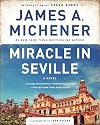
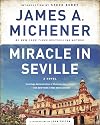
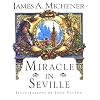
Miracle in Seville
by James A. Michener
On This Page
Description
Fiction. Literature. Thriller. Historical Fiction. HTML:James A. Michener, the Pulitzer Prize–winning master of the historical saga, returns to his beloved Spain with this magical novel of Seville at Easter time, a season of splendid pageantry, thrilling bullfights, deep piety—and the possibility of miracles. An American sports journalist has come to the city to report on efforts by the rancher Don Cayetano Mota to revive his once-proud line of bulls. Not only does Mota pray to the show more Virgin Mary, but he takes on herculean acts of devotion during the solemn celebrations of Holy Week. With treacherous enemies waiting in the ring, Mota’s struggle taps deeply into life’s mysteries, shaking the newspaperman’s skepticism and opening his eyes to the wonder of faith. Featuring illustrations by the American bullfighter John Fulton, Miracle in Seville is Michener at his most dazzling.Praise for Miracle in Seville
“Eloquent . . . a vintage demonstration of Michener storytelling . . . What emerges most strongly is the real admiration and awe that lovers of bullfighting feel for the toro bravo.”—The New York Times Book Review
“Compelling . . . told with an understanding of and appreciation for a culture where matadors are artists and miracles are possible.”—Chicago Tribune. show less
Tags
Recommendations





























Member Reviews
Unlike Michener's lengthy sagas, this novel was short at 127 pages (3 hours 25 minutes). This novel follows an American newspaper reporter who travels to Seville to report on the efforts of an old bull rancher who is trying to revive his brand in the ring. It's also the story of the pageantry of Easter. Good feeling of time and place, although the characters and plot line are not as well as developed as Michener's usually are, probably due to the shortness of the book. I listened to this on audio.
Michener captures the mysticism that endures in the bullfighting culture of Spain. This short work draws the reader in and then enchants and entrances with its characterization and action. Michener is known for his epics and this story of his is often forgotten. It surely shouldn't be!
Ratings
Members
- Recently Added By
Author Information

207+ Works 49,310 Members
James A. Michener, 1907 - 1997 James Albert Michener was born on February 3, 1907 in Doylestown, Pa. He earned an A.B. from Swarthmore College, an A.M. from Colorado State College of Education, and an M.A. from Harvard University. He taught for many years and was an editor for Macmillan Publishing Company. His first book, "Tales of the South show more Pacific," derived from Michener's service in the Pacific in World War II, won the 1947 Pulitzer Prize for Fiction and was the basis for the Rodgers and Hammerstein Broadway musical South Pacific, which won the 1950 Pulitzer Prize for Drama. Michener completed close to 40 novels. Some other epic works include "Hawaii," "Centennial," "Space," and "Caribbean." He also wrote a significant amount of nonfiction including his autobiography "The World Is My Home." Among his many other honors, James Michener received the Presidential Medal of Freedom in 1977. He was married to Patti Koon in 1935; they divorced in 1948. He married Vange Nord in 1948 (divorced 1955) and Mari Yoriko Sabusawa in 1955 (deceased 1994). He died in 1997 in Austin, Texas. (Bowker Author Biography) show less
Common Knowledge
- Canonical title
- Miracle in Seville
- Original publication date
- 1995
- People/Characters
- Shenstone (narrator); Cayetano Mota (breeder); Paco Camino (matador); El Viti (matador); El Cordobes (matador); Lazaro Lopez (matador) (show all 13); Father Eduardo; Maria Concepcion Mota; Ines Mota; Magdalena Lopez (gypsy); Mary; Torpedo (toro); Diego Puerta
- Important places
- Seville, Andalusia, Spain; El Puerto de Santa María, Andalusia, Spain; Mota Ranch, Andalusia, Spain; Maestranza, Seville, Andalusia, Spain (Plaza de toros de la Real Maestranza de Caballería de Sevilla); Málaga, Andalusia, Spain; Triana, Seville, Andalusia, Spain
- First words
- For two good reasons I did not cable New York a true account of what transpired during that spring feria in Seville twenty years ago.
- Last words
- (Click to show. Warning: May contain spoilers.)Their duel was a draw.
Classifications
- Genres
- Fiction and Literature, General Fiction, Historical Fiction
- DDC/MDS
- 813.54 — Literature & rhetoric American literature in English American fiction in English 1900-1999 1945-1999
- LCC
- PS3525 .I19 .M56 — Language and Literature American literature American literature Individual authors 1900-1960
- BISAC
Statistics
- Members
- 181
- Popularity
- 180,789
- Reviews
- 2
- Rating
- (3.71)
- Languages
- English
- Media
- Paper, Audiobook, Ebook
- ISBNs
- 12
- ASINs
- 5