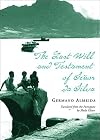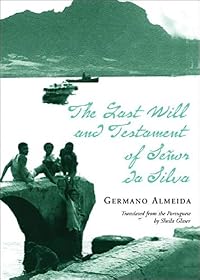
The Last Will and Testament of Senhor da Silva Araújo
by Germano Almeida
On This Page
Description
Everyone in Cape Verde knows Senor da Silva. Successful entrepreneur, owner of the island's first automobile, a most serious, upright, and self-made businessman, Senor da Silva is the local success story. Born an orphan, he never married, he never splurged--one good suit was good enough for him--and he never wandered from the straight and narrow. Or so everyone thought. But when Senor da Silva's 387-page Last Will and Testament is read aloud--a marathon task on a hot afternoon which exhausts show more reader after reader--there's eye-opening news, and not just for the smug nephew so certain of inheriting all Senor da Silva's property. With his will, Senor da Silva leaves a memoir that is a touching web of elaborate self-deceptions. He desired so ardently to prosper, to be taken seriously, to join (perhaps, if they'll have him) the exclusive Gremio country club, and, most of all, to be a good man. And yet, shady deals, twists of fate, an illegitimate child: such is the lot of poor, self-critical Senor da Silva. A bit like Calvino's Mr. Palomar in his attention to protocol and in his terror of life's passions; a bit like Calvino's Mr. Palomar in his attention to protocol and in his terror of life's passions; a bit like Svevo's Zeno (a little pompous, a little old-fashioned, and often hapless), Senor da Silva moves along a deliciously blurry line between farce and tragedy: a self-important buffoon becomes a fully human, even tragic, figure in the arc of this hilarious and touching novel - translated into Spanish, German, French, Italian, Dutch, Norwegian, Swedish, and now, at last, English. show lessTags
Recommendations




















Member Reviews
When Napumoceno da Silva Araújo dies, he leaves a 387-page will. Not because he has that many things to will - he just decided to write his memoir in the will. And as the laws of Cabo Verde require the will to be read in full, everyone needs to listen to his life story. This will is the base of the novel but the author decides to use it creatively - we get parts of it but we also get additional parts of the story and sometimes a different viewpoint to what the document narrates.
At the start of the novel we learn that the expected heir, his nephew Carlos, is not really the heir - Napumoceno has an illegitimate daughter and he uses the will to announce that to the world. As the novel progresses, it becomes clear that we are dealing with show more an unreliable narrator in pretty much any point of the story (multiple narrators, never separated cleanly - even the excerpts from documents are not clearly marked). But every additional page brings new details, often contradicting what we think we know. Some of these details come from the detailed notebooks which the deceased wrote and the daughter found; some come from the memories of the still living people.
By the end of the story, the facade of the respected Senhor da Silva Araújo had cracked irreparably. What people thought of him, what he believed about himself and what the reality had been cannot be reconciled. The reader is left to decide in some places what the truth actually is and in other places, there is no way to read the story without seeing evil in it (even if some of the still living insist that this is not the case).
The writing is a bit convoluted (not just because of the selected style of not marking the narrator) and often circles around. But it does paint the story of a country that is almost unknown - Napumoceno dies in 1984 (the novel is published in Portuguese in 1989) and his will had been last updated in 1974, the year before Cabo Verde's independence. That allows us a glimpse into these days and the life in ex-colony - both immediately before it became independent and a few years after that. It verges on the farcical in some places and remains painfully mundane in others - and I wish the balance was actually a bit better between these moments.
Overall, an interesting book mainly because of where it is set and where the author is from. show less
At the start of the novel we learn that the expected heir, his nephew Carlos, is not really the heir - Napumoceno has an illegitimate daughter and he uses the will to announce that to the world. As the novel progresses, it becomes clear that we are dealing with show more an unreliable narrator in pretty much any point of the story (multiple narrators, never separated cleanly - even the excerpts from documents are not clearly marked). But every additional page brings new details, often contradicting what we think we know. Some of these details come from the detailed notebooks which the deceased wrote and the daughter found; some come from the memories of the still living people.
By the end of the story, the facade of the respected Senhor da Silva Araújo had cracked irreparably. What people thought of him, what he believed about himself and what the reality had been cannot be reconciled. The reader is left to decide in some places what the truth actually is and in other places, there is no way to read the story without seeing evil in it (even if some of the still living insist that this is not the case).
The writing is a bit convoluted (not just because of the selected style of not marking the narrator) and often circles around. But it does paint the story of a country that is almost unknown - Napumoceno dies in 1984 (the novel is published in Portuguese in 1989) and his will had been last updated in 1974, the year before Cabo Verde's independence. That allows us a glimpse into these days and the life in ex-colony - both immediately before it became independent and a few years after that. It verges on the farcical in some places and remains painfully mundane in others - and I wish the balance was actually a bit better between these moments.
Overall, an interesting book mainly because of where it is set and where the author is from. show less
I originally thought this book was a mildly humorous story revealing the true nature of the deceased, which was so different than how he saw himself. I was bothered by his decision to hate his nephew mostly based on reasons he conjured in his own mind, when his nephew most likely made the ungrateful old man wealthy.
I had to force myself to keep reading after Sr. Araújo raped his housekeeper and thus beget his daughter. No way around it, he raped her. When asked about it after he’d died, she said she wanted it. But that’s not how it was depicted when it happened. In fact, I rather despise the author for making this excuse later in the book. The man was a self-important, despicable, ungrateful character who used women repeatedly for show more his own gratification. show less
I had to force myself to keep reading after Sr. Araújo raped his housekeeper and thus beget his daughter. No way around it, he raped her. When asked about it after he’d died, she said she wanted it. But that’s not how it was depicted when it happened. In fact, I rather despise the author for making this excuse later in the book. The man was a self-important, despicable, ungrateful character who used women repeatedly for show more his own gratification. show less
Though this book is quite short, only about 150 pages, it left me with a lot to think about. It tells the life story of one Napumoceno da Silva Araujo, a respected and rich Cape Verdean businessman who died at a very old age and left a shocking will that was over 300 pages long and bequeathed everything to the bastard daughter no one knew he had.
The story, particularly in the beginning describing the funeral, is extremely funny in its way. It is also notable for showing how various people's perceptions of the same events can be so different as to be come almost unrecognizable. Araujo's nephew, for instance, through his eyes is a slimy, arrogant, deceitful Uriah Heep type character, but his newfound cousin Maria de Graca sees him as a show more likable enough man who bears no grudge against her, and they become friendly with each other.
Normally I can't stand overlong paragraphs and run-on sentences in books, and this book had plenty of both, but for some reason I didn't mind this time. I didn't think I would enjoy reading this nearly as much as I did, and I wish I could seek out the author's other novels, but none of them have been translated into English. show less
The story, particularly in the beginning describing the funeral, is extremely funny in its way. It is also notable for showing how various people's perceptions of the same events can be so different as to be come almost unrecognizable. Araujo's nephew, for instance, through his eyes is a slimy, arrogant, deceitful Uriah Heep type character, but his newfound cousin Maria de Graca sees him as a show more likable enough man who bears no grudge against her, and they become friendly with each other.
Normally I can't stand overlong paragraphs and run-on sentences in books, and this book had plenty of both, but for some reason I didn't mind this time. I didn't think I would enjoy reading this nearly as much as I did, and I wish I could seek out the author's other novels, but none of them have been translated into English. show less
A novel that's a kind of stream-of-consciousness paraphrase of the recitation of the very lengthy will of the Cape Verdean entrepreneur Senhor Da Silva Araújo and its aftermath. I'm not formally a fan of this style of prose, but even in translation it's clear that Germano Almeida's prose is deft enough to make it more pleasurable than tedious to read. However, it did feel like somewhat a book of two halves, with a shift in focus in the second half to something that I was less interested in.
Cape Verde. This was a fast, enjoyable book, a very funny novel whose absent protagonist leaves a will that runs to hundreds of pages. Embedded in the will and other characters' associations to it or tangents from it is the dead man's apologia pro vita sua. While sometimes he seems to be on the level, at other times there is sufficient evidence that he is engaged in image management and has spun events as best he can, perhaps even disguising his real intentions from himself.
Upstanding citizen, entrepreneur, most serious Senor da Silva has passed away, but at the reading of his will, there are eye-opening news about his life for both his nephew and for the other people of the island. Wonderfully told story about how a seemingly stuffy patriarch had both an inner emotional life and a checkered past that nobody had suspected. A story told in reverse that reverses all expectations. A little dry, but quite beautiful.
Nella mia ignoranza, essendo Capo Verde di fronte al Senegal, non mi aspettavo di leggere un libro nella mia comfort zone sudamericana.
Il sig. Napumoceno lascia un testamento di 300 e passa pagine. L'apertura rivela aspetti sconosciuti di quest'uomo e attraverso questo e la perlustrazione della sua casa e dei taccuini, gli eredi e le persone con cui ha avuto rapporti, ne ricostruiscono la vita e non solo. Ne uscirà un ritratto malinconico e pieno di chiaroscuri.
Non ci si può non affezionare (e questo viene da quella che storce il naso a commenti del tipo "non ci sono personaggi con cui ho empatizzato") a questo pezzo di m., ma comunque ho delle perplessità che non mi fanno gridare al capolavoro (da qui le 3 stelle, che poi sarebbero show more anche 3,5). Prima tra tutte, è corto. Ma se fosse stato più lungo, sarebbe risultato inconcludente e noioso? Mi sarei chiesta, e quindi, dove voleva andare a parare?
Il valore effettivo, e forse una raddrizzata al giudizio, lo vedremo tra qualche mese, se mi saranno rimaste attaccate le cose che mi hanno colpito. show less
Il sig. Napumoceno lascia un testamento di 300 e passa pagine. L'apertura rivela aspetti sconosciuti di quest'uomo e attraverso questo e la perlustrazione della sua casa e dei taccuini, gli eredi e le persone con cui ha avuto rapporti, ne ricostruiscono la vita e non solo. Ne uscirà un ritratto malinconico e pieno di chiaroscuri.
Non ci si può non affezionare (e questo viene da quella che storce il naso a commenti del tipo "non ci sono personaggi con cui ho empatizzato") a questo pezzo di m., ma comunque ho delle perplessità che non mi fanno gridare al capolavoro (da qui le 3 stelle, che poi sarebbero show more anche 3,5). Prima tra tutte, è corto. Ma se fosse stato più lungo, sarebbe risultato inconcludente e noioso? Mi sarei chiesta, e quindi, dove voleva andare a parare?
Il valore effettivo, e forse una raddrizzata al giudizio, lo vedremo tra qualche mese, se mi saranno rimaste attaccate le cose che mi hanno colpito. show less
Members
- Recently Added By
Published Reviews
ThingScore 75
Published in 2004 by New Directions, this is a short novel that seems slight at first but becomes unexpectedly affecting before the end. One of the few works of literature available from the African archipelago of Cape Verde, it tells the story of a local businessman backwards: beginning with his death.
added by kidzdoc
Lists

Cabo Verde
19 works; 1 member
Author Information

27 Works 260 Members
Some Editions
Awards and Honors
Common Knowledge
- Canonical title
- The Last Will and Testament of Senhor da Silva Araújo
- Original title
- O Testamento do Sr. Napumoceno da Silva Araújo
- Original publication date
- 1991; 2004-07-17 (US) (US)
- People/Characters
- Napumoceno da Silva Araújo; Maria da Graça; Carlos Araújo; Americo Fonseca; Adélia; Dona Jóia (show all 7); Dr. Scusa
- Important places
- Mindelo, São Vicente, Cape Verde; Lisbon, Portugal
- Related movies
- Napomuceno's Will (1997 | IMDb)
- First words
- The reading of the last will and testament of Sr. Napumoceno da Silva Araújo ate up a whole afternoon.
- Original language
- Portuguese
Classifications
- Genres
- Fiction and Literature, General Fiction
- DDC/MDS
- 869.342 — Literature & rhetoric Spanish Literature Literatures of Portuguese and Galician languages Portuguese fiction 20th Century 1945-1999
- LCC
- PQ9942.9 .A46 .T4713 — Language and Literature French, Italian, Spanish and Portuguese literatures Portuguese literature Provincial, local, colonial, etc.
- BISAC
Statistics
- Members
- 139
- Popularity
- 234,575
- Reviews
- 13
- Rating
- (3.16)
- Languages
- 10 — Danish, Dutch, English, French, German, Italian, Norwegian, Portuguese, Spanish, Swedish
- Media
- Paper, Ebook
- ISBNs
- 19
- ASINs
- 1