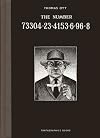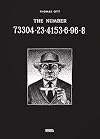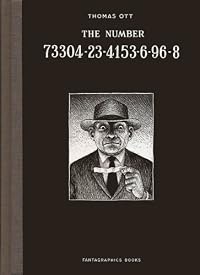
The Number 73304-23-4153-6-96-8
by Thomas Ott
On This Page
Description
When clearing up the cell of a prisoner who has been sentenced to death and subsequently executed, a prison guard finds a small piece of paper with a combination of numbers on it. On the spur of the moment, he puts it into his pocket. As the guard lives a solitary, monotonous life, the numbers on the paper awake his curiosity. To find out their hidden meaning could add a new meaning to his life as well, so the guard stumbles into situations in which the number or part of it seem to achieve a show more certain importance and offer him hints and possible solutions. And the numbers signal a radical change in his luck. He gets to know a woman, falls in love with her, and one night, in a casino, he wins a huge amount of money when gambling on these numbers. But the next morning, the woman and money have disappeared. The man goes in search of the woman and the money. But from that day on, his luck changes and the numbers bring him only bad luck, sending him inexorably into an abyss that he might not recover from" -- from publisher's web site. show lessTags
Recommendations





















Member Recommendations
Member Reviews
I'm getting to like the works of Thomas Ott. I came across them at the library, and the stark artwork and sturdy binding of his books impressed me. Those that I've read--or viewed, as the books emphasize the "graphic" in the graphic novel--tell strange, supernatural stories with a just a dash of horror. You can read these in mere minutes if that's your thing, but the stories are well-paced and the art is worth lingering over. In this particular tale, a man finds a scrap of paper bearing a sequence of numbers, and soon those numbers appear to be directing--or maybe just reflecting--the course of his life. Odd, macabre fun.
I picked this up on a whim in the library, because the lack of "real" title (just a string of numbers) caught my attention. Then I noticed it had no text at all, and was even more curious, so I stood there and read it in the comics rack of the library.
The art was really great, and the pure black & white drawings give it a sense of darkness, even when things are going well. I enjoyed the story being portrayed. But I give 4 stars rather than 5 because I could tell from very early on how a few things were going to go. Even with knowing that, though, there was enough creative original content telling the story that I was still plenty curious about how exactly things would happen. I'm definitely interested in seeing more of Ott's work after show more reading this. show less
The art was really great, and the pure black & white drawings give it a sense of darkness, even when things are going well. I enjoyed the story being portrayed. But I give 4 stars rather than 5 because I could tell from very early on how a few things were going to go. Even with knowing that, though, there was enough creative original content telling the story that I was still plenty curious about how exactly things would happen. I'm definitely interested in seeing more of Ott's work after show more reading this. show less
In the 1920s and 1930s, artists such as [author:Frans Masereel] (The Idea) and [author:Lynd Ward] (Gods' Man) used woodcuts to produce popular wordless novels which would go on to influence generations of illustrators. The Swiss artist Thomas Ott employs a similar style in his first novel-length work, The Number 73304-23-4153-6-96-8.
The creator of numerous short graphical stories, collected in [book:Cinema Panopticum], [book:Greetings From Hellville], and [book:Dead End], Ott relates here a powerful, Twilight Zone-styled tale of a series of numbers that grants desires to those who decipher the pattern. Following an execution, a prison guard finds a piece of paper with a sequence of numbers (the title's 73304-23-4153-6-96-8) left behind show more by the dead prisoner. The guard begins to see the numbers cropping up in his life (a clock, a phone number, cards, and even a dog's markings). As he follows the seemingly random numbers, the guard's luck begins to change. Previously a poor, lonely man, he soon comes into money, romance, and happiness, perhaps for the first time. Alas, all this fortune does not last, as the story veers off into surprisingly fantastical and creepy territory.
Ott employs a scratchboard process, a technique that uses sharp knives for etching into a thin layer of white china clay coated with black india ink (as opposed to the more labor-intensive woodcut method, where images are actually carved into a block of wood). His art has a warmth and depth of detail that forebears Masereel and Ward sometimes lacked. Without words, Ott artistically and expertly conveys feelings and clearly distinguishes every action. Text would only cloud the narrative.
From artistic, design, and narrative standpoints, Ott creates a masterpiece of contemporary graphic storytelling that knows no geographical or linguistic boundaries. Ushering in a major new talent, The Number 73304-23-4153-6-96-8 aptly demonstrates the power of Ott's creative vision, while leaving the reader hungry for more from this unique cartoonist.
This review originally appeared in The Austin Chronicle, July 11, 2008. show less
The creator of numerous short graphical stories, collected in [book:Cinema Panopticum], [book:Greetings From Hellville], and [book:Dead End], Ott relates here a powerful, Twilight Zone-styled tale of a series of numbers that grants desires to those who decipher the pattern. Following an execution, a prison guard finds a piece of paper with a sequence of numbers (the title's 73304-23-4153-6-96-8) left behind show more by the dead prisoner. The guard begins to see the numbers cropping up in his life (a clock, a phone number, cards, and even a dog's markings). As he follows the seemingly random numbers, the guard's luck begins to change. Previously a poor, lonely man, he soon comes into money, romance, and happiness, perhaps for the first time. Alas, all this fortune does not last, as the story veers off into surprisingly fantastical and creepy territory.
Ott employs a scratchboard process, a technique that uses sharp knives for etching into a thin layer of white china clay coated with black india ink (as opposed to the more labor-intensive woodcut method, where images are actually carved into a block of wood). His art has a warmth and depth of detail that forebears Masereel and Ward sometimes lacked. Without words, Ott artistically and expertly conveys feelings and clearly distinguishes every action. Text would only cloud the narrative.
From artistic, design, and narrative standpoints, Ott creates a masterpiece of contemporary graphic storytelling that knows no geographical or linguistic boundaries. Ushering in a major new talent, The Number 73304-23-4153-6-96-8 aptly demonstrates the power of Ott's creative vision, while leaving the reader hungry for more from this unique cartoonist.
This review originally appeared in The Austin Chronicle, July 11, 2008. show less
After an electrocution a slip of paper with a long number sequence is found on the floor. The executioner brings it home with him, and soon starts to see those numbers everywhere. The number sequence sets his life in completely new directions – wonderful at first, then more and more sinister.
Another wordless graphic novel, and an enjoyable one – if not up par with the total excellence of Shaun Tan’s book. Ott’s story is simple, yet chillingly strange and is told effectively is a crisp, realist style. I’d be happy to read more from this Swiss artist.
Another wordless graphic novel, and an enjoyable one – if not up par with the total excellence of Shaun Tan’s book. Ott’s story is simple, yet chillingly strange and is told effectively is a crisp, realist style. I’d be happy to read more from this Swiss artist.
Another wordless from Ott; enjoyed, wanted "more".
Wow! Bello, crudo, molto particolare. Mi ha ricordato molto Dylan Dog ❤️☔
Members
- Recently Added By
Lists

Books Read in 2022
5,164 works; 111 members
Author Information

25+ Works 629 Members
Series
Belongs to Publisher Series
Colecção Novela Gráfica (série V) (11)
Common Knowledge
- Original publication date
- 2008-03
- People/Characters
- Joe Perez; Mrs. V. Price; Lucky; Mr. Luckinsky; Executioner
- Important places
- USA
- Important events
- death penalty
- Epigraph
- Good people are always so sure they're right.
Barbara Graham
(Executed at San Quentin June 3, 1955) - Original language
- French
Classifications
Statistics
- Members
- 150
- Popularity
- 217,598
- Reviews
- 8
- Rating
- (4.08)
- Languages
- 9 — Czech, English, French, German, Italian, Portuguese, Spanish, Swedish, Turkish
- Media
- Paper
- ISBNs
- 15
- ASINs
- 1