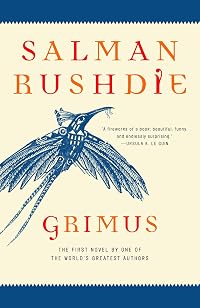
Grimus
by Salman Rushdie
On This Page
Description
Fantasy. Fiction. Literature. Historical Fiction. HTML:“A mixture of science fiction and folktale, past and future, primitive and present-day . . . Thunderous and touching.”–Financial Times
After drinking an elixir that bestows immortality upon him, a young Indian named Flapping Eagle spends the next seven hundred years sailing the seas with the blessing–and ultimately the burden–of living forever. Eventually, weary of the sameness of life, he journeys to the mountainous Calf show more Island to regain his mortality. There he meets other immortals obsessed with their own stasis and sets out to scale the island’s peak, from which the mysterious and corrosive Grimus Effect emits. Through a series of thrilling quests and encounters, Flapping Eagle comes face-to-face with the island’s creator and unwinds the mysteries of his own humanity. Salman Rushdie’s celebrated debut novel remains as powerful and as haunting as when it was first published more than thirty years ago.
“A book to be read twice . . . [Grimus] is literate, it is fun, it is meaningful, and perhaps most important, it pushes the boundaries of the form outward.”
–Los Angeles Times. show less
Tags
Recommendations






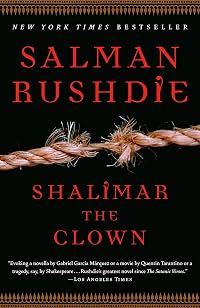
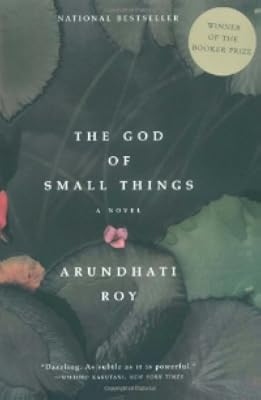

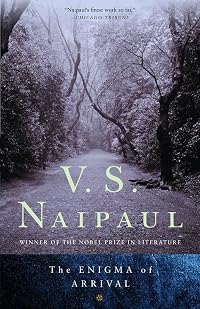








Member Recommendations

Member Reviews
I think what Rushdie was trying to accomplish here was a magical realist version of John Fowles's The Magus, with its island setting and Flapping Eagle's quest for the mysterious Grimus.
The magical realism definitely works against Rushdie, since it allows him to bypass the complexity of human emotion in order to be "experimental." When you can just make up the rules as you go along, it is rarely satisfying as a work of fiction.
There are also some rather unnecessarily creepy moments of rape and incest that might have been allowed to slip through in 1975, but do not pass muster for today's reader.
Throughout Grimus, you can feel the ambition in Rushdie's prose. Unfortunately, the end result is a book that is unable to live up to that ambition.
The magical realism definitely works against Rushdie, since it allows him to bypass the complexity of human emotion in order to be "experimental." When you can just make up the rules as you go along, it is rarely satisfying as a work of fiction.
There are also some rather unnecessarily creepy moments of rape and incest that might have been allowed to slip through in 1975, but do not pass muster for today's reader.
Throughout Grimus, you can feel the ambition in Rushdie's prose. Unfortunately, the end result is a book that is unable to live up to that ambition.
3.5 stars
Grimus is Salman Rushdie’s first novel. Part fantasy, part folk-tale, and part science fiction, this book is a blend of mythology, mysticism, and religious symbolism. The book tells the tale of Flapping Eagle, a Native American man who becomes immortal and wanders the world for 777 years, 7 months, and 7 days until he attempts suicide and ends up in another world (a parallel dimension). The book is based on a 12th century Sufi poem and covers themes of human identity and meaning.
This was my first Rushdie book and in retrospect was probably a strange book to chose as my first Rushdie book. What a wacky book! The book was like nothing I’ve every read before but I really enjoyed it for reasons I can’t quite describe. I’m show more sure many people who read this book will hate it because at times it seems nonsensical. There are flaws in the book (I think he tries to pack too much in the book to the point that the story line becomes convoluted at times), but interspersed with the moments of nonsense there were some real gems. Rushdie raises some interesting questions in this book about human nature, spirituality, and cultural isolation. I enjoyed thinking about the issues he raised and loved seeing the parallels with other works of literature. In many ways, the book structure parallels Dante’s Divine Comedy. There are three parts, a guide called Virgil, and parallels between the travels through various circles to reach “Heaven.” I decided to re-read the Divine Comedy while reading this book and it made the reading experience much more meaningful. I am less knowledgeable about the other religious/spiritual material he draws from so I think I missed out on a lot of the other references that were made in this book. show less
Grimus is Salman Rushdie’s first novel. Part fantasy, part folk-tale, and part science fiction, this book is a blend of mythology, mysticism, and religious symbolism. The book tells the tale of Flapping Eagle, a Native American man who becomes immortal and wanders the world for 777 years, 7 months, and 7 days until he attempts suicide and ends up in another world (a parallel dimension). The book is based on a 12th century Sufi poem and covers themes of human identity and meaning.
This was my first Rushdie book and in retrospect was probably a strange book to chose as my first Rushdie book. What a wacky book! The book was like nothing I’ve every read before but I really enjoyed it for reasons I can’t quite describe. I’m show more sure many people who read this book will hate it because at times it seems nonsensical. There are flaws in the book (I think he tries to pack too much in the book to the point that the story line becomes convoluted at times), but interspersed with the moments of nonsense there were some real gems. Rushdie raises some interesting questions in this book about human nature, spirituality, and cultural isolation. I enjoyed thinking about the issues he raised and loved seeing the parallels with other works of literature. In many ways, the book structure parallels Dante’s Divine Comedy. There are three parts, a guide called Virgil, and parallels between the travels through various circles to reach “Heaven.” I decided to re-read the Divine Comedy while reading this book and it made the reading experience much more meaningful. I am less knowledgeable about the other religious/spiritual material he draws from so I think I missed out on a lot of the other references that were made in this book. show less
It should be pointed out that Flapping Eagle was averagely kind and good; but he would soon be responsible for a large number of deaths. He was also as sane as the next man, but then the next man was Mr Virgil Jones.
I could have sworn that I read this book back in the year dot when I first acquired it, but apparently not. I must have been thinking of another book altogether, as the plot was all completely new to me and not about a shepherd boy on a quest at all.
This is the story of Flapping Eagle's quest for mortality. Hundreds of years after drinking a liquid that made him immortal, he is bored with life and wants to start ageing again, so he starts looking for the mysterious peddler who gave him the bottle before leaving with his show more sister. An old acquaintance directs him to an island where immortals go to live when they are tired of living in the ever-changing world of mortal men, but he finds a place of stagnation and fear whose inhabitants live in the past as much as possible.
An interesting story, but for some reason it didn't really appeal, so I'm only giving it three stars. show less
I could have sworn that I read this book back in the year dot when I first acquired it, but apparently not. I must have been thinking of another book altogether, as the plot was all completely new to me and not about a shepherd boy on a quest at all.
This is the story of Flapping Eagle's quest for mortality. Hundreds of years after drinking a liquid that made him immortal, he is bored with life and wants to start ageing again, so he starts looking for the mysterious peddler who gave him the bottle before leaving with his show more sister. An old acquaintance directs him to an island where immortals go to live when they are tired of living in the ever-changing world of mortal men, but he finds a place of stagnation and fear whose inhabitants live in the past as much as possible.
An interesting story, but for some reason it didn't really appeal, so I'm only giving it three stars. show less
I'm always fascinated with first novels: how the author tries so hard to make an impression; the youthful indiscretions; the eccentricities; the fabulous plots. Rushdie's first has all of these and more. It has a story that cannot be summarised easily without recourse to trite and inaccurate cliches, and it is one of the most inventive pieces I've ever seen. I can't wait to read more.
This being the sixth of Rushdie's novels that I have read, I had already made my mind up that I was going to like it. It is the first one that he wrote, and differs from the other ones I have read in not at all involving India. It has a more science fiction slant than his others, while being roughly identifiable in its magical realism tones consistent in his other works. This is one of the things that I like his books for, though it does not seem to be quite as pronounced here. I wanted to like this book, though I had heard it was his worse one. The story is quite unusual, and may not appeal as readily to those who have enjoyed any of his other works as most of the other ones they have not read would, due to its Sci-Fi, non contemporary show more setting. I wasn't disappointed to have read it, but I didn't enjoy it nearly as much as any of his other books. Many of the things that make his other books so good are present here, but in a lesser quantity. I would not reccommend it readily to a first time Rushdie reader, as it may put them off, unless they were into Science Fiction, (which I am certainly not). The plot is sound, and I was pleased with the ending, but the depth and splendour of imagination found in the Satanic Verses, my favourite so far, was not here. show less
This was Salman Rushdie's first novel and it shows in that it's far less polished than his later works. The plot is a bit confusing at times and the characters are impossible to empathize with, but there's nevertheless an interesting story presented here.
If you're looking for a better example of Rushdie's writing, go for Midnight's children. If you're just a crazy Rushdie fanatic (like me!), then go ahead and read Grimus anyway.
If you're looking for a better example of Rushdie's writing, go for Midnight's children. If you're just a crazy Rushdie fanatic (like me!), then go ahead and read Grimus anyway.
This is a horrible book. Not even the author rates it! It is interesting only because Rushdie plays around with the magical realism that will play a major part in his writing and touches on themes he will later explore in much greater depth.
I don't recommend anyone who is thinking of reading Rushdie to think that as this is one of his shorter ones it would be a good one to start with, it really isn't a good read. Rather go for [b:Shame|4831|Shame|Salman Rushdie|http://d.gr-assets.com/books/1348893969s/4831.jpg|855015] with the wonderfully drawn character of the Virgin Ironpants (Benazir Bhutto). Now that book would make anyone want to explore more Rushdie.
Recommended to writers: knowing that Rushdie won the Booker of Bookers for his show more magnificent book [b:Midnight's Children|14836|Midnight's Children|Salman Rushdie|http://d.gr-assets.com/books/1166661748s/14836.jpg|1024288] should give you hope that even if your first book flops (because it is crap) there is still hope, you can still aim for the top and know that it's possible to reach there.
Read back '96ish, reviewed Nov 2012, edited February 2013. Why does this awful book stick in my head? show less
I don't recommend anyone who is thinking of reading Rushdie to think that as this is one of his shorter ones it would be a good one to start with, it really isn't a good read. Rather go for [b:Shame|4831|Shame|Salman Rushdie|http://d.gr-assets.com/books/1348893969s/4831.jpg|855015] with the wonderfully drawn character of the Virgin Ironpants (Benazir Bhutto). Now that book would make anyone want to explore more Rushdie.
Recommended to writers: knowing that Rushdie won the Booker of Bookers for his show more magnificent book [b:Midnight's Children|14836|Midnight's Children|Salman Rushdie|http://d.gr-assets.com/books/1166661748s/14836.jpg|1024288] should give you hope that even if your first book flops (because it is crap) there is still hope, you can still aim for the top and know that it's possible to reach there.
Read back '96ish, reviewed Nov 2012, edited February 2013. Why does this awful book stick in my head? show less
Members
- Recently Added By
Published Reviews
ThingScore 50
Salman Rushdies Roman ist nicht unbedingt ein Lesevergnügen, zu verquer sind Handlungs- und Figurenkonstellation. Bis zu seinen spektakulären "Satanischen Versen" sollten noch fast dreizehn Jahre vergehen - eine Zeit, in der ein offenbar übereifriger Debütant zu einem Dichter reifen sollte.
added by Indy133
Lists

1001 Books You Must Read Before You Die
1,448 works; 1,132 members

The Immortal Wanderer
23 works; 1 member

David Pringle's Modern Fantasy: The 100 Best Novels
100 works; 5 members

Biggest Disappointments
606 works; 168 members
Author Information

91+ Works 69,856 Members
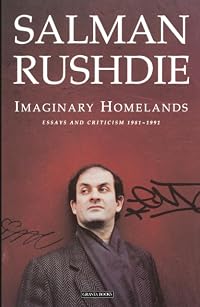
Salman Rushdie was born in India on June 19, 1947. He was raised in Pakistan and educated in England. His novels include Grimus, Shame, The Satanic Verses, Haroun and the Sea of Stories, The Moor's Last Sigh, The Ground Beneath Her Feet, Fury, Shalimar the Clown, The Enchantress of Florence, Luka and the Fire of Life, and The Golden House. His show more non-fiction works include Joseph Anton, Imaginary Homelands, The Jaguar Smile, and Step across This Line. He also wrote a collection of short stories entitled East, West. He has received numerous awards including the Whitbread Prize for Best Novel twice, the James Tait Black Prize, the French Prix du Meilleur Livre Étranger, the Booker Prize in 1981 for Midnight's Children, and the 2014 PEN/Pinter Prize. (Bowker Author Biography) show less
Some Editions
Awards and Honors
Series
Belongs to Publisher Series
Common Knowledge
- Canonical title*
- Grimus
- Original title
- Grimus
- Original publication date
- 1975
- Epigraph
- Go, go, go, said the bird; human kind
Cannot bear very much reality.
(T. S. ELIOT)
Come, you lost atoms, to your Centre draw,
And be the Eternal Mirror that you saw:
Rays that have wandered into dark... (show all)ness wide
Return, and back into your sun subside.
(FARID-UD-DIN 'ATTAR,
iThe Conference of the Birds, trans. Fitzgerald)
Crow straggled, limply bedraggled his remnant.
He was his own leftover, the spat-out scrag.
He was what his brain could make nothing of.
(TED HUGHES,
Crow's Playmate)
The sands of Time are steeped in new<>Beginnings.
(IGNATIUS Q. GRIBB,
The All-Purpose Quotable Philosopht) - Dedication
- For Clarissa
- First words
- Mr Virgil Jones, a man devoid of friends and with a tongue rather too large for his mouth, was fond of descending this cliff-path on Tiusday mornings.
- Last words
- (Click to show. Warning: May contain spoilers.)The raw material of being was claiming its own.
- Blurbers
- Le Guin, Ursula K.
*Some information comes from Common Knowledge in other languages. Click "Edit" for more information.
Classifications
Statistics
- Members
- 1,001
- Popularity
- 26,047
- Reviews
- 8
- Rating
- (3.34)
- Languages
- 10 — Danish, Dutch, English, French, German, Hungarian, Italian, Polish, Portuguese, Romanian
- Media
- Paper, Audiobook, Ebook
- ISBNs
- 31
- ASINs
- 5