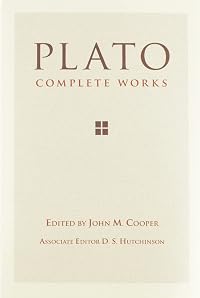
Plato: Complete Works
by Platon
On This Page
Description
Gathers translations of Plato's works and includes guidance on approaching their reading and study.Tags
Recommendations
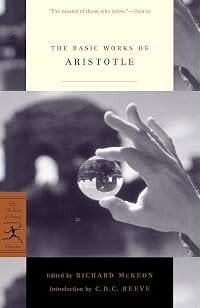
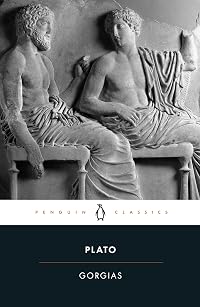
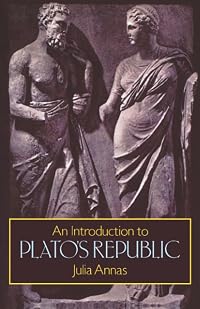
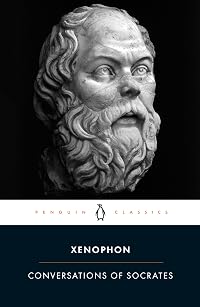
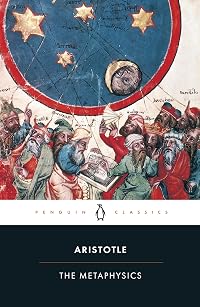


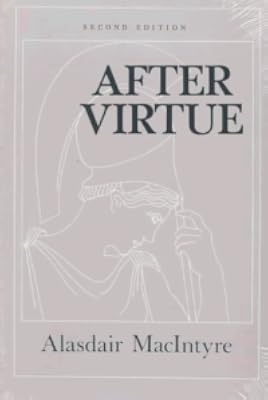

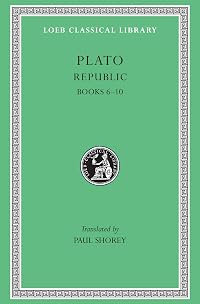
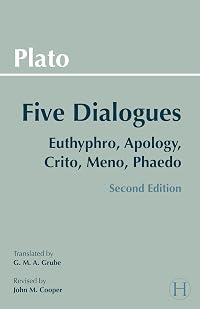







Member Recommendations
mcaution Taking up Plato's problem of universals and the tradition of Aristotle, Rand provides the solution as well as laying the foundation for the proper methods of validating all other knowledge.
08
hbryant2 "Catherine Zuckert explains ... how these prose dramas cohere to reveal a comprehensive Platonic understanding of philosopohy."
Member Reviews
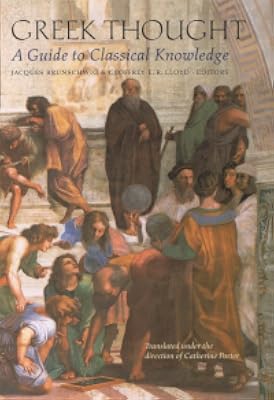
Plato and Aristotle between them not only laid the foundations for Western philosophy, many would argue they divided it neatly between them: Plato the one who with his "Allegory of the Cave" gave birth to the idea of an existence beyond our senses, giving a rational gloss to mysticism. Aristotle, the father of logic and a scientist, with a this-world orientation. There's a famous fresco by Raphael, "The School of Athens," where that's illustrated, where the figure meant to be Plato points to the sky--the heavens--while Aristotle points to the ground--to this Earth. If you're going to ask me which school I belong to--at least as so categorized, Aristotle wins, hands down. Yet if you ask me which philosopher I found a joy to read, which a show more slog--well, Plato wins.
Unfortunately, much of Aristotle's works were lost, and what remains I've seen described as not his polished material, but "lecture notes." In the case of Plato, though, what we have are largely "dialogues." These are like little plays, with characters arguing back and forth. Even if, as the "Socratic method" many a law student has endured suggests, much of it often consists of Socrates asking questions and others answering things such as "It would seem so, Socrates."
Not in the Symposium though, where various characters (including the comic playwright Aristophanes) meet for a dinner party where all contribute to a conversation on the meaning of love--and I think even those derisive or fearful of something labeled "philosophy" would find themselves engaged--even charmed. Plato's Republic though, is likely the most famous of his works--even perhaps the most controversial. It has so many famous aspects--the question of whether one could be virtuous if you owned an invisibility ring and could cloak your crimes, and especially the "Allegory of the Cave," perhaps the most famous metaphor in all of philosophy. The Republic has taken heat for being the paradigm of the totalitarian state, as it posits an ideal state modeled after Sparta, where children are taken away from their parents to be raised communally and all aspects of the lives of citizens controlled.
Karl Popper has a fascinating critique of Plato along these lines in the first volume of his The Open Society. But he notes a contradiction looking at Plato's works as a whole. The Gorgias, for instance, which I studied in college, reads as a great defense of freedom of speech and expression. It's also not consistent with the three dialogues that tell of Socrates trial and death, The Apology, The Crito and The Phaedo. In the first Socrates defends himself as a gadfly--as someone that stings the lazy horse of the state awake--and who should be rewarded, not swatted. It's a spirited defense of the role of the dissenter. Popper attributes the inconsistencies to the differences between Socrates and Plato, as well as a change in Plato over time. In the earlier dialogues, particularly the more biographical ones about Socrates' trial and death, we get the genuine article. But more and more, Popper would argue, Plato put words into Socrates mouth that didn't accord with his democratic and libertarian beliefs, particularly as Plato grew more aristocratic and authoritarian. It is interesting in that regard, that in what is purported to be Plato's last dialogue, The Laws, Socrates disappears as a character altogether.
In any case, I'd strongly recommend becoming familiar with Plato--he's just as important to Western Civilization as The Bible, whether you're sympathetic to his arguments or not. (Indeed, much Christian theology is a amalgam of the New Testament and Greek philosophy.) At least try The Republic, The Symposium, and The Apology. And truly, reading the dialogues isn't arduous as is true of many philosophical tracts. The ideas can sometimes be difficult and sophisticated, but it's often a surprisingly lively read. show less
Unfortunately, much of Aristotle's works were lost, and what remains I've seen described as not his polished material, but "lecture notes." In the case of Plato, though, what we have are largely "dialogues." These are like little plays, with characters arguing back and forth. Even if, as the "Socratic method" many a law student has endured suggests, much of it often consists of Socrates asking questions and others answering things such as "It would seem so, Socrates."
Not in the Symposium though, where various characters (including the comic playwright Aristophanes) meet for a dinner party where all contribute to a conversation on the meaning of love--and I think even those derisive or fearful of something labeled "philosophy" would find themselves engaged--even charmed. Plato's Republic though, is likely the most famous of his works--even perhaps the most controversial. It has so many famous aspects--the question of whether one could be virtuous if you owned an invisibility ring and could cloak your crimes, and especially the "Allegory of the Cave," perhaps the most famous metaphor in all of philosophy. The Republic has taken heat for being the paradigm of the totalitarian state, as it posits an ideal state modeled after Sparta, where children are taken away from their parents to be raised communally and all aspects of the lives of citizens controlled.
Karl Popper has a fascinating critique of Plato along these lines in the first volume of his The Open Society. But he notes a contradiction looking at Plato's works as a whole. The Gorgias, for instance, which I studied in college, reads as a great defense of freedom of speech and expression. It's also not consistent with the three dialogues that tell of Socrates trial and death, The Apology, The Crito and The Phaedo. In the first Socrates defends himself as a gadfly--as someone that stings the lazy horse of the state awake--and who should be rewarded, not swatted. It's a spirited defense of the role of the dissenter. Popper attributes the inconsistencies to the differences between Socrates and Plato, as well as a change in Plato over time. In the earlier dialogues, particularly the more biographical ones about Socrates' trial and death, we get the genuine article. But more and more, Popper would argue, Plato put words into Socrates mouth that didn't accord with his democratic and libertarian beliefs, particularly as Plato grew more aristocratic and authoritarian. It is interesting in that regard, that in what is purported to be Plato's last dialogue, The Laws, Socrates disappears as a character altogether.
In any case, I'd strongly recommend becoming familiar with Plato--he's just as important to Western Civilization as The Bible, whether you're sympathetic to his arguments or not. (Indeed, much Christian theology is a amalgam of the New Testament and Greek philosophy.) At least try The Republic, The Symposium, and The Apology. And truly, reading the dialogues isn't arduous as is true of many philosophical tracts. The ideas can sometimes be difficult and sophisticated, but it's often a surprisingly lively read. show less
If you're looking to read Plato in English then this is the book for you. It is the only edition to include everything passed down under his name from antiquity: the entire canon of Thrasyllus, one or two other pieces like Definitions and the epigrams from the Greek Anthology. All other editions make editorial decisions about what is and is not by Plato. Obviously, not everything in here is by Plato. In some cases we know the names of the people who actually wrote certain works, but in the case of something like Clitophon I see no reason why it couldn't be a genuine work. Either way, the spurious pieces give you a wider idea of the philosophy of the Greeks. Some are very good. Others, if nothing else, make clear just how difficult the show more dialogue form was and just how good Plato was with it.
If I have one quibble it's that not all the translations are as good as they could be. Not that they appear inaccurate, but take the translation of Republic. Some twenty-odd years ago I read Robin Waterfield's translation. It was that book that got me into Plato, philosophy and Greek literature in general. There's a zing and pzazz to the writing that all the best translations share and which must be there in Plato's Greek. The offering in this volume is a plodding affair. If that had been my introduction to Plato I think I would have been put off for life. Also, the tone in some of the other translations is just a little bit off. But most of the translations are fine and some are very good.
It's also a well made book, printed on beautiful paper. I spilt Ribena on my copy. show less
If I have one quibble it's that not all the translations are as good as they could be. Not that they appear inaccurate, but take the translation of Republic. Some twenty-odd years ago I read Robin Waterfield's translation. It was that book that got me into Plato, philosophy and Greek literature in general. There's a zing and pzazz to the writing that all the best translations share and which must be there in Plato's Greek. The offering in this volume is a plodding affair. If that had been my introduction to Plato I think I would have been put off for life. Also, the tone in some of the other translations is just a little bit off. But most of the translations are fine and some are very good.
It's also a well made book, printed on beautiful paper. I spilt Ribena on my copy. show less
Footnotes are very sparse and are mostly for the purposes of alternate translation possibilities for words and phrases. The paper is so thin that I fear I will tear the pages as I turn them.
Despite those shortcomings, this volume is just too cool! Everything in one not too unwieldy book with an elegant jacket design that adds respectability to any shelf (not that we care about things like that). It includes every work that has ever been attributed to Plato (that we currently know of), even the ones with quite spurious claims of authorship, like the last book of Epigrams. It makes up for the lack of footnotes with a thorough index. Of course, it uses the Stephanus numbers for easy reference. Add to this that at least some of the show more translations have been revised for this edition, and you have the 'must have' book for ancient philosophy fans and scholars.
Complete Works is heavy enough that I certainly won't throw away my shorter Hackett booklets which come in handy for vacations, but for use at home this can't be beat. show less
Despite those shortcomings, this volume is just too cool! Everything in one not too unwieldy book with an elegant jacket design that adds respectability to any shelf (not that we care about things like that). It includes every work that has ever been attributed to Plato (that we currently know of), even the ones with quite spurious claims of authorship, like the last book of Epigrams. It makes up for the lack of footnotes with a thorough index. Of course, it uses the Stephanus numbers for easy reference. Add to this that at least some of the show more translations have been revised for this edition, and you have the 'must have' book for ancient philosophy fans and scholars.
Complete Works is heavy enough that I certainly won't throw away my shorter Hackett booklets which come in handy for vacations, but for use at home this can't be beat. show less
So again, the superlative wisdom of Socrates is testified by all antiquity, and placed on ground not to be questioned. When therefore Plato puts into his mouth such paralogisms, such quibbles on words & sophisms as a schoolboy would be ashamed of, we conclude they were the whimsies of Plato's own foggy brain, and acquit Socrates of puerilities so unlike his character. (Speaking of Plato I will add that no writer antient or modern has bewildered the world with more ignes fatui than this renowned philosopher, in Ethis, in Politics & Physics. In the latter, to specify a single example, compare his views of the animal economy, in his Timaeus, with those of mrs Bryan in her Conversations on chemistry, and weigh the science of the canonised show more philosopher against the good sense of the unassuming lady. But Plato's visions have furnished a basis for endless systems of mystical theology, and he is therefore all but adopted as a Christian saint... (TJ to William Short, 4 August 1820)
http://lcweb2.loc.gov/cgi-bin/ampage?collId=rbc3&fileName=rbc0001_2007jeffca... show less
http://lcweb2.loc.gov/cgi-bin/ampage?collId=rbc3&fileName=rbc0001_2007jeffca... show less
The long journey for knowledge begins…The greatest progenitor and first true western mind that began modern intellect and exploration of thought itself.. a must read, a necessary read..
Someone I've read a lot of and was important to my intellectual history due to being one of the first meaty thinkers I read.
Sorry, I know this is required reading for all people of substance, but it is too dry to be interesting.
Members
- Recently Added By
Lists

Harold Bloom - The Western Canon: A. The Theocratic Age
97 works; 13 members

1001 Books You Must Read Before You Die
1,448 works; 1,136 members

Trinity College Booklist (1951): Class Three, Philosophy and Religion
80 works; 3 members

Kilobook
19 works; 1 member

Philosophy, Politics and Economics
61 works; 1 member

The ESOTERICA Library by Dr. Justin Sledge (Classical Philosophy)
4 works; 1 member

el
1,139 works; 1 member

.
396 works; 1 member
Author Information

Plato was born c. 427 B.C. in Athens, Greece, to an aristocratic family very much involved in political government. Pericles, famous ruler of Athens during its golden age, was Plato's stepfather. Plato was well educated and studied under Socrates, with whom he developed a close friendship. When Socrates was publically executed in 399 B.C., Plato show more finally distanced himself from a career in Athenian politics, instead becoming one of the greatest philosophers of Western civilization. Plato extended Socrates's inquiries to his students, one of the most famous being Aristotle. Plato's The Republic is an enduring work, discussing justice, the importance of education, and the qualities needed for rulers to succeed. Plato felt governors must be philosophers so they may govern wisely and effectively. Plato founded the Academy, an educational institution dedicated to pursuing philosophic truth. The Academy lasted well into the 6th century A.D., and is the model for all western universities. Its formation is along the lines Plato laid out in The Republic. Many of Plato's essays and writings survive to this day. Plato died in 347 B.C. at the age of 80. (Bowker Author Biography) show less
Some Editions
Series
Belongs to Publisher Series
Work Relationships
Contains
Common Knowledge
- Canonical title
- Plato: Complete Works
- Original publication date
- 1959
- People/Characters
- Socrates; Plato
- Important places
- Athens, Greece; Atlantis
- First words
- Euthyphro: What's new, Socrates, to make you leave your usual haunts in the Lyceum and spend your time here by the king-archon's court?
- Last words
- (Click to show. Warning: May contain spoilers.)The Graces, seeking for themselves a shrine that would not fall, found the soul of Aristophanes.
- Original language
- Ancient Greek
- Disambiguation notice
- This is the Complete works of Plato. It should NOT be combined with "The Works of Plato" from the Great Books of the Western World series (Great Books vol 7; sometimes references as vol 6), as the Great Books collection does... (show all) not include Plato's "Alcibiades".
Classifications
Statistics
- Members
- 3,182
- Popularity
- 5,465
- Reviews
- 11
- Rating
- (4.42)
- Languages
- 11 — Dutch, English, Finnish, French, German, Greek (Ancient), Italian, Latin, Norwegian (Bokmål), Slovenian, Spanish
- Media
- Paper, Ebook
- ISBNs
- 56
- ASINs
- 37