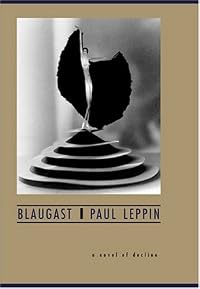
Blaugast: A Novel of Decline
by Paul Leppin
On This Page
Description
Blaugast is a tale of ruin. A bored clerk, Klaudius Blaugast, pursues his desires down a path spiraling into complete degradation. Homeless and destitute, having lost everything to the evil prostitute Wanda, he seeks redemption in a Prague that has become sybaritic and uncaring -- a city in which he has become an outcast among the outcasts. Flashbacks to incidents in his past, hallucinatory revelations of the meaning of events long forgotten, point to the seeds of his eventual downfall. show more Leppin's final novel, which he never saw published (the typescript languished for decades after his death in the archives in Prague), Blaugast is an indictment of the despotic and vulgar, an exploration of the sadistic tendencies found amongst the "moral" and "respectable." Max Brod's depiction of Leppin as "a poet of eternal disillusionment, at once a servant of the Devil and an adorer of the Madonna" nowhere rings more true than here. show lessTags
Recommendations










































Member Reviews
I like a little debauchery and degradation as much as the next, but I almost wearied of the self-loathing pathos of the title character before Leppin let the narrative escape outside Blaugast’s head. I understand that self-obsession is a defining feature of Decadent literature, but I prefer characters that embrace revelry, intoxication, and debauchery as a choice against the misfortunes of history and the tragedy of the human condition rather than as a mark of their own self-disgust. (Blaugast became a different book when Leppin told the story of the noble whore Johanna.)
The depravity is laid on thick (for to repulse the church ladies of early 20th c. Prague?), and some of the prose is more purple than poetic. The cesspools of show more destiny! Everything seethes and festers and reeks. About a third of the way in I realized I was not so much reading as observing Blaugast as an artifact, with Leppin presenting a kind of performance piece: Frank Moore without the mad, spastic cackle, or Saló without the fascism. But, yes, it was entertaining. show less
The depravity is laid on thick (for to repulse the church ladies of early 20th c. Prague?), and some of the prose is more purple than poetic. The cesspools of show more destiny! Everything seethes and festers and reeks. About a third of the way in I realized I was not so much reading as observing Blaugast as an artifact, with Leppin presenting a kind of performance piece: Frank Moore without the mad, spastic cackle, or Saló without the fascism. But, yes, it was entertaining. show less
Ratings
Members
- Recently Added By
Author Information

8+ Works 316 Members
Common Knowledge
- Original title
- Blaugast: ein Roman aus dem alten Prag
- Original publication date
- 1935 (redaction, circa) (redaction, circa); 1984 (posth.) (posth.); 2007 (English translation) (English translation)
- People/Characters
- Klaudius Blaugast
- Important places
- Prague, Bohemia
- First words
- The street greeting Blaugast was now quiet; the stormy night had frightened him out of bed, and he left the sultry room to cool his head by wandering aimlessly in the summer rain.
- Last words
- (Click to show. Warning: May contain spoilers.)"Yes, Klaudius Blaugast, you are."
- Original language
- German
Classifications
- Genres
- Fiction and Literature, General Fiction
- DDC/MDS
- 833.912 — Literature & rhetoric German & related literatures German fiction 1900- 1900-1990 1900-1945
- LCC
- PT2623 .E67 — Language and Literature German, Dutch and Scandinavian literatures German literature Individual authors or works 1860/70-1960
- BISAC
Statistics
- Members
- 80
- Popularity
- 395,182
- Reviews
- 1
- Rating
- (3.83)
- Languages
- Czech, English, French, German
- Media
- Paper, Ebook
- ISBNs
- 4
- ASINs
- 1