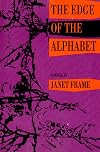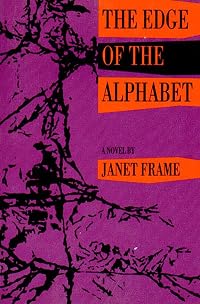
The Edge of the Alphabet
by Janet Frame
On This Page
Description
Toby Withers, a young man with epilepsy, leaves New Zealand after the death of his mother. While on board a ship to England, he meets Zoe, a middle-aged woman looking for a life of meaning and Pat, an Irishman who claims to have many friends but treats people with carelessness. Alike in their alienation, all three embark on a new life in London, piecing together an existence in the margins of the urban world. The Edge of the Alphabet, the third novel by Janet Frame, one of New Zealand's show more foremost writers of the twentieth century, is a piercing, startlingly strange work about identity, the post-colonial experience and the search for connection in a lonely world, published here on the centenary of her birth with a new foreword by Catherine Lacey. show lessTags
Recommendations































Member Reviews
Published in 1962, Janet Frame’s extraordinary third novel chronicles the adventures of three people living “on the edge of the alphabet”: a desolate outpost of the soul where feelings of worthlessness and crushing loneliness cannot be expressed. New Zealander Toby Withers, an epileptic, suffers as well from an acute form of social awkwardness that leaves him isolated and fretful. Zoe Bryce, a depressed middle-aged spinster from England, has left her position as a schoolteacher in humiliation after developing amorous feelings for a colleague that were not reciprocated. And boastful know-it-all Pat Keenan, an Irishman, lives an exceedingly prosaic life in London, where he drives a bus. The three cross paths on a passenger ship show more traveling from New Zealand to London. After the death of his supportive mother, and in defiance of his pragmatic father, Toby has decided to exert his independence, strike out on his own and see the world. He is also smarting after being rejected by a young woman whom he was convinced loved him because she tolerated his company and was on occasion nice to him. Zoe’s “working vacation” in NZ is over, and she is returning to England to face an uncertain future. And Pat is returning home as well after time off from his job. On board the ship, each traveling alone, Toby, Zoe and Pat form a loosely compatible trio, and in London their connection endures even as their quiet desperation intensifies. Pat returns to his squalid rooming house, where he has convinced Zoe that she should live as well, while Toby finds cramped, disagreeable quarters elsewhere. To support themselves, Zoe and Toby take menial, unfulfilling employment. For a time, Toby, Zoe and Pat are able to sustain themselves on their delusions. Toby, though largely unschooled and barely literate, has convinced himself that he will someday write a novel about “The Lost Tribe,” a notion, encouraged by his mother but dismissed as ridiculous by his father, that he guards closely and that has occupied him for years. Zoe, having been kissed on board the ship by a drunken sailor (the first kiss of her life), clings to the hope that love is not completely out of reach. And Pat makes his unexceptional life tolerable by puffing himself up with self-important claims, habitually exaggerating his accomplishments, offering unsolicited advice, and pushing people around, especially those, such as Zoe, who lack confidence and will be overwhelmed by his persistence. Eventually, however, each is compelled to give up on their dreams, with consequences that range from unfortunate to disastrous. The novel’s loose structure and Frame’s reliance on distorted interior monologue contribute a hazy, dreamlike quality to the action, which drifts from one event or encounter to the next. Throughout, Frame’s magical, often disorienting language leaps from the page: “But it is people, their shape, their presence, that are bulwark, bung-hole, asbestos wall. For the wind blows from fire, as well as from ice.” Impressionistic, sometimes bizarre, but bracingly original, The Edge of the Alphabet is also a compassionate and moving novel, one that confronts an age-old and tragic human enigma: that loneliness and its devastating effects can persist in a world filled with people searching for connection. show less
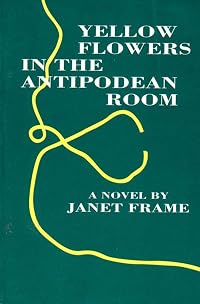
this is my favorite janet frame book so far, but i haven't read yellow flowers in the antipodean room yet. i loved it--it hurt a little to read and conjured up weird child-nightmarish snippets of blurry sense memory from the past. very deceptive in the simplicity of its barebones picture-book plot formation and dialogue, but sinister and brittle feeling in that janet frame way. sigh.
Ratings
Members
- Recently Added By
Published Reviews
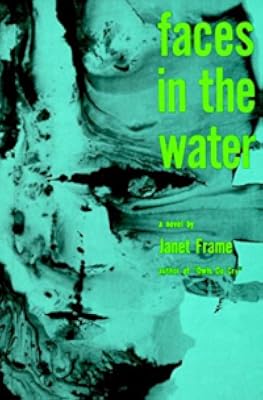
An impressionistic novel deals with people too desperately lonely to be able to use words as communication and it has many of the virtues, and liabilities, of Faces in the Water, flickering, fragmentary, partially autobiographical account of mental illness. Depressing, and sometimes too personal in language, the book is also full of the precise and shocking images which enlarge consciousness - show more in this case of the too common state of incurable isolation. show less
added by poppycocteau
Author Information

51+ Works 4,684 Members
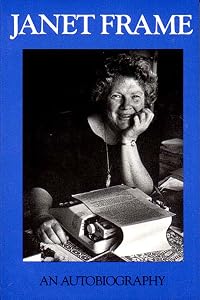
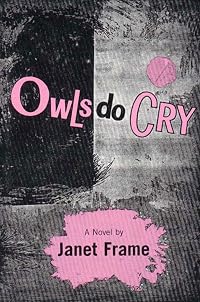
Janet Frame is a writer. She was born in Dunedin, New Zealand in 1924. Frame has written eleven novels, five collections of short stories, a volume of poetry, and a children's book. She has received the Commonwealth Literature Prize, the Turnavsky Prize, a Katherine Mansfield Fellowship, a Robert Burns Fellowship, and a Sargeson Fellowship. She show more was awarded an honorary doctorate in literature from Otago University and is an honorary member of the American Academy of Arts and Letters and she is a past President of Honour of the New Zealand Society of Authors. Her three autobiographies, To the Island, An Angel at My Table, and The Envoy from Mirror City, were turned into a three-part television series, and then a 1990 motion picture directed by Jane Campion. Frame was awarded the CBE in 1983. In 2015 Janet Frame's 1957 debut novel, Owls Do Cry, topped the second annual Great Kiwi Classic poll run by the New Zealand Book Council and Auckland Writers Festival. (Bowker Author Biography) show less
Awards and Honors
Notable Lists
Work Relationships
Is contained in
Common Knowledge
- Original title
- The Edge of the Alphabet
Classifications
Statistics
- Members
- 110
- Popularity
- 295,115
- Reviews
- 2
- Rating
- (3.97)
- Languages
- English, Spanish, Swedish
- Media
- Paper, Ebook
- ISBNs
- 6
- ASINs
- 2