On This Page
Description
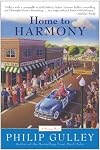
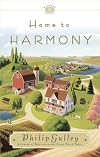
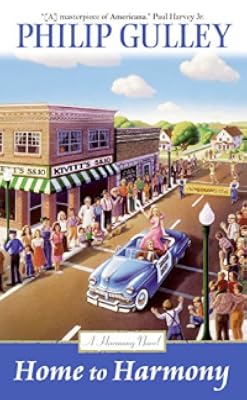
Philip Gulley is a Quaker minister, a best-selling author, and a master storyteller who is often compared to Garrison Keillor and Mark Twain. In this gentle book, Harmony, Indiana takes its place alongside Jan Karon's Mitford as a town that many readers would move to if it were really on the map. Home of hefty noodle casseroles and the world's shortest evangelist, Harmony also boasts the Coffee Cup cafe, where a painting of The Last Supper hangs over the salad bar. As his first year in this show more small, sheltered town unfolds, Pastor Sam Gardner shares his wry observations and humorous stories about its colorful residents. Home to Harmony won the Christy Award for Best Contemporary Fiction in 2001. Funny, refreshing, and uplifting, it is the perfect antidote to the heavy volumes lurking on many bookstore shelves today. After spending a few hours in this special place, your step will be lighter, and so will your spirit. show lessTags
Recommendations







Member Reviews
I ran backwards to read this first Harmony book after I stumbled upon a Christmas novella further along in the series and laughed my head off reading it.
Unlike that holiday tale, this novel doesn't have a central plot with a problem and a resolution. Rather, this is more a collection of small-town vignettes, most of them ending with "moral of the story" reflections from Sam with a sense of regret here, nostalgia there, and hope overall. The book with its hodgepodge of flawed folks has got plenty of funny moments with some poignant ones mixed in, one which almost made me cry.
The delightfulness of the read can make you forgive the fact that the method of storytelling doesn't always make sense. Sam narrates in first person, but while he's show more telling stories about his fellow townsfolk, he's more of an omniscient narrator in their lives. Somehow, he knows their thoughts and feelings and can convey major and minor details about the characters' personal/private moments to the reader, as if Sam is sitting right there in other people's heads and seeing what they see in every scene, during years past and present.
Maybe you're supposed to assume the townsfolk gave Sam all of these details at some point after they happened? He doesn't say so.
Nevertheless, the humor and the evident, relatable understanding of human nature here makes this easy reading worthwhile. I definitely plan on continuing the series. show less
Unlike that holiday tale, this novel doesn't have a central plot with a problem and a resolution. Rather, this is more a collection of small-town vignettes, most of them ending with "moral of the story" reflections from Sam with a sense of regret here, nostalgia there, and hope overall. The book with its hodgepodge of flawed folks has got plenty of funny moments with some poignant ones mixed in, one which almost made me cry.
The delightfulness of the read can make you forgive the fact that the method of storytelling doesn't always make sense. Sam narrates in first person, but while he's show more telling stories about his fellow townsfolk, he's more of an omniscient narrator in their lives. Somehow, he knows their thoughts and feelings and can convey major and minor details about the characters' personal/private moments to the reader, as if Sam is sitting right there in other people's heads and seeing what they see in every scene, during years past and present.
Maybe you're supposed to assume the townsfolk gave Sam all of these details at some point after they happened? He doesn't say so.
Nevertheless, the humor and the evident, relatable understanding of human nature here makes this easy reading worthwhile. I definitely plan on continuing the series. show less
"Church would be a wonderful thing, if it weren't for all the people." This is a common quip among pastors and church members alike sometimes, when the quest for spiritual growth runs up against the bureaucracy of the church and the stubbornness of some church members.
Sam Gardner, the Quaker pastor in Philip Gulley's charming and very funny Home to Harmony (the first of Gulley's "Harmony Novels"), would certainly agree. By an unlucky coincidence, Sam finds himself called to pastor the church in which he grew up, located in small town Harmony, Indiana. In his first year, he adjusts to life in his hometown, dealing with an assortment of odd, yet endearing, church folk.
This book at once celebrates many components of American small town show more life: the local diner, the local newspaper, the church, the special annual events. It gently presents the challenge any newcomers face when they try to move into a small town. It shows the power of small town gossip and the pervasive watchfulness, and subsequent discussion, that follows almost every action in a small town.
But Home to Harmony is squarely focused on the eccentricities of the local Quaker congregation. Go to any church long enough, and you will recognize the denizens of the Harmony Friends Meeting. The unspoken seating chart in the sanctuary. The ill-advised but earnest plans of a couple of the elders. The frustrations of church meetings. The underlying power of the women in determining what's really important on the church calendar.
Gulley is a pastor (as am I) and he knows these people and these situations. It is clear that they have frustrated him over his career. But it is also clear that he loves them: he loves them for their earnest, if misdirected passion, loves them for their subconscious assumptions, loves them for their quiet moments of honor and love.
The book is filled with gentle humor, and is a pleasure to read. In fact, it is such an easy and enjoyable read that Gulley's skill is not immediately apparent. In the midst of these almost self-contained chapters, each of which ends with a delicate moral (sometimes posed more as a question than as an assertion), Gulley gives life to the fictitious town of Harmony and many of its citizens. show less
Sam Gardner, the Quaker pastor in Philip Gulley's charming and very funny Home to Harmony (the first of Gulley's "Harmony Novels"), would certainly agree. By an unlucky coincidence, Sam finds himself called to pastor the church in which he grew up, located in small town Harmony, Indiana. In his first year, he adjusts to life in his hometown, dealing with an assortment of odd, yet endearing, church folk.
This book at once celebrates many components of American small town show more life: the local diner, the local newspaper, the church, the special annual events. It gently presents the challenge any newcomers face when they try to move into a small town. It shows the power of small town gossip and the pervasive watchfulness, and subsequent discussion, that follows almost every action in a small town.
But Home to Harmony is squarely focused on the eccentricities of the local Quaker congregation. Go to any church long enough, and you will recognize the denizens of the Harmony Friends Meeting. The unspoken seating chart in the sanctuary. The ill-advised but earnest plans of a couple of the elders. The frustrations of church meetings. The underlying power of the women in determining what's really important on the church calendar.
Gulley is a pastor (as am I) and he knows these people and these situations. It is clear that they have frustrated him over his career. But it is also clear that he loves them: he loves them for their earnest, if misdirected passion, loves them for their subconscious assumptions, loves them for their quiet moments of honor and love.
The book is filled with gentle humor, and is a pleasure to read. In fact, it is such an easy and enjoyable read that Gulley's skill is not immediately apparent. In the midst of these almost self-contained chapters, each of which ends with a delicate moral (sometimes posed more as a question than as an assertion), Gulley gives life to the fictitious town of Harmony and many of its citizens. show less
What a charming book this is. Sam, a young Quaker minister returns to his home town in the US, and we get to know the stories behind several of his neighbours and friends.
It gives a lovely set of cameos of life in small-town America, which, if the book is to be believed, is apparently still rather clinging to life in the mid-20th century... even though this was written in 2002. I did rather find myself wondering when the story was going to start, after several of what seemed like introductory chapters, but gradually realised that it was, effectively, a set of linked short stories rather than a novel as such.
I found it slightly confusing at first, as it's all narrated in the first person, but still switches viewpoints to events where show more Sam was not present, even relating other people's thoughts - but after initial puzzlement, I became used to the style and stopped worrying about it.
There were a couple of places where I chuckled out loud, and many more where I smiled at the aptness of the writing. Well worth reading, for anyone who likes gentle character-based books of this kind. show less
It gives a lovely set of cameos of life in small-town America, which, if the book is to be believed, is apparently still rather clinging to life in the mid-20th century... even though this was written in 2002. I did rather find myself wondering when the story was going to start, after several of what seemed like introductory chapters, but gradually realised that it was, effectively, a set of linked short stories rather than a novel as such.
I found it slightly confusing at first, as it's all narrated in the first person, but still switches viewpoints to events where show more Sam was not present, even relating other people's thoughts - but after initial puzzlement, I became used to the style and stopped worrying about it.
There were a couple of places where I chuckled out loud, and many more where I smiled at the aptness of the writing. Well worth reading, for anyone who likes gentle character-based books of this kind. show less
I thought I'd try something different. I always assumed, that if I had to be Christian, I'd be Quaker. But after getting to p. 60 and finding that the author is sympathetic to the censorious librarian, I'm just thankful to be an atheist and to not live in a town like Harmony.
'If you went to the circulation desk to ask if the library had a certain book and Miss Rudy didn't think it was one suitable for Christian people, she would let you know.
She'd say, We don't have that book. This is a library, not a cesspool. If you want smut, you'll have to go to the city."
She'd say it in loud voice, so that people would look up from whatever they were reading and stare at you. By the time you reached home, three people had phoned your mother to show more tell on you."'" show less
'If you went to the circulation desk to ask if the library had a certain book and Miss Rudy didn't think it was one suitable for Christian people, she would let you know.
She'd say, We don't have that book. This is a library, not a cesspool. If you want smut, you'll have to go to the city."
She'd say it in loud voice, so that people would look up from whatever they were reading and stare at you. By the time you reached home, three people had phoned your mother to show more tell on you."'" show less
I really enjoyed this book! I love the small town feel, the humor, and the profound moments at the end of each chapter. It reminded me in some ways of Jan Karon's At Home In Mitford, but thankfully wasn't a Mitford Copycat. Some of the "Quaker-isms" bothered me a bit, but not enough to make me not read it. Also there was one chapter in the middle that was . . a bit . . . adult. Ahem. The book could have done without that one. :P
What I loved most about this book was the profound 'lessons' at the end of each chapter. I wanted to pound my fist on the table and shout "AMEN!" after some of them. They didn't come across as preachy, AT ALL, just as an observation or encouragement.
The characters were great; Dale Hinshaw was HILARIOUS and show more annoying, I loved Miriam and Ellis Hodges; and of course, Sam Gardener and family was sweet too.
Favorite quotes:
"I don't think we ought to look for Christ in a quilt. I think we ought to look for Christ in the poor, in the common, in the lady who rings up our groceries, in the man who mops the grocery floor, in the kid who delivers our pizza. . . We always look for Christ amid magnificence. But that Christ has a history of showing up amid the unlovely. Born in a dirty stall. Crowned with thorns. Died gasping on a shameful cross atop a jagged rise. We don't need to be beautiful for Christ to take us in . He is equally at home when we're broken down and dirty. "
" 'I'll be fine,' I'll tell him. 'I'll be fine. You go on home. Don't worry, I'll be fine.' Putting on a brave face. We learn that in first grade."
"In the end, that is what we all must do. Stand where we feel led. Stand straight, stand tall, and try hard to remember that other folks might be led to stand elsewhere."
All in all, I loved this book! Excepting the one aforementioned chapter, I heartily recommend this! show less
What I loved most about this book was the profound 'lessons' at the end of each chapter. I wanted to pound my fist on the table and shout "AMEN!" after some of them. They didn't come across as preachy, AT ALL, just as an observation or encouragement.
The characters were great; Dale Hinshaw was HILARIOUS and show more annoying, I loved Miriam and Ellis Hodges; and of course, Sam Gardener and family was sweet too.
Favorite quotes:
"I don't think we ought to look for Christ in a quilt. I think we ought to look for Christ in the poor, in the common, in the lady who rings up our groceries, in the man who mops the grocery floor, in the kid who delivers our pizza. . . We always look for Christ amid magnificence. But that Christ has a history of showing up amid the unlovely. Born in a dirty stall. Crowned with thorns. Died gasping on a shameful cross atop a jagged rise. We don't need to be beautiful for Christ to take us in . He is equally at home when we're broken down and dirty. "
" 'I'll be fine,' I'll tell him. 'I'll be fine. You go on home. Don't worry, I'll be fine.' Putting on a brave face. We learn that in first grade."
"In the end, that is what we all must do. Stand where we feel led. Stand straight, stand tall, and try hard to remember that other folks might be led to stand elsewhere."
All in all, I loved this book! Excepting the one aforementioned chapter, I heartily recommend this! show less
The author, like his narrator, is a Quaker minister in a small midwestern town. The writing is lovely. Each chapter has a moral, but it is very gently delivered. Lots of humor and situations that are universal.
Think back to when you were little, visiting relatives--the ones who lived in a small town, in a house with a big front porch. After supper you sat on the porch, at the edge of the conversation's circle, listening to story after story. The sun was setting. The western sky turned pink. The crickets started up. Somewhere down the block, a screen door banged. You've been there haven't you--and long to go back?
Members
- Recently Added By
Lists

to get
244 works; 2 members
Author Information

34+ Works 5,715 Members
Philip Gulley is a Quaker minister, writer, husband, and father. He and his wife, Joan, live in Indiana with their sons, Spencer and Sam
Awards and Honors
Awards
Series

Common Knowledge
- Canonical title
- Home to Harmony
- Original publication date
- 2002
Classifications
Statistics
- Members
- 782
- Popularity
- 35,705
- Reviews
- 18
- Rating
- (3.71)
- Languages
- English
- Media
- Paper, Audiobook, Ebook
- ISBNs
- 15
- ASINs
- 6