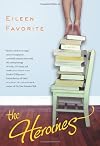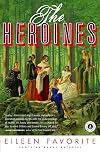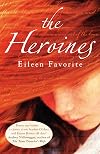
The Heroines
by Eileen Favorite
On This Page
Description
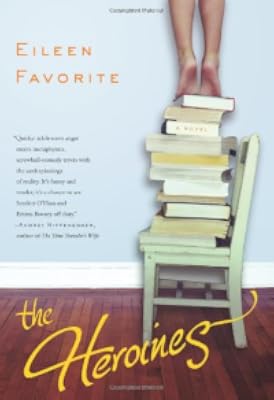
Heroines from literature come to life and visit Anne-Marie's bed and breakfast, where she tries not to interfere with their lives in fear it will change the outcome of their novels.Tags
Recommendations






Member Reviews
Sometimes a clever conceit should remain just that--a conceit. Because no matter how you try to develop it, it will never be as as wonderful as the idea itself. Trying to build upon it and give it complexity strips it of its fanciful "What if?" brilliance and plummets it back to earth. And so we have The Heroines, a novel built around one of the most wonderful ideas I've ever encountered--what if the heroines from famous novels needed a respite from the tragedies of their own storylines--and promptly clustermugs the whole thing up.
Basically, I feel as though I was sold a false bill of goods. The novel purports to be about a bed and breakfast that attracts the heroines of famous novels. Deirdre of the Sorrows, Franny Glass, Daisy show more Buchanan, Anna Karenina, Hester Prynne, Catherine Earnshaw have all signed the guest book and checked in for a few days of freedom from the misery of their lives. This is what I wanted to read about--how the heroines come to be at the bed and breakfast and how they interact with a modern world. I expected quirky, witty, and humorous. What I got was dark, disjointed, and ordinary. Instead of focusing on the heroines (who are little more than footnotes), the novel focuses on Anne-Marie Entwhistle and her daughter, Penny. Anne-Marie and Penny run the bed and breakfast and, unfortunately, the novel chooses to focus on their problematic relationship as a result of Penny's coming of age. WTF? Scarlett O'Hara's pounding on the door and instead of focusing on that, a pedestrian mother/daughter conflict is the subject of the book? And that is, in essence, the root source of my disappointment with the book. When heroines do (very briefly) make an appearance, they are flat, one-dimensional versions of their colorful, complex selves. Hester sets about sewing an A on the front of her dress and throwing just enough "thou" into her dialogue to make her seem authentic, Scarlett wakes in the middle of the night to pull down the curtains (for dressmaking purposes, of course) and try to steal the sweet potatoes, Deirdre constantly weeps. They read as caricatures of themselves.
As for the plot, Penny is rebelling by going out into the nearby woods against her mother's rule against doing so. While there she meets and falls in lust with the Irish King of Ulster, Connor (better known as Conchobar in the original Deirdre mythology), who has followed Deirdre into our time. Through a muddled turn of events, Penny is locked up in a psych ward and we have to read about her "it's-just-so-all-unfair!" experiences there. After finally breaking free, Penny returns to the woods with Connor, during which some awkward sexual awakening occurs and Penny is going through withdrawal from the meds given to her in the psych ward. She spends her days smoking pot while Connor hunts deer and builds huts. Aaannnnndddddd that's pretty much it. Basically, there's just enough inexplicable tragedy and unresolved longing in Penny's life to make one wonder if Penny is herself a heroine (a thought which Penny also considers).
Then we have a peculiar shift in narrative and we go back in time to when Penny's mother was a young woman. A point of contention between Penny and her mother has always been the void that is Penny's father. Penny knows that her mother became pregnant out of wedlock, decided to keep the baby against the wishes of her parents, and that her father died in a car accident. Penny's mom is mum on the details of who Penny's father was and what, exactly, her relationship with him was. This part of the narrative answers all of the questions Penny has regarding her father. I won't reveal any more here as to do so would be to spoil the ending, but this storyline was the best in the book and took about 10-15 pages. The payoff was not worth the other 200+ pages through which I had to drag myself.
The story could have been saved if the characters had been more likable, the heroines had made more frequent (and more satisfying) appearances, or if the story hadn't been so self-aware of how clever it was being with all of its metaphysical musings on the nature of "heroines" and storytelling itself. show less
Basically, I feel as though I was sold a false bill of goods. The novel purports to be about a bed and breakfast that attracts the heroines of famous novels. Deirdre of the Sorrows, Franny Glass, Daisy show more Buchanan, Anna Karenina, Hester Prynne, Catherine Earnshaw have all signed the guest book and checked in for a few days of freedom from the misery of their lives. This is what I wanted to read about--how the heroines come to be at the bed and breakfast and how they interact with a modern world. I expected quirky, witty, and humorous. What I got was dark, disjointed, and ordinary. Instead of focusing on the heroines (who are little more than footnotes), the novel focuses on Anne-Marie Entwhistle and her daughter, Penny. Anne-Marie and Penny run the bed and breakfast and, unfortunately, the novel chooses to focus on their problematic relationship as a result of Penny's coming of age. WTF? Scarlett O'Hara's pounding on the door and instead of focusing on that, a pedestrian mother/daughter conflict is the subject of the book? And that is, in essence, the root source of my disappointment with the book. When heroines do (very briefly) make an appearance, they are flat, one-dimensional versions of their colorful, complex selves. Hester sets about sewing an A on the front of her dress and throwing just enough "thou" into her dialogue to make her seem authentic, Scarlett wakes in the middle of the night to pull down the curtains (for dressmaking purposes, of course) and try to steal the sweet potatoes, Deirdre constantly weeps. They read as caricatures of themselves.
As for the plot, Penny is rebelling by going out into the nearby woods against her mother's rule against doing so. While there she meets and falls in lust with the Irish King of Ulster, Connor (better known as Conchobar in the original Deirdre mythology), who has followed Deirdre into our time. Through a muddled turn of events, Penny is locked up in a psych ward and we have to read about her "it's-just-so-all-unfair!" experiences there. After finally breaking free, Penny returns to the woods with Connor, during which some awkward sexual awakening occurs and Penny is going through withdrawal from the meds given to her in the psych ward. She spends her days smoking pot while Connor hunts deer and builds huts. Aaannnnndddddd that's pretty much it. Basically, there's just enough inexplicable tragedy and unresolved longing in Penny's life to make one wonder if Penny is herself a heroine (a thought which Penny also considers).
Then we have a peculiar shift in narrative and we go back in time to when Penny's mother was a young woman. A point of contention between Penny and her mother has always been the void that is Penny's father. Penny knows that her mother became pregnant out of wedlock, decided to keep the baby against the wishes of her parents, and that her father died in a car accident. Penny's mom is mum on the details of who Penny's father was and what, exactly, her relationship with him was. This part of the narrative answers all of the questions Penny has regarding her father. I won't reveal any more here as to do so would be to spoil the ending, but this storyline was the best in the book and took about 10-15 pages. The payoff was not worth the other 200+ pages through which I had to drag myself.
The story could have been saved if the characters had been more likable, the heroines had made more frequent (and more satisfying) appearances, or if the story hadn't been so self-aware of how clever it was being with all of its metaphysical musings on the nature of "heroines" and storytelling itself. show less
After reading the summary, I would say that you don't really need to read the book. It pretty much sums up the whole thing. I found it difficult to get into the story, then once I was into the action, I found it hard to understand why Anne-Marie chose the heroines over her own daughter time and time again. As a mother, that is completely unbelievable.
Toward the end, there was a spark of whether or not Penny may be a heroine. I would have LOVED that twist in the story. It would have made it more compelling.
While this is an intriguing storyline, I can't recommend it.
Toward the end, there was a spark of whether or not Penny may be a heroine. I would have LOVED that twist in the story. It would have made it more compelling.
While this is an intriguing storyline, I can't recommend it.
This book was a disappointment. It needed to be about 100 pages longer to fully flesh out the narrative, character development, back story, and even the main plotline. It felt like a half-finished book. The ending was a HUGE cop-out.
Which really is a shame. It's such an original idea with so much potential, and the book just fell flat with me. Too many things going on, too many story lines, and not enough pages to do them all justice.
Which really is a shame. It's such an original idea with so much potential, and the book just fell flat with me. Too many things going on, too many story lines, and not enough pages to do them all justice.
The premise of this book is fantastic. Thirteen-year-old Penny and her mother run a bed and breakfast that is frequented by literary heroines who have stopped in to take a respite from their own fraught plot lines. The heroines show up unexpectedly and leave just as suddenly, and Penny, her mother, and their housekeeper Gretta are the only ones who know of the heroines and who care for them during their stay.
As others have said, the premise for this story is enthralling, and has so much potential. The breakdown seems to stem largely from Favorite's choice to use teen angst and a stint in a mental institution as a major plot device. Rather than work through the characters' issues, the author offers them the escape of presumed insanity, show more which -- though an interesting take on mental health care in the 1970s -- stifles the otherwise fascinating trajectory of the plot and lands it smack in the middle of irrelevance. Some plot points just don't add up, and overall any purported literary loftiness falls flat on its backside.
I would much preferred to have seen the heroines interact with the plot in a more direct way. So many of these characters are such important figures (archetypes, even), and could have been used much more effectively. Instead, the entering heroine with whom Penny has the most contact is a near-nameless character from an obscure work of medieval literature. Again, this seems a bit of a cop-out: it's almost as if Favorite didn't want to offend her readers through possible misrepresentation of one of the great heroines from more modern and well known fiction.
Nevertheless, I really enjoyed this book. I found it to be quite the page-turner, and the premise was sufficiently interesting to keep me reading straight through, even when it didn't turn out to be quite the book I was expecting it to be. This makes for great light reading, and could be a fun read for those who are well versed in the classics and familiar with the heroines of many of these stories. show less
As others have said, the premise for this story is enthralling, and has so much potential. The breakdown seems to stem largely from Favorite's choice to use teen angst and a stint in a mental institution as a major plot device. Rather than work through the characters' issues, the author offers them the escape of presumed insanity, show more which -- though an interesting take on mental health care in the 1970s -- stifles the otherwise fascinating trajectory of the plot and lands it smack in the middle of irrelevance. Some plot points just don't add up, and overall any purported literary loftiness falls flat on its backside.
I would much preferred to have seen the heroines interact with the plot in a more direct way. So many of these characters are such important figures (archetypes, even), and could have been used much more effectively. Instead, the entering heroine with whom Penny has the most contact is a near-nameless character from an obscure work of medieval literature. Again, this seems a bit of a cop-out: it's almost as if Favorite didn't want to offend her readers through possible misrepresentation of one of the great heroines from more modern and well known fiction.
Nevertheless, I really enjoyed this book. I found it to be quite the page-turner, and the premise was sufficiently interesting to keep me reading straight through, even when it didn't turn out to be quite the book I was expecting it to be. This makes for great light reading, and could be a fun read for those who are well versed in the classics and familiar with the heroines of many of these stories. show less
I puzzled over this book for a while before finally buying it on sale.Then, I waited even longer to sit down and read it. Oh, how I wish I had read it right away. This charming novel is the perfect blend of famous heroines from literature mixed with a spunky, headstrong American girl's thoughts and experiences. It was an easy read, taking me just under a day once I got past a slightly rocky beginning.
The book is definitely worth the read, and will provide the reader with hours of "what if" imaginings after the end. It's definitely one I'll pass on to friends, both literature lovers and casual readers, alike. Although the main character is 13, the book can be enjoyed by YA readers and adults, thanks to its many layers of allusions and show more humor. Not only was it enjoyable, but it's motivated me to revisit some of my favorite classics, next! show less
The book is definitely worth the read, and will provide the reader with hours of "what if" imaginings after the end. It's definitely one I'll pass on to friends, both literature lovers and casual readers, alike. Although the main character is 13, the book can be enjoyed by YA readers and adults, thanks to its many layers of allusions and show more humor. Not only was it enjoyable, but it's motivated me to revisit some of my favorite classics, next! show less
Interesting concept regarding actual literary heroines showing up at a B&B, but the book didn't quite work for me. I was expecting more heroine action. Instead, lots of flashbacks mixed somewhat unsuccessfully with the teen protagonist's current situation.
An interesting premise coupled with a mother-daughter/coming-of-age conflict, that takes a left turn into [book: Girl, Interrupted] territory and never quite recovers.
Members
- Recently Added By
Author Information
1+ Work 358 Members
Eileen Favorite teaches at the School of the Art Institute of Chicago.
Some Editions
Common Knowledge
- Canonical title
- The Heroines
- Original publication date
- 2007-12-11
- People/Characters
- Penny Entwhistle; Anne-Marie Entwhistle; Scarlett O'Hara; Blanche Dubois; Franny Glass; Hester Prynne (show all 9); Emma Bovary; Catherine Earnshaw; Dierdre of the Sorrows
- Important places
- The Homestead, Prairie Bluff, Illinois; The Unit (mental hospital ward)
- Important events
- Watergate Scandal
- Dedication
- For Martin and Lucille
- First words
- I was so angry with Mother!
- Last words
- (Click to show. Warning: May contain spoilers.)I bury Mother in 2025. And my father never ever returns.
Classifications
Statistics
- Members
- 358
- Popularity
- 87,843
- Reviews
- 25
- Rating
- (3.01)
- Languages
- English, Finnish, Italian
- Media
- Paper, Audiobook, Ebook
- ISBNs
- 15
- ASINs
- 4