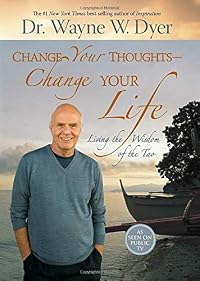
Change Your Thoughts - Change Your Life: Living the Wisdom of the Tao
by Dr. Wayne W. Dyer
On This Page
Description
Five hundred years before the birth of Jesus, a God-realized being named Lao-tzu in ancient China dictated 81 verses, which are regarded by many as the ultimate commentary on the nature of our existence. The classic text of these 81 verses, called the Tao Te Ching or the Great Way, offers advice and guidance that is balanced, moral, spiritual, and always concerned with working for the good. In this book, Dr. Wayne W. Dyer has reviewed hundreds of translations of the Tao Te Ching and has show more written 81 distinct essays on how to apply the ancient wisdom of Lao-tzu to today's modern world. This work contains the entire 81 verses of the Tao, compiled from Wayne's researching of 12 of the most well-respected translations of text that have survived for more than 25 centuries. Each chapter is designed for actually living the Tao or the Great Way today. Some of the chapter titles are "Living with Flexibility," "Living Without Enemies," and "Living by Letting Go." Each of the 81 brief chapters focuses on living the Tao and concludes with a section called "Doing the Tao Now." Wayne spent one entire year reading, researching, and meditating on Lao-tzu's messages, practicing them each day and ultimately writing down these essays as he felt Lao-tzu wanted you to know them. This is a work to be read slowly, one essay a day. As Wayne says, "This is a book that will forever change the way you look at your life, and the result will be that you'll live in a new world aligned with nature. Writing this book changed me forever, too. I now live in accord with the natural world and feel the greatest sense of peace I've ever experienced. I'm so proud to present this interpretation of the Tao Te Ching, and offer the same opportunity for change that it has brought me." show lessTags
Recommendations


Member Reviews
I really would like to say that I liked this book; but i didn't. The author carried himself with the same prideful self-assurance that many Christians do. His patronizing tone that he had superior (and by his own admission, inspired) knowledge and would should all pay attention was insulting and irritating. It's hard to take a person like that seriously. For the few points that I agreed with the author, they could be derived from common sense but the author venerated them (and all his points) as untimely wisdom that could only be gleaned from his special ancient text.
It was also in poor taste that the author constantly used himself as an example of how the Dao should be enacted and never gave an example of his own failings. I'm going to show more go out on a limb here and make a bold assumption that the author (like the rest of us) is a human being; and therefore and made many mistakes and is in no way in any state of enlightenment.
I didn't appreciate the loose references to god and heaven without clarifying the terms. People use these terms in many different ways and it seemed the author had no intention of specifying what he meant with his use of these very loaded terms.
The author's continued worship of Lao Zi and his pretentious writings. After all, anyone who opens a book about the Dao with a statement that the Dao cannot be named or described could not have been too bright. Finally, the author constantly tried to deify the Dao by making it some kind of supernatural force. It most definitely is not. show less
It was also in poor taste that the author constantly used himself as an example of how the Dao should be enacted and never gave an example of his own failings. I'm going to show more go out on a limb here and make a bold assumption that the author (like the rest of us) is a human being; and therefore and made many mistakes and is in no way in any state of enlightenment.
I didn't appreciate the loose references to god and heaven without clarifying the terms. People use these terms in many different ways and it seemed the author had no intention of specifying what he meant with his use of these very loaded terms.
The author's continued worship of Lao Zi and his pretentious writings. After all, anyone who opens a book about the Dao with a statement that the Dao cannot be named or described could not have been too bright. Finally, the author constantly tried to deify the Dao by making it some kind of supernatural force. It most definitely is not. show less
As soon as I picked up this book, I was hooked although it took me an inordinate amount of time to actually finish it. The subject was so perfect for me, especially at this point in my life when I am going through so many changes and my life is filled with so much uncertainty, that I did not want to finish it too soon.
Dyer analyzes and discusses the 81 verses of the Tao Te Ching, or the Great Way, which is a "book of wisdom" that is over 2500 years old. His essays are insightful, drawing on real-world examples that make the verses hit home and their application in today's world easy to see.
This book and the 81 verses have helped me greatly in my daily life and have helped me to cope with my uncertainties. I even took copious notes so show more that I can go back and receive inspiration and reflection later. After all, it is a library book and eventually I will have to reluctantly return it so that others can get the same positive influence that I have from it. show less
Dyer analyzes and discusses the 81 verses of the Tao Te Ching, or the Great Way, which is a "book of wisdom" that is over 2500 years old. His essays are insightful, drawing on real-world examples that make the verses hit home and their application in today's world easy to see.
This book and the 81 verses have helped me greatly in my daily life and have helped me to cope with my uncertainties. I even took copious notes so show more that I can go back and receive inspiration and reflection later. After all, it is a library book and eventually I will have to reluctantly return it so that others can get the same positive influence that I have from it. show less
I was always impressed with how with the very title he shows us a great occult truth, and reading the book shows me how he has made this great star in the sky, a true model of how to immerse in and discover a sacred text.
I love to see him fulfill so effortlessly the role of a great spiritual master, reaching an elevated state that masters across the world tell us we can reach just as they do. "Now the Son of Man [i.e. a child of humanity] is glorified, and God is glorified in him." (John 13:31 NIV). (If you'll forgive me adopting Paramahansa Yogananda's tic of quoting the Bible.)
I aspire to speak more of this-- perhaps later.
I love to see him fulfill so effortlessly the role of a great spiritual master, reaching an elevated state that masters across the world tell us we can reach just as they do. "Now the Son of Man [i.e. a child of humanity] is glorified, and God is glorified in him." (John 13:31 NIV). (If you'll forgive me adopting Paramahansa Yogananda's tic of quoting the Bible.)
I aspire to speak more of this-- perhaps later.
What a beautiful book! Two main reasons; Ageless words of wisdom (81 verses) from a timeless Sage, Lao Tzu (Father of Taoism), and a practical and modern interpretation for our lives by another Sage, Wayne Dyer, who continuously reminds us how to practically take this into our lives and embrace the world we create each day. I´m on my 2nd reread and when i emerge from my morning meditation a few verses of this book, a cup of coffee, some lovely music - gets my day off to a great start making me feel ever so good inside and realizing of my connection. Thank you Lao Tzu & Wayne Dyer for the lovely reminder to connect with the Tao - our eternal source of all life.
The book attempts to explain the scriptures of Tao and provide opportunities to adapt to a Taoist way of life. I found it obtuse and fairly meaningless.
Lots of food for thought: both Lao-Tzu and Wayne Dyer's. Great book to use in daily meditative practice.
This was the first book of Dyers that I had read and really enjoyed it. I also listen to the tape and found it better to hear him speak the wisdom.
Members
- Recently Added By
Lists

My Wish List
15 works; 1 member

Men's healing resources
728 works; 1 member
Author Information

278+ Works 13,706 Members
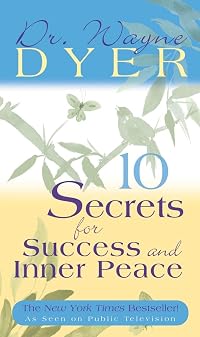
Wayne W. Dyer was born in Detroit, Michigan on May 10, 1940. His father left the family when Dyer was a toddler, and his mother placed him in foster care until he was about 10. After serving four years in the Navy, he received a bachelor's degree in history and philosophy, a master's degree in psychology, and a Ph.D. in counseling from Wayne State show more University. He worked as a high school guidance counselor and a psychologist before becoming a motivational speaker and writer. His first book, Your Erroneous Zones: Step-by-Step Advice for Escaping the Trap of Negative Thinking and Taking Control of Your Life, was published in 1976. During his lifetime, he wrote more than 30 books including Manifest Your Destiny: Nine Spiritual Principles for Getting Everything You Want, Wisdom of the Ages, There's a Spiritual Solution to Every Problem, 10 Secrets for Success and Inner Peace, The Power of Intention, Stop the Excuses!: How to Change Lifelong Thoughts, Change Your Thoughts - Change Your Life, Excuses Begone, Wishes Fulfilled, and I Can See Clearly Now. He died of a heart attack on August 29, 2015 at the age of 75. (Bowker Author Biography) show less
Awards and Honors
Distinctions
Common Knowledge
- Canonical title*
- La saggezza del tao: come cambiare modo di pensare per vivere meglio
- Original title
- Change Your Thoughts - Change Your Life: Living the Wisdom of the Tao
- Original publication date
- 2007-07-31
*Some information comes from Common Knowledge in other languages. Click "Edit" for more information.
Classifications
- Genres
- Religion & Spirituality, Nonfiction, Philosophy, General Nonfiction
- DDC/MDS
- 299.51482 — Religion Other religions Shintoism/Taoism/Other Mythologies Of Asian Origin Religions of Chinese Origin Taoism Scriptures
- LCC
- BL1900 .L35 .D94 — Philosophy, Psychology and Religion Religions. Mythology. Rationalism Religions. Mythology. Rationalism History and principles of religions Asian. Oriental By region or country China Taoism
- BISAC
Statistics
- Members
- 1,035
- Popularity
- 24,859
- Reviews
- 13
- Rating
- (4.15)
- Languages
- 8 — Danish, Dutch, English, French, German, Italian, Serbian, Spanish
- Media
- Paper, Audiobook, Ebook
- ISBNs
- 30
- UPCs
- 1
- ASINs
- 5