The Complete Rhyming Dictionary: Including The Poet's Craft Book
by Clement Wood
On This Page
Description
A complete guide to the technique, forms, and rhyming words of English poetry.Tags
Recommendations
















Member Reviews
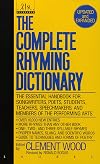
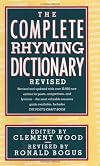
This is an updated version of Clement Wood's original work from 1936, which I have reviewed separately, although LibraryThing seems to have combined the two. There is little difference, except for the addition of 10,000 new entries. Wood's original essay on "The Poet's Craft" is included basically intact, except for at least one slight edit, which replaces the N-word with "peoples". Other than that, the original essay, with its references and quotes to poets both well-known and largely forgotten--including Clement Wood himself--appears unchanged. (Wood was a prolific writer of all types of books, including poetry, pulp fiction, pornography, and pretty much anything else you can imagine, as well as being a socialist and atheist--which show more didn't sit too well with many folks in Alabama, where he grew up.)
I do find it a bit amazing that his highly opinionated and prescriptive essay is still in print, but I guess rhyming dictionaries are not on the top of the list for paying anyone to make substantial updates. In any case, it is mostly a good introduction, though he dwells too long on really obscure French forms of poetry. I am convinced that Stephen Fry used Wood's work as the basis for his brilliant "The Ode Not Taken" which provides, in a much more modern and humorous manner, the same sort of instruction, minus the non-essentials, and with integrated exercises along the way--in line with Wood's own suggestion.
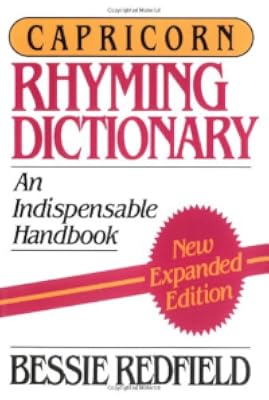
As for the rhyming dictionary itself, it is laid out in a phonetic arrangement that takes a while to get used to compared to a rhyming dictionary that includes an index (or an ebook where you can easily search for the word you want to rhyme with). But by omitting an index, there is a whole lot more room for actual rhymes.
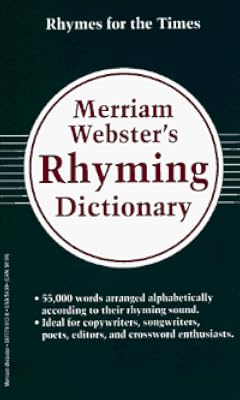
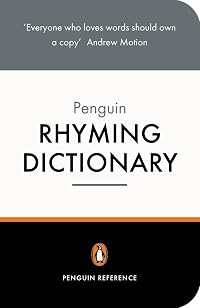
This newer version continues to insist, quite vehemently, that "north" and "forth" (and "nor" and "fore" as well) don't rhyme because the 'o' sound is different. The contention is that the 'o' in "old" and the 'o' in "for" are different sounds. But I don't buy it. Nor do the Penguin Rhyming Dictionary or Merriam-Webster Rhyming Dictionary I bought at the same time.
Of all four rhyming dictionaries I purchased, the M-W, which is organized alphabetically by the letters to be rhymed (such as "orth") may be the easiest to use. It doesn't really require an index, and you don't have to look at a lot of phonetic symbols. show less
I do find it a bit amazing that his highly opinionated and prescriptive essay is still in print, but I guess rhyming dictionaries are not on the top of the list for paying anyone to make substantial updates. In any case, it is mostly a good introduction, though he dwells too long on really obscure French forms of poetry. I am convinced that Stephen Fry used Wood's work as the basis for his brilliant "The Ode Not Taken" which provides, in a much more modern and humorous manner, the same sort of instruction, minus the non-essentials, and with integrated exercises along the way--in line with Wood's own suggestion.
As for the rhyming dictionary itself, it is laid out in a phonetic arrangement that takes a while to get used to compared to a rhyming dictionary that includes an index (or an ebook where you can easily search for the word you want to rhyme with). But by omitting an index, there is a whole lot more room for actual rhymes.
This newer version continues to insist, quite vehemently, that "north" and "forth" (and "nor" and "fore" as well) don't rhyme because the 'o' sound is different. The contention is that the 'o' in "old" and the 'o' in "for" are different sounds. But I don't buy it. Nor do the Penguin Rhyming Dictionary or Merriam-Webster Rhyming Dictionary I bought at the same time.
Of all four rhyming dictionaries I purchased, the M-W, which is organized alphabetically by the letters to be rhymed (such as "orth") may be the easiest to use. It doesn't really require an index, and you don't have to look at a lot of phonetic symbols. show less
I bought this after reading reviews of some newer versions which said that they didn't include the long introductory part on The Poet's Craft. However, my newer version does include it, with at least one slight edit, which replaces the N-word with "peoples". Other than that, the original 1936 essay, with its references and quotes to poets both well-known and largely forgotten--including Clement Wood himself--appears intact. (Wood was a prolific writer of all types of books, including poetry, pulp fiction, pornography, and pretty much anything else you can imagine, as well as being a socialist and atheist--which didn't sit too well with many folks in Alabama, where he grew up.)
I do find it a bit amazing that his highly opinionated and show more prescriptive essay is still in print, but I guess rhyming dictionaries are not on the top of the list for paying anyone to make substantial updates. In any case, it is mostly a good introduction, though he dwells too long on really obscure French forms of poetry. I am convinced that Stephen Fry used Wood's work as the basis for his brilliant "The Ode Not Taken" which provides, in a much more modern and humorous manner, the same sort of instruction, minus the non-essentials, and with integrated exercises along the way--in line with Wood's own suggestion.
As for the rhyming dictionary itself, it is laid out in a phonetic arrangement that takes a while to get used to compared to a rhyming dictionary that includes an index (or an ebook where you can easily search for the word you want to rhyme with). But by omitting an index, there is a whole lot more room for actual rhymes. I haven't done any sort of comparison with the newer edition, which claims to include 10,000 new entries, but the arrangement is the same.
Both books also insist that "north" and "forth" (and "nor" and "fore" as well) don't rhyme because the 'o' sound is different. The contention is that the 'o' in "old" and the 'o' in "for" are different sounds. But I don't buy it. Nor does the Penguin Rhyming Dictionary or Merriam-Webster Rhyming Dictionary I bought at the same time.
Of all four rhyming dictionaries, the M-W, which is organized alphabetically by the letters to be rhymed (such as "orth") may be the easiest to use. It doesn't really require an index, and you don't have to look at a lot of phonetic symbols. show less
I do find it a bit amazing that his highly opinionated and show more prescriptive essay is still in print, but I guess rhyming dictionaries are not on the top of the list for paying anyone to make substantial updates. In any case, it is mostly a good introduction, though he dwells too long on really obscure French forms of poetry. I am convinced that Stephen Fry used Wood's work as the basis for his brilliant "The Ode Not Taken" which provides, in a much more modern and humorous manner, the same sort of instruction, minus the non-essentials, and with integrated exercises along the way--in line with Wood's own suggestion.
As for the rhyming dictionary itself, it is laid out in a phonetic arrangement that takes a while to get used to compared to a rhyming dictionary that includes an index (or an ebook where you can easily search for the word you want to rhyme with). But by omitting an index, there is a whole lot more room for actual rhymes. I haven't done any sort of comparison with the newer edition, which claims to include 10,000 new entries, but the arrangement is the same.
Both books also insist that "north" and "forth" (and "nor" and "fore" as well) don't rhyme because the 'o' sound is different. The contention is that the 'o' in "old" and the 'o' in "for" are different sounds. But I don't buy it. Nor does the Penguin Rhyming Dictionary or Merriam-Webster Rhyming Dictionary I bought at the same time.
Of all four rhyming dictionaries, the M-W, which is organized alphabetically by the letters to be rhymed (such as "orth") may be the easiest to use. It doesn't really require an index, and you don't have to look at a lot of phonetic symbols. show less
An excellent reference work, but I personally love to just read it aloud--it makes some very interesting, funny and sometimes profound statements that way, sort of stream of consciousness style.
One of my favourite works, and of course, very useful if you need or want to rhyme in English.
One of my favourite works, and of course, very useful if you need or want to rhyme in English.
This is one of the coolest books ever! It makes rhyming easier, and it's an easy to follow dictionary once you get the hang of it. It's great for teachers, too, because it makes it easier to develop word families.
A wonderful and much-used resource.
01/00/00
Ratings
Members
- Recently Added By
Author Information
95+ Works 1,331 Members
Clement Wood was a writer, lawyer, and schoolteacher who was born in Alabama in 1883. Wood's work as editor for The Complete Rhyming Dictionary is his best remembered contribution to modern poets everywhere. Clement Wood died in 1950. (Bowker Author Biography)
Common Knowledge
- Dedication
- TO GLORIA GODDARD
- First words
- The word poetry is often used loosely to mean whatever embodies the products of imagination and fancy, the finer emotions and the sense of ideal beauty.
- Last words
- (Click to show. Warning: May contain spoilers.)There are other words which have no proper rhyming mates, but have words so close in sound that they are used as rhyming mates by many poets:
blague (vague). . .
Classifications
Statistics
- Members
- 861
- Popularity
- 31,817
- Reviews
- 6
- Rating
- (4.14)
- Languages
- English, German
- Media
- Paper
- ISBNs
- 4
- ASINs
- 12