A Student of Weather
by Elizabeth Hay
On This Page
Description
From some accidents of love and weather we never quite recover. At the worst of the Prairie dust bowl of the 1930s, a young man appears out of a blizzard and forever alters the lives of two sisters. There is the beautiful, fastidious Lucinda, and the tricky and tenacious Norma Joyce, at first a strange, self-possessed child, later a woman who learns something of self-forgiveness and of the redemptive nature of art. Their rivalry sets the stage for all that follows in a narrative spanning show more over thirty years, beginning in Saskatchewan and moving, in the decades following the war, to Ottawa and New York City. Disarming, vividly told, unforgettable, this is a story about the mistakes we make that never go away, about how the things we want to keep vanish and the things we want to lose return to haunt us. show lessTags
Recommendations





















Member Recommendations
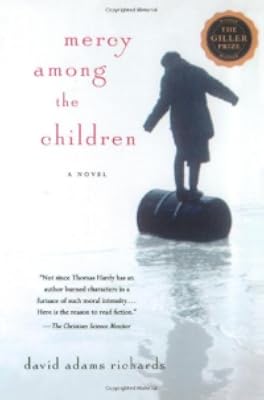
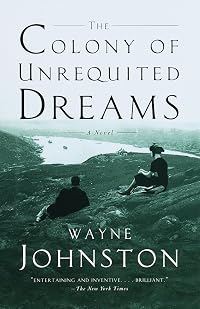
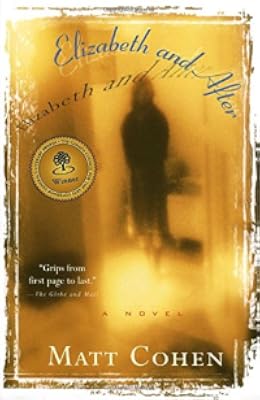
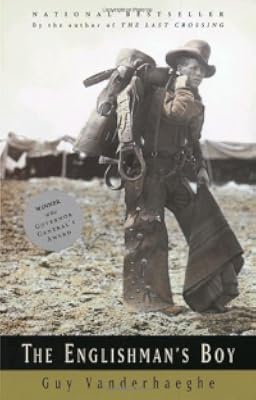
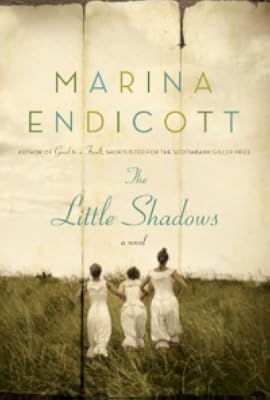
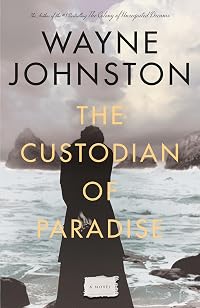
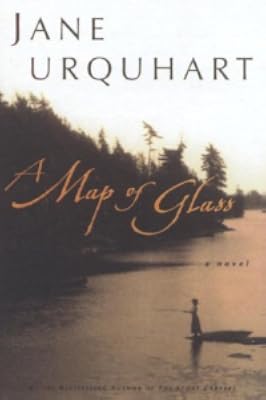
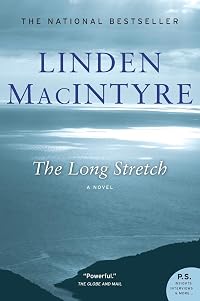
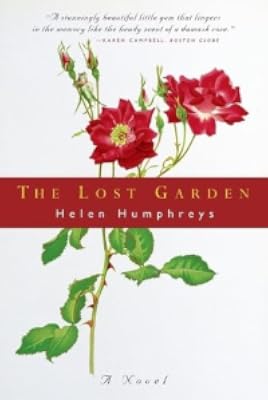
Miels Both are lyrical, heavily atmospheric novels. Both concern the relationship between a strange, bookish protagonist and her more sensible sister. In Robinson's book, it's an eccentric aunt who comes between them. In Hay's, it's a charming, seductive man. Both books are very much about love, loss, social ostracism, and ephemeral/elemental beauty.

Member Reviews
In the dust bowl of 1930s Saskatchewan, charming, careless Maurice Dove, the eponymous student of weather appears on a farm and turns the lives of two sisters upside down. Frugal, hard-working Lucinda captivates Maurice with her beauty while grasping, passionate Norma Joyce captures his attention with her cleverness. The sisters‘ inexhaustible fascination with him shapes the whole of their lives from the prairies to Ottawa to New York City. A Student of Weather is a quiet, beautifully written story of unrequited love, a sisterly struggle for blessing, and, ultimately self-discovery and forgiveness.
A Student of Weather is a car without brakes. No. A Student of Weather is a car without brakes set at the top of a very tall hill. No. A Student of Weather is a car without brakes set at the top of a very tall hill...and someone gives it a push. This is what is was like to read Elizabeth Hay's first novel. It started off easy enough, slow enough, gentle enough, harmless enough. Then, without any warning at all it is careening crazily almost out of control. Impossible to stop. Stopping the read proved impossible, too. I seriously couldn't put it down.
As mentioned before, the story starts out simply. Maurice Dove is a researcher, come to study the weather of Saskatchewan. He stays with the Hardy family - Ernest and his two daughters show more Lucinda and Norma-Joyce. Both daughters, despite being very young, fall in love with Mr. Dove. From there, simplicity comes to a halt. A Student of Weather is a novel full of contrasting themes. While Lucinda is fair-haired, beautiful and virtuous Norma-Joyce is dark-haired, impulsive and outspoken. While both sisters find ways to fall in love with their visitor, both also find ways to hate each other. Even the landscapes within the story are contrasting. Norma-Joyce's childhood prairie home cannot compare to the bustling city of her adulthood, New York City. As time progresses and Norma-Jean grows to be a woman with a child of her own, even her child is a conflicted in personality - both shy and loud simultaneously.
On the surface this seems like a love story - two sisters vying for the affections of a traveling man who loves neither of them. Digging deeper it is a story of betrayal and survival. It is the story of pain and loss and the idea that not every broken heart gets mended. show less
As mentioned before, the story starts out simply. Maurice Dove is a researcher, come to study the weather of Saskatchewan. He stays with the Hardy family - Ernest and his two daughters show more Lucinda and Norma-Joyce. Both daughters, despite being very young, fall in love with Mr. Dove. From there, simplicity comes to a halt. A Student of Weather is a novel full of contrasting themes. While Lucinda is fair-haired, beautiful and virtuous Norma-Joyce is dark-haired, impulsive and outspoken. While both sisters find ways to fall in love with their visitor, both also find ways to hate each other. Even the landscapes within the story are contrasting. Norma-Joyce's childhood prairie home cannot compare to the bustling city of her adulthood, New York City. As time progresses and Norma-Jean grows to be a woman with a child of her own, even her child is a conflicted in personality - both shy and loud simultaneously.
On the surface this seems like a love story - two sisters vying for the affections of a traveling man who loves neither of them. Digging deeper it is a story of betrayal and survival. It is the story of pain and loss and the idea that not every broken heart gets mended. show less
By the end of this book I felt as if I had spent many seasons on the Canadian prairies and endured much harsh weather; as the book covers more than 30 years the passage of time is marked by a multitude of dust storms, droughts and freezing winters. Brrr! Not only does the weather keep changing but the action keeps moving backwards and forwards between Saskatchewan, Ottawa and New York. A bit hard to keep track of at times.
But don’t get me wrong, I liked the book very much and enjoyed my trip to Canada.
The descriptions of the natural environment (the weather, seasons, flora, landscape) are excellent.
"Here you find almost every extreme. The coldest winters and the hottest summers, the longest days and the shortest, the richest soil and show more the poorest, the biggest views of the simplest skies, the least rain, the most wind, the best light and the worst dust in this best and worst of all worlds."
Set in Saskatchewan in the 1930’s the story focuses on two strongly contrasted sisters and their rivalry to win the attentions of a handsome visiting weather expert, Maurice Dove, aged 23. The younger sister, Norma Joyce Hardy is no angel – at times she’s selfish, willful and ruthless, but she has an appealing directness, resourcefulness, a passionate curiosity about the natural world, and a thirst for knowledge, experience - and love. She’s only 8 years old but she becomes ‘imprinted’ on Maurice and spends the next 30 years hoping the love will be reciprocated, but it is not.
"A child falls in love with a man, and the man is seduced by the intensity he has generated. Then his attention shifts to someone else. End of story."
By the end of the novel Norma has outlived her mother, father, sister and brother. She’s glad to have survived, but she’s also gained some insight into her own deficiencies.
Hay writes with intelligence, deft humour and the imagery is often superb. show less
But don’t get me wrong, I liked the book very much and enjoyed my trip to Canada.
The descriptions of the natural environment (the weather, seasons, flora, landscape) are excellent.
"Here you find almost every extreme. The coldest winters and the hottest summers, the longest days and the shortest, the richest soil and show more the poorest, the biggest views of the simplest skies, the least rain, the most wind, the best light and the worst dust in this best and worst of all worlds."
Set in Saskatchewan in the 1930’s the story focuses on two strongly contrasted sisters and their rivalry to win the attentions of a handsome visiting weather expert, Maurice Dove, aged 23. The younger sister, Norma Joyce Hardy is no angel – at times she’s selfish, willful and ruthless, but she has an appealing directness, resourcefulness, a passionate curiosity about the natural world, and a thirst for knowledge, experience - and love. She’s only 8 years old but she becomes ‘imprinted’ on Maurice and spends the next 30 years hoping the love will be reciprocated, but it is not.
"A child falls in love with a man, and the man is seduced by the intensity he has generated. Then his attention shifts to someone else. End of story."
By the end of the novel Norma has outlived her mother, father, sister and brother. She’s glad to have survived, but she’s also gained some insight into her own deficiencies.
Hay writes with intelligence, deft humour and the imagery is often superb. show less
This book is totally mesmerizing. I really couldn't put it down. I was totally caught up in the lives of the two sisters Lucinda and Norma Joyce. The book begins right smack in the middle of the dustbowl 1930's on a Saskatchewan farm. This farm is where Lucinda and Norma Joyce were born, as well as Norma Joyce's twin brother Norman. Times were hard and all the country families pulled together to help everyone out. Norma Joyce's twin brother dies at the age of 2 and her mother when Norma Joyce was a little girl. Her sister Lucinda takes over her mother's chores. A young man shows up at their door one day and that event forever changes their lives. From then on Norma Joyce and her sister are rivals for the affection of this captivating show more young man. This rivalry dogs their relationship forever and changes the course of Norma Joyce's life. And the young man-well he continues on with his own life after he leaves the Hardy girls behind and he's blissfully unaware of the havoc that he has caused. The story covers more than three decades and the setting moves on to Ottawa when Lucinda, Norma Joyce and their father move there. It continues on in New York City where Norma Joyce moves to get away from what she feels is an atmosphere at home that is crushing the life out of her. This is an emotionally intense book to read. Ms. Hay's prose is so succinct and so brilliantly evocative that the story just leaps off the page. And it reminded me that most times people aren't really what they seem to be. The line between good and bad is blurred and no one is ever always good, and in most cases, not always bad either. show less
Elizabeth Hay has this wonderful knack of really embedding you in the location of her novels. One morning, I was so deeply surrounded by 1930s Saskatchewan dust that it was a surprise to see Ontario trees and a lake outside my window when I put the book down.
A lot of the book is about the uneasy relationship between citizens of those two provinces. Norma Joyce Hardy is Saskatchewan: mercurial, productive and yet needy. Maurice Dove is Ontario: sophisticated, confident, self-absorbed.
Loved it.
A lot of the book is about the uneasy relationship between citizens of those two provinces. Norma Joyce Hardy is Saskatchewan: mercurial, productive and yet needy. Maurice Dove is Ontario: sophisticated, confident, self-absorbed.
Loved it.
Yet another re-read. Loved this the first time.
Oh, I still LOVE this book! Elizabeth Hay is a great talent.
"Two sisters fell down the same well, and the well was Maurice Dove."
Acclaimed Canadian short story writer Hay's first novel, which was shortlisted for the prestigious Giller Prize in 2000, is a compelling and highly original debut telling the story of two sisters and the jealousy that irrevocably changes their lives when a young student comes to stay on their father's Saskatchewan farm in the 1930s.
Ernest Hardy is widowed, a single father raising two young girls on the rural prairies, when twenty-something Maurice Dove arrives from Ottawa to study the region's unusual weather patterns. Eight-year-old Norma Joyce, dark, fiercely show more intelligent, and inflicted with early puberty, claims Maurice from the first moment she sees him, albeit unrequitedly. Her sister, the "beautiful, saintly" Lucinda, 17, falls deeply in love. After Maurice leaves and his letters stop coming, Lucinda suffers a two-month-long deep depression.
Seven years later, the sisters cannot forget Maurice. The Hardy family inherits a relative's house and moves to Ottawa, on the same block as the Dove family home. What occurs between then teenaged Norma Joyce and the war-damaged Maurice brings to light a childhood betrayal significant enough to devastate everyone involved. Moving seamlessly through 30 years in Saskatchewan, Ottawa and New York City, Hay's novel offers up just the right combination of melodrama and melancholy. show less
Oh, I still LOVE this book! Elizabeth Hay is a great talent.
"Two sisters fell down the same well, and the well was Maurice Dove."
Acclaimed Canadian short story writer Hay's first novel, which was shortlisted for the prestigious Giller Prize in 2000, is a compelling and highly original debut telling the story of two sisters and the jealousy that irrevocably changes their lives when a young student comes to stay on their father's Saskatchewan farm in the 1930s.
Ernest Hardy is widowed, a single father raising two young girls on the rural prairies, when twenty-something Maurice Dove arrives from Ottawa to study the region's unusual weather patterns. Eight-year-old Norma Joyce, dark, fiercely show more intelligent, and inflicted with early puberty, claims Maurice from the first moment she sees him, albeit unrequitedly. Her sister, the "beautiful, saintly" Lucinda, 17, falls deeply in love. After Maurice leaves and his letters stop coming, Lucinda suffers a two-month-long deep depression.
Seven years later, the sisters cannot forget Maurice. The Hardy family inherits a relative's house and moves to Ottawa, on the same block as the Dove family home. What occurs between then teenaged Norma Joyce and the war-damaged Maurice brings to light a childhood betrayal significant enough to devastate everyone involved. Moving seamlessly through 30 years in Saskatchewan, Ottawa and New York City, Hay's novel offers up just the right combination of melodrama and melancholy. show less
Elizabeth Hay has this wonderful knack of really embedding you in the location of her novels. One morning, I was so deeply surrounded by 1930s Saskatchewan dust that it was a surprise to see Ontario trees and a lake outside my window when I put the book down.
A lot of the book is about the uneasy relationship between citizens of those two provinces. Norma Joyce Hardy is Saskatchewan: mercurial, productive and yet needy. Maurice Dove is Ontario: sophisticated, confident, self-absorbed.
Loved it.
A lot of the book is about the uneasy relationship between citizens of those two provinces. Norma Joyce Hardy is Saskatchewan: mercurial, productive and yet needy. Maurice Dove is Ontario: sophisticated, confident, self-absorbed.
Loved it.
Members
- Recently Added By
Published Reviews
ThingScore 92
But A Student of Weather is not simply a well-wrought example of a fine CanLit premise (Two Prairie Sisters in Love with the Same Man). The plot itself is wide in both physical and emotional geography, and textured enough that the book moves beyond the spare and elegant. . . . Add the seductive incisiveness of the writing, and it’s nearly impossible not to gobble the book whole, even when show more you want to savour every bite. show less
added by Nickelini
These excesses don't spoil ''A Student of Weather,'' which, like its maddening characters, is nearly impossible not to like. Even as a child, Norma Joyce ''has to make everybody uncomfortable.'' Hay seems to share that impulse -- and in this disquieting novel, she succeeds.
added by Nickelini
Top-flight fiction keeps arriving from Canada with remarkable frequency these days. This time, the high standards set by Alice Munro, Robertson Davies, and others are matched—and then some—by a dramatic first novel from an award-winning Ottawa journalist and short-story writer (Small Change, 1997).
In stunningly precise and suggestive prose, Hay tells a story of obsession and rivalry neatly show more summarized at the start: “Two sisters fell down a well, and the well was Maurice Dove.” show less
In stunningly precise and suggestive prose, Hay tells a story of obsession and rivalry neatly show more summarized at the start: “Two sisters fell down a well, and the well was Maurice Dove.” show less
added by Nickelini
Lists

The Best of Canadian Literature
235 works; 33 members

Literature About Women and Girls
394 works; 39 members

Books Read in 2022
5,168 works; 114 members

Canadian Historical Fiction 🇨🇦
157 works; 8 members
Author Information

12+ Works 2,516 Members
Elizabeth Hay was born in Owen Sound, Ontario on October 22, 1951. She attended Victoria College, University of Toronto. She worked for Canadian Broadcasting Corporation radio for ten years as a host, interviewer, and documentary maker. She has written several books including Small Change, A Student of Weather, Garbo Laughs, and The Only Snow in show more Havana. She won the 2007 Scotiabank Giller Prize for Late Nights on Air. In 2002, she received the Marian Engel Award for her body of work, which includes novels, short fiction, and creative non-fiction. (Bowker Author Biography) show less
Awards and Honors
Common Knowledge
- Canonical title
- A Student of Weather
- Original publication date
- 2000
- People/Characters
- Norma Joyce Hardy; Lucinda Hardy; Ernest Hardy; Maurice Dove; Johnny Hardy; Mrs Gillot
- Important places
- Saskatchewan, Canada; Ottawa, Ontario, Canada; New York, New York, USA
- Epigraph
- "But when there are two sisters, one is uglier and more clumsy than the other, one is less clever, one is more promiscuous. Even when all the better qualities unite in one sister, as most often happens, she will not be happy,... (show all) because the other, like a shadow, will follow her success with green eyes,"
LYDIA DAVIS, Break It Down - Dedication
- For Rhoda Barrett and Ben Fried
- First words
- Soms laat ze 's avonds nog eens alle details de revue passeren, beginnend met het weer en dan de druppel bloed op het oude laken - waarna ze snel een wens deed: ik wil een man met rechte witte tanden en rode lippen - en tensl... (show all)otte de komst van die man. Zijn stem buiten, haar hand op de ronde bevroren plek op zijn wang, de appel die hij meebracht.
Some nights she still goes over every detail, beginning with the weather and proceeding to the drop of blood on the old sheet - her quick wish for a man with straight white teeth and red lips - and then his arrival. His voice... (show all) outside, her hand on the coin of frostbite on his cheek, his gift of an apple. - Last words
- (Click to show. Warning: May contain spoilers.)I can use this, she thinks to herself. I can begin with the bruise.
Classifications
Statistics
- Members
- 486
- Popularity
- 62,375
- Reviews
- 21
- Rating
- (3.75)
- Languages
- Dutch, English, German, Italian
- Media
- Paper, Audiobook, Ebook
- ISBNs
- 17
- ASINs
- 5