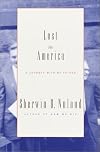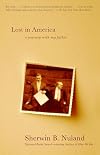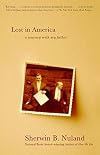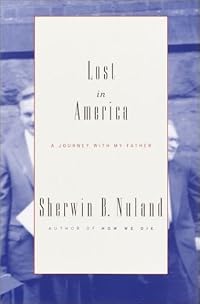
Lost in America: A Journey with My Father
by Sherwin B. Nuland
On This Page
Description
A writer renowned for his insight into the mysteries of the body now gives us a lambent and profoundly moving book about the mysteries of family. At its center lies Sherwin Nuland’s Rembrandtesque portrait of his father, Meyer Nudelman, a Jewish garment worker who came to America in the early years of the last century but remained an eternal outsider. Awkward in speech and movement, broken by the premature deaths of a wife and child, Meyer ruled his youngest son with a regime of rage, show more dependency, and helpless love that outlasted his death. In evoking their relationship, Nuland also summons up the warmth and claustrophobia of a vanished immigrant New York, a world that impelled its children toward success yet made them feel like traitors for leaving it behind. Full of feeling and unwavering observation, Lost in America deserves a place alongside such classics as Patrimony and Call It Sleep. show lessTags
Recommendations



















Member Reviews
After reading innumerable memoirs featuring irresponsible parents, here is one so different - where the child hates his father for reasons which seem cruel and heartless.
I read and really admired Dr. Nuland's "How We Die" and he himself died recently. His obit mentioned this book and it is a shocker. Beyond being the quintessential Jewish boyhood in the Bronx, the introduction describes Nuland's near-lobotomy in his search of a cure for his severe depression. What follows is truly disturbing, including a shocker involving his father's own physical wretchedness and how Dr. Nuland discovered the cause.
Almost unbearable in its bravery and truth and an essential read.
I read and really admired Dr. Nuland's "How We Die" and he himself died recently. His obit mentioned this book and it is a shocker. Beyond being the quintessential Jewish boyhood in the Bronx, the introduction describes Nuland's near-lobotomy in his search of a cure for his severe depression. What follows is truly disturbing, including a shocker involving his father's own physical wretchedness and how Dr. Nuland discovered the cause.
Almost unbearable in its bravery and truth and an essential read.
Skilled surgeon and National Book Award Winner Sherwin Nuland writes a heart-wrenchingly painful memoir about growing up in immigrant New York in the 30s and 40s. Russian Jews, struggling to make ends meet in their southwest Bronx neighborhood, Nuland’s Mother, Father and older brother shared close quarters with his maternal Grandma Bubbeh and Aunt Rose. While the women of the family were affectionate with deep ties to their extended family, Sherwin’s father was domineering, angry and distant. Never gaining proficiency in English and plagued with a progressively crippling physical condition, Meyer Nuland often required his youngest son to assist him, a task that never ceased to embarrass Sherwin and that fed his growing anger and show more resentment toward his father, who remained always an outsider in his adopted homeland. show less
7/2012 - Cyrille Cobe : I almost rejected this gem for thinking the beginning words were far more cerebral and the topic far more depressing than I wanted for a summer read. However, I gave it one more try and found the story touching, poignant, and relevant. The author, known for other works including “How We Die”, is an excellent writer with a gift for sharing his extraordinary observations about human behavior. This father son story is an eye opener that in a few pages speaks volumes about family dynamics and the legacies we have received and will leave behind. Anyone who grew up in the Bronx will enjoy this for the setting at the very least.
About a son and father, often at odds, their loyalty to one another and the obvious love displayed in hidden ways. I shed tears as I thought of my own aging father and the too often silent love that connects us.
Ratings
Members
- Recently Added By
Author Information

40+ Works 4,965 Members
Dr. Sherwin B. Nuland was born Shepsel Ber Nudelman on December 8, 1930 in the Bronx, New York. He received a bachelor's degree from New York University in 1951 and a medical degree from Yale University in 1955. He decided to specialize in surgery and in 1958, became the chief surgical resident at Yale-New Haven Hospital. From 1962 to 1991, he was show more a clinical professor of surgery at Yale University, where he also taught bioethics and medical history. Before retiring to write full-time, he was a surgeon at Yale-New Haven Hospital from 1962 to 1992. His books include Doctors: The Biography of Medicine, The Wisdom of the Body, The Doctors' Plague, The Uncertain Art, and the memoir Lost in America. His book, How We Die, won the National Book Award for nonfiction in 1994. He was also a contributing editor to The American Scholar and The New Republic. He died of prostate cancer on March 3, 2014 at the age of 83. (Bowker Author Biography) show less
Awards and Honors
Distinctions
Classifications
- Genres
- Biography & Memoir, Nonfiction, General Nonfiction, History
- DDC/MDS
- 974.7 — History & geography History of North America Northeastern United States (New England and Middle Atlantic states) New York
- LCC
- F128.9 .J5 .N85 — Local History of the United States, Canada and Latin America United States local history New York
- BISAC
Statistics
- Members
- 184
- Popularity
- 177,294
- Reviews
- 4
- Rating
- (4.05)
- Languages
- English, German
- Media
- Paper, Audiobook, Ebook
- ISBNs
- 8
- ASINs
- 2