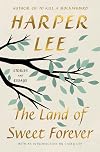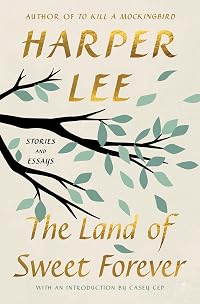
The Land of Sweet Forever: Stories and Essays
by Harper Lee
On This Page
Description
"A posthumous collection of newly discovered short stories and previously published essays and magazine pieces, offering a fresh perspective on the ... literary mind of Harper Lee"--Provided by publisher.Tags
Recommendations





Member Reviews
I never expected to react to a Harper Lee book with indifference, but this week the newly-released The Land of Sweet Forever managed it. To Kill a Mockingbird is an undisputed masterpiece, of course, and a wonderful read besides, and even Go Set a Watchman, its controversial and arguably cynically-released follow-up/early draft, had enough about it to excite commentary.
The Land of Sweet Forever, in contrast, is the very definition of scraping the bottom of the barrel. It pulls together eight short stories written by a pre-Mockingbird Harper Lee alongside eight even shorter entries which are charitably labelled 'essays' and other 'miscellaneous pieces'.
The latter can be dispatched by this review immediately: only the first 'Love – in show more Other Words' enters essay territory and merits the reading. The rest include the transcript of a lacklustre lecture delivered on an Alabaman historian and, God help us, a brief letter to Oprah's magazine and a recipe for bread. Even the autobiographical pieces, such as her impressions of meeting Gregory Peck for the film version of Mockingbird or – more importantly – telling us in 'Christmas to Me' how her friends paid for her to have a year off work in order to write the novel, are delivered rather blandly.
But it is the short stories which are the most disappointing. Only one, 'The Pinking Shears', offers anything close to the writer's voice we would expect from Harper Lee, and even if we try to go into the rest without any Mockingbird-induced preconceptions, they're inconclusive, milquetoast pieces. The stories go nowhere, say little (if anything) and their characters vanish from your mind within moments, if indeed they ever landed there in the first place. There's some of the writer's gift on show, but all eight stories are pre-Mockingbird attempts that were rejected by the magazines that a young Nelle submitted them to. And, reading them, you have to say – rightfully so.
I responded to The Land of Sweet Forever with indifference then, but not solely because of the unimpressive nature of its contents. That indifference was also a defence mechanism, because the mystery of Harper Lee, the one that I encountered in school many years ago – the author who birthed one impressive Great American Novel into the world at the first attempt and then became a recluse, part Scout Finch and part Boo Radley – has been thoroughly destroyed.
If Go Set a Watchman at least had some literary and biographical merit to temper its dubiously moral and cynical release, this very slight book (tellingly, there are blank pages separating each story and 'essay' from the next) has none. Each release – admittedly without Lee's consent – dilutes that mystery of the great writer and replaces it with a colder reality. The more miscellanea that we are presented with for sale, and which gets touted as wonderful genius by the media and paid reviewers, the more the emperor is stripped of their clothes. The more we see of what's been pulled from her drawers and her notepapers, the less we see Mockingbird dominate our appreciation of her. The more that gets released in Harper Lee's name, the more unsightly trash accumulates on the ground around her pedestal.
Replacing the mysterious legacy we accepted pre-Watchman, we begin to entertain a more unfortunate hypothesis: that perhaps Harper Lee was not a great writer, though she did write a great book. As she relates in 'Christmas to Me', that unprecedented gift of a year's salary from her friends allowed her to write To Kill a Mockingbird, a stroke of good fortune and patronage that undoubtedly many other talented writers have failed to get as they faded into unread or unrealised obscurity. The giving of money made her name; it is ironic that it is the desire to make money in her name, with Watchman and now The Land of Sweet Forever, which is causing it to be tarnished. show less
The Land of Sweet Forever, in contrast, is the very definition of scraping the bottom of the barrel. It pulls together eight short stories written by a pre-Mockingbird Harper Lee alongside eight even shorter entries which are charitably labelled 'essays' and other 'miscellaneous pieces'.
The latter can be dispatched by this review immediately: only the first 'Love – in show more Other Words' enters essay territory and merits the reading. The rest include the transcript of a lacklustre lecture delivered on an Alabaman historian and, God help us, a brief letter to Oprah's magazine and a recipe for bread. Even the autobiographical pieces, such as her impressions of meeting Gregory Peck for the film version of Mockingbird or – more importantly – telling us in 'Christmas to Me' how her friends paid for her to have a year off work in order to write the novel, are delivered rather blandly.
But it is the short stories which are the most disappointing. Only one, 'The Pinking Shears', offers anything close to the writer's voice we would expect from Harper Lee, and even if we try to go into the rest without any Mockingbird-induced preconceptions, they're inconclusive, milquetoast pieces. The stories go nowhere, say little (if anything) and their characters vanish from your mind within moments, if indeed they ever landed there in the first place. There's some of the writer's gift on show, but all eight stories are pre-Mockingbird attempts that were rejected by the magazines that a young Nelle submitted them to. And, reading them, you have to say – rightfully so.
I responded to The Land of Sweet Forever with indifference then, but not solely because of the unimpressive nature of its contents. That indifference was also a defence mechanism, because the mystery of Harper Lee, the one that I encountered in school many years ago – the author who birthed one impressive Great American Novel into the world at the first attempt and then became a recluse, part Scout Finch and part Boo Radley – has been thoroughly destroyed.
If Go Set a Watchman at least had some literary and biographical merit to temper its dubiously moral and cynical release, this very slight book (tellingly, there are blank pages separating each story and 'essay' from the next) has none. Each release – admittedly without Lee's consent – dilutes that mystery of the great writer and replaces it with a colder reality. The more miscellanea that we are presented with for sale, and which gets touted as wonderful genius by the media and paid reviewers, the more the emperor is stripped of their clothes. The more we see of what's been pulled from her drawers and her notepapers, the less we see Mockingbird dominate our appreciation of her. The more that gets released in Harper Lee's name, the more unsightly trash accumulates on the ground around her pedestal.
Replacing the mysterious legacy we accepted pre-Watchman, we begin to entertain a more unfortunate hypothesis: that perhaps Harper Lee was not a great writer, though she did write a great book. As she relates in 'Christmas to Me', that unprecedented gift of a year's salary from her friends allowed her to write To Kill a Mockingbird, a stroke of good fortune and patronage that undoubtedly many other talented writers have failed to get as they faded into unread or unrealised obscurity. The giving of money made her name; it is ironic that it is the desire to make money in her name, with Watchman and now The Land of Sweet Forever, which is causing it to be tarnished. show less
Most of us in America have read Harper Lee's To Kill a Mockingbird at sometime throughout our lives. It's the clearest account of Jim Crow on Southern American culture and of the power of a few upright people to fix it. Lee's Alabama roots are well known, but she actually wrote the classic in New York City. Beforehand, she wrote a series of short stories with themes that forecast her great accomplishment. Posthumously, those stories have come to light in this collection.
The short stories include some tales from New York City but mostly tales from Alabama. Some of To Kill a Mockingbird's themes and characters are given early debuts in these works. Like the novel's characters, these characters are memorable despite living in only 10-20 show more pages each. Lee's genius is beyond apparent.
A series of essays also accompany the work. Some of those essays are themselves works of genius; others tell the story of a friend financing Lee to write To Kill a Mockingbird as a Christmas gift; still others share Lee's acute insight into human nature. I particularly enjoyed her diatribe on love's nature, published originally in Vogue. When she died, we certainly lost a gem, albeit a hermit-like gem.
I hope every literate American will read Lee's To Kill a Mockingbird at some point in their lives. For those not literate, I hope they see the movie. For the rest of her life, the public was starved for more insight from this reclusive woman. She did not comply. Now that we lost her, we have two more works of hers to study, Go Set a Watchman and this collection of short stories and essays. Honestly, this collection is the best of the two. I enjoyed it thoroughly and recommend it wholeheartedly to anyone wanting to engage with Lee on a deeper level. show less
The short stories include some tales from New York City but mostly tales from Alabama. Some of To Kill a Mockingbird's themes and characters are given early debuts in these works. Like the novel's characters, these characters are memorable despite living in only 10-20 show more pages each. Lee's genius is beyond apparent.
A series of essays also accompany the work. Some of those essays are themselves works of genius; others tell the story of a friend financing Lee to write To Kill a Mockingbird as a Christmas gift; still others share Lee's acute insight into human nature. I particularly enjoyed her diatribe on love's nature, published originally in Vogue. When she died, we certainly lost a gem, albeit a hermit-like gem.
I hope every literate American will read Lee's To Kill a Mockingbird at some point in their lives. For those not literate, I hope they see the movie. For the rest of her life, the public was starved for more insight from this reclusive woman. She did not comply. Now that we lost her, we have two more works of hers to study, Go Set a Watchman and this collection of short stories and essays. Honestly, this collection is the best of the two. I enjoyed it thoroughly and recommend it wholeheartedly to anyone wanting to engage with Lee on a deeper level. show less
This was nice. This was pleasant.
Which, for the author of one of the most influential books of my life, is rather disappointing.
The first, mostly fictional half was okay, with stories that almost felt more anecdotal than anything, but they raised a few smiles from me, though the fire of Scout had not ignited in these offshoot adventures. I will say I enjoyed the New York stories more.
The second half, non-fiction essays that were mostly previously published, I tended to enjoy a bit more, until the dreadful, and dreadfully long review of a book on the history of Alabama.
Overall, it's very much a mixed bag, but with the dearth of writing we've gotten from Harper Lee, I'm guessing it pretty much all had to be included just to meet a certain show more minimum page count.
Which again, is much of the problem.
All of this shows just how much Lee captured lightning in a bottle with TO KILL A MOCKINGBIRD. show less
Which, for the author of one of the most influential books of my life, is rather disappointing.
The first, mostly fictional half was okay, with stories that almost felt more anecdotal than anything, but they raised a few smiles from me, though the fire of Scout had not ignited in these offshoot adventures. I will say I enjoyed the New York stories more.
The second half, non-fiction essays that were mostly previously published, I tended to enjoy a bit more, until the dreadful, and dreadfully long review of a book on the history of Alabama.
Overall, it's very much a mixed bag, but with the dearth of writing we've gotten from Harper Lee, I'm guessing it pretty much all had to be included just to meet a certain show more minimum page count.
Which again, is much of the problem.
All of this shows just how much Lee captured lightning in a bottle with TO KILL A MOCKINGBIRD. show less
Eight stories and several previously published essays, collected nine years after Harper Lee's death in 2016.
The introduction suggests the content of the eight unpublished stories was largely repurposed for Watchman and Mockingbird. I don't recall either novel in well enough detail to confirm, but these certainly seem to stand up on their own. "The Water Tank" has an unfinished feel, but "The Binoculars" roused my sense of fairness and "The Pinking Shears" was a good chuckle, all three offering a look at childhood in the south like what Mockingbird depicted. "The Viewers and the Viewed" sounds surprisingly like Fran Lebowitz. If "The Cat's Meow" makes you feel uncomfortable, that's a good sign.
The essays only comprise the last quarter show more or so of the book and can be read in one swoop - the standout being Lee's tale of the very special Christmas gift that continues to give to this day. show less
The introduction suggests the content of the eight unpublished stories was largely repurposed for Watchman and Mockingbird. I don't recall either novel in well enough detail to confirm, but these certainly seem to stand up on their own. "The Water Tank" has an unfinished feel, but "The Binoculars" roused my sense of fairness and "The Pinking Shears" was a good chuckle, all three offering a look at childhood in the south like what Mockingbird depicted. "The Viewers and the Viewed" sounds surprisingly like Fran Lebowitz. If "The Cat's Meow" makes you feel uncomfortable, that's a good sign.
The essays only comprise the last quarter show more or so of the book and can be read in one swoop - the standout being Lee's tale of the very special Christmas gift that continues to give to this day. show less
I have always been a huge fan of Harper Lee, mainly through her masterful classic “To Kill a Mockingbird.” I taught that book for most of my 40 years in the classroom teaching high school English. I re-read the novel every year, not because I had to in order to conduct classes about it; I re-read it because I loved it so much. When I found this book, published in 2025, I was naturally skeptical, primarily because when “To Set a Watchman,” Lee’s “discovered” book in 2015 and published that year, came out, I rushed to read it and then was somewhat disappointed in it. It was not, after all, “To Kill a Mockingbird.” I checked out “The Land of the Sweet Forever” from our local library in audio form and listened to it show more during my daily 30- minute walk. I was immediately pleased to hear one of the most pleasant voices of all time narrating: Ellen Burstyn. I’m not sure any other voice could have done justice to Harper Lee’s beautiful words. The book is made up of short stories, essays, and letters, some of which have been previously published, but many of which have not. I thoroughly enjoyed each one until the last, “Romance and High Adventure,” a paper presented by Harper Lee in 1983 in Eursaula, Alabama, at a literary festival. Maybe it was that trying to follow the essay on audio was just too much, especially since staying upright on the treadmill as I listened was a full time job in itself. I just didn’t enjoy it as much as I did the rest of the book. I liked this book so much, I’ve decided to order the print version just to have it on hand. I haven’t bought a print book in years, so this is a milestone. All of my reading is on my Kindle or through my earbuds. Any lover of TKAM and Harper Lee will enjoy this small book with almost the same enthusiasm as that delivered by Nelle Harper Lee’s classic gem. show less
This originally appeared at The Irresponsible Reader. If you like this post, you might like others on that site. Consider checking it out!
---
WHAT'S THE LAND OF SWEET FOREVER?
The short version is that this is a collection of eight short stories and eight short non-fiction pieces by Harper Lee.
That seems a bit lacking, so here's what the Publisher says:
Harper Lee remains a landmark figure in the American canon – thanks to Scout, Jem, Atticus, and the other indelible characters in her Pulitzer-winning debut, To Kill a Mockingbird; as well as for the darker, late-’50s version of small-town Alabama that emerged in Go Set a Watchman, her only other novel, published in 2015 after its rediscovery. Less remembered, until now, however, is show more Harper Lee the dogged young writer, who crafted stories in hopes of magazine publication; Lee the lively New Yorker, Alabamian, and friend to Truman Capote; and the Lee who peppered the pages of McCall’s and Vogue with thoughtful essays in the latter part of the twentieth century.
The Land of Sweet Forever combines Lee’s early short fiction and later nonfiction in a volume offering an unprecedented look at the development of her inimitable voice. Covering territory from the Alabama schoolyards of Lee’s youth to the luncheonettes and movie houses of midcentury Manhattan, The Land of Sweet Forever invites still-vital conversations about politics, equality, travel, love, fiction, art, the American South, and what it means to lead an engaged and creative life.
There are three pieces that I want to focus on: two short stories and one essay.
THE CAT'S MEOW
This story takes place in Maycomb—our favorite fictional community. Our narrator (a thinly disguised Harper Lee) returns home for a visit from New York City, and stays with her sister (a thinly disguised version of her sister, Alice). In this story, Alice has a "Yankee Negro" gardener with a criminal past. His actions, life, and interactions with people in the community are the focus of the story.
The narrator is clearly not comfortable with the way that the gardener is treated—but lacks the courage to follow through beyond a comment or two lest she do something to cause an irreparable rift.
It's easy to judge the narrator (as the editor seems to in her introduction), but it's also really easy to empathize and root for her quiet push-back and hope for something bigger around the corner. Anyone who's been in a dicey conversation in the last few years with a relative on the other side of a political/social divide will be able to relate to this.
The characters are fully human and flawed. Everything is incredibly relatable, and you can't help but feel for the gardener (even when he makes some huge errors in judgement)
"THE LAND OF SWEET FOREVER"
This story right here is worth the purchase price of the book. It showed up in Go Set a Watchman, but don't hold that against it.
There's something about the characters and conversations in this story that just worked for me—the storyline itself is almost non-existent, but the scenes that make it up are so good that it doesn't matter.
I can't put my finger on what about this that clicked with me, and I really don't know how to discuss it. It's a simple little story that made my heart swell.
"LOVE—IN OTHER WORDS"
I wasn't sure what to expect from the non-fiction portion of the book, but when I finished it, I put in my notes, "If this is what these essays are going to be like, I'm very happy." Sadly, this was the best of the batch—by a lot.
It's really a basic essay about love—Lee invokes historical figures, general sentiment, literature, and the Bible, and comes up with something that just strikes you as true. Practically timeless. Yeah, it's basic, but it doesn't need to be more.
SO, WHAT DID I THINK ABOUT THE LAND OF SWEET FOREVER?
A lot of the stories/pieces were just fine or underwhelming—the collection as a whole isn't that great. The high points were high (and I didn't discuss them all), and the low points were forgettable.
But this is definitely a case of the whole being greater than the sum of its parts. We get to see a lot of different aspects of Lee here—ways she developed as a writer. The way she can lift bits of her older writing and incorporate them into her novels. Her personality. This is a great way to understand her.
I've heard and read the story so many times about her friends giving her a place to live for a year so she can focus on To Kill a Mockingbird. We all know how close she was to Capote, or how much she admired Gregory Peck. Reading those things in her own words just makes those things we all know resonate so much more clearly.
I don't know how often I'll read this entire collection again (certainly before I re-read Go Set a Watchman), but I can dip back into it here and there. But I'm so glad we have it. I think if you have more than a passing interest in Lee, you will, too. show less
---
WHAT'S THE LAND OF SWEET FOREVER?
The short version is that this is a collection of eight short stories and eight short non-fiction pieces by Harper Lee.
That seems a bit lacking, so here's what the Publisher says:
Harper Lee remains a landmark figure in the American canon – thanks to Scout, Jem, Atticus, and the other indelible characters in her Pulitzer-winning debut, To Kill a Mockingbird; as well as for the darker, late-’50s version of small-town Alabama that emerged in Go Set a Watchman, her only other novel, published in 2015 after its rediscovery. Less remembered, until now, however, is show more Harper Lee the dogged young writer, who crafted stories in hopes of magazine publication; Lee the lively New Yorker, Alabamian, and friend to Truman Capote; and the Lee who peppered the pages of McCall’s and Vogue with thoughtful essays in the latter part of the twentieth century.
The Land of Sweet Forever combines Lee’s early short fiction and later nonfiction in a volume offering an unprecedented look at the development of her inimitable voice. Covering territory from the Alabama schoolyards of Lee’s youth to the luncheonettes and movie houses of midcentury Manhattan, The Land of Sweet Forever invites still-vital conversations about politics, equality, travel, love, fiction, art, the American South, and what it means to lead an engaged and creative life.
There are three pieces that I want to focus on: two short stories and one essay.
THE CAT'S MEOW
This story takes place in Maycomb—our favorite fictional community. Our narrator (a thinly disguised Harper Lee) returns home for a visit from New York City, and stays with her sister (a thinly disguised version of her sister, Alice). In this story, Alice has a "Yankee Negro" gardener with a criminal past. His actions, life, and interactions with people in the community are the focus of the story.
The narrator is clearly not comfortable with the way that the gardener is treated—but lacks the courage to follow through beyond a comment or two lest she do something to cause an irreparable rift.
It's easy to judge the narrator (as the editor seems to in her introduction), but it's also really easy to empathize and root for her quiet push-back and hope for something bigger around the corner. Anyone who's been in a dicey conversation in the last few years with a relative on the other side of a political/social divide will be able to relate to this.
The characters are fully human and flawed. Everything is incredibly relatable, and you can't help but feel for the gardener (even when he makes some huge errors in judgement)
"THE LAND OF SWEET FOREVER"
This story right here is worth the purchase price of the book. It showed up in Go Set a Watchman, but don't hold that against it.
There's something about the characters and conversations in this story that just worked for me—the storyline itself is almost non-existent, but the scenes that make it up are so good that it doesn't matter.
I can't put my finger on what about this that clicked with me, and I really don't know how to discuss it. It's a simple little story that made my heart swell.
"LOVE—IN OTHER WORDS"
I wasn't sure what to expect from the non-fiction portion of the book, but when I finished it, I put in my notes, "If this is what these essays are going to be like, I'm very happy." Sadly, this was the best of the batch—by a lot.
It's really a basic essay about love—Lee invokes historical figures, general sentiment, literature, and the Bible, and comes up with something that just strikes you as true. Practically timeless. Yeah, it's basic, but it doesn't need to be more.
SO, WHAT DID I THINK ABOUT THE LAND OF SWEET FOREVER?
A lot of the stories/pieces were just fine or underwhelming—the collection as a whole isn't that great. The high points were high (and I didn't discuss them all), and the low points were forgettable.
But this is definitely a case of the whole being greater than the sum of its parts. We get to see a lot of different aspects of Lee here—ways she developed as a writer. The way she can lift bits of her older writing and incorporate them into her novels. Her personality. This is a great way to understand her.
I've heard and read the story so many times about her friends giving her a place to live for a year so she can focus on To Kill a Mockingbird. We all know how close she was to Capote, or how much she admired Gregory Peck. Reading those things in her own words just makes those things we all know resonate so much more clearly.
I don't know how often I'll read this entire collection again (certainly before I re-read Go Set a Watchman), but I can dip back into it here and there. But I'm so glad we have it. I think if you have more than a passing interest in Lee, you will, too. show less
I think the fact that this will be my last ever read by the author of my favorite book makes me love it a little more than I should. I loved bits and pieces but not all. However, if I ever managed to piece together a book, it would read like that
Members
- Recently Added By
Published Reviews
ThingScore 25
No deception is being practised here, and if people want to read the lesser scribblings of a favourite author, it is surely a victimless crime. However, like most such books, it has little to offer to those who aren’t diehard fans.
added by lilithcat
Lists

Purchase
55 works; 1 member
Author Information

Nelle Harper Lee was born in Monroeville, Alabama on April 28, 1926. She studied law at the University of Alabama from 1945 to 1949, and spent a year as an exchange student in Oxford University, Wellington Square. She moved to New York where she worked as an airlines reservations clerk while pursuing a literary career. In 1959, she accompanied show more Truman Capote to Holcombe, Kansas, as a research assistant for Capote's novel In Cold Blood. Her first book, To Kill a Mockingbird, was published in 1960 and won the Pulitzer Prize for Fiction in 1961. The book was adapted as a feature film in 1962 and a London stage play in 1987. Her second book, Go Set a Watchman, was published in 2015. She died on February 19, 2016 at the age of 89. (Bowker Author Biography) show less
Awards and Honors
Awards
Distinctions
The Guardian Book of the Day (2025-10-21)
Common Knowledge
- Original publication date
- 2025-10-21
- Important places
- Alabama, USA; New York, New York, USA
- Original language
- English
Classifications
Statistics
- Members
- 261
- Popularity
- 124,417
- Reviews
- 9
- Rating
- (4.00)
- Languages
- English
- Media
- Paper, Audiobook, Ebook
- ISBNs
- 12
- ASINs
- 2